Configuring policies and packages to install the Bitdefender agents
After connecting GravityZone to ConnectWise Asio, you need to configure policies and packages that allows automatic installation of the Bitdefender agents on devices (computers). The integration supports Bitdefender Endpoint Security Tools on Windows, Linux, and macOS computers.
Configuring policies
You must configure a ConnectWise Asio policy to automatically install Bitdefender Endpoint Security Tools on computers. ConnectWise Asio policies should not be confused with GravityZone policies.
To configure a policy in the ConnectWise Asio portal, follow these steps:
Go to Endpoints > Policies & Packages.
In the Policies tab, click Add Policy.
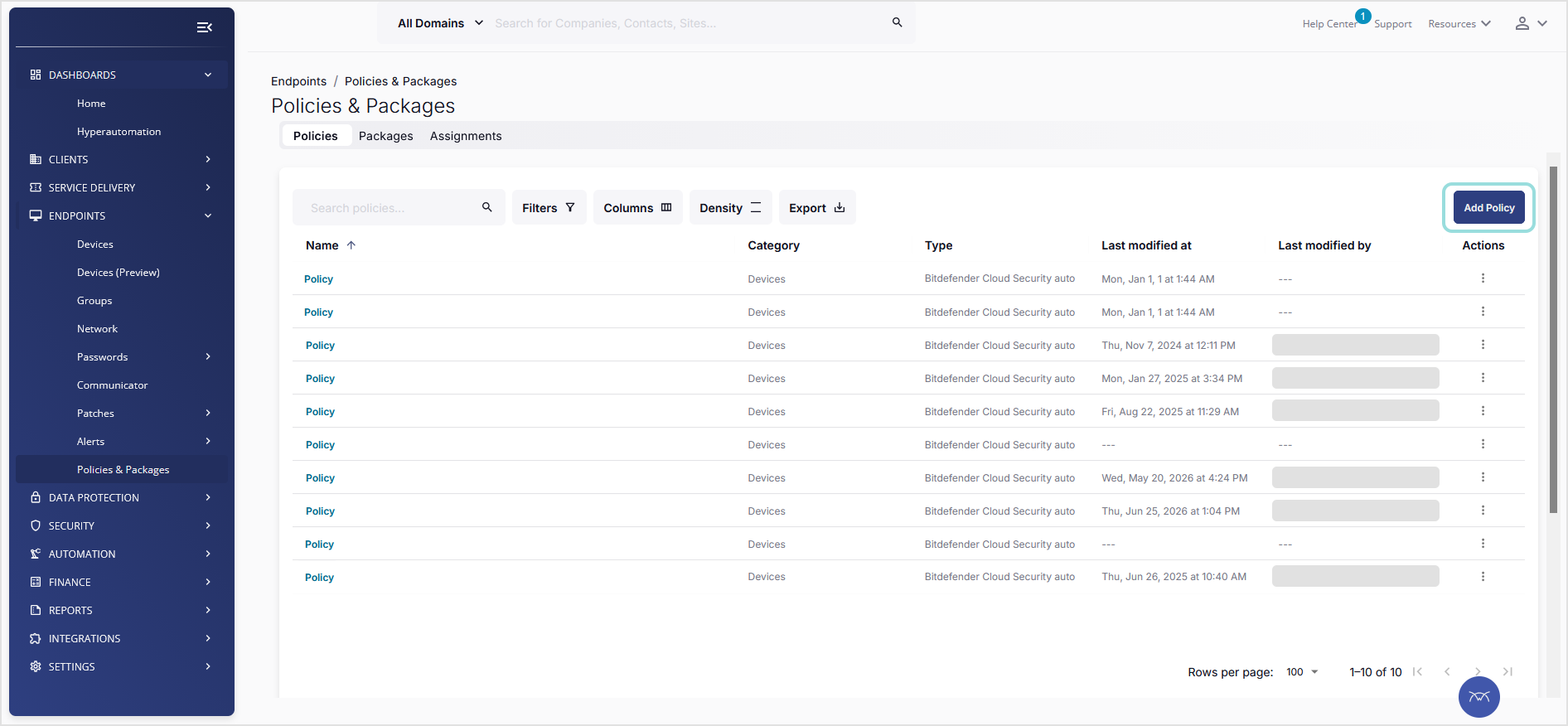
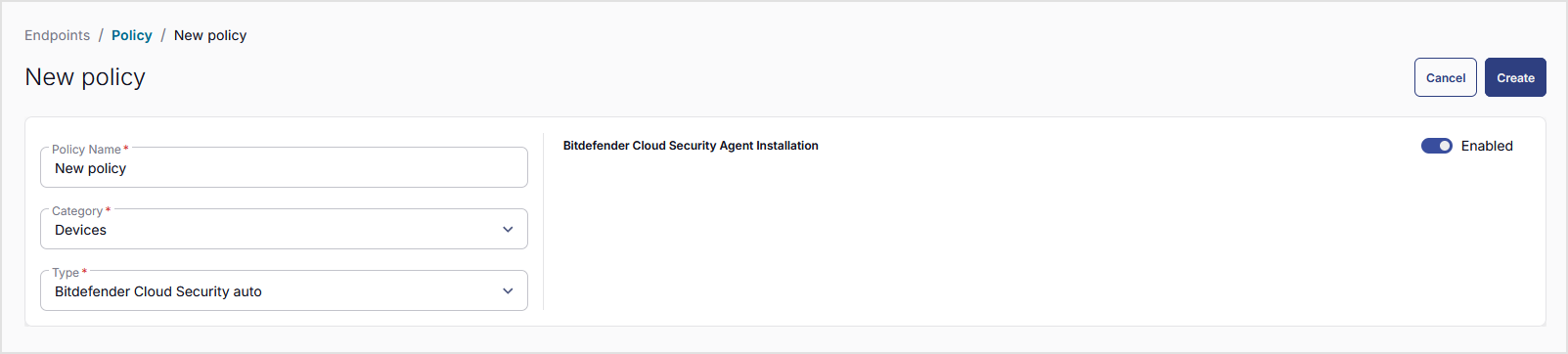
On the New Policy page:
Enter a name for the new policy.
Under Category, select Devices.
Under Type, select Bitdefender Cloud Security auto.
In the right-side pane, enable Bitdefender Cloud Security Agent Installation.
Click Create.
Configuring packages
To configure the package for Bitdefender agents, follow these steps:
Go to Endpoints > Policies & Packages.
In the Packages tab, click Add Package.
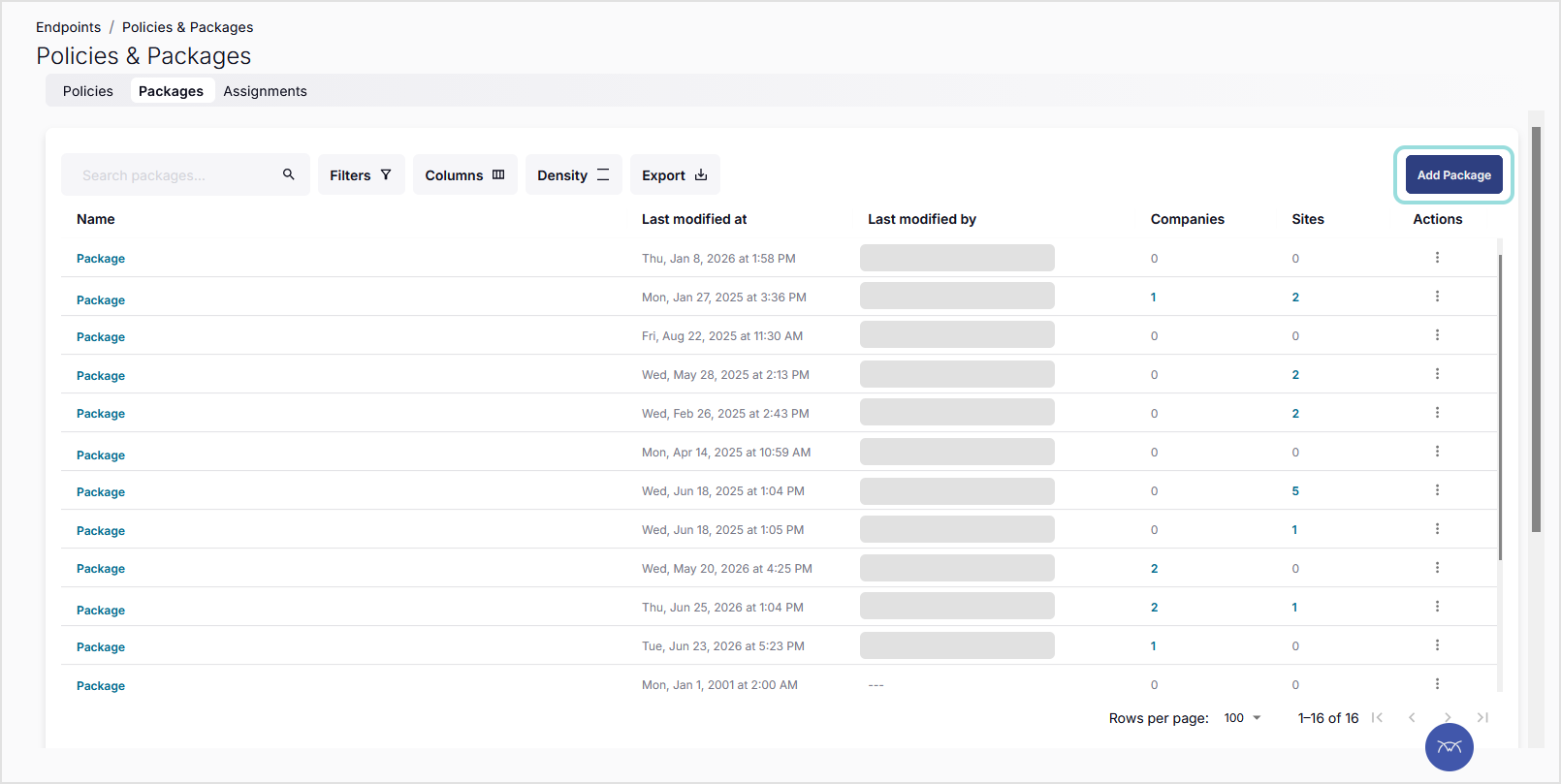
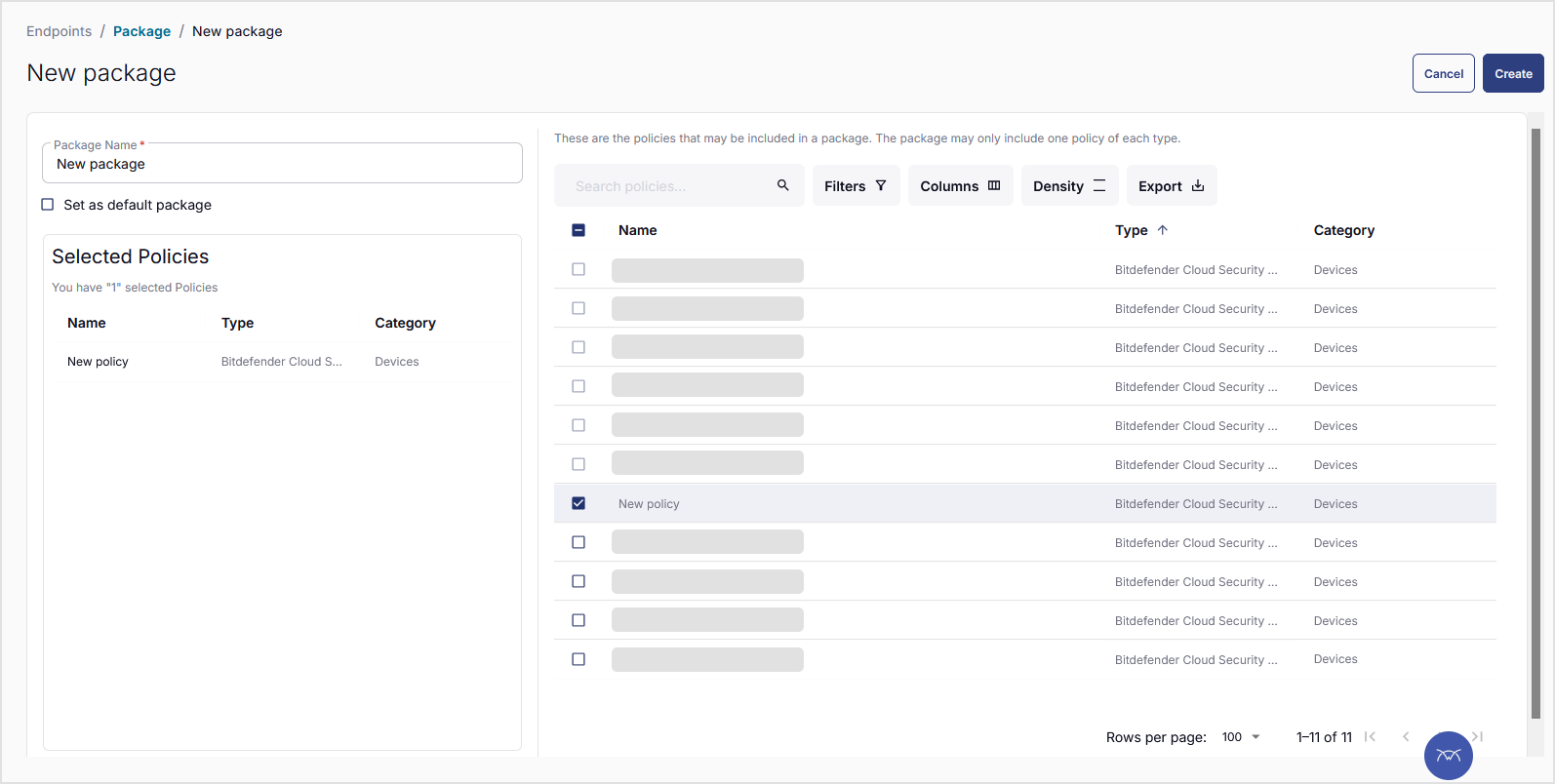
On the New Package page:
Enter a name for the new package.
In the right-side column, select the policies that you want to include in the package.
Note
Leave the Set as default package checkbox unselected.
Click Create.
Assigning packages
By assigning the package to a site in ConnectWise Asio portal, you remotely install Bitdefender agents on the computers belonging to that site.
Important
ConnectWise Asio installation packages must not be confused with GravityZone installation packages.
To assign a package, follow these steps:
Go to Endpoints > Policies & Packages.
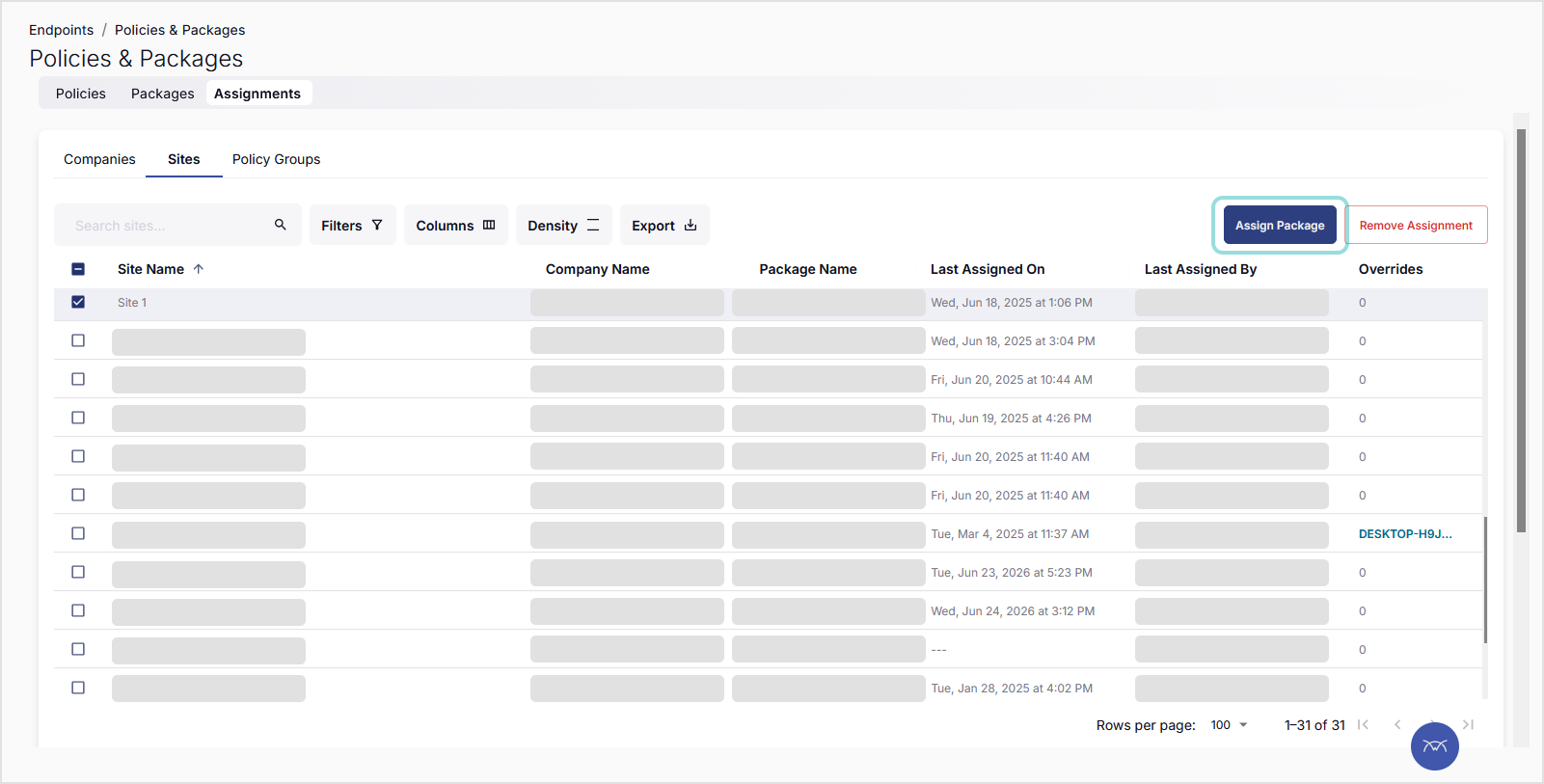
In the Assignments tab, go to Sites.
Select one or more sites and click Assign Package.
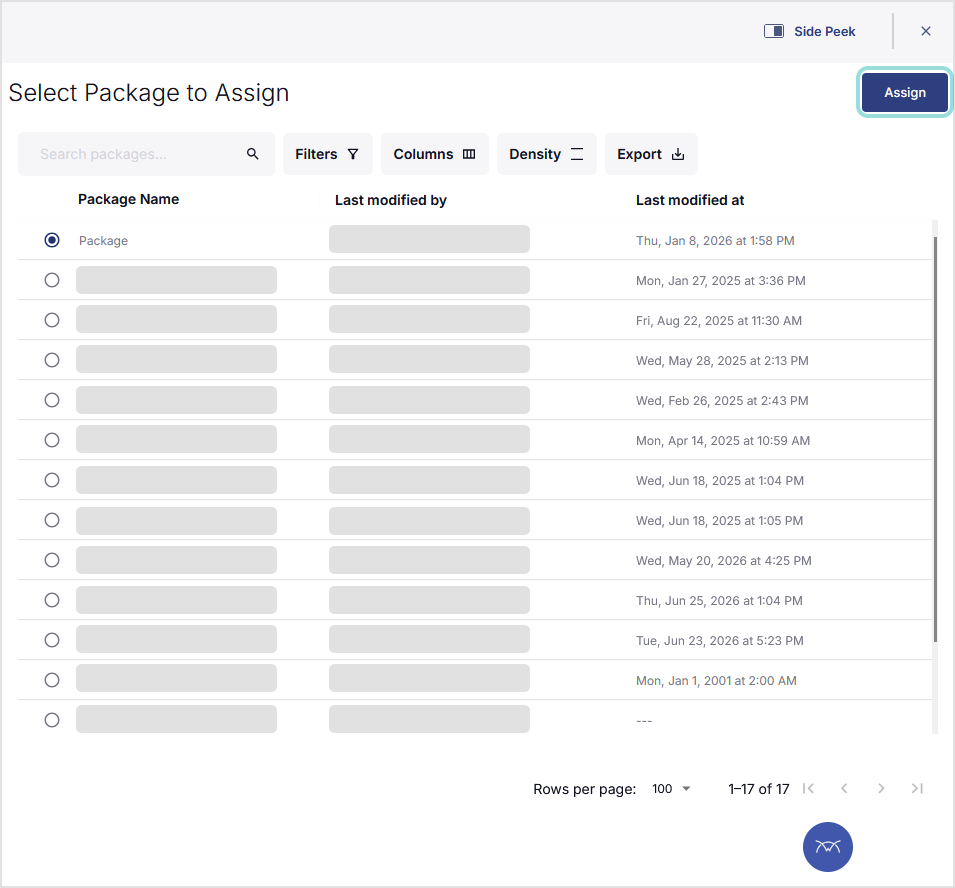
In the Select Package to Assign window, select a package and click Assign.
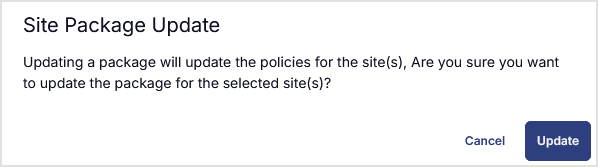
In the confirmation window, click Update.
Bitdefender agents starts to install on the computers in those sites.
Note
After the Asio package is applied, Bitdefender installation may take up to 30 minutes to begin. This delay is a known behavior of the ConnectWise Asio platform, observed during testing.
If Bitdefender deployment fails, the integration will automatically retry the installation for up to one hour, with a maximum of 10 retry attempts.
Checking deployment status
To check the deployment status of Bitdefender:
Go to Endpoints > Devices.
Go to the Integrations tab and select Bitdefender Cloud Security for MSP.
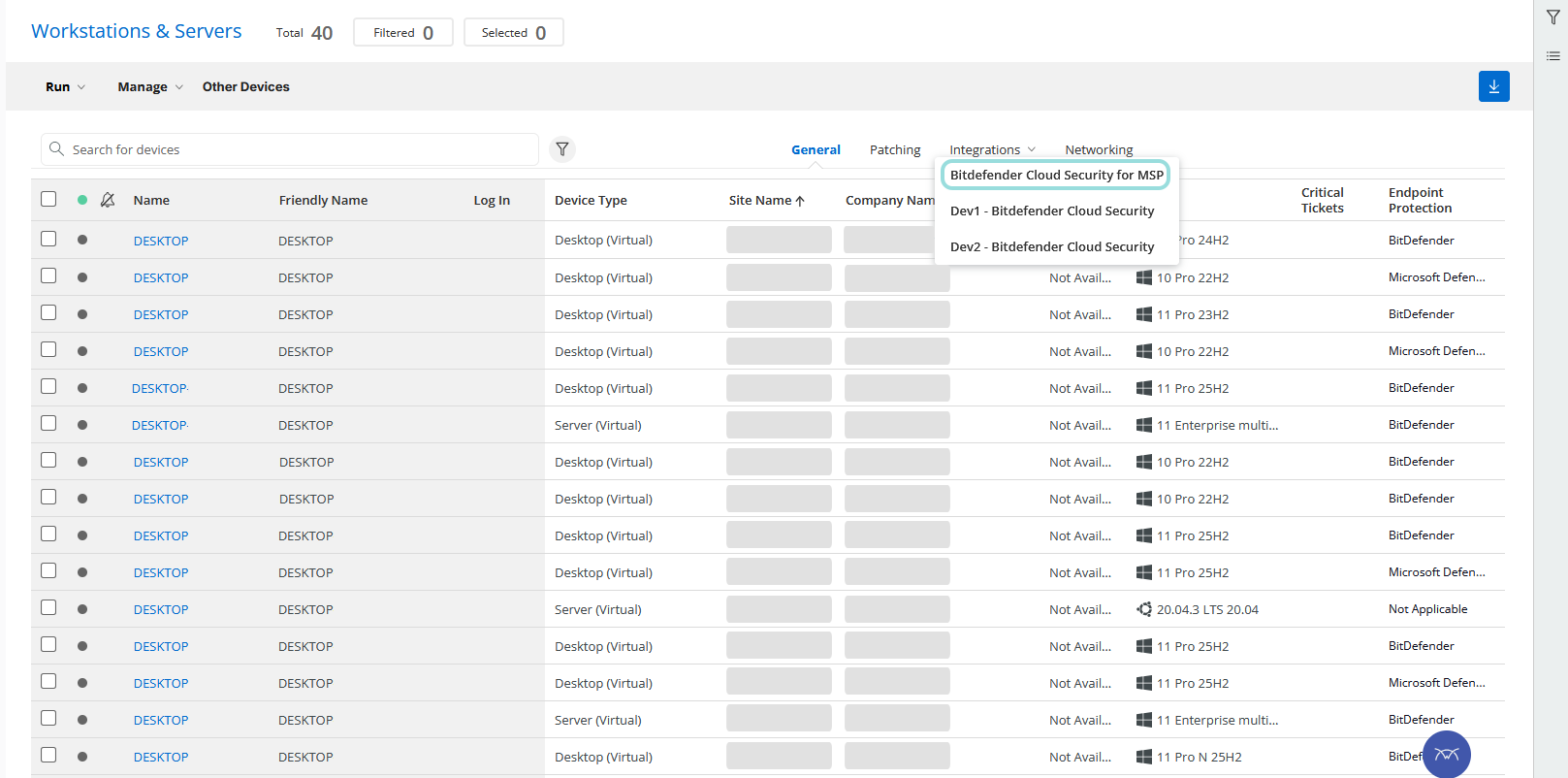
In the Deployment Status column, review the current installation status for each device.
The following statuses are available:
In progress – Bitdefender installation is still in progress.
Success – Bitdefender installation was completed successfully.
Failed – Bitdefender installation was unsuccessful.
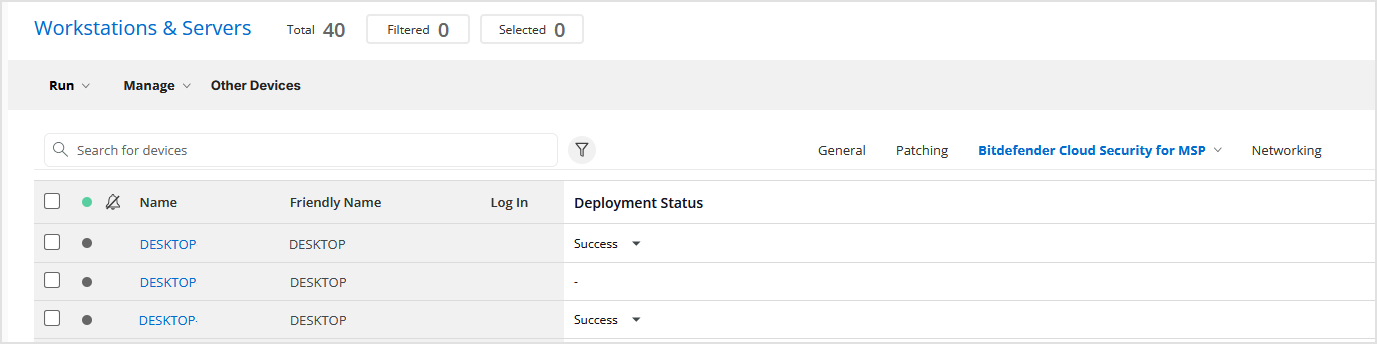
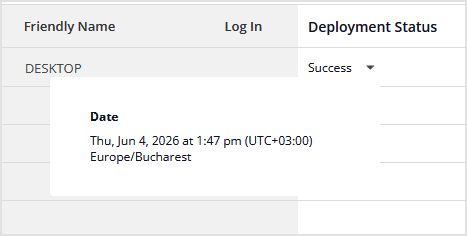
For more details, click on the entry in the Deployment Status column to view additional information.
Note
It can take up to 60 minutes for the deployment status to update.
The Bitdefender Cloud Security for MSP tab will only be visible if at least one device has been selected for Bitdefender installation via Policies and Packages.
Handling installation failures
During installation, Bitdefender automatically attempts to uninstall any existing third-party security software. If the competitor software fails to uninstall, Bitdefender installation will also fail. Other installation failures may occur. For more information, refer to this Bitdefender support document.
If the installation fails, you can do this:
On the Endpoints > Devices page, under the Integration tab, click on the Failed status in the Deployment Status column.
View the error code associated with the failure and check the Bitdefender support document for troubleshooting steps.
Note
If you want to keep the existing third-party security software, you can log into the GravityZone console and disable the Remove Competitors option in the installation package. However, this is not recommended, as it may interfere with Bitdefender’s functionality.
Uninstalling the Bitdefender agents
To uninstall the Bitdefender agents from devices, choose one of these methods:
Remove the package from the site.
Remove the policy from the package.
Disable the Bitdefender Cloud Security Agent Installation option in the policy:
Go to Endpoints > Policies & Packages > Policies.
Click the policy name.
In the right-side section, disable the Bitdefender Cloud Security Agent Installation toggle.
Save the changes.
Disable the Bitdefender Cloud Security Agent Installation option at the endpoint level:
Go to Endpoints > Devices.
Click the endpoint name.
Go to Settings.
Expand the Devices section and select Bitdefender Cloud Security auto.
In the right-side panel, click Edit and disable the Bitdefender Cloud Security Agent Installation toggle.
Save the changes.
Note
These methods are applicable when you want to uninstall Bitdefender Endpoint Security Tools for Windows and Linux. On macOS, you can use the uninstall task in GravityZoneControl Center.
These methods also prevent the installation of Bitdefender agents.