

What is Spyware?
Spyware is a type of malicious software specifically designed to infiltrate a user's device and covertly gather information without their knowledge or consent, operating silently in the background and collecting data about the user's online activities, personal information, and device usage.
Spyware is characterized by its ability to remain undetected while harvesting valuable information. Unlike other forms of malware that may disrupt system operations, its main goal is to spy on the user and transmit the collected data to third parties.
This information can include:
- Browsing history and internet usage patterns
- Login credentials and passwords
- Financial information
- Personal communications
- Keystrokes
- Application usage
The clandestine nature of spyware makes it a particularly insidious threat. It often disguises itself as legitimate software or embeds itself deeply within a device's operating system, making detection and removal challenging. Some sophisticated variants can even interfere with security software, further complicating their discovery and elimination.
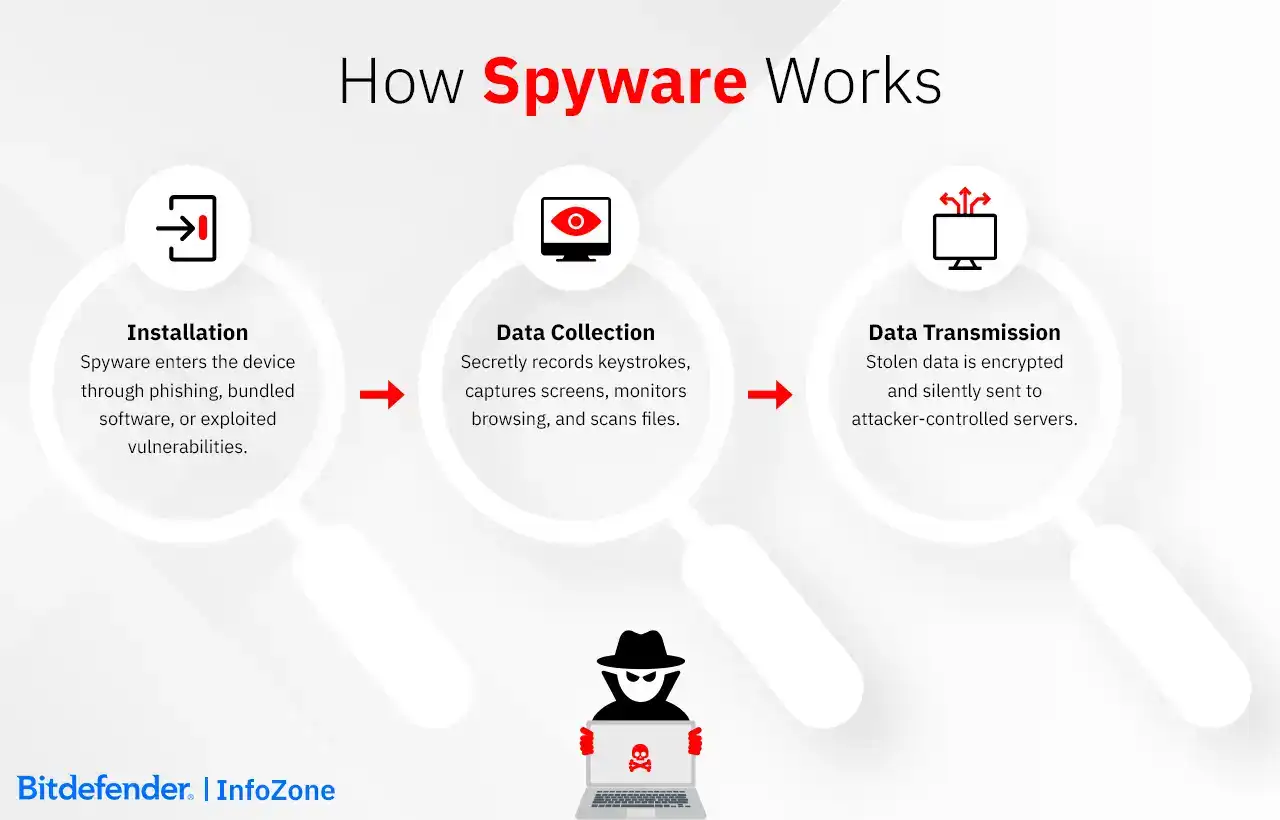
Spyware Functionality
Spyware's functionality can be broken down into three primary phases: installation, data collection, and data transmission.
1. Installation Methods. Spyware infiltrates devices through various deceptive means, including:
- Bundleware: Spyware often hides within legitimate software packages or free downloads, silently installing alongside the desired program.
- Drive-by Downloads: It exploits browser vulnerabilities when users visit compromised or malicious websites, automatically downloading without user consent.
- Phishing: Users are tricked into clicking malicious links or downloading infected attachments through deceptive emails or messages.
- Software Vulnerabilities: Spyware exploits unpatched security flaws in operating systems or applications, gaining unauthorized access to the device.
Once installed, it embeds deeply within the system, often modifying critical files or registry entries to ensure persistence and evade detection.
2. Data Collection. Spyware employs multiple techniques to gather valuable information:
- Keylogging: It records every keystroke made by the user, capturing passwords, credit card numbers, and other sensitive data.
- Screen Capturing: Periodic screenshots are taken to monitor user activity.
- Browser Monitoring: It tracks web history, search queries, and overall online behavior.
- File Scanning: Searches for specific file types or content on the infected device, extracting relevant data.
- Microphone and Camera Access: In advanced cases, spyware can record audio or video without the user's knowledge, turning the device into a surveillance tool.
The collected data is typically encrypted and stored locally in hidden files or folders to avoid detection.
3. Data Transmission. Spyware communicates with external servers controlled by attackers using various methods:
- Encrypted Network Traffic: Data transfers are disguised as legitimate web traffic to avoid raising suspicions.
- Piggybacking: Hiding data within normal network requests to blend in with regular internet activity.
- Scheduled Uploads: Transmitting data at predetermined intervals or during periods of high network activity to avoid detection.
- Proxy Servers: Routing data through multiple servers to obscure its origin and destination, making it difficult to trace
Spyware Evasion Techniques
Through sophisticated functionalities, spyware manages to operate undetected for extended periods, continuously harvesting and transmitting sensitive user data. To stay hidden, it employs various evasion tactics:
- Polymorphic Code: Constantly changing its signature to avoid detection by antivirus software.
- Rootkit Capabilities: Hiding its presence at the system level, making it invisible to standard detection methods.
- Anti-analysis Features: Detecting and disabling debugging or analysis tools used to identify malware.
Common Types of Spyware
Spyware comes in various forms, with unique characteristics and methods of compromising user privacy and security.
Keylogger Spyware
Keyloggers record every keystroke performed on an infected device. This type can capture passwords and usernames, credit card numbers and financial information, personal messages, and emails. Some advanced keyloggers can even capture screenshots, providing context to the recorded keystrokes.
Adware
While not always malicious, adware often borders on spyware functionality by displaying unwanted pop-up advertisements, tracking browsing habits to serve targeted ads, and slowing down device performance. It is frequently bundled with free software downloads: for instance, a free video or photo editing tool might come packaged with adware that inundates the user with pop-up ads and monitors their online shopping habits.
Trojan Horse Spyware
This type, trojan horses, disguises itself as legitimate software to trick users into installation. Once active, it can steal sensitive data, provide backdoor access to cybercriminals, or even compromise the entire system's integrity. A common example is a fake antivirus program that claims to protect the device but actually installs spyware. Once installed, it might steal personal information or even hold files for ransom.
Browser Hijackers
These variants focus on manipulating web browsers, often changing the default search engine, redirecting users to unwanted websites or modifying browser settings without permission. For example, a browser hijacker might change the homepage to a fake search engine that tracks all queries and serves malicious ads.
Spyware Examples and History
The evolution of this malware mirrors the development of the internet itself, growing more sophisticated and dangerous over time:
- Gator (1999 - mid-2000s): Early adware developed by Gator Corporation (later Claria). Bundled with free software, it tracked browsing habits to display targeted ads, reportedly installed on 35 million PCs by 2003.
- CoolWebSearch (Early 2000s): One of the earliest and most notorious browser hijackers, CoolWebSearch exploited Internet Explorer vulnerabilities to redirect users to specific websites and display unwanted ads. It was particularly difficult to remove, often requiring specialized tools.
- FinFisher (2008 - Present): Also known as FinSpy, it is employed by law enforcement and intelligence agencies worldwide. It can monitor all activities on an infected device, including calls, messages, and location, making it a powerful tool for surveillance.
- SpyEye (2009 - 2013): This banking Trojan and spyware targeted financial institutions and was used to steal sensitive information such as online banking credentials. It was notorious for its ability to perform man-in-the-browser attacks, capturing user data as it was entered into web forms.
- Stalkerware (2010s - Present): A more recent and particularly invasive form of spyware, stalkerware is often used in abusive relationships to monitor victims' devices. It can track location, record calls, and access messages, raising serious privacy and safety concerns.
- Emotet (2014 - Present): Initially a banking trojan, Emotet evolved into a sophisticated malware platform that can be used to steal sensitive information and load additional malicious payloads.
- Pegasus (2016 - Present): Developed by NSO Group, Pegasus represents the cutting edge of commercial spyware. It can infect devices through zero-click exploits, meaning no user interaction is required. Pegasus has been used to target from journalists and activists to political figures worldwide, showing how this malware can be used as a tool of oppression.
- LemonDuck (2020-Present): A sophisticated botnet malware that infiltrates systems through phishing or exploits, then steals sensitive data and hijacks computing power to mine Monero cryptocurrency. This evolving dual threat targets individuals and organizations globally, with a particular focus on the manufacturing and IoT sectors.
Risks Associated with Spyware
Understanding why exactly this malware is so dangerous can be an important motivational factor for implementing robust cybersecurity measures both on individual and organizational levels. Here are the primary dangers associated with spyware infections:
> Privacy Invasion: Spyware's core function is to invade user privacy, often with severe consequences:
- Stolen personal data (name, address, Social Security number) can be used to open fraudulent accounts.
- Captured financial information enables unauthorized transactions or credit applications.
- Compromised login details allow criminals to impersonate victims on various platforms.
For example, an infection could allow attackers to access a victim's entire email history, exposing sensitive personal or professional communications.
> Identity Theft: The information gathered can be a goldmine for identity thieves:
- Stolen personal data (name, address, Social Security number) can be used to open fraudulent accounts.
- Captured financial information enables unauthorized transactions or credit applications.
- Compromised login details allow criminals to impersonate victims on various platforms.
> System Instability: Beyond privacy concerns, spyware can significantly impact device performance:
- Exposure of confidential business information, including trade secrets and intellectual property.
- Loss of personal data, such as healthcare records or financial details.
- Financial losses due to fraud and recovery costs.
- Reputational damage and loss of customer trust.
> Data Breaches: Spyware can be used to steal sensitive data from individuals and organizations, leading to data breaches with serious consequences:
- Exposure of confidential business information, including trade secrets and intellectual property.
- Loss of personal data, such as healthcare records or financial details.
- Financial losses due to fraud and recovery costs.
- Reputational damage and loss of customer trust.
> Financial Losses: Spyware can lead to direct and indirect financial damages:
- Leaked sensitive information could damage personal or professional relationships.
- Businesses might face loss of customer trust if client data is compromised.
- Account hijacking could lead to embarrassing social media posts or emails.
> Reputational Damage: For individuals and businesses alike, spyware can cause significant reputational harm:
- Leaked sensitive information could damage personal or professional relationships.
- Businesses might face loss of customer trust if client data is compromised.
- Account hijacking could lead to embarrassing social media posts or emails.
> Legal Consequences: Spyware infections can have significant legal ramifications:
- Businesses may face regulatory fines for failing to protect customer data under laws such as GDPR, CCPA, and HIPAA.
- Individuals could be held liable if their infected devices are used in cybercrimes, including unauthorized access and data theft.
- Intellectual property theft could lead to lawsuits or loss of competitive advantage.
> Illicit Crypto-Mining: Often overlooked, another danger of spyware is the planting of crypto-mining software (also known as cryptojacking) which can lead to:
- Significant degradation of system performance as resources are hijacked for mining.
- Increased energy consumption due to the high computational demands of crypto-mining.
- Accelerated hardware wear, reducing the lifespan of affected devices.
Signs of Spyware Infection
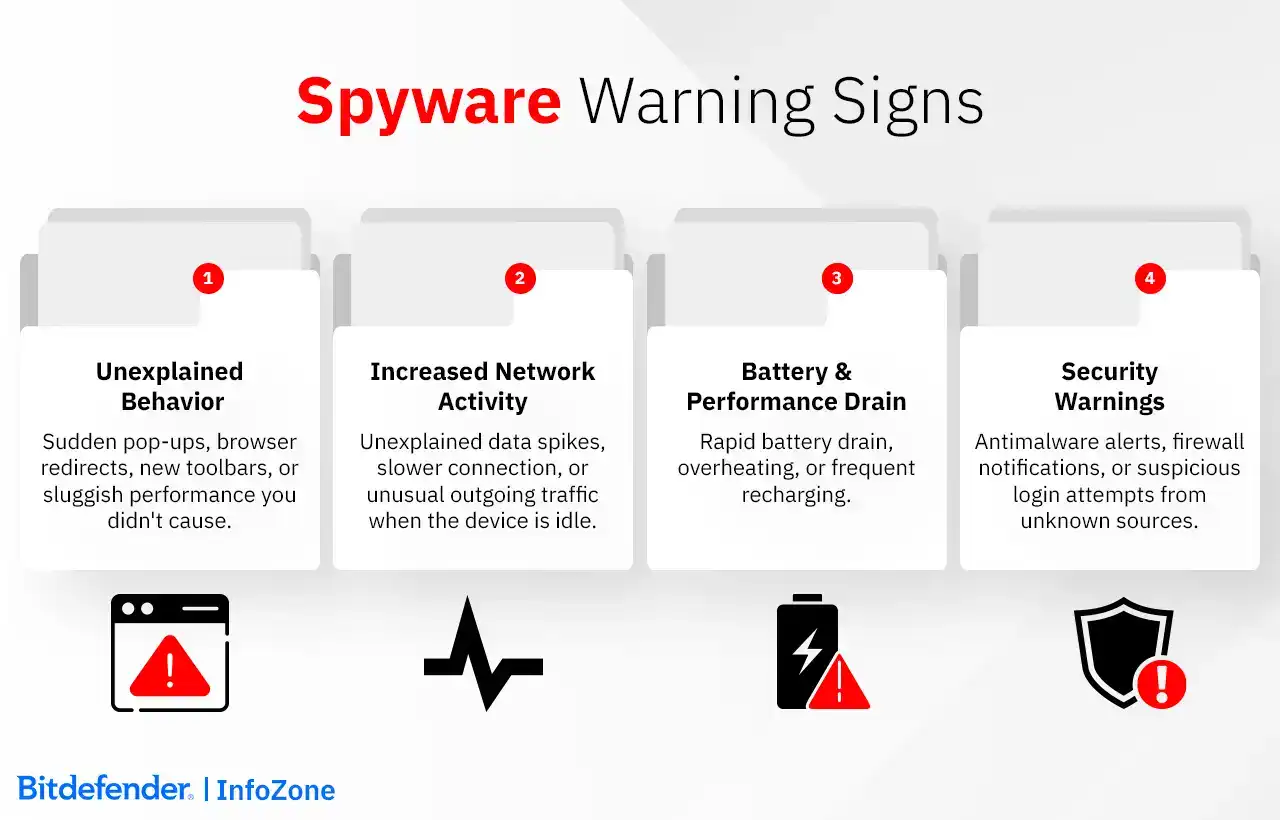
Detecting spyware can be challenging; however, there are several telltale signs that may indicate an infection on your device.
Unexplained Behavior:
- The sudden appearance of pop-up ads, even when not browsing the internet.
- Unexpected changes to browser settings, such as a new homepage or default search engine.
- Addition of new toolbars or extensions to your web browser that you don't remember installing.
- Browser redirects to unfamiliar websites without your consent.
- Sluggish system performance, with programs taking longer to load or respond.
- Random system error messages.
- Your computer suddenly becomes slow when opening programs or processing tasks such as saving files.
Increased Network Activity: Spyware needs to communicate with remote servers, often leading to:
- Unexplained spikes in data usage, especially noticeable on mobile devices.
- Slower internet speeds despite no changes in your network setup.
- Increased activity on your network, even when you're not actively using your device.
- Unusual outgoing network connections visible in network monitoring tools.
You should be wary if your data plan is being consumed much faster than normal or notice that your internet connection is slowing down at regular intervals.
Battery Drain: If you notice that your device's battery life has significantly reduced without any changes in usage patterns, it could be a sign of spyware running in the background. This can cause significant battery drain on mobile devices due to constant background activity:
- Sudden and unexplained decrease in battery life.
- Device heating up more than usual, even when not in active use.
- Frequent need to recharge your device throughout the day.
Security Warnings: While sophisticated spyware can evade detection, some may trigger alerts:
- Unexpected warnings from your antimalware software about suspicious activity.
- Firewall alerts about unknown programs attempting to access the internet.
- System notifications about applications trying to modify critical settings.
- Warnings from email providers about suspicious login attempts.
Other Indicators: Additional signs that could point to an infection include:
- Your webcam's indicator light turning on unexpectedly. Unusual sounds or signals from your device when not in use.
- Suspicious charges on your credit card or unexplained financial transactions.
- Receiving emails or messages from your accounts that you didn't send.
It's important to note that while these signs can indicate an infection, they may also be caused by other issues. If you observe multiple symptoms or have concerns, it's advisable to run a comprehensive security scan using reputable antivirus software and consider seeking professional IT support if problems persist. Regular system monitoring and staying vigilant about these signs can help you detect and address infections early.
Legal and Ethical Implications of Spyware
The use of spyware raises significant legal and ethical concerns, challenging our notions of privacy, consent, and digital rights.
Legal Considerations. The legal status of spyware is often complex and varies by jurisdiction, but generally, there are certain commonalities:
- Unauthorized installation is illegal in many countries, violating computer trespass laws. For instance, installing spyware on someone's device without their consent is considered illegal under laws protecting against unauthorized access and computer misuse.
- Using spyware to intercept communications without consent may violate wiretapping and electronic surveillance laws. In the United States, this could breach the Federal Wiretap Act, which prohibits the unauthorized interception of electronic communications.
- Collecting personal data through spyware can breach data protection regulations like the General Data Protection Regulation (GDPR) in the EU or the California Consumer Privacy Act (CCPA). These laws require clear consent for data collection and impose strict requirements on how personal data is handled and protected.
- Commercial spyware vendors may face legal challenges, as seen with NSO Group's Pegasus, which has been the subject of lawsuits and trade restrictions due to its use in the surveillance of journalists, activists, and political figures without their consent.
Ethical Dilemmas. An ethical dilemma might arise, for instance, when a parent considers using spyware to monitor their child's online activities. While the intent may be to protect the child, this action raises questions about trust, privacy rights, and the long-term psychological impact on the child. The above case is a simple one, showing that the use of spyware is a very complex issue that comes with several ethical challenges, such as:
Consent and Transparency. It is rarely ethically justifiable to monitor someone without their knowledge, and ethical software practices demand that users be adequately informed about data collection activities. Transparency involves clear, understandable communication about what data is collected, how it is used, and who has access to it. This helps in building trust and allows users to make informed decisions about their privacy.
Privacy vs. Security. Balancing privacy and security is a fundamental ethical dilemma. Spyware can be used for legitimate purposes, for instance, parental controls or employee monitoring; it must not infringe on individual privacy rights, however.
Power Dynamics. Spyware can exacerbate power imbalances in relationships and society. In personal relationships, one party may use it to covertly monitor another, leading to abuse and exploitation. In a broader context, government or corporate use can infringe on civil liberties and undermine democratic processes.
Data Responsibility. Spyware creators have an ethical obligation to handle collected data responsibly, implementing robust security measures to protect data from unauthorized access and misuse. Unfortunately, there are many cases of spyware companies being hacked.
Unintended Consequences. Even legitimate monitoring tools can be misused, leading to unintended harmful consequences. For instance, spyware intended for parental control can be repurposed for stalking.
In conclusion, the ethical use of monitoring software should, at least in theory, require:
- Clear Consent: Obtaining explicit consent from all parties involved.
- Transparency: Being transparent about what data is collected and how it is used.
- Limitations: Implementing strict limitations on data collection and retention.
- Safeguards: Ensuring safeguards against misuse or unauthorized access to collected information.
How to Prevent Spyware Attacks
Protecting your devices from spyware requires a proactive approach and constant vigilance. By implementing these essential strategies, you can significantly reduce the risk of attacks.
Keep Software Updated. Cybercriminals often exploit vulnerabilities in outdated systems; therefore, regular updates patch these security holes, making it much harder for spyware to infiltrate your device. Enable automatic updates for your operating system, browsers, and all installed applications. Pay special attention to security software, as these updates often include new threat definitions to combat emerging spyware variants. For business environments, implement a robust patch management system to ensure all devices on the network receive timely updates.
Be Cautious Online. Adopt a skeptical approach to unsolicited content and be wary of potential threats. Avoid clicking on suspicious links, like those received in emails or messages from unknown senders. These links may get you on malicious websites that automatically download spyware onto your device. When downloading software, use official app stores and reputable websites. Be cautious of free software offerings, as they may bundle spyware or adware. Always read user reviews and check the developer's credibility before installing any new application. Exercise particular caution when using public Wi-Fi networks, as these can be breeding grounds for distribution. Consider using a VPN to encrypt your internet connection.
Use Cybersecurity Software.Reputable antimalware software with real-time protection continuously monitors suspicious activity, being able to detect and block spyware before it can establish a foothold on your device. Look for antimalware solutions that offer specific anti-spyware features, including: real-time scanning of downloads and email attachments, web protection to block access to known malicious websites, and behavior-based detection to identify new, unknown threats.
Stay Informed and Vigilant. There is no single measure that can guarantee complete protection against spyware. Combining software solutions with informed online practices and regular system maintenance creates a strong defense against these insidious threats. Stay informed about the latest cybersecurity trends and adjust your security measures accordingly to maintain a robust protection strategy.
Spyware Detection and Removal Methods
While prevention is ideal, knowing how to identify and eliminate infections is equally important. Below, we explore various methods for detecting and removing spyware from your devices.
Antimalware Scans. Using comprehensive antimalware/antivirus software plays a vital role in detection and removal. Modern security solutions are designed to identify a wide range of threats, including various types of spyware. To maximize the effectiveness of a scans:
- Perform Regular Full System Scans: Ideally on a weekly basis. These deep scans can uncover hidden spyware that might evade real-time protection.
- Enable and Configure Scheduled Scans: Run these automatically during off-hours, ensuring your system is consistently checked without disrupting your work.
- Keep Your Antivirus Software Updated: Updates often include new definitions for emerging threats.
- Follow Recommendations for Quarantine or Removal: When a threat is detected, follow your antivirus software's recommendations. In some cases, you may need to restart your device to complete the removal process.
Anti-Spyware Software. While antivirus programs offer broad protection, anti-spyware tools can provide an additional layer of defense. These tools are specifically designed to combat the unique characteristics of the malware:
- Heuristic Analysis: Anti-spyware software often uses heuristic analysis to detect new or unknown variants based on their behavior, complementing the signature-based detection of traditional antivirus programs.
- Real-time Protection: Many anti-spyware tools offer real-time protection, monitoring your system for suspicious activities such as unauthorized changes to system settings or unexpected network connections.
Manual Inspection. Manual inspection can uncover spyware that might slip through automated defenses:
- Examine Installed Programs: Regularly look for unfamiliar applications or those with suspicious names. Research any programs you don't recognize before removing them.
- Check Browser Extensions and Add-Ons: Remove any that you didn't intentionally install or that seem suspicious. Pay attention to extensions that request excessive permissions.
- Review Startup Programs: Spyware often sets itself to run at startup to maintain persistence. Use the Task Manager (Windows) or System Preferences (for Mac) to investigate and disable suspicious startup items.
- Monitor Network Connections: Use built-in tools like Resource Monitor on Windows or Activity Monitor on Mac. Look for unfamiliar processes making network connections, which could indicate spyware communicating with remote servers.
- Inspect Browser Settings: Check your browser settings, including the homepage and default search engine. Spyware often modifies these settings to redirect users to malicious sites.
Remember, removal can be complex, and aggressive spyware might resist removal attempts. If you suspect a severe infection or are uncomfortable performing these steps yourself, consider seeking help from a professional IT service. They can perform a thorough cleanup and ensure your system is truly cleaned.
Protecting Your Privacy Against Spyware Threats
Protecting your privacy is an ongoing battle that needs constant vigilance and adapting to new threats as they emerge. Here are some practical strategies to safeguard your devices and personal information from intrusions.
Secure Your Devices Against Spyware
Implementing robust security measures on your devices forms the first line of defense against spyware:
- Use Strong, Unique Passwords: Create strong, unique passwords for all your accounts. You could use a password manager, which generates and stores complex passwords securely. For instance, avoid using common passwords like "password123" or reusing passwords across multiple sites.
- Enable Two-Factor Authentication (2FA): Enable 2FA whenever possible. This additional layer of security makes it much harder for attackers to access your accounts, even if they obtain your password through spyware.
- Encrypt Sensitive Data: Most modern operating systems offer built-in encryption tools.
- Regularly Update Firmware and Operating Systems: Regular updates often feature critical security patches that protect against the latest threats. Enable automatic updates so that your device is protected. This is particularly important for mobile devices, which are frequently targeted due to their constant internet connectivity.
Be Vigilant
Awareness and caution are crucial in preventing infections:
- Stay Informed About Trends: Regularly read reputable cybersecurity news sources to understand emerging threats and how to protect against them.
- Exercise Caution When Downloading Applications: Stick to official app stores and always verify the legitimacy of an app before installation. Be cautious of free software, as it may bundle spyware or adware. For example, avoid downloading apps from third-party sources or clicking on pop-ups that promise free software.
- Be Wary of Phishing Attempts: Spyware often spreads through deceptive emails or messages. Avoid clicking on suspicious links don't download attachments from unknown sources. Be very cautious of emails that claim to be from well-known companies asking for personal information.
- Use Privacy-Focused Browsers and Search Engines: Use secure, privacy-focused browsers and search engines that minimize data collection and tracking.
- Be Careful About Sharing Information Online: Limit the personal information you share on social media and online platforms. For instance, avoid posting your full birth date, home address, or other sensitive information.
Use a VPN
A Virtual Private Network (VPN) can help you protect against spyware, making it more difficult to track your online activity and steal your personal information:
- It encrypts internet traffic: A VPN encrypts all data that is transmitted between your device and the internet, making it difficult to intercept and read this information.
- It masks your IP address: By masking your IP address, a VPN makes it harder to track your online activities or pinpoint your location.
- Can protect you when using public Wi-Fi: Public Wi-Fi networks are often unsecured and can be hotspots for spyware. If you must use public Wi-Fi, always connect through a VPN to protect your data.
Regular Audits and Maintenance
Consistent monitoring and maintenance of your devices can help detect and prevent spyware infections:
- Conduct Regular Privacy Audits: Review app permissions, checking that applications only have access to necessary data and features. Revoke permissions for apps that you don't use or trust.
- Perform Routine System Scans: Use reputable antimalware and anti-spyware software to perform routine system scans. Schedule these scans to run automatically at regular intervals to ensure continuous protection.
- Clean Up Your Devices: Regularly uninstall unused applications and clear out temporary files and cached data. This not only improves system performance but also reduces potential hiding spots.
- Monitor Accounts for Unusual Activity: Regularly check your email, social media, and financial accounts for signs of unauthorized access or suspicious transactions. Set up real-time account alerts when possible for things like login attempts or financial transactions.
- Keep Backups of Important Data: Maintain backups of your important data on an external, offline storage device. In the event of an infection, having a clean backup allows you to restore your data without compromising your privacy.
How Bitdefender Can Help?
Bitdefender offers a comprehensive suite of tools designed to protect against spyware, enhancing both security and privacy for business or private users. Here's how Bitdefender can help:
Advanced Spyware Detection and Removal:
- Real-time Protection: Bitdefender provides real-time protection to detect and block spyware before it can infiltrate your system. This includes scanning all incoming network data and blocking threats instantly.
- Behavioral Analytics: Utilizing machine learning and behavioral analysis, Bitdefender identifies suspicious activities that deviate from normal operations, such as unauthorized script executions or abnormal network requests. This proactive approach helps detect and mitigate threats efficiently.
- Scanning: Bitdefender's advanced antimalware and anti-spyware tools conduct thorough scans of your system to identify and remove any existing spyware. Regularly scheduled scans ensure ongoing protection and system integrity.
Proactive Security Measures:
- Endpoint Detection and Response (EDR): Bitdefender's EDR capabilities provide continuous monitoring and detailed analytics, combining threat intelligence to detect subtle indications of spyware. This allows for quick response to threats, minimizing potential damage.
- Sandboxing Technology: Suspicious files and URLs are analyzed in an isolated environment using Bitdefender's advanced sandboxing technology. This helps understand the behavior of potential spyware and prevents it from affecting the main system.
- Memory Protection: Bitdefender protects the memory space of running processes, preventing unauthorized code injections. This is crucial in stopping spyware that attempts to operate by injecting malicious code into memory.
Privacy Protection:
- Webcam and Microphone Security: Bitdefender includes features like Webcam Protection and Microphone Monitoring, which constantly monitor applications that try to access these devices. This prevents spyware from recording video or audio without your consent.
- Secure Browsing: Bitdefender’s anti-tracking features and secure browsing tools prevent spyware from tracking your online activities and collecting sensitive information. This includes blocking malicious websites known to host malware.
- Virtual Private Network (VPN): This service adds an extra layer of privacy through the encryption of your internet connection so that all your online activities remain anonymous and protected from potential eavesdroppers. This is very useful on public Wi-Fi networks, preventing hackers from intercepting your data.
Frequently Asked Questions
Is spyware a virus?
No, it is not a virus, but they are both types of malicious software (malware). While viruses replicate and spread by infecting files and systems, spyware secretly monitors and collects your data, such as personal information and browsing habits, without your consent. Both can harm your device and compromise your privacy, but they operate differently. To protect yourself, use reputable security software, avoid suspicious downloads, and keep your system updated.
Why isn't all spyware banned?
Completely banning spyware is complex. Governments use it for law enforcement and national security, while parents may utilize it for child monitoring. Differing regulations and enforcement across countries make a global ban challenging. Additionally, there's often a lack of political will to fully address the issue, as seen with the controversial Pegasus spyware, which remains legal despite misuse concerns.
How does spyware get on my phone?
Spyware can infect your phone through malicious apps, phishing links, compromised websites, unsecured public Wi-Fi, and software vulnerabilities, similar to how it targets computers. To protect your phone, download apps from trusted sources, avoid suspicious links, use security software, keep everything updated, and be cautious with public Wi-Fi. Effective Kubernetes security prevents unauthorized access, data breaches, and disruptions in dynamic, distributed environments.