Legal landmines of real-time sensor twins

December 16, 2025
Real-time sensor twins reshape smart homes, but they also introduce hidden privacy, compliance and liability risks every consumer should understand.
How real-time sensor twins jeopardize your exposure
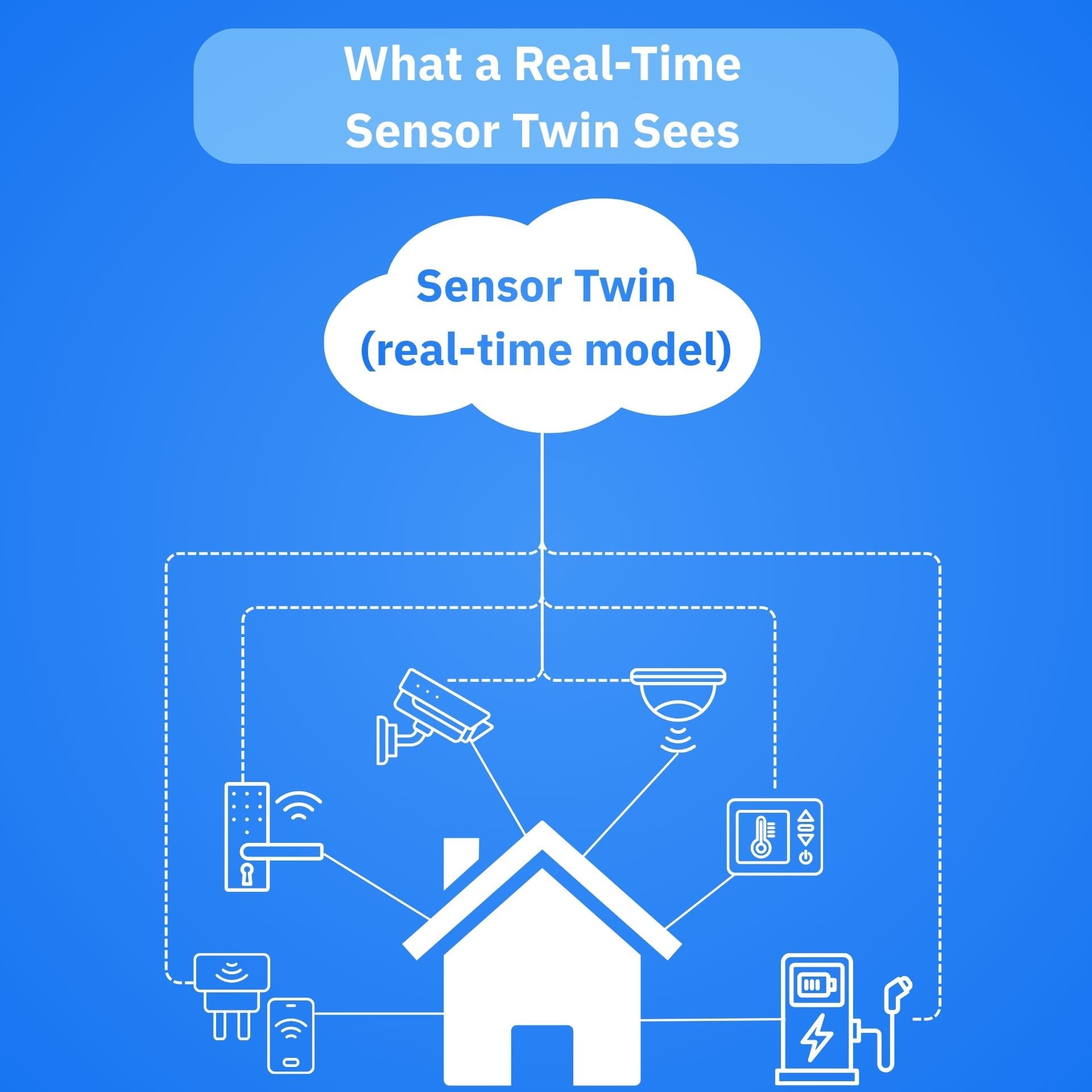
Real-time “sensor twins” are subtly morphing into the nervous systems of modern smart homes. Your IoT devices – from thermostats and motion sensors to door locks, EV chargers, security cameras and wearables – all stream data into a virtual replica of your home that updates in real time.
This digital mirror makes automation more convenient and, ideally, lowers your energy bill. However, it also creates a dense cloud of real-time data on the way you live.
Far from a mere cybersecurity concern, this data sits squarely in the crosshairs of privacy laws such as GDPR and CCPA, as well as emerging guidance on smart homes and digital twins. For consumers, that means your real-time twin can quietly turn into a legal liability if you’re not careful about configuring and securing your devices.
This guide walks through the main legal landmines and what you can do at home to reduce your exposure, including hardening your network with specialized services.
What is a real-time sensor twin?
A real-time sensor twin is a digital model of your home that updates continuously using data from connected devices such as:
- Sensors (temperature, motion, humidity, air quality)
- Actuators (smart locks, plugs, valves, blinds)
- Higher-level systems (energy dashboards, digital assistants, security hubs)
In more technical terms, a digital twin constantly ingests live sensor streams and combines them with historical data and analytics to mirror the current state of your physical environment.
It is already present in various consumer products, even if they’re not marketed with “digital twin” branding. Some examples of digital twins include security apps that show which doors and windows are open in real-time, energy apps that monitor consumption and map outlets and appliances to virtual floor plans, and house dashboards that reflect occupancy, lights, temperature and air quality room-by-room.
This may seem convenient, but there’s a catch: the more detailed and real-time these twins become, the more they resemble behavioral profiles of everyone in the house (both residents and visitors).
Where the legal landmines hide
1. Your twin is full of personal data
Although you never typed in your name or other revealing details, your digital twin is chock full of personal data. By combining timestamps, device IDs and usage patterns (such as when you cook, sleep, shower, leave for work), sensor twins can easily identify or infer information about specific individuals in the home.
Under regulations such as GDPR, any data that can be used to identify someone is personal and its collection and use must comply with current laws and regulations.
For consumers, this should raise questions such as:
- What exactly is my twin tracking about me and my family?
- Is the vendor using the twin only to run my home, or to train AI models, build advertising profiles and share data with partners as well?
- How long do they keep the raw sensor streams and derived profiles?
If a company cannot or will not answer these questions clearly, that should be a red flag.
2. Who really owns the twin, you or the vendor?
There is no specific “digital twin law” yet. Instead, a patchwork of rules on data protection, contracts, consumer rights and intellectual property applies.
Key murky areas include:
- Data ownership vs control: While you may own certain devices, the vendor often controls the cloud platform where the twin “lives.” Their terms of service may grant them a broad range of rights to reuse aggregated or pseudonymized data.
- Lock-in risks: Switching ecosystems may render you unable to export historical twin data in a usable format. This unfortunate situation may result in years of detailed household history being locked in a proprietary data silo.
- Model and algorithm IP: Even when the raw data is yours, models and analytics built on top (such as predictive occupancy or anomaly detection) usually belong to the vendor.
Although there’s no way around these situations, what you could do is pay close attention to data usage and export sections of smart-home system terms, not just the marketing pages.
3. Consent, children and unknowing guests
It makes sense that real-time sensor twins monitor account holders (buyers of the product). However, one lesser-known fact is that they also monitor others, including partners, kids, roommates, overnight guests, cleaners, babysitters, tradespeople and others who spend time inside your home.
Laws like GDPR and CCPA address these situations. People have the right to know if and when their personal data is being collected, how it will be used, and in some cases, opt out or request deletion. When your home behaves like a surveillance system, that point is not trivial.
Potential legal pitfalls include:
- Failing to inform guests that cameras or voice assistants are active
- Capturing children’s data and sending it to cloud services without understanding how it is handled
- Sharing access to device dashboards with multiple family members in ways that reveal more about their private routines than they expect
Taking some simple steps like clearly labeling monitored areas, disabling audio where not needed and using privacy zones or geofencing on cameras pointing outside your property.
4. When the twin is wrong
Digital twins are at the backbone of automated decisions, such as when to lock doors, turn off appliances, trigger alarms or start tracking movement on security cameras. Advanced systems combine real-time data with predictive behavior analysis to “guess” what’s happening in your smart home.
While these perks bring convenience, they can also spell disaster in certain situations, namely if the twin is biased or inaccurate.
- Who is liable if a misclassification results in damage (for instance, a wrongly triggered cutoff that spoils food or a false alarm that results in a costly call-out)?
- What happens if a predictive model flags “suspicious behavior” that later turns out to be normal, but the data is shared with third parties?
- Are you given meaningful transparency and control over automated decisions, as data protection laws increasingly require?
The law is still catching up and much depends on contracts and local regulations. However, consumers must assume that poor security and misconfiguration can come back in the form of financial and legal headaches.
5. Cross-border twins and data-hoarding
Many smart-home platforms operate worldwide, moving your data between various regions for storage, analytics and support. In the EU, exporting personal data outside the bloc is tightly regulated; in the US, state laws like CCPA and others are evolving into a complex patchwork.
At the same time, some industry incentives still favor keeping more data for longer, because it improves models and analytics. Current frameworks can inadvertently reward data hoarding and even make it harder for individuals to assert meaningful control over their digital representations.
For the average smart-home owner, this means two things: for one , your highly detailed twin may live in jurisdictions with different privacy protections than your own. Secondly, breaches or misuse could involve regulators in multiple regions, not just your local authority.
How consumers can reduce legal exposure
You can’t rewrite IoT law on your own, but you can make your home’s real-time twin a lot less risky with a few pragmatic moves.
1. Ask legal-flavored questions
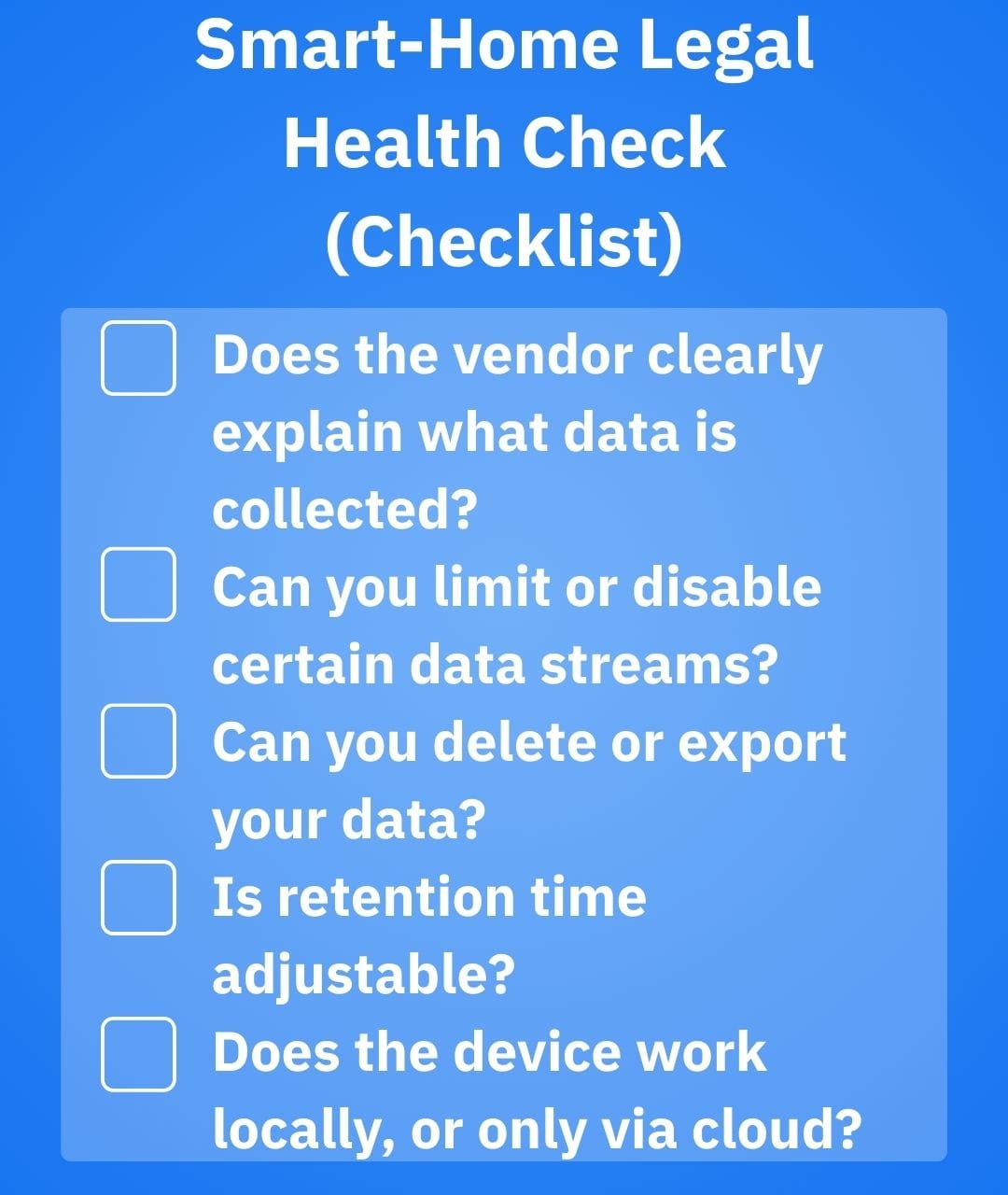
Before adding devices that feed your sensor twins, check what data is collected (and whether data collection is actually relevant to the product), whether there are clear, plain-language privacy policies, if certain data streams can be turned off, or whether data can be safely exported or deleted if the user leaves the ecosystem.
If vendors cannot answer clearly, consider alternatives.
2. Configure for ‘data minimization’
Most regulations push for data minimization – the practice of collecting only strictly necessary data and keeping it only as long as needed. Consumers can mimic the principle by turning off verbose logging where not needed, reducing retention periods in app settings and disabling experimental analytics features that feel invasive.
3. Lock down the network where your twin lives
Many legal problems start with simple technical failures, such as hacked devices or compromised Wi-Fi followed by data breaches. Regulators increasingly expect appropriate security for IoT environments. Poor security can aggravate fines or liability after an incident.
In households, network-level protection is typically the most effective layer within your control. With that in mind:
- Use strong, unique passwords and modern Wi-Fi security (WPA3, if available)
- Segment your network and keep IoT devices on separate SSIDs or guest networks
- Keep device firmware and router software up to date
On top of that, consider using router-level security services such as NETGEAR Armor:
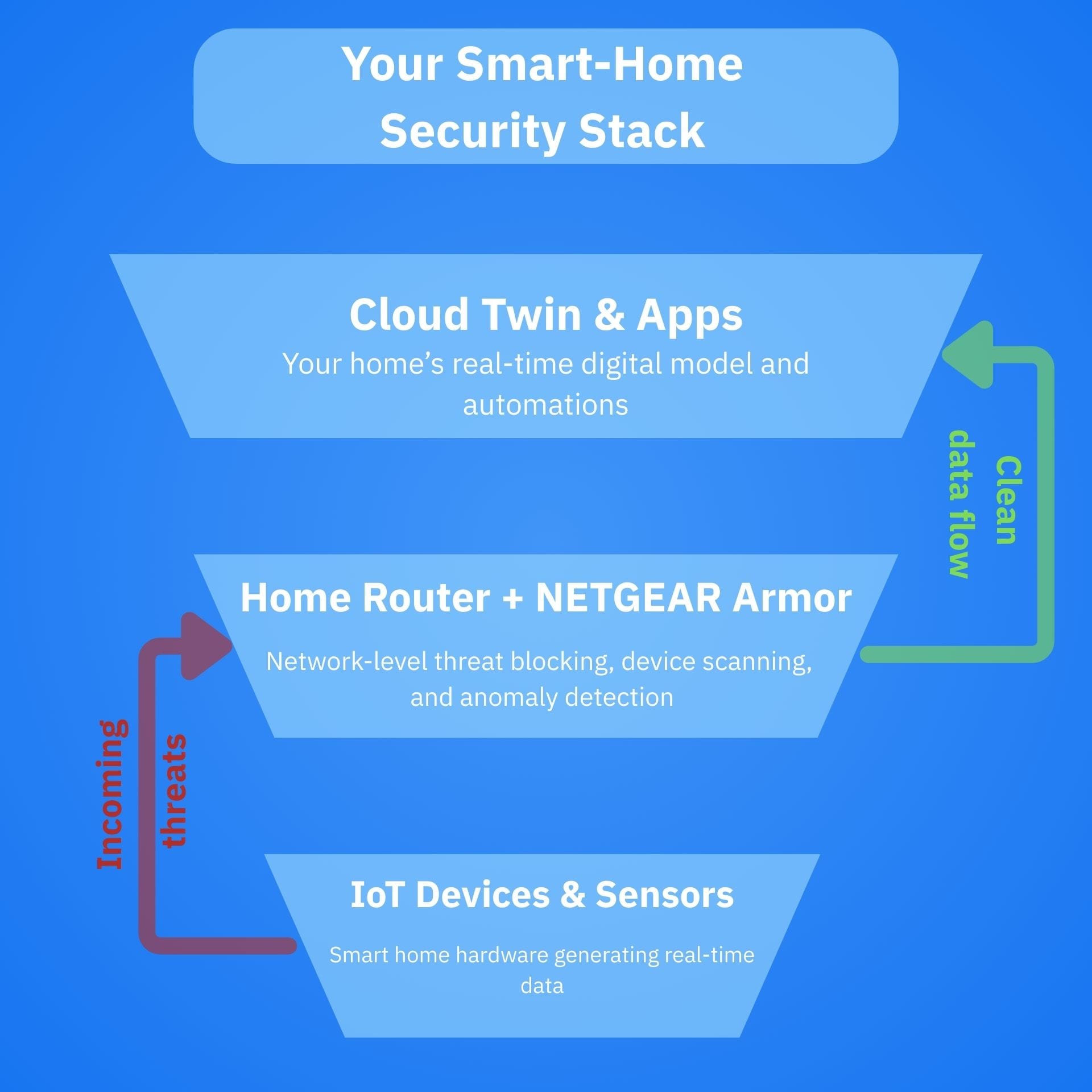
- Armor is built into many NETGEAR routers and mesh systems and is designed to protect every device on your home network, including IoT gadgets that cannot run traditional security software.
- It uses AI-powered threat detection to spot anomalous behavior on connected devices, blocks access to known malicious websites and helps prevent your smart devices from talking to rogue servers.
You still need basic cyber hygiene, but treating the router as your first line of defense substantially lowers security and legal risks.
Frequently Asked Questions (FAQs)
Can digital twins be patented?
Yes. Patents can cover the specific technical methods or algorithms behind a digital twin, but not the general concept itself.
Is digital twin still a thing?
Absolutely. Digital twins continue to grow across smart homes, industry, healthcare and energy sectors, especially with the rise of real-time sensor data and AI.
What is the digital twin for compliance?
It is a virtual model used to automate monitoring and reporting to show a system meets regulatory or safety requirements.
Conclusion
Real-time sensor twins make smart homes genuinely powerful, but they also compress your daily life into a stream of legally sensitive data. Until regulators fully catch up, consumers need to think about both what is being tracked and the way that data is protected.
If you choose vendors that are transparent about data collection and retention, minimize the amount and duration of data your devices collect and harden your home network with strong configuration and router-level protection such as NETGEAR Armor, you can benefit from a highly responsive smart home without sacrificing your legal exposure.
tags
Author

Vlad's love for technology and writing created rich soil for his interest in cybersecurity to sprout into a full-on passion. Before becoming a Security Analyst, he covered tech and security topics.
View all postsYou might also like
Bookmarks
