Instagram scam automation and bot networks make fake accounts harder to spot

June 23, 2026
Instagram scam automation and bot networks help fraudsters spread fake comments, malicious links, phishing messages and impersonation scams at scale. What looks like one strange comment or a single suspicious follower may be part of a much larger automated scam operation.
Key Takeaways
- Instagram scam automation and bot networks allow scammers to mass-post comments, send DMs, follow users and promote malicious links with very little manual effort.
- Instagram bots can be fake accounts, compromised real accounts or semi-automated profiles controlled by scammers to push malicious content.
- Bot-driven scam campaigns often use engagement tricks and social engineering to make fraudulent posts or profiles look more legitimate.
- Consumers can reduce risk by avoiding comment links, checking suspicious messages with tools like Bitdefender Scamio, securing creator accounts and monitoring exposed personal data.
Why scammers use automation on Instagram
Instagram is built around visibility and interaction. A comment under a popular Reel can reach thousands of people. A DM can feel personal even when it was sent to hundreds of other users. A profile with many followers can look trustworthy at a glance. Scammers understand this and use automation to turn Instagram’s engagement features into a distribution system for fraud.
Instagram scam automation usually refers to software, scripts or coordinated account networks used to perform actions automatically. These actions can include:
- Following accounts
- Liking posts
- Posting comments
- Tagging users
- Sending direct messages
- Pushing links across multiple profiles
Not all automation is malicious. Brands may use approved tools for scheduling posts, managing inboxes, responding to customers, or other actions. The problem starts when automation is used for malicious purposes.
For scammers, automation solves a major problem: scale. A single fake account can be reported and removed. A bot network made of hundreds or thousands of accounts can keep spreading too fast for ordinary users to track.
How Instagram bot networks spread scams
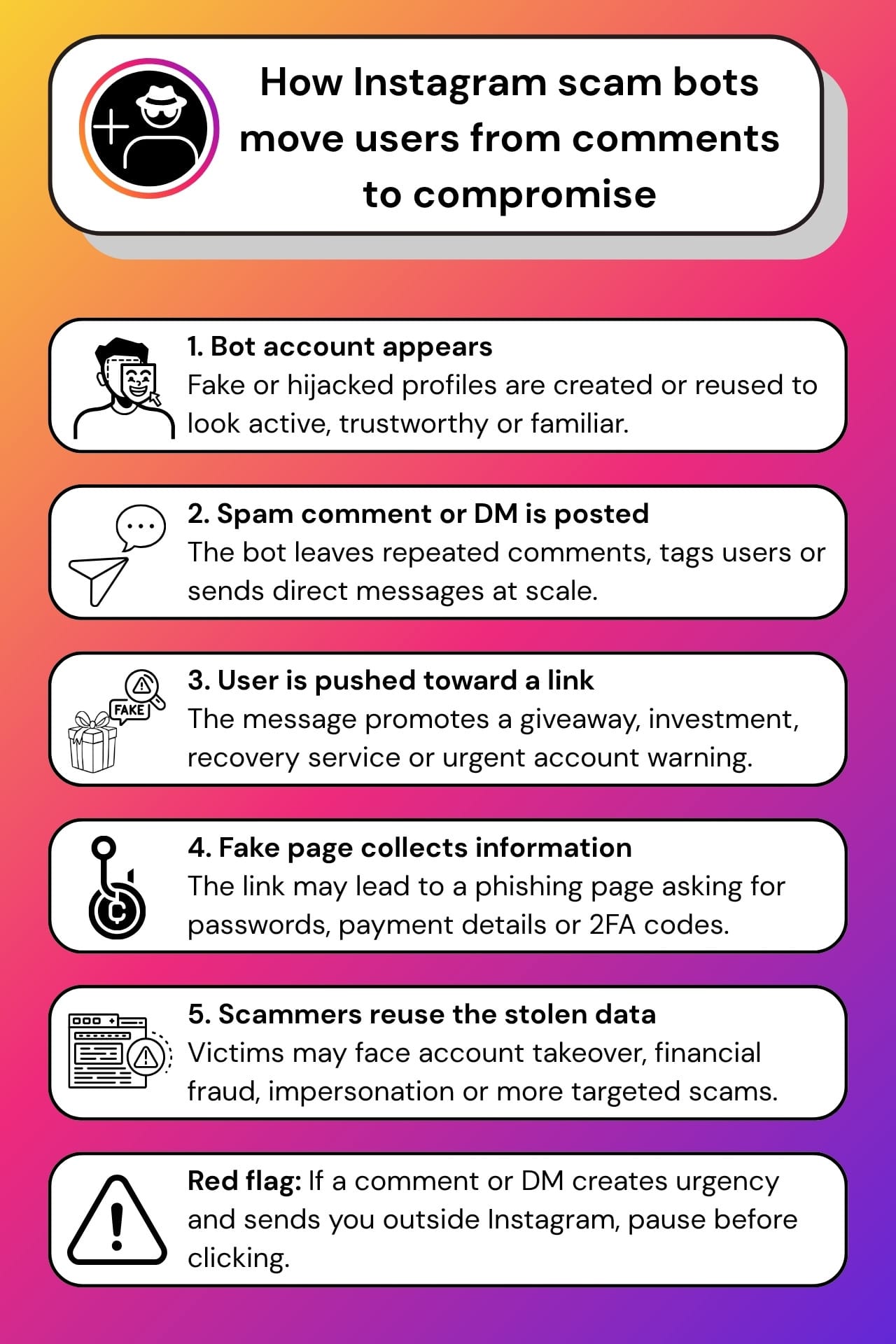
Bot networks rarely rely on a single tactic. They usually work like a funnel. First, they create visibility. Then they build false credibility. Finally, they push the victim toward a link, private chat or payment request.
A typical Instagram scam bot network may:
- Post repeated comments under viral content
- Follow users who interact with certain hashtags or topics
- Send DMs about prizes, investments, adult content, jobs or account problems
- Tag users in fake giveaways
- Amplify scam posts with likes and comments
- Use compromised real accounts to make the campaign look more believable
The most dangerous part is that some bots are longer obviously fake. Scammers can use stolen profile photos, AI-generated text, copied bios and recycled posts to create accounts that appear normal at first glance. In some cases, they also use hijacked Instagram accounts, which means the profile may have real photos, real followers and a history of normal activity before it starts spreading scams.
Common scams powered by Instagram automation
Instagram scam automation and bot networks are not a scam category by themselves. They are the engine behind many scams users already recognize.
Fake giveaway scams
Fake giveaway bots often tag users or comment under brand posts, claiming they have won a prize. Victims are pushed to fake claim pages that ask for login details, shipping fees or payment information.
Crypto and investment scams
Crypto and investment bots promote fake profits, trading mentors, private groups or “guaranteed” returns. They may use automated comments to make a scam profile look popular before moving victims to WhatsApp or Telegram.
Fake account recovery scams
Account recovery bots target users who say they were hacked or locked out. Fake helpers claim they can restore an Instagram account quickly, then they steal passwords, recovery codes or money.
Romance scams
Romance and adult-content bots use attractive fake profiles, automated likes and short DMs to start a conversation. The scam can have disastrous consequences, including wallet draining, identity theft or multiple types of fraud.
Impersonation scams
Impersonation bot networks copy legitimate accounts and use automation to reply quickly to complaints, redirect users to fake support links or pressure them into sharing sensitive information.
How to recognize bot-driven Instagram scams
A single suspicious signal is not always proof that an account is a bot. Real people can have new accounts, low activity or awkward comments, so they are not always dead giveaways for fake accounts. Noticing patterns and understanding how these bot campaigns operate is far more important in this situation.
Artificial behavior
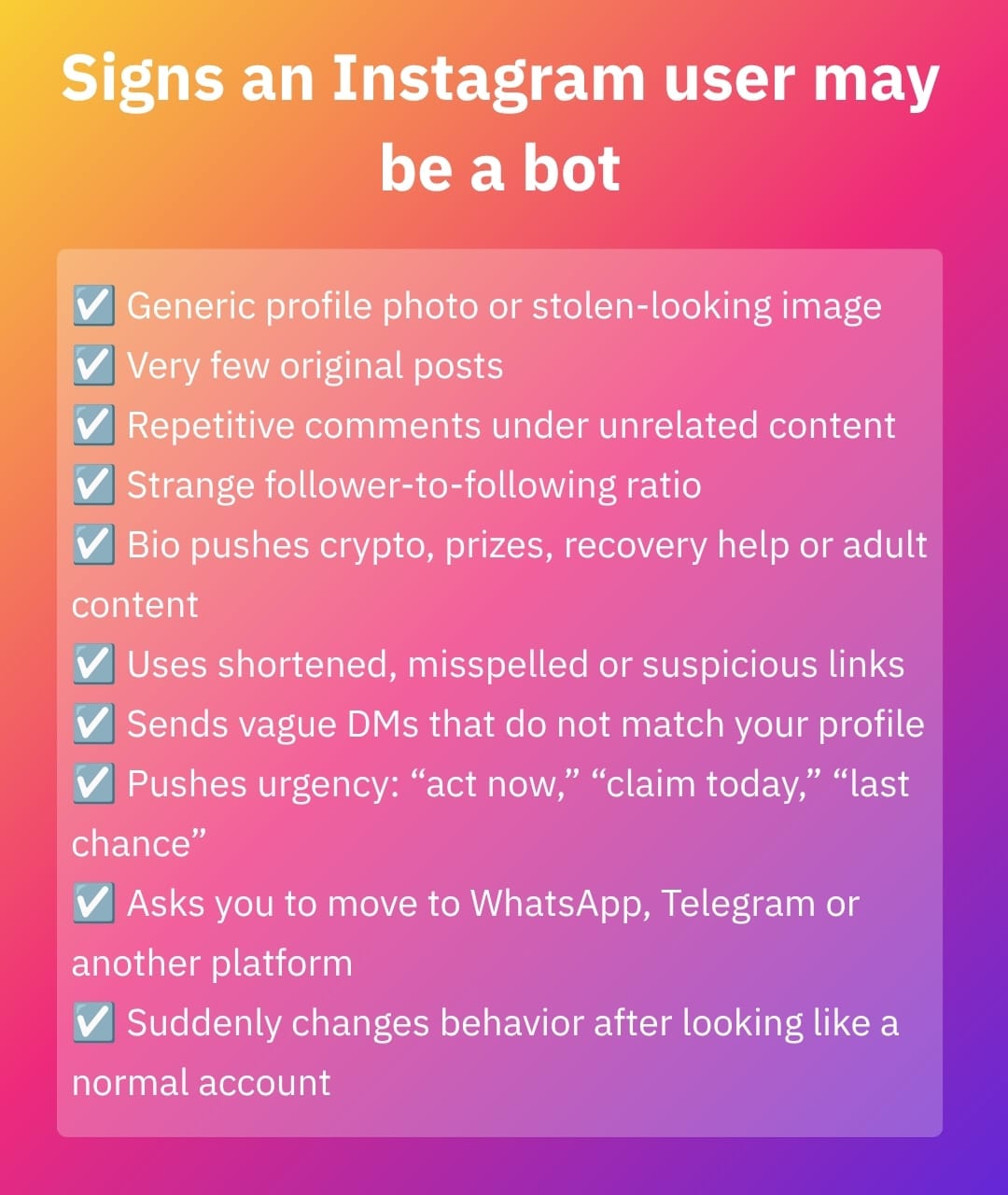
Be cautious when an Instagram user has a generic profile photo, few original posts, a strange follower-to-following ratio, repetitive comments, unrelated hashtags or replies that don’t match the conversation. Bot comments often feel slightly detached from the post: “Great content, check my profile,” “DM me for recovery,” “I made $5,000 today,” or “click before it expires.”
Watch out for suspicious links
The link behavior is even more important. A bot-driven scam often uses shortened URLs, misspelled domains, link-in-bio redirects or pages that imitate legitimate businesses. If a link asks you to perform actions that could put your account in danger, treat it as high risk.
Before interacting with a suspicious Instagram message, comment link or QR code, users can copy the content or describe the situation to Bitdefender Scamio for a second opinion. Scamio is especially useful when something feels urgent but not obviously fake, because scam automation often relies on pressure and repetition to prompt users to act before thinking.
Why bot followers can be risky for regular users and creators
For a regular user, bot followers are usually more annoying than catastrophic. However, they can still expose you to spam DMs, malicious links, impersonation attempts and engagement traps. If you interact with them, you may signal that your account is active and responsive, which can attract even more scam attempts.
For creators, the risk is bigger. Bot followers and fake engagement can distort analytics, damage brand trust and make the account look artificially inflated. More importantly, creators are frequently targeted by threat actors. Once a creator’s account is hijacked, attackers can use that trusted audience to perpetuate the scam.
This is where account security becomes part of scam prevention. Bitdefender Security for Creators can help protect Instagram, Facebook and YouTube accounts by monitoring for account takeover attempts and supporting recovery if an account is compromised.
What to do when you see Instagram scam bots
Don’t reply to suspicious bot comments, even to mock or challenge them. Engagement can increase visibility and bring more spam. Don’t click links promoted in comments or DMs, especially when they involve urgency or prizes, especially if they sound too good to be true.
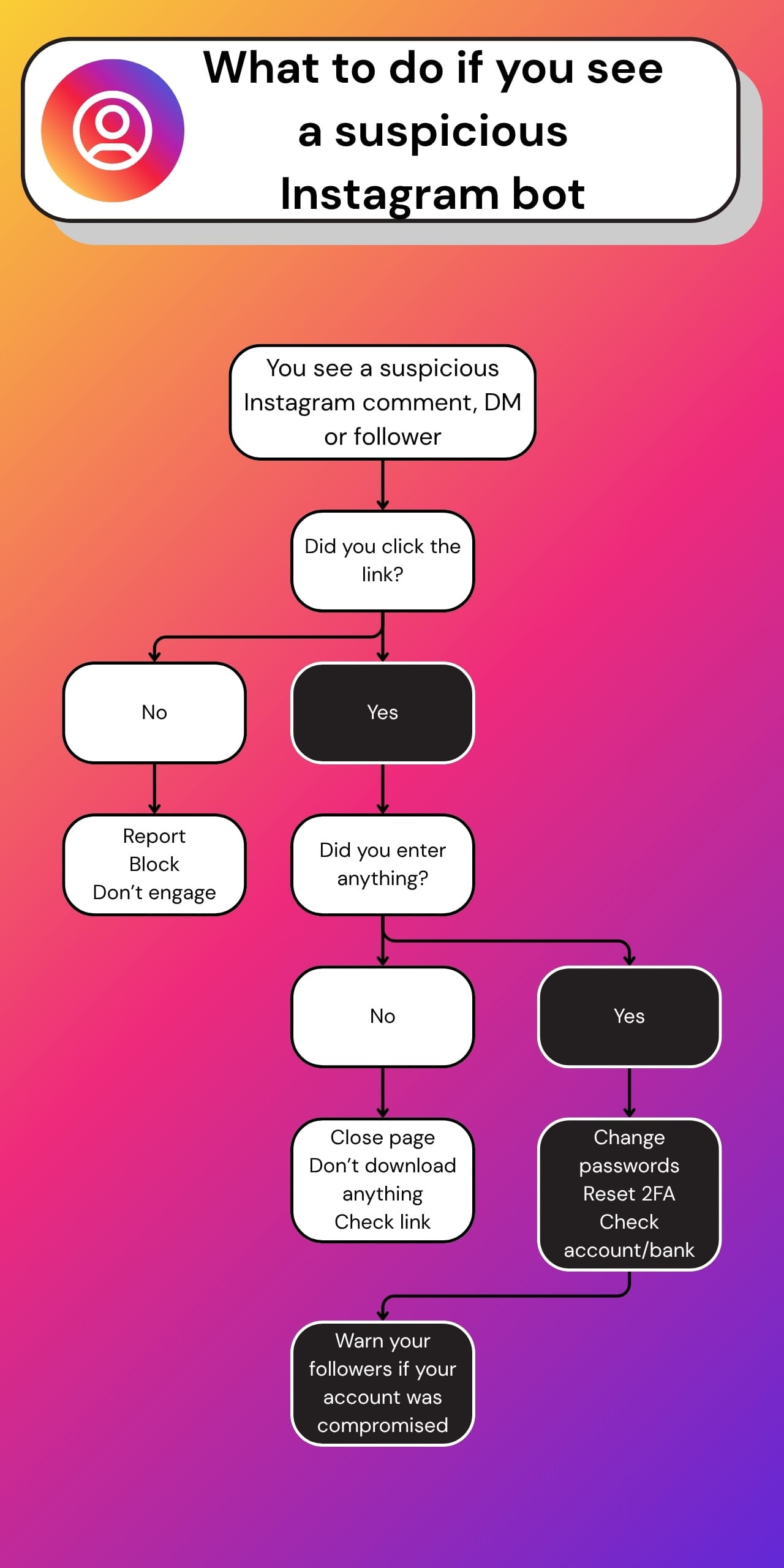
Instead, report the comment or account through Instagram, block the profile and warn friends privately if you see them interacting with the scam. If you already clicked a suspicious link but did not enter information, close the page and avoid further interaction. If you entered your password, payment details or two-factor authentication code, act quickly: change your password, enable or reset two-factor authentication, remove suspicious third-party apps, check login activity and contact your bank if payment information was exposed.
Because bot networks sometimes use leaked personal data to make scams more convincing, Bitdefender Digital Identity Protection can also help users monitor their digital footprint, spot exposed information and reduce the risk of impersonation or identity-based targeting.
How Instagram users can stay ahead of automated scams
The best defense is to treat Instagram links in comments and unsolicited DMs as untrusted by default. Go directly to a brand’s official website instead of following a comment link. Search for the company manually. Check whether the account is verified, but don’t rely on verification alone. Look for consistency across the profile, post history, comments, domain names and message tone.
Keep your Instagram account private if you don’t need public visibility. Limit who can tag or mention you. Review message requests carefully. Use a strong, unique password and two-factor authentication. Use a trusted password manager like Bitdefender SecurePass to avoid password fatigue. Revoke access for third-party apps you no longer use, especially old growth tools, giveaway apps or analytics services.
For creators and public-facing users, moderation settings also matter. Filter common scam phrases, restrict suspicious accounts and monitor comments after publishing high-visibility posts. Scammers often move quickly when a post starts performing well.
Conclusion
Instagram scam automation and bot networks make online fraud look more active and more convincing. A fake comment may be part of a coordinated system designed to push malicious links, steal logins, hijack accounts or manipulate trust.
Consumers don’t need to understand every technical detail behind bot networks. The practical rule is simple: be skeptical of unsolicited links, watch for repeated or mismatched behavior, secure your account before there is a problem and use trusted tools when you need a second opinion.
FAQ
How to tell if an Instagram user is a bot?
Look for patterns rather than a single clue. Bot accounts often have generic profile photos, little original content, repetitive comments, strange follower patterns, recently created profiles, unrelated hashtags or messages that push you toward a link, investment, giveaway or “support” service. Some bots use stolen or hijacked real accounts, so also check whether the account’s recent activity suddenly changed.
Is Instagram automation legal?
Some automation, such as approved scheduling or customer support tools, can be legitimate when it follows platform rules and does not deceive users. Automation used for spam, fake engagement, scraping, impersonation, phishing or buying fake followers can violate platform policies and may also create legal or regulatory problems, especially when used to misrepresent influence or deceive consumers.
Are bots on Instagram real people?
Usually, no. A bot is typically an automated or semi-automated account controlled by software. However, some scam networks use a mix of fake accounts, compromised real accounts and human operators. That means a suspicious profile may look human because it once belonged to a real person or because a scammer occasionally controls it manually.
Is it bad if bots follow you on Instagram?
A few bot followers are usually not an emergency, but they are not harmless either. Bots can send spam, promote malicious links, distort your engagement metrics or make your audience look less authentic. For creators and businesses, large numbers of bot followers can hurt credibility and make the account a bigger target for scams. Remove, block or report suspicious followers when needed.
tags
Author

Vlad's love for technology and writing created rich soil for his interest in cybersecurity to sprout into a full-on passion. Before becoming a Security Analyst, he covered tech and security topics.
View all postsYou might also like
Bookmarks
