Deepfakes explained: how to spot them and avoid scams

September 01, 2026
Deepfakes can clone a loved one’s voice, make a familiar face say something surprising, or turn a public figure into a fraudulent spokesperson. The danger is not synthetic media on its own, it’s how it can be used in impersonation, fraud and manipulation. Knowing how to spot a deepfake increasingly depends on verification habits, not simply on what looks or sounds real.
Key Takeaways
- Deepfakes are AI-generated or AI-manipulated video, audio or images that can imitate real people, voices or events
- Human perception alone is unreliable, especially when familiarity, authority, urgency or emotion makes a message feel credible
- Context and independent verification matter more than any single visual or audio clue
- If suspicious content asks you to pay, reveal information or act urgently, stop and verify first
What is a deepfake?
A deepfake is media created with AI to make a person, voice or event appear authentic when it is not. It can involve altered or generated video, cloned speech, manipulated images, or several formats combined.
Not all synthetic media is malicious. Genuine satire, entertainment and creative work may use similar techniques without deceptive intent. The security problem begins when realistic media or impersonation is used to mislead someone.
Why deepfakes are difficult to detect
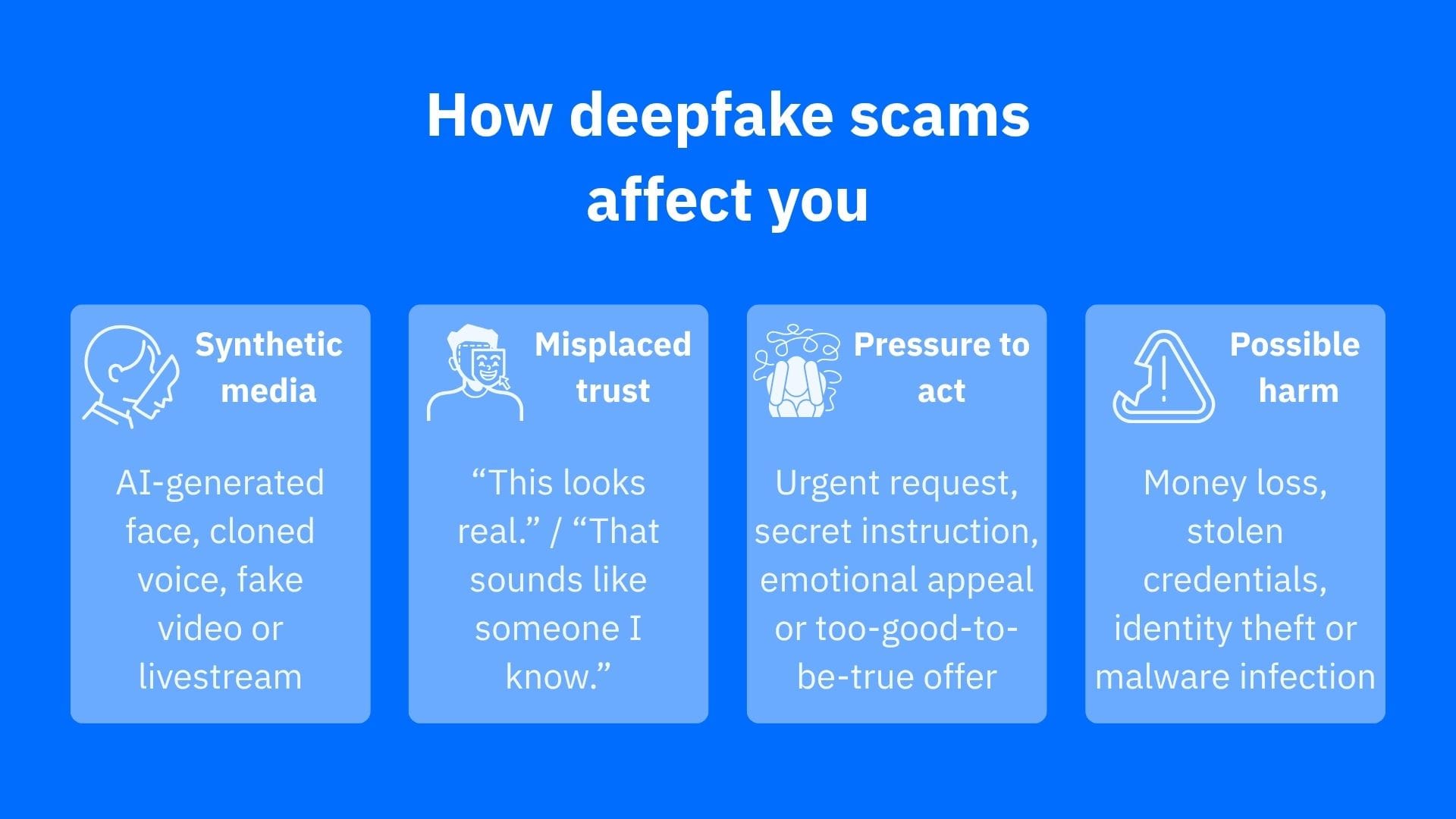
Familiar faces and voices encourage trust, while authority, fear and urgency can bypass skepticism. A 2026 peer-reviewed study found that people’s ability to distinguish real from AI-generated faces and voices did not reliably generalize between the two formats; confidence also related differently to accuracy across face and voice judgments.
Modern deepfakes may lack obvious defects. Judge the source—and what it wants you to do—rather than the visuals alone.
How to spot a deepfake: important warning signs
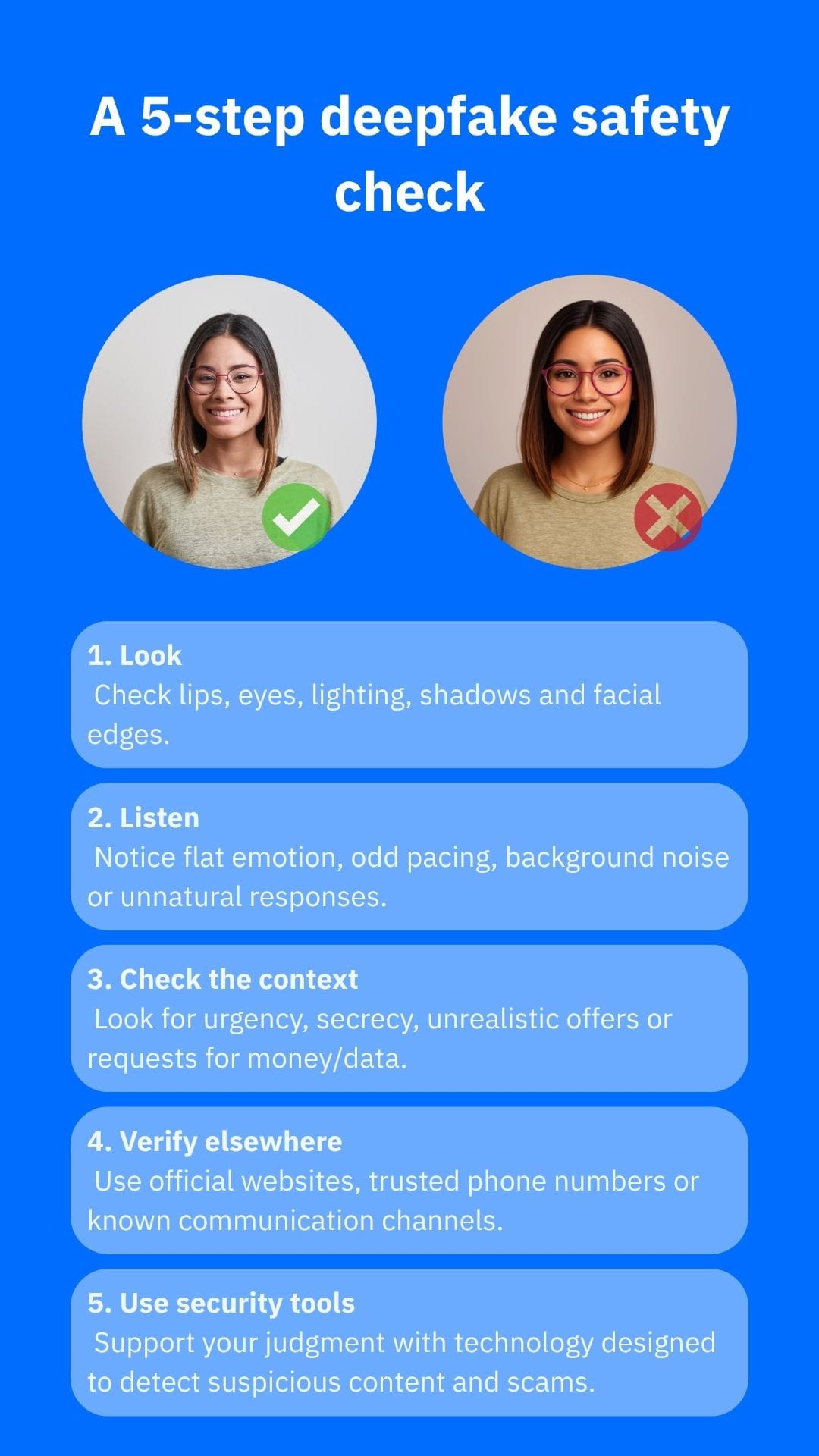
Possible deepfake warning signs include unnatural speech timing, mismatched emotion or body language, flat or clipped audio, lip-sync problems, inconsistent lighting, or unstable edges around hair, glasses and jewelry. No single sign alone is proof of a deepfake.
Context is often stronger evidence. Be cautious when a new number or unverified account urgently requests money, credentials, cryptocurrency, gift cards or sensitive data, or when a supposed relative or executive bypasses normal procedures. FTC and FBI guidance recommends verification through known contact channels.
Where deepfake scams appear
Deepfake scams can reinforce family-emergency and voice-cloning scams, executive impersonation, celebrity investment and cryptocurrency fraud, romance and pig-butchering schemes, fake endorsements, election manipulation, harassment and reputational abuse. Synthetic media can also lend credibility to false missing-person or missing-pet claims.
The common thread is impersonation: fabricated media adds a sense of trustworthiness to a request, claim or identity.
How to verify suspicious video or audio
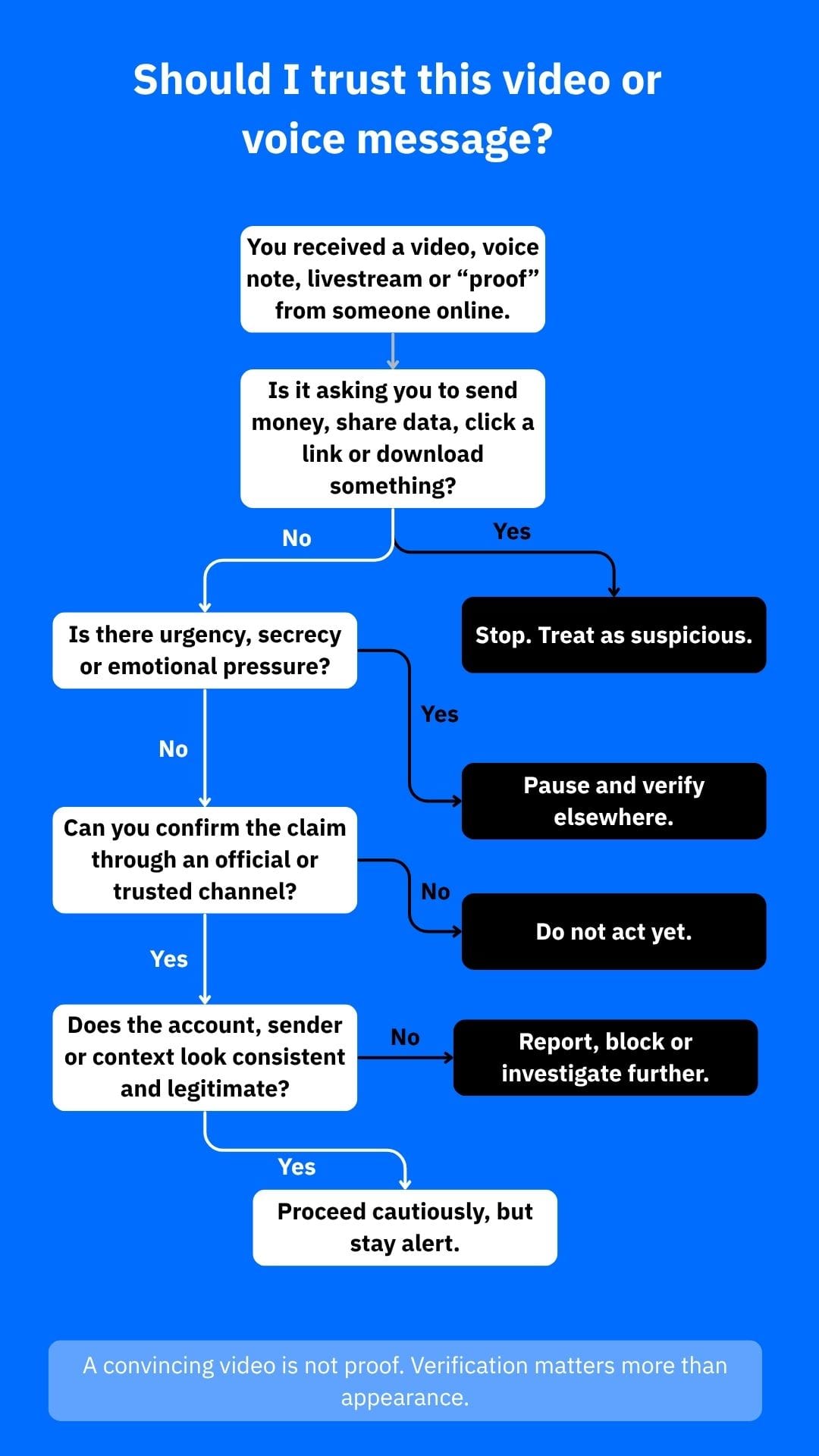
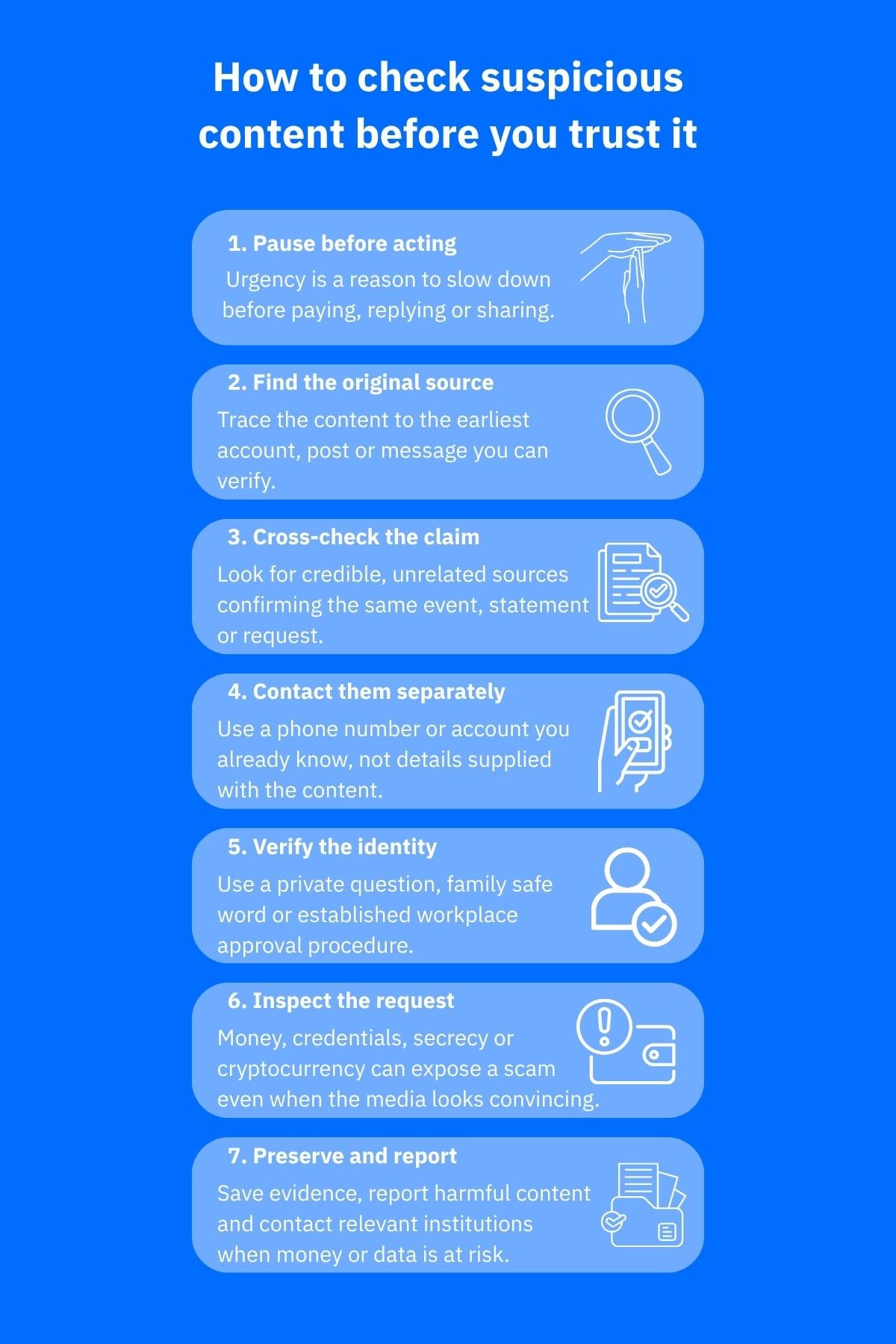
Use the same process whenever suspicious media creates pressure to act:
- Pause before reacting, paying, replying or sharing.
- Identify the original source. Find the earliest account, post or message you can verify.
- Search for independent confirmation from credible, unrelated sources.
- Contact the supposed speaker separately through a number, email address or account you already trust.
- Use a personal or procedural check. Ask a private question, use a family safe word, or follow workplace approval rules.
- Examine the requested action. Secrecy, rushed transfers, login links or cryptocurrency payments may expose the scam even when the media looks polished.
- Use reputable verification tools where appropriate. Bitdefender RealCheck can analyze a public video link or uploaded video and provide a structured report on the likelihood of manipulation, deceptive intent, audio and visual signals, and transcript-level indicators. Treat the result as supporting evidence instead of proof.
- Report harmful or fraudulent content through the platform and relevant financial, workplace or law-enforcement channels.
What to do after encountering a deepfake
Do not forward suspicious content while checking it. Preserve the message, URL, account name, timestamps, screenshots and payment instructions. If you’ve already shared it, correct the record and warn affected people.
If you sent money or disclosed credentials, contact the financial institution, secure exposed accounts and change compromised passwords. If your face or voice was used, report the content, preserve evidence, alert affected contacts and notify appropriate authorities when necessary. Workplace incidents should also follow established security or fraud-reporting procedures.
Why deepfakes are a cybersecurity problem
Deepfakes are social-engineering tools. A convincing face or cloned voice can support impersonation fraud, credential theft, account compromise, unauthorized payments, manipulation and reputational damage. The FBI has warned that AI-generated voice messages are used in impersonation campaigns seeking data or funds.
They also create a trust problem: false media may be accepted as real while authentic evidence is dismissed as fake. Reliable identity checks and trusted communication channels are more important than merely spotting glitches.
Check before you trust, pay or share
If a video is surprising, urgent or financially consequential, verify it before acting. Bitdefender RealCheck can provide additional context by assessing manipulation and deception signals, but no analysis tool should be your only source of truth. Analyze suspicious content, then confirm the claim through a separate trusted channel before you pay, disclose information or pass it on.
Build verification habits, not perfect eyesight
You do not need forensic training to become more resilient to deepfakes. Build a repeatable habit: pause, identify the source, verify the person through a trusted channel, examine the requested action and follow established family or workplace procedures.
That approach still works when AI-generated video or cloned audio looks convincing. Deepfake resilience is a cybersecurity practice built around identity, context and independent confirmation. When seeing and hearing are no longer enough, verification becomes the new front line against AI-driven threats.
Frequently asked questions (FAQs)
What does deepfake mean?
A deepfake is AI-generated or AI-manipulated video, audio or imagery that convincingly imitates a real person, object, place or event. The technology can create or alter a person’s appearance or voice. Deepfakes can be harmless when clearly disclosed, but they become a security concern when used for deception, impersonation, fraud or abuse.
Are deepfakes illegal?
Deepfakes are not automatically illegal everywhere. Laws differ by country and often depend on how content is created, disclosed and used, including fraud, impersonation, election interference, harassment, defamation, privacy violations or non-consensual intimate imagery. In the EU, for example, AI Act transparency rules now require disclosure for certain deepfake content, with specific exceptions.
How can you spot deepfakes?
To spot deepfakes, prioritize source verification and context over visual glitches. Check who originally posted the content, seek independent confirmation, contact the supposed speaker through a known channel, and scrutinize requests for money, credentials, secrecy or urgent action. Visual or audio irregularities can help, but no single clue proves a deepfake.
tags
Author

Vlad's love for technology and writing created rich soil for his interest in cybersecurity to sprout into a full-on passion. Before becoming a Security Analyst, he covered tech and security topics.
View all postsYou might also like
Bookmarks
