The money trail behind investment scams

July 20, 2026

US authorities have charged two New York residents on allegations of helping launder at least $43 million stolen from victims of online investment scams in a sophisticated money laundering network tied to China.
The Department of Justice alleges the pair managed a network of shell companies, bank accounts, and money mules that helped move proceeds from so-called “pig butchering” scams out of the United States between 2020 and 2022.
Key takeaways
- US prosecutors charged two alleged members of a Chinese money laundering network
- Authorities say the network laundered at least $43 million stolen through investment scams
- Investigators allege the operation relied on 45 shell companies and roughly 140 bank accounts
- Victims were targeted through fake online investment opportunities, commonly known as pig butchering scams
- The case supports findings from the Bitdefender 2026 Global Scam Intelligence Report on the growing global infrastructure behind financial fraud
A laundering network
Federal prosecutors allege that Zhuoying Chen, 27, of Brooklyn, and Haojie Zhang, 38, of Queens, oversaw a criminal operation that moved millions of dollars obtained from cyber-enabled investment fraud.
According to the indictment, the defendants recruited and managed more than a dozen individuals based in Queens and Brooklyn who opened approximately 140 bank accounts in the names of around 45 shell companies.
Victims' money was allegedly deposited into those accounts before being consolidated and transferred to co-conspirators in China, helping disguise the origin of the stolen funds. Authorities say the scheme laundered at least $43 million.
If convicted, both defendants face up to 20 years in prison on the money laundering conspiracy charge.
How the scams worked
The laundering operation allegedly supported a widespread form of online investment fraud commonly referred to as pig butchering.
These scams typically begin with an unsolicited message on social media, dating platforms, text messages, or encrypted messaging apps. Fraudsters spend days or weeks building trust before introducing what seems to be a highly profitable investment opportunity, often involving cryptocurrency.
Victims are directed to professional-looking trading platforms that display fabricated profits. Encouraged by what appear to be real profits, many invest increasingly large sums before discovering they can no longer withdraw their money.
By that stage, both the fake investment platform and the scammers have disappeared.
Law enforcement agencies worldwide identify pig butchering as one of the fastest-growing forms of online financial fraud.
Organized crime behind online fraud
While the scammers communicating with victims often receive the most attention, investigators say large-scale fraud operations depend on extensive financial infrastructure operating behind the scenes.
According to prosecutors, Chen and Zhang allegedly coordinated the movement of illicit proceeds through dozens of shell companies before transferring funds overseas, allowing proceeds of fraud to be integrated into the broader financial system while making recovery significantly more difficult for victims.
The case illustrates, yet again, how modern investment scams increasingly rely on international criminal networks that specialize in money laundering rather than fraud alone.
Large-scale investment fraud has become one of the most profitable forms of cyber-enabled crime.
Unlike traditional phishing attacks, modern investment scams often rely on professional sales techniques, fake trading platforms, convincing websites, spoofed identities, and long-running conversations that build trust over weeks or months.
Many operations now function like legitimate businesses, complete with scripted sales calls, customer relationship management systems, multilingual staff, and performance targets for employees.
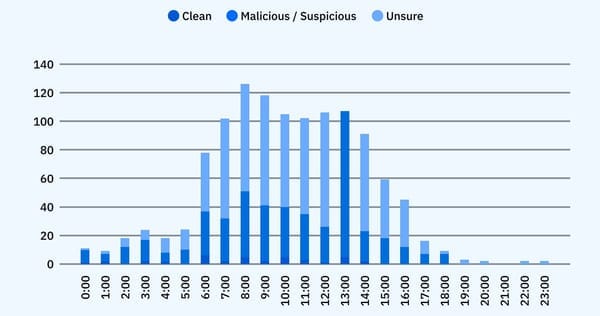
According to the Bitdefender 2026 Global Scam Intelligence Report, many scam operations follow predictable work schedules, reinforcing what investigators increasingly observe: modern cybercrime is a business.
How to protect yourself from investment scams
Most investment scams follow similar patterns. To reduce your risk:
- Be skeptical of unsolicited investment advice received through social media, messaging apps, or dating platforms
- Treat promises of guaranteed returns or unusually high profits as a major warning sign
- Verify that investment platforms and brokers are properly licensed before sending money
- Never rely solely on screenshots showing investment profits
- Be cautious if you're pressured to act quickly or invest larger amounts after initial “successes”
- Discuss significant investment opportunities with a trusted financial adviser or family member before transferring funds
- Protect your devices with a dedicated security solution capable of detecting malicious websites, phishing attempts, and other online threats
The best defense is usually a healthy dose of skepticism: whenever someone demands money, personal information, or urgent action, verify first. However, it always helps to use a security tool.
When in doubt about an unsolicited phone call, text or social media interaction, consider using a scam detector like Scamio or Scam Radar, our new scam-fighting solutions integrated across our consumer security suite.
We’ve also recently launched Bitdefender RealCheck — a standalone app for iOS and Android that helps you evaluate whether a video has been manipulated and may be intended to deceive.
You may also want to read:
Is your social media feed the new scam inbox?
700-person scam empire brought down by Dutch police
US indicts three Russians accused of powering global cybercrime
tags
Author

Filip has 17 years of experience in technology journalism. In recent years, he has focused on cybersecurity in his role as a Security Analyst at Bitdefender.
View all postsYou might also like
Bookmarks
