Holiday Email Scams Surge: Over Half of Christmas-Themed Spam Emails in 2025 Are Scams, Bitdefender Antispam Labs Warns

December 18, 2025
If your inbox has felt unusually festive or suspicious this December, you're not imagining things. Bitdefender Antispam Labs recorded a serious wave of Christmas-themed spam this season, with more than half of all holiday-related spam emails turning out to be scams.
From November 1 to December 15, 51% of Christmas-themed spam messages received by consumers worldwide were malicious, according to Bitdefender Antispam Lab researcher Viorel Zavoiu.
A Season of Fake Rewards, Free Gifts, and Festive ‘Special Offers’
This year’s campaigns follow a familiar pattern: scammers impersonate well-known brands, insert glossy product images, and promise free gifts if recipients complete a quick survey.
Bitdefender telemetry flagged subject lines such as:
- Get Set for Christmas – Free Yeti Rambler Tumbler
- Claim Your Free Heavy-Duty Christmas Tree Stand
- Claim Your Free Marriott Luxury Pillows 2-Piece Set
- Hello, Your United Healthcare Oral-B Series 8 Awaits
- ¡Atención Inmediata Necesaria: Abre para una Oferta Crucial!
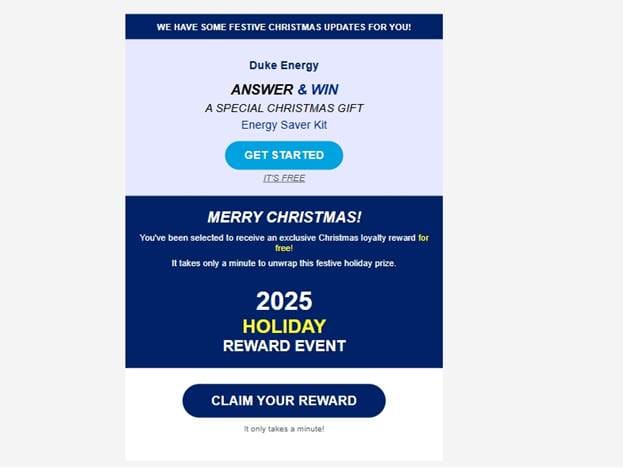
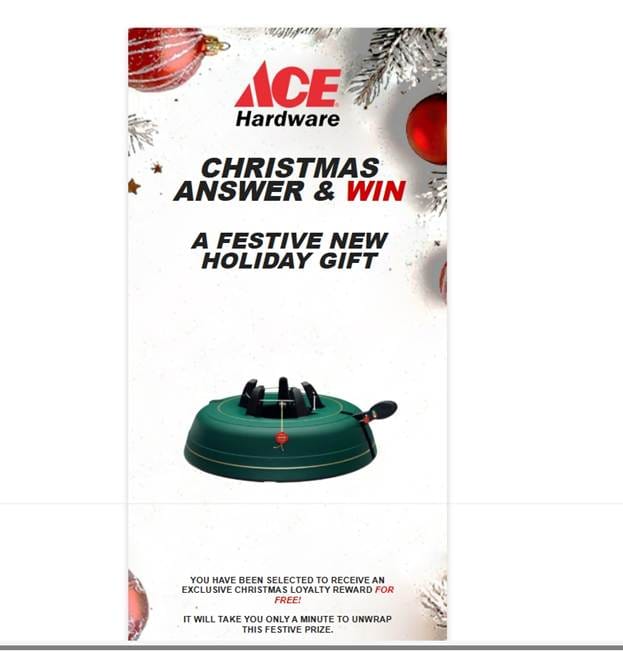
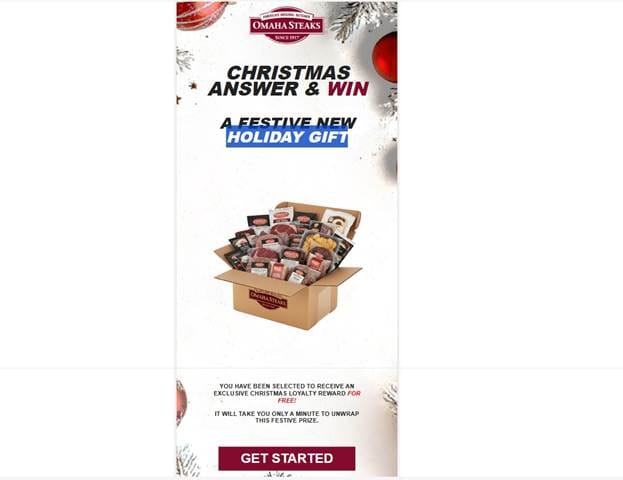
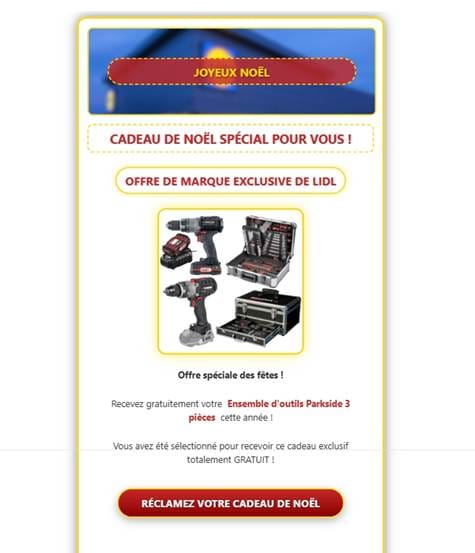
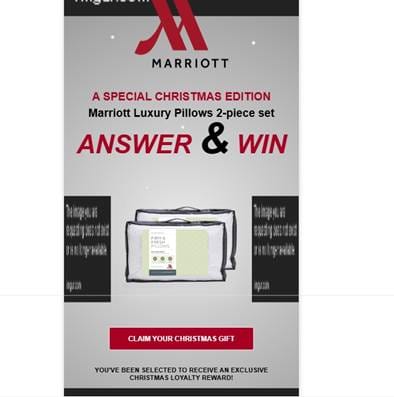
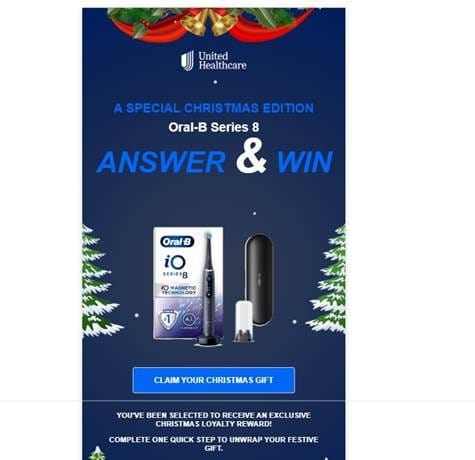
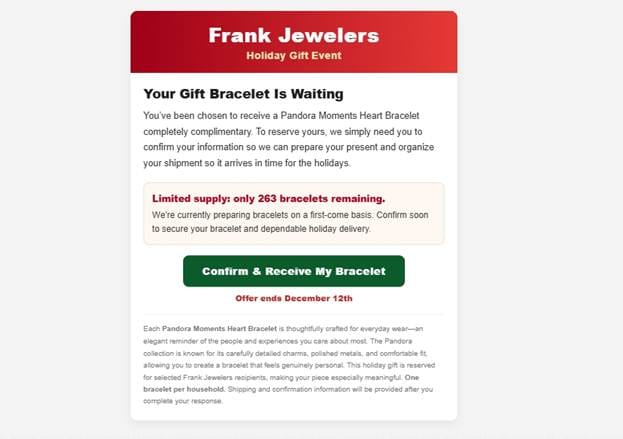
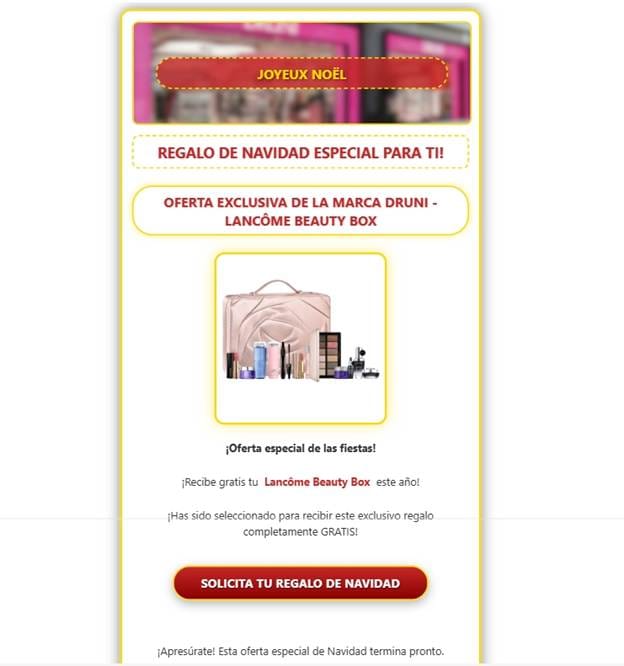
Most of these messages redirect to fraudulent landing pages designed to collect personal information, credit card data, or both.
Where the Holiday Spam Hit Hardest in 2025
Although attackers distributed their campaigns globally, a handful of countries absorbed most of the Christmas-themed spam detected this year.
Top destinations for Christmas-themed spam:
- United States – 47%
- India – 14%
- Ireland – 13%
- Germany – 11%
- United Kingdom – 6%
- Italy – 1%
- France – 1%
- Australia – 1%
- South Africa – 1%
- Romania – 1%
- The Netherlands – 1%
- Canada – 1%
While the US remains the primary target, it’s clear that scammers are expanding their reach.
Where the Spam Comes From: Top Sources of 2025 Christmas-Themed Spam and Scams
Analysis of outbound traffic reveals a diverse mix of spam-origin points.
Top sources of Christmas-themed spam include the United States – 35%, The Netherlands – 12%, the UK and Italy - 6% each, France and China – 5% each, and Germany – 4%. This spread indicates an increasingly international spam ecosystem fueled by botnets, hijacked servers, and abused email platforms.
Giveaway & Survey Scams Dominate the Holiday Season
A defining trend of the 2025 Christmas spam wave is the overwhelming volume of “giveaway” and “survey reward” scams. These messages accounted for a significant share of malicious holiday traffic and consistently ranked among the most effective lures.
The concept is simple and very effective: pair a trusted brand with a high-value free item, add a festive design, and tell recipients they only need to complete a short survey or confirm their details to receive the gift.
Some of the most prominent campaigns impersonated well-known brands:
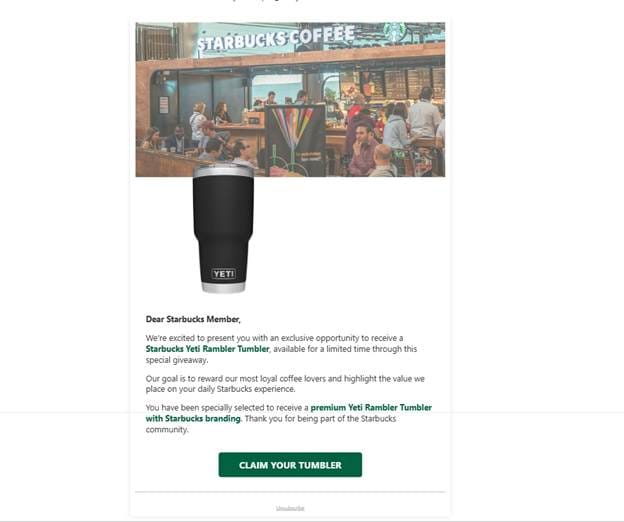
Starbucks: Free Yeti Rambler Tumbler
Scammers replicated Starbucks’ holiday aesthetic with impressive accuracy, using branded colors, cup designs, and seasonal motifs. Recipients were told they had been “selected” for a limited-edition tumbler giveaway and were pushed toward a survey page.
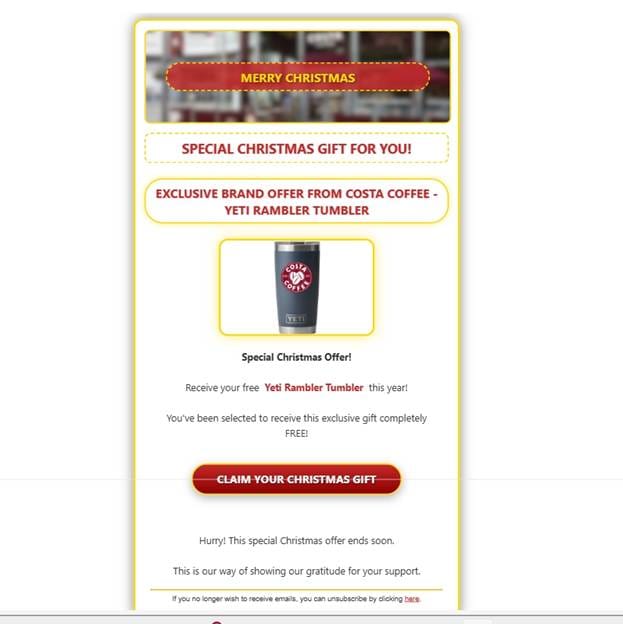
Costa Coffee: VIP Christmas Rewards
These emails leaned heavily on holiday imagery, offering exclusive Costa Coffee gifts in exchange for answering a few questions. The fraudulent pages collected personal and financial information under the pretext of verifying the reward.
Marriott, Ace Hardware, Frank Jewelers, Oral-B
Other campaigns promised:
- Complimentary Marriott luxury pillows
- Free Ace Hardware Christmas tree stands
- A holiday Frank Jewelers bracelet
- An Oral-B Series 8 toothbrush from “United Healthcare”
Each of these scams directed users to convincing, brand-like pages that requested sensitive data under the guise of confirming eligibility or covering shipping costs.
Other High-Impact Holiday Campaigns: Gift Cards, Crypto & Dating
Giveaway and survey scams weren’t the only patterns observed this year. Bitdefender Antispam Labs also tracked several recurring scam themes that blend holiday motifs with other popular fraud models. These aren’t necessarily new to 2025, but they continue to appear prominently in the data.
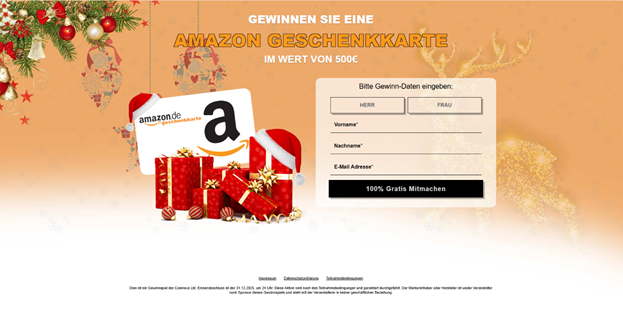
German Amazon.de €500 Gift Card Scam
A polished holiday-themed landing page invited recipients to enter their personal data for a chance to win a €500 Amazon.de Christmas gift card. The design closely mirrored legitimate Amazon promotions, including branding, fonts, and layout. In reality, the page served as a data harvesting form, collecting names, email addresses, and other details for potential misuse.
Solana Airdrop Crypto Scam
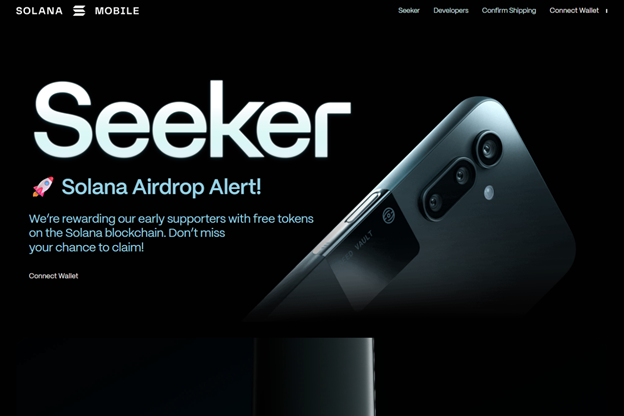
Attackers also capitalized on the overlap between crypto hype and the holiday season. A sleek phishing site mimicking Solana Mobile promised free tokens for “early supporters” or “Christmas drop participants.” Users were prompted to connect their wallets, effectively granting attackers unauthorized access.
Holiday Dating Scams (Germany)
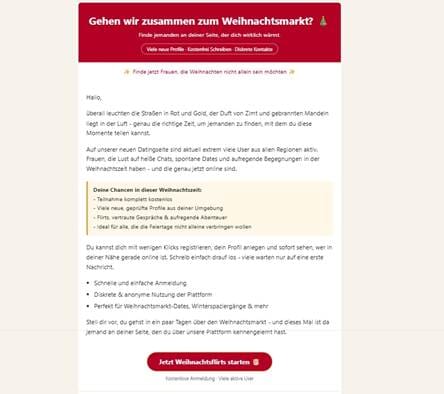
Some German-language campaigns used a more emotional hook, encouraging recipients to “find someone to visit the Christmas markets with” or to avoid spending the holidays alone. The emails linked to dating or chat platforms offering free registration and holiday promotions. Once users sign up, they are often steered toward subscription traps or pressured to pay for “premium” features with little to no real value.
Together, these examples show how attackers are blending Christmas themes with long-running types of fraud, including gift card scams, crypto phishing, and romance scams. The seasonal packaging makes these familiar scams feel timely, relevant, and easier to disguise among legitimate holiday offers.
How 2025 Compares to 2024
Compared to the 2024 holiday scam landscape, this year’s trends show a clear increase in both reach and sophistication. The shift from roughly 49% to 51% of malicious holiday spam emails is modest, but it marks the first time scammers have produced the majority of all Christmas-themed spam messages.
Another noticeable change is the wider regional spread of holiday scams. While the 2024 campaigns heavily focused on English-speaking countries, 2025 saw larger waves hitting India and Germany, with consistent activity across Australia, South Africa, and Romania. This suggests attackers are tailoring their campaigns to a more diverse global audience.
The quality of impersonation also improved, with scammers creating more polished designs modeled after hotels, coffee chains, healthcare companies, beauty brands, jewelers, and home improvement retailers.
Overall, the changes from 2024 to 2025 are subtle in volume but significant in execution. Holiday scams are becoming more polished, more diverse, and more geographically adaptable.
How to Stay Safe from Holiday-Themed Scams
Holiday scams are designed to catch you at your busiest, so a few practical habits can help protect you during this high-risk scam season:
- Ensure your online accounts are secure. Use strong, unique passwords for every account and enable two-factor authentication. A password manager can simplify this and reduce your exposure if one of your passwords is compromised.
- Protect your phone. Most people read email on their phones, making smartphones the frontline of holiday scam defense. Install reputable mobile security, keep apps and operating systems updated, and enable anti-phishing protections.
- Think before you click. If a holiday offer seems unusually generous — or the email insists you were “selected” — pause and assess. Scammers rely on quick, emotional reactions.
- Double-check unsolicited emails. Avoid clicking links in emails, especially for rewards or giveaways. Instead, visit the brand’s official website or app independently and look for the promotion there. Legitimate companies rarely offer high-value gifts without a clear, traceable context.
- Use Bitdefender Scamio for instant scam checks. If you’re unsure whether an email, screenshot, link, or message is legitimate, you can quickly verify it through Bitdefender Scamio. Scamio analyzes text, URLs, and images to help determine whether something is suspicious.
- Scan links before opening them. Bitdefender Link Checker lets you verify URLs on the spot, helping you avoid phishing pages, malware downloads, or fake survey portals posing as brand giveaways.
- Know the scam lingo and watch for a faux sense of urgency. Phrases like “last chance,” “limited supply,” or “offer expires today” are classic pressure tactics used to override careful thinking and push you to act without verification.
- Use comprehensive security solutions. Bitdefender’s antispam and antifraud detection technologies help block dangerous emails, adding an essential layer of protection during the holiday spam surge.
tags
Author

Alina is a history buff passionate about cybersecurity and anything sci-fi, advocating Bitdefender technologies and solutions. She spends most of her time between her two feline friends and traveling.
View all postsYou might also like
Bookmarks
