How to Protect Your Smart Home Office Without Breaking the Bank

January 21, 2026
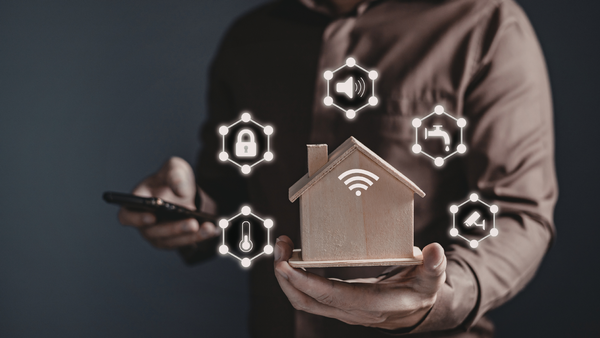
Running a small business today rarely means working in a neatly separated, fully secured office. For many people, work happens at home, in shared spaces, or in small offices where business life blends into everyday life almost without being noticed.
You answer emails from your phone, send invoices from your laptop, and print documents on a Wi-Fi printer, all while the rest of life carries on around you. A smart doorbell records a delivery, and a smart feeder gives your dog a treat in the middle of a call. A smart TV, speaker, air purifier, or heater runs quietly in the background as part of your daily routine.
Even when you try to keep personal and business devices separate, that line is hard to maintain when your office is at home or when remote work is the norm rather than the exception. Because these devices feel familiar and harmless, they are easy to overlook when thinking about your business security.
Could your smart devices leak your business data?
Smart devices use sensors, software, and automation to handle small tasks in the background, the kind you don’t want to think about during a busy workday. Unlike older devices that simply switch on and off, many of today’s “smart” tools learn from patterns. Over time, they adapt to how you move, work, and live.
That intelligence is part of their appeal, but it also explains why they deserve a second look from a security point of view. In most small businesses, these devices are not isolated. Printers, TVs, speakers, lighting, thermostats, and wearables often connect to the same Wi-Fi network as the devices that actually carry the business: phones, laptops, and tablets.
Smart devices also run software you never see. Their companion apps live on your phone, require online accounts, and sometimes ask for permissions that feel unrelated to their basic purpose. Many communicate quietly with external servers, sending and receiving data without drawing attention.
Related: Small Business Security Starter Kit: The Tools You Need and Why
How smart devices can become a doorway to business data and why trust isn’t enough
Smart devices don’t need to be hacked in a dramatic way to become a problem. In many cases, the risk comes from devices that are outdated, poorly secured, or simply forgotten after the initial setup.
From an attacker’s perspective, these devices are rarely the end goal. No one is interested in your air purifier’s usage statistics; what matters is what sits nearby. Smart devices can become an easy side door because they live on the same network as systems that hold real value: business email, cloud storage, invoices, contracts, client conversations, and login credentials.
Many business owners rely on well-known brands and assume that reputation equals safety. In many cases, it does reduce risk. But all software ages, security updates eventually stop, while default settings remain unchanged. Apps collect more data than most people realize. And once devices do their job, they are rarely reviewed again.
Related: How Hackers Use AI to Target Small Businesses. What Helps When You Have No IT Team
How to protect your smart home office
The goal is to reduce obvious exposure with a few habits that actually make a difference.
- Start with your Wi-Fi network. It’s the common ground for all connected devices. If someone gains access there, they don’t need to break into each gadget individually. Make sure your router uses modern encryption (WPA3, if available), change default passwords, and use a separate guest network if your router supports it. A VPN can also help protect your internet traffic, especially when working remotely or traveling, but it should complement, not replace, basic Wi-Fi security.
- Keeping devices and apps updated matters more than most people think. Updates are easy to ignore when everything seems to work fine, but they often fix known security issues. Turning on automatic updates where possible and checking devices occasionally is one of the simplest ways to reduce risk.
- Strong, unique passwords still matter. Many smart devices and apps rely on passwords as their main line of defense. Reusing the same password across accounts makes it much easier for one small issue to turn into a bigger problem. A password manager can help generate and store strong passwords without adding mental effort.
- Multi-factor authentication adds a second step, such as a code or app confirmation, and can stop many common account takeover attempts.
- Voice-controlled devices also deserve a bit of attention. They are designed to listen for commands, which means it’s worth reviewing their privacy settings, limiting what they can do by voice, and avoiding their use for anything involving sensitive business or financial information.
Related: What to Check Security-Wise When You Buy a Business
Secure your business without adding more to your plate
When people start thinking seriously about security, it can feel like everything suddenly becomes a risk and every device needs to be locked down. You don’t need to unplug every smart device or turn your home office into a technical fortress.
What really matters is protecting the setup that actually carries your business: your phone, your laptop, your email accounts, your online identity, and the network that connects them are where your work lives.
This is why Bitdefender Ultimate Small Business Security fits the reality of very small businesses so well. It focuses on the core of your business and your digital assets: the devices you work from, the accounts tied to your name, potential breaches, the scams and impersonation attempts that target you directly.
That kind of coverage becomes even more important when business and personal technology share the same environment.
Try Bitdefender Ultimate Small Business Security free for 30 days.
tags
Author

Cristina Popov is a Denmark-based content creator and small business owner who has been writing for Bitdefender since 2017, making cybersecurity feel more human and less overwhelming.
View all postsYou might also like
Bookmarks
