Should children watch TV or screens while eating? A therapist explains

August 27, 2026
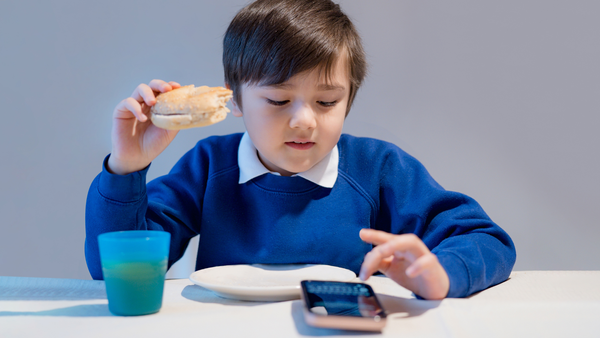
Parents often use screens during meals because they work. Children stay seated, eat even when picky, and everyone avoids conflict. It can make meals easier, especially after a long day.
But while this may solve today's dinner, could it create problems in the long run?
We asked clinical psychologist and cognitive behavioral psychotherapist Anca Ivu to explain how watching TV or using screens during meals can affect children.
Here's what parents need to know.
Key takeaways
- Regular screen use during meals can make it harder for children to recognize hunger and fullness cues.
- Eating while watching TV or other screens may interfere with healthy eating habits, family conversations, and language development.
- Children who only eat with screens aren't being difficult, the habit develops through normal learning and conditioning.
- Replacing screens gradually, staying consistent, and creating positive family mealtime routines can help children adapt to screen-free meals.
How watching screens during meals affects children
When children eat while watching cartoons or videos, they're often paying far more attention to the screen than to the food in front of them. If a parent is also feeding them while they're distracted, eating can become an automatic activity rather than something the child actively participates in.
According to clinical psychologist and cognitive behavioral psychotherapist Anca Ivu, this matters because children learn healthy eating habits by engaging with food. They notice its taste, texture, temperature, and smell. They learn to decide whether they want another bite, when they're getting full, and when they've had enough.
"A child's attention is limited and easily captured by highly stimulating things like screens. When their attention is focused on a cartoon, they're much less likely to notice what's happening inside their own body," explains Anca.
One important concept here is interoception, the brain's ability to recognize internal body signals such as hunger, fullness, thirst, tiredness, or the need to use the bathroom. Like many other skills in childhood, interoception develops over time. When a screen consistently takes over a child's attention during meals, they have fewer opportunities to notice and respond to those internal signals.
Parents often use screens because they make feeding easier. A distracted child may accept another spoonful without protest, even when they would normally refuse it. While this can feel like a short-term win, it also means the child misses valuable opportunities to explore food with curiosity.
The long-term effects of screens during meals
"Meals are about much more than nutrition," says Anca Ivu. "They're also one of the most important daily opportunities children have to connect with their family." When a television, tablet, or phone becomes the center of attention, children may miss out on important developmental opportunities.
These include:
- Learning to communicate. Family conversations help children develop vocabulary, listening skills, and confidence expressing themselves. Research has shown that televisions during family meals can reduce the amount and quality of conversation between parents and children.
- Supporting language development. Studies suggest that children who are regularly exposed to television during family meals may have lower language development scores, regardless of their total daily screen time. Experts believe it's the conversations between adults and children, not the television itself, that support language learning.
- Building social and emotional skills. Mealtimes give children daily opportunities to practice taking turns, reading facial expressions, talking about their day, and feeling emotionally connected to their family.
Anca emphasizes that another long-term concern is the habit children build around eating itself.
"If every meal includes a screen, children may begin to believe that eating always requires external entertainment. Over time, this association can make it more difficult to enjoy meals at school, restaurants, birthday parties, or other situations where a screen isn't available."
Why some children won't eat without a screen
Many parents say the same thing: "My child will only eat if I turn on cartoons."
"When eating and screen time happen together over and over again, the brain starts linking the two experiences. This is a normal learning process called conditioning.", says Anca Ivu.
Over time, the screen may shift from an occasional distraction to something the child expects before they're willing to sit down and eat.
"The child may start thinking, 'Meals come with cartoons,' because that's the pattern they've learned," says Anca. "The good news is that children can also learn new patterns."
With patience and consistency, parents can gradually replace this association by making screen-free meals the new normal. At first, children may protest because the routine has changed, but over time, the brain adapts to the new expectation just as it learned the old one.
How to help your child eat without screens
If your child has become used to eating with cartoons or videos, don't expect them to happily accept the change overnight, some resistance is completely normal. "Whenever we change an established routine, children experience discomfort. The important thing is for parents to remember that this discomfort is temporary." Anca encourages parents to keep their long-term goal in mind during difficult moments. Rather than focusing on getting through today's meal without tears, think about the habit you're helping your child build for years to come.
The therapist recommends:
- Make the change gradually. For example, if your child currently eats every meal with a screen, start by making just one meal a day screen-free. Once that feels more natural, add another.
- Keep the rest of the routine predictable. Serve meals at roughly the same times and in the same place each day. Familiar routines help children feel secure while they adjust to the change.
- Involve your child in mealtime. Depending on their age, they can help set the table, wash vegetables, stir ingredients, or choose between two healthy side dishes. These small tasks help children feel included and shift the focus from the screen to the shared family ritual.
- Make conversation part of the meal. Ask about their day, something that made them laugh, or what they're looking forward to tomorrow. Try to replace passive entertainment with family connection.
- Avoid negotiating every bite. "If you've decided this meal is screen-free, try to stay consistent," says Anca. "Avoid bargaining over every bite, because children can start associating mealtimes with tension instead of connection."
- Let your child listen to their body. If they're healthy and don't have feeding difficulties, growth concerns, or other medical conditions affecting their eating, it's normal for them to eat less while they're adjusting to the new routine. That doesn't mean the change isn't working. "The goal isn't to make your child eat as much as possible," Anca explains. "The goal is to help them build a healthy relationship with food and learn to trust their own hunger and fullness cues."
For many families, the hardest part isn't convincing the child, it's staying patient through the transition. But with consistency, the protests usually fade, and the new routine gradually becomes the normal one.
If reducing screen time at mealtimes is one of your family's goals, parental controls can make the transition easier. Instead of asking your child to put the device away every day, you can schedule downtime during breakfast or dinner so the rule stays consistent. Bitdefender Parental Control, included with all Bitdefender Family Plans, lets parents set internet time schedules, helping families create healthier routines with fewer daily arguments over screen time. While no app can replace patience and family conversations, it can support the habits you're trying to build at home.
You can explore how a family protection plan works, here.
You may also want to read:
- 10 Screen Time Rules Every Parent Should Set for a Healthy Digital Balance
- Is your child addicted to screens? What parents should watch for, according to a therapist
- Your Child Says “I’m Bored” After Screen Time? Here’s How to Respond
- How to set screen time rules with grandparents, babysitters, and nannies
- How to Move Your Child’s Bedtime Earlier and Make It Easier for Everyone
FAQs
Should children watch TV while eating?
Generally, experts recommend keeping meals screen-free whenever possible. While watching TV or using other screens during the occasional meal is unlikely to cause harm, making it a daily habit can distract children from recognizing hunger and fullness, reduce family interaction, and make it harder to develop healthy eating habits.
Why shouldn't children use screens while eating?
Screens take a child's attention away from the meal itself. Over time, this can affect their ability to notice when they're hungry or full, reduce opportunities for family conversation, and create a habit of associating eating with entertainment.
Can eating in front of a screen lead to overeating?
It can. When children are distracted by a screen, they're less likely to notice when they feel full. Research has also found an association between frequent screen use during meals and a higher intake of foods high in sugar and fat.
Why does my child only eat while watching cartoons?
Children learn through repetition. If meals are regularly paired with cartoons or videos, they may begin to expect a screen every time they eat. This is a learned association, not necessarily a sign of stubbornness.
How can I stop my child from eating with a screen?
Start gradually by making one meal a day screen-free instead of removing screens all at once. Keep mealtimes predictable, involve your child in preparing or setting the table, and stay consistent even if they protest at first.
Is it okay to let children watch screens while eating sometimes?
Yes. An occasional movie night, a long journey, or another special situation isn't the same as using screens during every meal. What matters most is the everyday routine your child develops.
Resources:
Mindful Eating • The Nutrition Source
Does Eating during Television Viewing Affect Preschool Children’s Intake?
tags
Author

Cristina Popov is a Denmark-based content creator and small business owner who has been writing for Bitdefender since 2017, making cybersecurity feel more human and less overwhelming.
View all postsYou might also like
Bookmarks
