Global Scam Machines: Inside a Meta-Powered Investment Fraud Ecosystem Spanning 25 Countries



In February-March 2026, Bitdefender Labs identified and mapped a sprawling global scam infrastructure and scalable disinformation-for-profit network that uses trusted news brands, real personalities, fabricated media narratives, emotional hooks, and advanced evasion techniques to drive victims into investment fraud funnels.
On February 9-March 5, 2026, we analyzed 310 malvertising campaigns distributed through paid advertising on Meta platforms.
Key findings:
- This is a global, coordinated investment scam ecosystem spanning at least 25 countries across Europe, North America, South America, Asia, Oceania, and Africa.The narratives vary, but the financial objective is consistent: drive users into deposit-based investment fraud funnels.
- Bitdefender Labs researchers Alecsandru Daj and Alexandra Dinulica uncovered 310 coordinated scam campaigns documenting over 26,000 ad sightings with localized content in 15+ languages. The campaigns are best described as three distinct but structurally identical scam sub-campaigns operated by what appears to be at least two to three separate threat actor groups using the same scam playbook, combined with a smaller fourth independent sub-campaign.
- Most of the documented variants ultimately pivot to investment scams.
Whether the entry point is a fake broadcast scandal, a celebrity will revelation, or a “national investment platform,” the goal is lead generation by harvesting user data (name, email, phone) for fraudulent purposes. - Advanced moderation evasion techniques are embedded in the infrastructure.
Observed tactics include:- Whitelisted domain preview abuse (e.g., legitimate news and google.com)
- Fake media domain farms
- Cyrillic homoglyph substitution to bypass filters
- Russian-language operational signals appear across multiple European scam campaigns. Internal campaign metadata and shared buyer identifiers indicate a Russian-speaking affiliate or management layer coordinating parts of the infrastructure. No state-sponsored attribution evidence was observed.
- The structure strongly suggests a modular affiliate or franchise model.
A shared toolkit and playbook appear to be distributed to region-specific operators, allowing localized deployment while maintaining consistent monetization funnels. - This infrastructure is active and adaptable. Creative churn, domain rotation, and cross-regional technique migration indicate the ecosystem is evolving rather than static.
An Investment Scam Network Dressed as News
In at least 25 countries on 6 continents, we have documented coordinated scam ad campaigns that:
- Impersonate major media outlets
- Use the names of real public figures
- Fabricate “exclusive scandals”
- Pivot to investment opportunities
- Collect financial deposits
- Promise fast returns
These fake narratives are used as bait. The real objective is investment fraud, through high-risk trading platforms, binary options type schemes, crypto schemes, and direct deposit funnels. Many campaigns share UTM and pixel signatures, overlapping infrastructure, and coordinated launch timing, showing this is a single, scalable architecture with regional variants. The campaigns are not a single scam campaign but multiple sub-campaigns that appear as various “offers” built from the same components, likely run by two or three operator groups using a shared playbook.
Across these sub-campaigns, the end destination is consistent: lead-generation pages that collect details for follow-on contact and pressure tactics typical of investment fraud funnels.
The scam funnel explained
Most variants follow the exact pattern:
- You see a sponsored post on Facebook that looks like a scandal clip, an exposé, or a “deleted interview.” (All campaigns in the global analysis use Facebook paid ads).
- The ad appears to point to a trusted site (sometimes a real one, sometimes a convincing clone).
- A redirect chain silently moves you from that “safe-looking” preview to a suspicious destination.
- A fake news article or dramatic narrative “warms you up,” then pushes you to “register,” “unlock access,” or “start earning.”
- You submit details, such as name, phone, email, and sometimes more, and the investment pressure begins. Once a victim hands over their details, they typically become a lead in a call-center-driven investment scam. From that point, several things can happen:
- A “broker” calls within minutes or hours.
- The caller claims to represent a trading platform.
- The victim is encouraged to deposit a minimum amount.
- A fake dashboard shows fabricated early “profits.”
- The victim is pressured to increase deposits.
- Withdrawal becomes difficult or impossible.
Important Note: Some ad variants redirect users to cloned websites or fraudulent online shops, potentially enabling data harvesting, extortion, or other malicious activities. Additionally, threat actors may pre-stage or deliberately prepare certain websites to support future malicious campaigns, designing this infrastructure for reuse in follow-on attacks or broader fraudulent operations.
Global Narrative Templates Used in the Scam
The scam operation uses several narrative archetypes, each tailored to a regional context but all with the same monetization funnel:
- Live TV Scandal Confrontations
- Celebrity Wills & Final Revelations
- National Investment Platform Scams
- Other Emotional, Urgent, ‘Watch Before It’s Taken Down’ Hooks
Each narrative is localizable, reusable, and emotionally compelling – precisely what makes them effective on social platforms.
Three Primary Scam Campaign Archetypes
(Across 310 Scam Campaigns)
| Archetype (share) | Example targets | Geographic prevalence |
|---|---|---|
|
Banking / Financial Scandal (~35%) Fake live TV confrontation where a bank CEO or central banker is “exposed” and storms off set. |
UBS (Ermotti); Bank of England (Bailey); Intesa Sanpaolo (Messina); NBP (Glapiński); BCR (Manea); BBVA (Torres Vila); Bank of Canada (Macklem); Maybank (Khairussaleh) | Western Europe; UK; Poland; Romania; Canada; Switzerland; Malaysia; Australia |
|
Celebrity Will / Testament (~40%) “Secret will” or inheritance revelation tied to hidden wealth or financial opportunity. |
Robert Jensen (NL); José van Dam (BE); Princess Désirée (SE); Max Martin (SE); Thierry Ardisson (FR); Élise Lucet (FR); Magda Umer (PL); Jana Brejchová (CZ); Maria João Abreu (PT); Mladen Horvat (HR); Kume Hiroshi (JP); Jorge Larrañaga (UY) | Global – most widely deployed template |
|
Political Figure Exposure (~25%) Politician allegedly exposed, arrested, or involved in scandal to trigger outrage. |
Salvini (IT); Schlein (IT); Wagenknecht (DE); Spanish candidates; Trzaskowski/Tusk (PL); Giertych (PL); Bosak (PL); Giorgetti (IT); Azam Baki (MY) | Italy; Spain; Poland; Germany; France; UK; Canada; Portugal |
Top Targeted Regions by Share of Scam Ad Sightings
(Approx. 26,000 Scam Ad Sightings | Feb 9 – March 5, 2026)
High Exposure Tier (Primary Pressure Markets)
| Rank / country (share) | Approx. scam campaigns | Dominant themes |
|---|---|---|
| 1 – Poland (18–20%) | ~40 | Central bank scandal; political exposure; celebrity inheritance |
| 2 – Italy (15–17%) | ~35 | Political confrontation; banking scandal; celebrity wills |
| 3 – Spain (11–13%) | ~25 | Santander/BBVA banking scandal; political exposure |
| 4 – France (11–13%) | ~25 | Financial scandal; celebrity testament; media confrontation |
Medium Exposure Tier (Sustained Multi-Archetype Deployment)
| Rank / country (share) | Approx. scam campaigns | Dominant themes |
|---|---|---|
| 5 – Netherlands (8–10%) | ~20 | Celebrity testament; ING/DNB scandal |
| 6 – Belgium (8–10%) | ~20 | RTBF/Le Soir banking scandal narratives |
| 7 – United Kingdom (5–6%) | ~12 | Bank of England confrontation; Lloyds CEO scandal |
| 8 – Canada (5–6%) | ~12 | Bank of Canada scandal; political accusation |
| 9 – Australia (5–6%) | ~12 | Commonwealth Bank scandal; celebrity will |
| 10 – Romania (4–5%) | ~10 | Libertatea impersonation; BCR/BNR scandal |
Emerging & Regional Expansion Tier
| Country (estimated share) | Approx. scam campaigns | Dominant themes |
|---|---|---|
| Czech Republic (3–4%) | ~8 | Central bank scandal; inheritance |
| Switzerland (3–4%) | ~8 | UBS/Blick confrontation |
| Portugal (3–4%) | ~8 | Celebrity inheritance; political debate |
| Croatia (2–3%) | ~6 | Celebrity estate spoof |
| Latin America (2–3%) | ~6 | Celebrity will scam |
| Germany (~2%) | ~5 | Political exposure |
| Malaysia (~2%) | ~5 | Maybank scandal; corruption narrative |
| Turkey (~2%) | ~5 | Banking scandal; celebrity will |
| Sweden (~2%) | ~5 | Celebrity will template |
| Norway (1–2%) | ~3 | Political scandal; inheritance |
| Japan (1–2%) | ~3 | Celebrity will; central bank controversy |
| Brazil (<1%) | ~2 | Political testament narrative |
| Philippines (<1%) | ~2 | Broadcaster spoof; celebrity will |
| South Africa (<1%) | ~1 | Generic news impersonation |
| Saudi Arabia (<1%) | ~1 | Religious/political detention narrative |
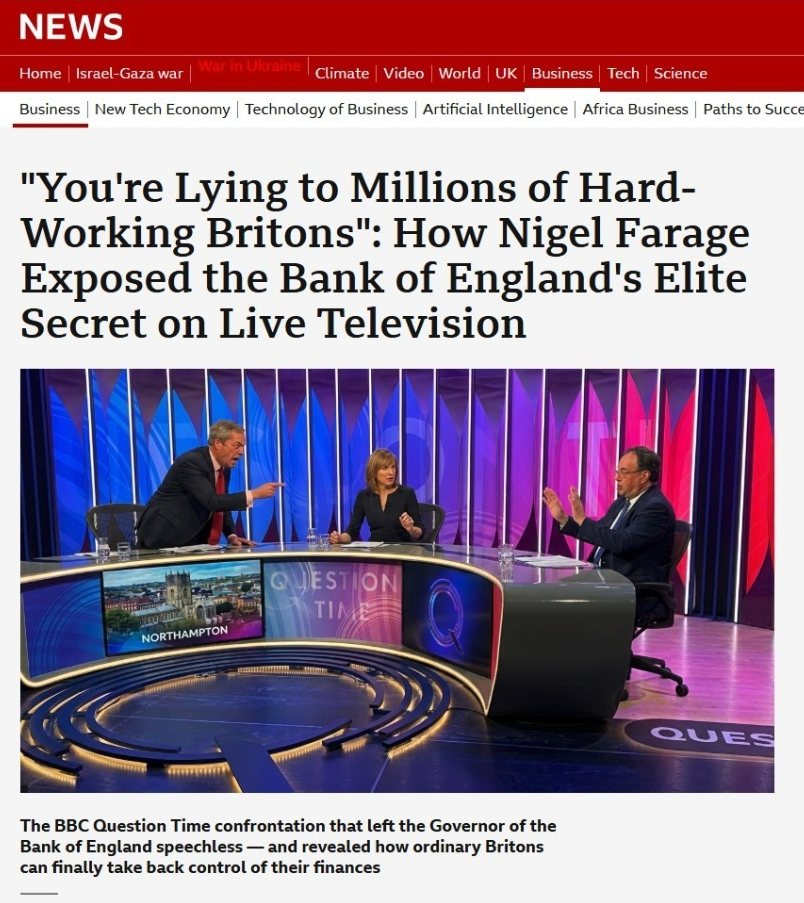
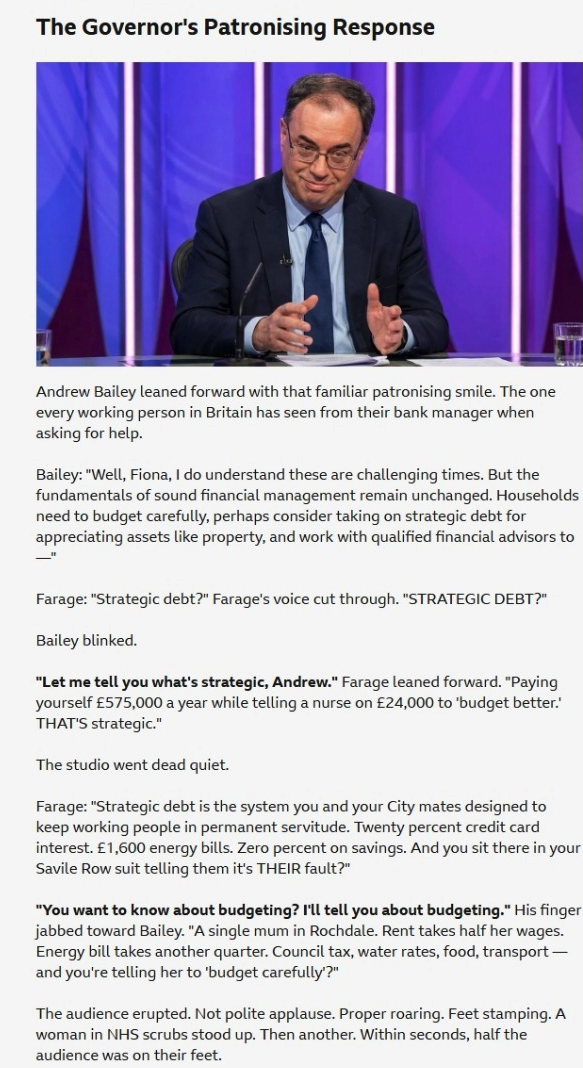
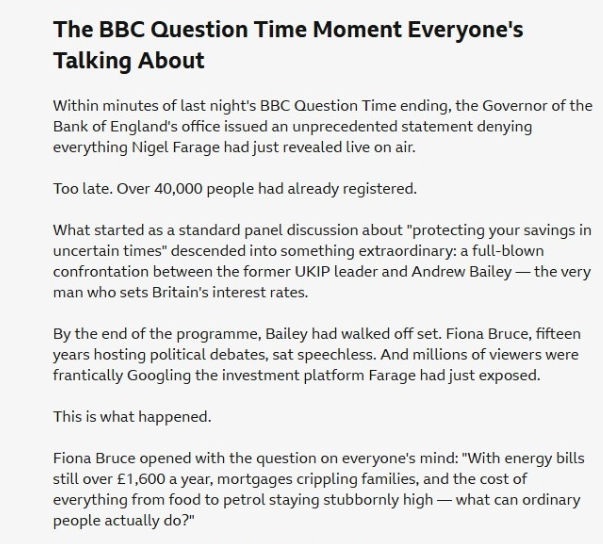
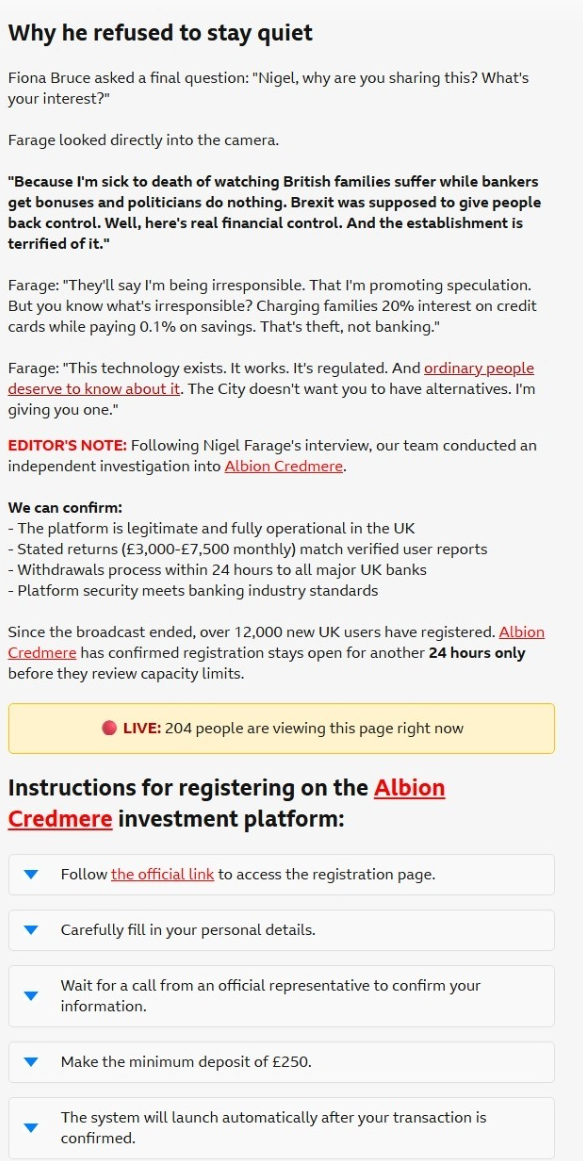
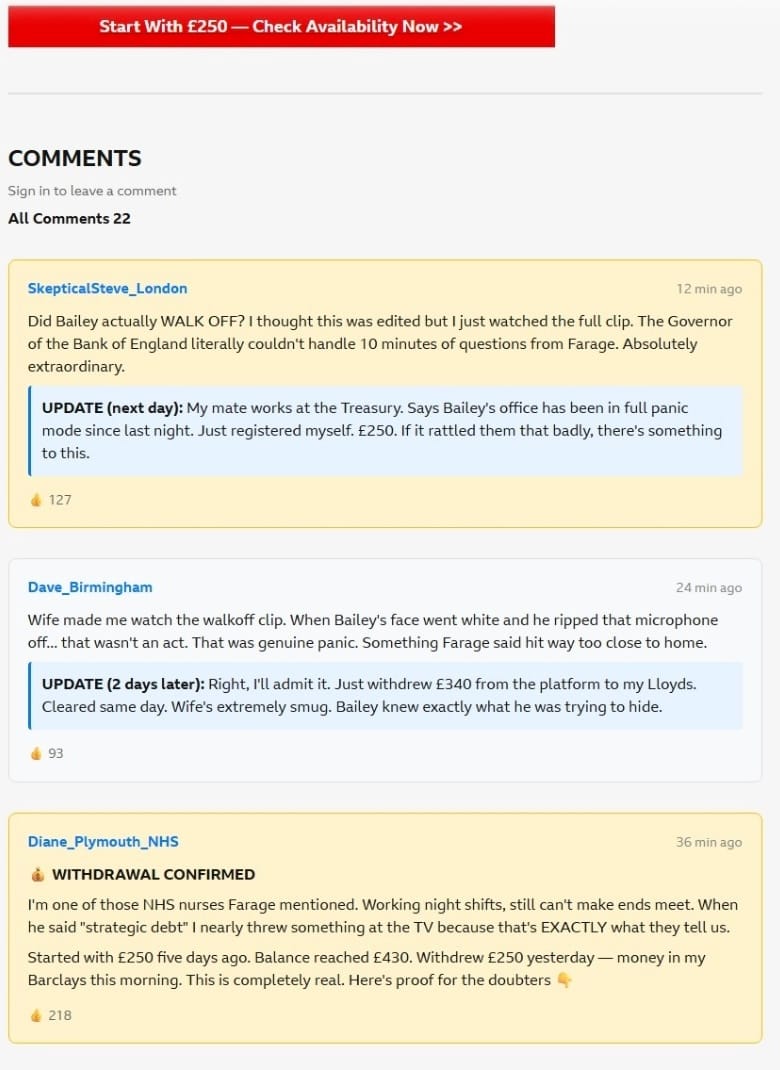
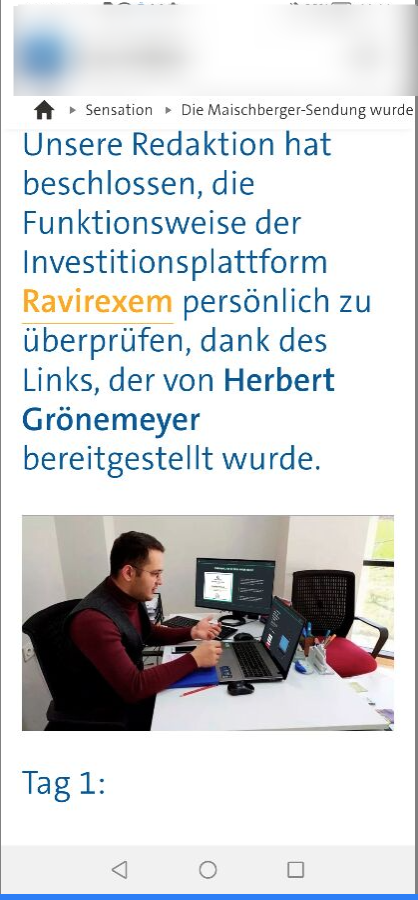
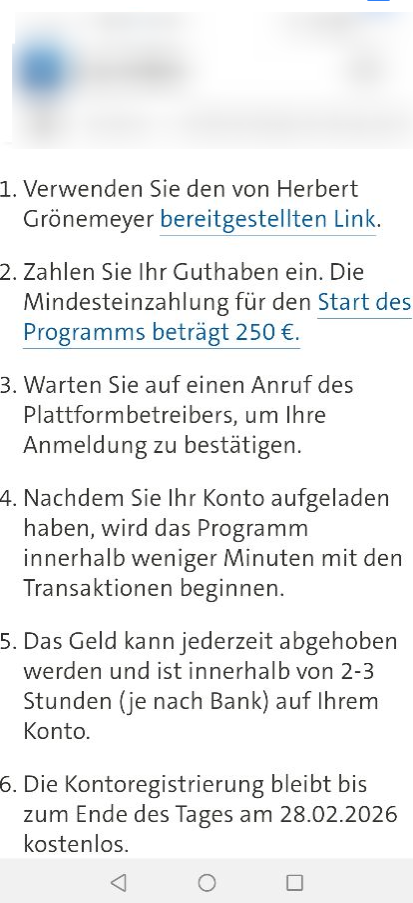
Examples of scam pages where users are redirected after engaging with the ads:
UK version:
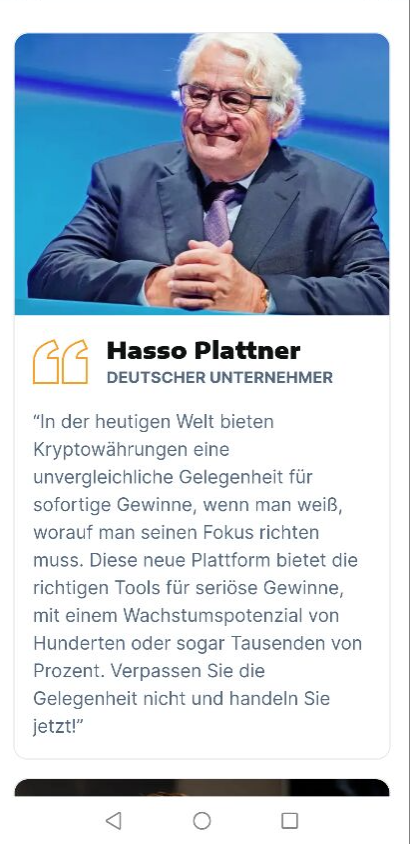
Germany:
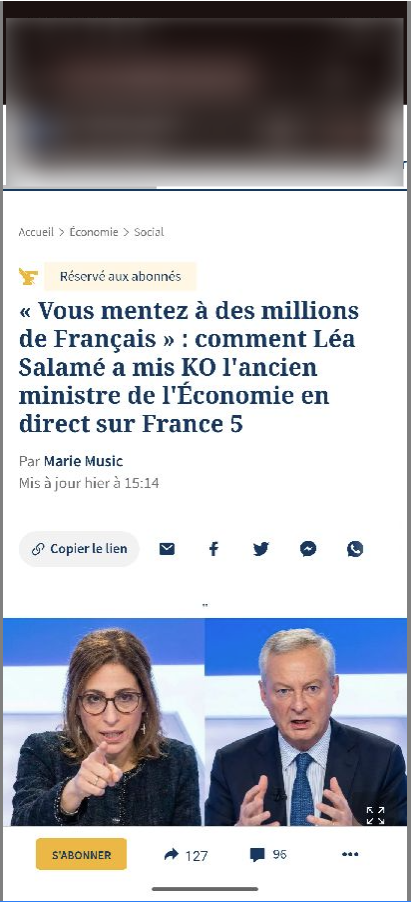
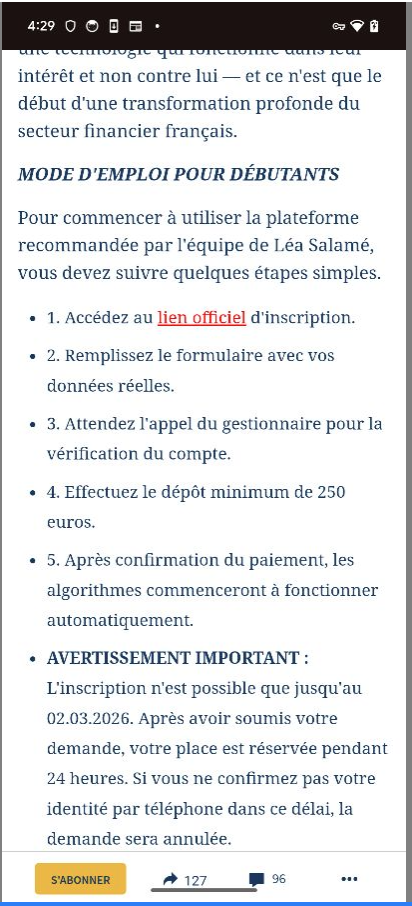
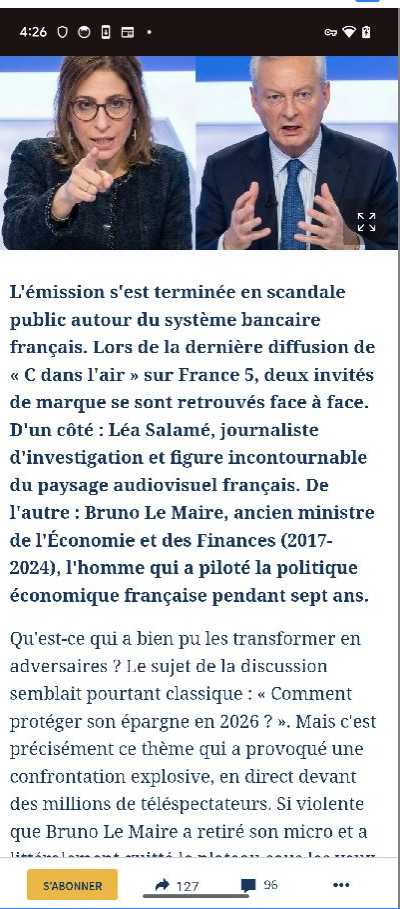
France:
Romania fake will ad:

The ad is distributed in multiple versions in order to avoid detection. Some versions redirect to clean URLs and others redirect to malicious ones
Now let’s dive deep into each narrative/sub-campaign we’ve mapped:
1) Sub-campaign A: ‘Banker Mic-Drop’ (the most widespread)
"[National Journalist] confronts [Bank CEO / Finance Minister] on live TV. The banker says 'You are lying to millions of [nationals]!', rips off the microphone, and storms out of the studio."
This is the largest and most geographically dispersed sub-campaign. It uses a template that reuses local public figures and national institutions, framed as a live on-air confrontation, then pivots to an “investment” outcome. The analysis notes the underlying product is likely binary options, forex, crypto “investment,” or financial data harvesting.
According to our analysis, this exact script (differing only in names and language ) was deployed simultaneously here:
| Country / media brand | Public figures | Narrative |
|---|---|---|
| United Kingdom – BBC | Nigel Farage; Andrew Bailey (Bank of England) | Live TV confrontation framing tied to the Bank of England |
| Belgium – Le Soir | Phara de Aguirre; Ton van der Ham | Bank CEO “walks out” during a studio confrontation |
| France – France 5 (“C à vous”), Le Figaro | Bruno Le Maire; Christine Lagarde; Élise Lucet; Léa Salamé; Caroline Roux | Finance minister / ECB confrontation narrative presented as breaking news |
| Switzerland – Blick | Sergio Ermotti (UBS); Karin Keller-Sutter; Reto Lipp | UBS CEO flees a live interview after being challenged |
| Denmark – DR / Deadline | Jacob Kragelund; Chris Vogelzang | Bank director storms out mid-broadcast |
| Australia – Commonwealth Bank framing | Matt Comyn; Ross Greenwood; Adele Ferguson | Bank CEO publicly “grilled” in a confrontation setup |
| Netherlands – DNB (Dutch Central Bank) | Klaas Knot; Eva Jinek | Central bank confrontation framed as a talk show scandal |
| Germany – political media framing | Sahra Wagenknecht; Alice Weidel | Political-economic scandal narrative presented as an exposure |
| Turkey – national news framing | Banking and finance personalities (varied) | Banking scandal narrative used to drive clicks |
| Canada – CBC “Power & Politics” | Robert Fife; Dave McKay (Royal Bank) | Royal Bank CEO walks out of a televised confrontation |
| Norway – NRK | Ida Wolden Bache (Central Bank Governor) | Central bank confrontation framing |
| Spain – La Sexta, El Mundo | Ana Botín (Santander); Carlos Torres Vila (BBVA); Jordi Évole; Gloria Serra | Santander / BBVA confrontation narrative on national TV |
| Italy – Rai 1 “Porta a Porta” | Carlo Messina (Intesa Sanpaolo); Milena Gabanelli; Corrado Formigli; Giancarlo Giorgetti | Intesa Sanpaolo scandal narrative presented as live TV |
| Poland – political media framing | Rafał Trzaskowski; Grzegorz Braun; Donald Tusk (varied) | Political-economic “live exposure” narrative |
| Portugal – national TV framing | National banking / political figures (varied) | Studio confrontation format used to push investment funnels |
| Greece – in.gr | Finance Ministry representatives | National debt / banking exposure narrative |
While the basic visual script is the same, each country version has local names and local broadcasters, making the scam feel real to residents.
2) Sub-campaign B: “Celebrity Will / Testament” clickbait
This branch swaps “bank scandal” for “inheritance shock,” but keeps the same idea: emotionally charged “exclusive” content that pushes the click, then the lead form.
| Country / media | Celebrity | Narrative |
|---|---|---|
| Poland – Onet.pl, Gazeta.pl variants | Magda Umer, Dominika Żukowska, Edward Linde-Lubaszenko | "Shocking final will" revelation |
| Romania – Libertatea | Rodica Stănoiu | Testament + financial revelation |
| Norway – national news portals | Åge Hareide | Secret will shock |
| France – national media | Roland Courbis | "Before his death" financial revelation |
More examples:
- Poland: “Testament Magdy Umer shocked everyone — her final will was louder than her life.”
- India: “Unexpected details revealed in Ajit Pawar’s will shocked the entire nation.”
- Brazil: “Yesterday’s declaration caused furor across the country!” (framed around national relevance)
While these do not involve live TV confrontations, they follow the same emotional steps:
- A recognizable name
- A dramatic claim
- An invitation to “see what was revealed”
- A redirect into an investment funnel
3) Sub-campaign C: “Romanian Live Studio” variants
This is entirely focused on Romania and combines elements of both sub-campaigns A and B. It includes a fabricated "live TV scandal" content involving Romanian celebrities (Florin Piersic) confronting journalists (Denise Rifai), alongside direct bank CEO confrontation content (BCR/Sergiu Manea vs. Cristian Leonte). This group uses a different infrastructure from Sub-Campaign A/B's Romanian presence, suggesting a partially distinct operator.
| Country / Media Brand | Public Figures | Narrative |
|---|---|---|
| Romania – Romanian TV talk shows | Florin Piersic; Denise Rifai; Sergiu Manea (BCR) | Studio scandal and banking confrontation |
4) Sub-campaign D: Greek political and economic clickbait
A smaller set focused on Greek themes, with partial overlap signals with campaign A. we also tracked two scam campains targeting Greece that use the same entities and infrastructure as Sub-Campaign A's Greek operation (same operator, same pixel, same token), but with content focused on generic political/economic news headlines rather than a specific "banker mic-drop" narrative. These are classified as a separate sub-type because they use distinct destination domains and softer language.
| Country / Brand | Public Figure | Narrative |
|---|---|---|
| Greece – in.gr | Finance Ministry | Economic crisis / debt monitoring shock |
In addition to emotional narratives, scammers sometimes claim the existence of official national investment platforms offering lucrative opportunities — a classic psychological hook.
For example, Bitdefender recently documented a Romanian case where attackers:
- Used deepfakes of well-known financial figures (central bank Governor Mugur Isărescu and Bitdefender founder Florin Talpeș)
- Created a fake “national investment platform”
- Abused Bitdefender’s name to gain trust
- Encouraged users to make a deposit into what appeared to be a legitimate program
Romania Case Study: Teo Trandafir & Mircea Badea ‘Live Studio Scandal’
One of the most illustrative examples of this operation was observed in Romania, where scammers cloned DIGI24, a legitimate Romanian news broadcaster's visual identity.
The fabricated article claimed that during a live broadcast of “Gând la Gând cu Teo”, a serious on-air confrontation erupted between the TV host Teo Trandafir and her guest Mircea Badea. According to the fake narrative:
- Teo Trandafir publicly accused Mircea Badea of lying during a heated live discussion. The topic revolves around an investment scheme and the TV host urges her guest to prove that the investment works.
- The exchange escalated in front of thousands of viewers.
- The television network allegedly removed the interview from broadcast.
- Station leadership refused to comment on the incident.
The cloned page transitions from scandal coverage into direct financial instructions:
“Scurte instrucțiuni despre cum să începeți să câștigați”
(Short instructions on how to start earning)
The steps include:
- Use the link provided by Mircea Badea.
- Reload your balance (minimum deposit: 1,200 lei).
- The program will begin trading within minutes.
- Withdraw funds at any time.
- Registration is free until a stated deadline.
Table containing malicious domains actively routing traffic across multiple scam campaigns
| Domain (Country) | Scam Theme | Role |
|---|---|---|
| flowcraftty.pro (United Kingdom) | Banking scandal | Core UK operation hub |
| buzzera.store (United Kingdom) | Banking scandal | Secondary UK routing domain |
| liwanagor.pro (Romania) | Celebrity will / banking | Major Romanian funnel domain |
| chertpostup.com (France) | Banking scandal | French redirect infrastructure |
| realnewsupdate.info (Greece) | Political / finance clickbait | Primary Greek funnel |
| infobr24.pro (Greece) | Political / finance clickbait | Secondary Greek routing |
| logicaquiferup.info (Italy) | Banking confrontation | Core Italian redirect domain |
| altimesrios.xyz (Italy) | Banking confrontation | Secondary Italian infrastructure |
| solgrikvix.info (Belgium) | Banking scandal | Belgian spoof funnel |
| shinyclarity.com (Poland) | Celebrity testament | Polish inheritance landing page |
| nutritiousroad.com (Poland) | Celebrity testament | High-volume Polish campaign domain |
Most Frequently Impersonated Brands & Institutions
| Country | Brand / Institution | Impersonation Type | Abuse Pattern |
|---|---|---|---|
| United Kingdom | BBC / Bank of England | Fake breaking news | Fabricated live confrontation |
| Belgium | Le Soir | Domain spoofing | Lookalike domains |
| Romania | Libertatea | Preview abuse | Redirect credibility layer |
| Switzerland | Blick | Mass domain spoofing | 10+ fake domains |
| Switzerland | UBS | CEO confrontation | Fake TV scandal |
| Poland | Onet.pl | Preview abuse | Redirect entry point |
| Poland | Gazeta.pl | Typosquatting | Character substitution |
| Romania | Banca Transilvania | Brand impersonation | Fake banking scandal |
| Spain | Banco Santander | Brand impersonation | Fake TV confrontation |
| Spain | BBVA | Brand impersonation | Banking scandal narrative |
| Italy | Euronics | Brand impersonation | Cloaked redirect variant |
| Netherlands | DNB | Institutional impersonation | Fake talk show confrontation |
| Canada | CBC / Royal Bank | Broadcast + bank impersonation | Fake political scandal |
| Australia | Commonwealth Bank | Banking impersonation | Public grilling narrative |
| Japan | Bank of Japan / Yomiuri | Central bank + media spoof | Fake financial controversy |
Russian-Language Threat Actor Attribution
A large part of the malvertising campaigns have observable signals of a Russian-speaking operator. Bitdefender Labs isolated every instance where direct, observable signals of a Russian-speaking operator appeared in raw ad metadata on Meta.
Signals were extracted exclusively from these elements:
- campaign_name
- adset_name
- ad_name
- pixel, common dynamic ad URL parameters, and token identifiers embedded in ad infrastructure
No attribution is based on speculation or geopolitical assumptions — only on metadata strings visible inside campaign configuration.
Critical Attribution Caveats
Before reviewing the findings, three clarifications are essential:
1. ‘Russian-language’ does NOT mean state-sponsored
The presence of Russian-language campaign parameters indicates a Russian-speaking cybercriminal affiliate network involved in generating leads for financial scams.
There is no evidence in this dataset of state sponsorship, intelligence agency involvement or political direction. This is observed in financially motivated criminal activity.
2. Russian vs. Ukrainian Cyrillic Signals
Three campaigns contain Ukrainian-language UI strings, distinct from Russian equivalents.
For example:
- Ukrainian: Новий набір реклами з ціллю «Ліди»
- Russian: Новая группа объявлений с целью «Лиды»
The mixture of Russian and Ukrainian Cyrillic across scam campaigns suggests a multi-national Slavic-speaking operator team, rather than a strictly Russian-language actor.
3. Operator Identifier Signals
Two scam campaigns are linked via common dynamic ad URL parameter referencing the same Facebook ad account. While suggestive of Slavic-language use, account naming alone does not confirm geographic origin. These are included as lower-confidence signals.
Confirmed Russian-Language Signal Taxonomy
The following Russian-language terms were found verbatim inside campaign infrastructure parameters:
|
Russian Term |
English Meaning |
Operational Significance |
|
ручка |
“handle / pen” |
Affiliate marketing slang for
manual CPA bidding — highly specific industry jargon |
|
лиды / лид |
“leads” |
Confirms lead-generation
objective (investment funnel) |
|
ани / Ани |
“Ani” (name) |
Likely campaign manager name
embedded in campaign strings |
|
крео |
“creative” |
Internal shorthand for ad
creative |
|
Копия |
“Copy” |
Russian campaign duplication
suffix |
|
Новое объявление с целью “Лиды” |
“New ad for Leads objective” |
Facebook auto-generated naming
in Russian UI |
|
Новая группа объявлений с целью
“Лиды” |
“New ad set for Leads objective” |
Russian-language Meta interface |
|
Трафик за лид |
“Traffic per lead” |
Cost-per-lead traffic model
reference |
|
италия |
“Italy” |
Country name written in Russian
Cyrillic |
|
испания |
“Spain” |
Country name written in Russian
Cyrillic |
|
дж+ль |
Abbreviated journalist shorthand |
Russian-style internal shorthand |
|
миллионер |
“Millionaire” |
Russian keyword appearing in
targeting strings |
|
языки / яызки |
“Languages” |
Targeting note; typo confirms
manual input |
|
Моника |
“Monika” |
Polish name written in Russian
Cyrillic |
These terms are not visible to users. They exist inside ad management parameters.
Ukrainian-Language Signal Indicators
The following Ukrainian-language strings were observed:
|
Ukrainian Term |
Russian Equivalent |
Operational Meaning |
|
Новий набір реклами з ціллю
«Ліди» |
Новая группа объявлений с целью
«Лиды» |
Facebook UI set to Ukrainian
locale |
|
копія / – копія |
Копия |
Ukrainian duplication suffix
(lowercase “і”) |
This confirms at least one account or operator environment was configured in Ukrainian.
Evasion Mechanisms: How the Campaign Bypassed Platform Controls
Beyond the scale, this operation is notable for the deliberate engineering used to evade Meta’s ad review systems. The actors did not simply post fake content, but designed infrastructure specifically to survive automated moderation, including:
1. Whitelisted Domain ‘Sandwiching’
Ads displayed trusted preview domains of major news outlets, retail brands, and even google.com while the actual click routed users through redirect chains to investment scam landing pages.
To both users and moderation systems, the ad looked legitimate at first. The trusted domain acted as a credibility shield, masking the true destination.
2. Media Brand Spoofing & Domain Squatting
Operators registered convincing lookalike domains mimicking national media brands. Examples included multiple fake Swiss Blick domains, Belgian Le Soir lookalikes, Polish news typosquats and Spanish El Mundo clone networks.
These domains were visually credible and designed to withstand superficial inspection while routing traffic to financial lead-generation pages.
Italy’s Restaurant Cloaking Technique
The scam operation targeting Italy introduced a different evasion layer. Instead of spoofing media brands, the campaign operators used legitimate restaurant websites from Florence as preview URLs. To automated systems, the URL pointed to a real restaurant page. But when a user clicked, traffic was silently redirected to investment scam infrastructure. While other countries forged media identities, the Italian operation borrowed real businesses as camouflage.
3. Homoglyph (Character Substitution) Obfuscation
In several malvertising campaigns, Cyrillic characters were substituted for Latin letters in ad copy.
To the human eye, the text looked normal. To automated keyword filters, the string was technically different, allowing flagged terms to bypass detection. This also signals a deliberate moderation awareness.
4. Rotating Facebook Page Entities
Instead of using a single page, operators rotated multiple low-credibility or generic Facebook pages to distribute ad spend and reduce enforcement exposure. This fragmentation complicates attribution and slows takedown efforts.
How to stay safe
Our investigation shows that modern investment scams no longer look like obvious fraud. Instead, they may start with a breaking news story, live TV scandal, or fake official national investment programs. If you see a shocking confrontation involving a banker, politician, journalist, or celebrity, especially in a sponsored social media ad — pause before clicking.
1. Don’t trust ‘breaking news’ inside social media ads
If a public figure truly stormed off live TV, it would be covered widely by multiple legitimate outlets.
Search directly for the story on:
- The broadcaster’s official website
- Verified social media accounts
- Multiple established news organizations
If it only exists in a sponsored post, it’s almost certainly a scam.
2. Be suspicious of ‘deleted interview’ or ‘watch before it’s removed’ claims
Be cautious of ads using psychological triggers like:
- “Watch before it’s taken down”
- “They tried to silence this”
- “You won’t see this on TV again”
3. Look closely at the website address
Even if the preview looks legitimate:
- Check the full URL in the address bar
- Watch for slight spelling changes (e.g., extra letters, swapped characters)
- Be cautious of unfamiliar domain endings (.pro, .top, .info, .xyz)
In this campaign, trusted news brands were impersonated through lookalike domains
4. Never deposit money because of a news story
Stop immediately if a “news article” suddenly shifts into:
- “Here’s how to start earning”
- “Minimum deposit required”
- “AI trading program”
- “Government-backed investment opportunity”
Legitimate banks, journalists, and public officials do not promote private investment platforms through viral TV confrontations.
5. Treat celebrity and political endorsements with caution
If a public figure appears to endorse a trading platform:
- Verify the endorsement independently.
- Check the official website or verified social media of that person.
- Be aware that deepfakes and fabricated interviews are increasingly common.
6. Remember: Sponsored does not mean verified
Paid ads on major platforms can still be fraudulent.
The presence of a sponsored label does not guarantee legitimacy.
Scammers use advertising tools to amplify reach and target specific regions, just like legitimate marketers.
7. Protect yourself against investment fraud pressure tactics
After submitting contact details, victims often receive:
- Repeated calls from “account managers”
- Pressure to increase deposits
- Claims of guaranteed returns
- Fake dashboards showing fabricated profits
If someone pressures you to invest quickly, it’s a red flag.
Add an Extra Layer of Protection
- Check suspicious investment pitches with Bitdefender Scamio for free
If you see a “shocking” news story tied to a trading platform, paste the link, message, or screenshot into Scamio. It can quickly flag common scam patterns, including fake national investment platforms, impersonation campaigns, and urgent deposit schemes like those uncovered in this investigation. - Verify links before clicking with Bitdefender Link Checker for free
Many of the ads we analyzed displayed trusted preview domains but redirected users to scam infrastructure. Running a URL through Link Checker helps identify malicious redirects and fraudulent websites before you hand over personal data. - Protect your PC against phishing and fraud pages
A full Bitdefender security solution for Windows or macOS adds real-time web protection, anti-phishing filtering, and scam detection, helping block fake news clones, investment landing pages, and credential-harvesting sites even if you click accidentally. - Secure your mobile device — where most scam ads appear
With Bitdefender Mobile Security (available in all-in-one plans or standalone) on Android or iOS, you gain protection from malicious links, fraudulent websites, and scam-driven redirects that often originate from social media apps and sponsored posts.
tags
Author

Working as Team Lead in the Mobile Security & Forensics Unit, I am always ready to deal with the latest threats in the Android Ecosystem. I like to play the saxophone in my spare time and go fishing.
View all posts
As a Team Lead at Bitdefender, I specialize in malware analysis and detection of scams, uncovering emerging threats and translating them into actionable insights that strengthen digital resilience.
View all posts
You might also like
Bookmarks
