US Army employee pleads guilty to stealing veterans' benefits using leaked records

October 26, 2026
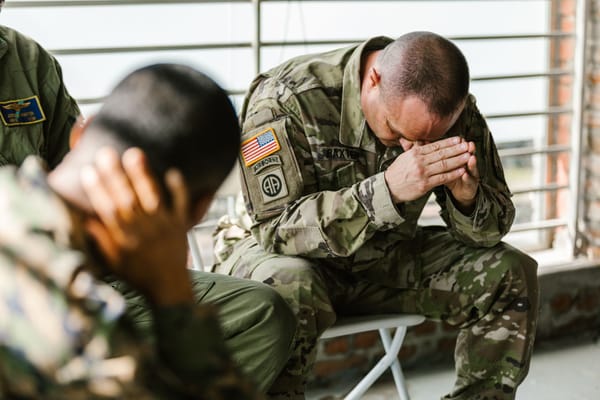
An American operating from the Philippines has pleaded guilty to helping steal money and veterans' benefits using sensitive personal information supplied by a civilian employee of the US Army.
A 45-year-old U.S. citizen who operated from the Philippines has pleaded guilty to participating in an identity-theft scheme that exploited the personal information of thousands of US military personnel and veterans to raid their bank accounts and steal government benefits.
The US Department of Justice announced the guilty plea on Oct. 20, revealing how a civilian employee of the US Army secretly photographed sensitive military records and supplied the information to criminals overseas.
Key points
- Robert Wayne Boling Jr., 45, pleaded guilty to participating in a fraud scheme targeting thousands of US servicemembers and veterans
- A civilian US Army employee in South Korea photographed sensitive personal records and passed the information to the fraudsters
- The stolen data was used to compromise bank accounts and government benefits accounts
- A network of money mules helped move stolen funds through US bank accounts and transfer some of the proceeds to the Philippines
- Boling faces up to 20 years in prison on each of two conspiracy charges
An insider with access to thousands of military records
The operation relied on sensitive personal information stolen by Fredrick Brown, a civilian medical records administrator working for the US Army in South Korea, according to court documents.
Brown used his access to photograph records containing personally identifiable information (PII) of thousands of military-affiliated individuals.
Rather than stealing the information in a cyberattack, the criminals got it directly from someone who had access to the records.
Brown passed the stolen information to Boling, who was operating from the Philippines.
Boling and his co-conspirators then used the data to compromise victims' financial accounts, including bank accounts and online accounts linked to government benefits.
The scheme affected thousands of servicemembers and veterans, including elderly and disabled veterans, according to the Justice Department.
Stolen identities, compromised accounts, and money mules
Once the criminals obtained the personal information, they used it to gain access to accounts belonging to military personnel and veterans.
The compromised accounts allowed the conspirators to steal money and veterans' benefits, according to prosecutors.
The operation also relied on a network of money mules in the United States. These individuals provided bank accounts to receive the stolen funds, helping the criminals move the proceeds of their fraud.
Some of the stolen money was later transferred to the Philippines.
Money mule networks are a common feature of organized financial fraud. By routing stolen funds through multiple accounts and individuals, criminals can make it harder for investigators and financial institutions to trace the money to its ultimate destination.
In this case, the arrangement connected an insider theft of sensitive military records in South Korea with account compromises in the United States and fraud operations based in the Philippines.
Up to 40 years in prison
Boling, a 45-year-old US citizen, was deported from the Philippines to the United States in May 2026 to face charges connected to the scheme.
He pleaded guilty to one count of conspiracy to commit wire fraud and one count of conspiracy to commit money laundering.
Each charge carries a maximum sentence of 20 years in prison, meaning Boling faces a combined statutory maximum of 40 years.
His sentencing is scheduled for Jan. 14, 2027.
Two other participants have already been sentenced.
Brown, the former civilian Army employee, received 151 months in prison, while another co-conspirator, Trorice Crawford, was sentenced to 46 months.
Two additional co-conspirators, Jongmin Seok and Allan Albert Kerr, remain fugitives.
The case is part of the Justice Department's Cyber-Enabled Scam Initiative, which targets organized fraud networks operating both domestically and internationally.
Why stolen personal information is so dangerous
Criminals don’t always need to trick victims into revealing their information. Sometimes, that information has already been stolen from an organization the victims trusted to protect it.
Personal information obtained from employment, medical, financial, or government records can be particularly valuable to fraudsters.
Depending on the information exposed, criminals may be able to use it to impersonate victims, attempt account recovery, bypass certain identity-verification checks, or commit financial fraud.
Unlike passwords, many personal identifiers can’t easily be changed once compromised. That makes identity theft a potentially long-term problem, even after the original criminal operation has been disrupted.
The Justice Department has not publicly detailed the precise methods used to compromise each victim's accounts in this case. However, the investigation demonstrates how stolen personal records can provide the foundation for financial fraud without victims necessarily realizing their information has been exposed.
How servicemembers and veterans can protect themselves
Military personnel, veterans, and their families should take extra precautions when dealing with sensitive personal information and accounts linked to finances or government benefits.
Some practical steps include:
- Monitor bank and benefits accounts. Review transactions and payment histories regularly, and investigate unfamiliar activity immediately
- Enable multifactor authentication. Use it wherever available, particularly for banking, email, and government accounts
- Watch for identity theft. Unexpected account notifications, unfamiliar credit inquiries, or changes to benefits information may indicate that someone is using your personal data; consider identity theft protections to stave off this threat
- Consider freezing your credit. A security freeze with the major credit bureaus can make it harder for criminals to open new credit accounts in your name
- Secure your email account. Email is often used for password resets and account recovery, making it an especially important target to protect
- Act quickly if something looks wrong. Contact your bank or the relevant benefits agency through its official website or phone number if you suspect unauthorized access
US consumers who suspect identity theft can also report it through the Federal Trade Commission's IdentityTheft.gov website, which provides recovery guidance.
Veterans concerned about unauthorized activity involving VA benefits should contact the Department of Veterans Affairs through official channels.
Related:
15,000 Americans caught up in massive cybercrime money laundering scheme
tags
Author

Filip has 17 years of experience in technology journalism. In recent years, he has focused on cybersecurity in his role as a Security Analyst at Bitdefender.
View all postsYou might also like
Bookmarks
