Police Say He Stole and Sold Women’s Snapchat Pics: Illinois Man Charged in Snapchat Hacking Scheme

January 12, 2026

Federal authorities have charged a 26-year-old Illinois man in relation to a Snapchat hack that authorities say targeted nearly 600 women and exploited private photos for profit and distribution on internet forums.
According to documents filed in the US District Court in Boston, Kyle Svara of Oswego, Illinois, is accused of orchestrating a sophisticated phishing scheme to access Snapchat accounts by tricking people into handing over security verification codes.
Prosecutors allege Svara’s operation ran from May 2020 through February 2021 and involved social engineering tactics that duped victims into believing they were interacting with legitimate Snapchat support staff.
How the scheme worked
Federal prosecutors say Svara first gathered email addresses, phone numbers, and Snapchat usernames from thousands of women. When Snapchat’s security system detected unauthorized login attempts, the platform automatically sent six-digit verification codes to the women’s phones or email addresses.
Posing as a representative of Snapchat using anonymized phone numbers, Svara allegedly sent texts to more than 4,500 people requesting those codes.
About 570 people provided the codes, allowing Svara to access at least 59 accounts without authorization. Once inside, authorities say, he downloaded private photos and videos, many of them sensitive in nature.
Profit, distribution, and co-conspirators
After obtaining the intimate images, Svara allegedly sold or traded them on internet forums and even took paid requests from third parties seeking photos of specific women.
“Svara allegedly advertised on internet forums like Reddit that he could ‘get into girls snap accounts’ for others and provide content ‘for you or trade,’” the US Department of Justice said in a press release
One such client identified in court filings was Steve Waithe, a former Northeastern University track coach previously convicted on federal charges including cyberstalking and extortion related to his own scheme to obtain and share private images of female student-athletes. Waithe is currently serving a five-year prison sentence.
Federal charges
Svara faces a series of serious federal charges, including aggravated identity theft, wire fraud, computer fraud, conspiracy to commit computer fraud, and making false statements.
If convicted, penalties can include decades in prison, fines, and supervised release.
He is scheduled to make his initial appearance in federal court in Boston on Feb. 4.
Authorities are urging anyone who believes they may have been a victim of the scheme to contact the FBI at https://forms.fbi.gov/victims/snaphackvictims.
Law enforcement is actively gathering information to support prosecution and victim assistance.
Youth are fueling scam risk by oversharing online
According to the Bitdefender 2025 Consumer Cybersecurity Survey, youngsters are twice as likely as older people to fall victim to a scam (20% vs 9.7%).
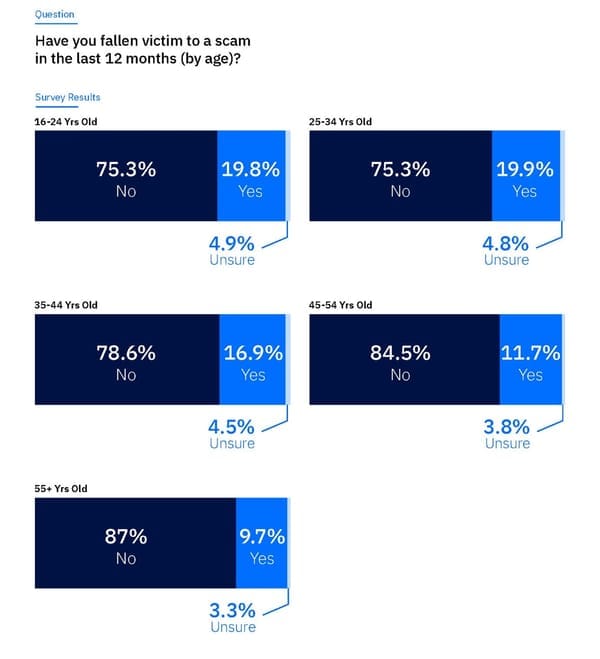
Source: Bitdefender 2025 Consumer Cybersecurity Survey
The reason? Younger generations interact far more with social media — now the top attack avenue for scammers.
Scammers don’t target their victims only on social media. As our study shows, a quarter of scams take place over the phone. However, social media is still the enabler most of the time.
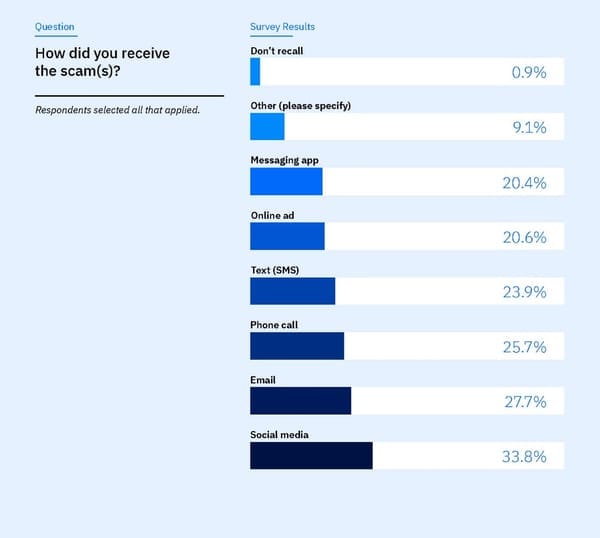
Source: Bitdefender 2025 Consumer Cybersecurity Survey
How to protect yourself online
The photo theft case highlights how familiar platforms like Snapchat can be abused through deception rather than traditional “hacking.” Here’s how to stay safe:
· Never share verification codes. Legitimate services never ask you to forward a security code to another party — even “support.” Those six digits are your key to your account.
· Enable multi-factor authentication (MFA) on all your online accounts. Whenever possible, use an authenticator app rather than SMS codes. Authenticator-generated codes are much harder for attackers to intercept or trick you into sharing.
· Watch out for impersonation scams. Always double-check sender phone numbers and be wary of unsolicited messages claiming to be from a platform’s support team.
· Report suspicious contact immediately. If you receive questionable texts or emails about your account, report them to the platform’s official support channels before responding.
· Monitor your account activity. Many social apps let you check recent login locations and devices — review these regularly for anything unfamiliar.
· Use a scam detector. Consider using Scamio if you’re suspicious of a certain phone call, email, or text message. Our chatbot is designed to combat socially engineered attacks.
· Educate yourself and your peers. Read the cybernews bulletin from time to time. Keep up with how attackers are using new technologies — and how defenses evolve. Friends and family — particularly younger users — may be targets of similar social engineering tactics. Sharing best practices helps protect everyone.
Download the complimentary Bitdefender 2025 Consumer Cybersecurity Survey for an in-depth look at today’s threat landscape — and learn what you can do to stay one step ahead.
You may also want to read:
tags
Author

Filip has 17 years of experience in technology journalism. In recent years, he has focused on cybersecurity in his role as a Security Analyst at Bitdefender.
View all postsYou might also like
Bookmarks
