Instagram Marketplace scams: How to spot fake shops before you pay

July 07, 2026
Instagram marketplace scams happen when fake shops, impersonator accounts, or DM sellers trick buyers into paying for products that never arrive, counterfeit goods, or phishing links. The safest checks are to verify the seller, avoid off-platform pressure, inspect the website and payment method, and use protected checkout options where available.
Key takeaways
- Instagram Marketplace scams often use fake shops, copied product photos, hijacked accounts, comment links and “limited-time” deals to lure shoppers into unsafe purchases.
- Fake Instagram sellers may direct buyers to lookalike websites, request risky payment methods, or disappear after stealing money and personal details.
- Instagram fake product scams commonly involve counterfeit goods, non-delivery, cheap knockoffs, fake tracking numbers and products that look nothing like the ad.
- The safest way to avoid Instagram shopping scams is to verify the seller outside of Instagram, check the payment method, inspect the website and treat suspicious DMs or comment links as potential phishing attempts.
Why fake product scams work so well on Instagram
Instagram Marketplace is not always a formal marketplace in the way consumers might think of Facebook Marketplace. People use the term to describe shopping through Instagram Shops, seller profiles, Reels, Stories, ads, DMs, comments and links in bios. That fragmented buying journey is a breeding ground for scammers.
Instagram fake product scams work because they appear where people already discover trends, brands and creator recommendations. In our 2026 Global Scam Intelligence Report, we found a 36% interaction rate with social media scams, noting that scam ads are reaching consumers inside trusted, everyday platforms. On Instagram, the possibilities are virtually endless because trust can be abused through polished product posts, sponsored-looking ads, comment links, fake creator endorsements and convincing storefront pages.
How Instagram fake product scams usually work
Most Instagram shopping scams begin with something that catches your eye. You see a well-placed product in your feed and you stop scrolling. It may be a viral beauty item, designer-inspired bag, discounted gadget, limited-edition sneaker, home accessory, pet accessory or handmade gift. The price is low enough to tempt you, but not always so low that it sets off alarm bells.
From there, the scam can go several ways. Most fake Instagram sellers redirect you to a cloned website that copies the branding of a legitimate retailer. The more patient con artists tend to keep the transaction inside DMs and ask for payment through bank transfer, cryptocurrency, gift cards, friends-and-family payment options or other methods that are hard to reverse. Some even send a fake tracking number to buy time or ship a cheap counterfeit product so the buyer hesitates before reporting the scam.
Malicious links in Instagram comments
The link is often where the real damage happens. A fake Instagram seller may look legitimate on the surface, but the checkout page, tracking page or “discount” link can lead to phishing, credential theft or payment fraud. Our report highlights the scale of this infrastructure: we analyzed 2.8 trillion URLs and identified and blocked 10 billion phishing URLs, with web-based threats described as the primary infrastructure behind digital scams.
If you are unsure about a seller message, suspicious link or QR code, tools such as Bitdefender Scamio can help analyze it before you click or pay; Scamio is designed to check suspicious texts, social media messages, links and QR codes.
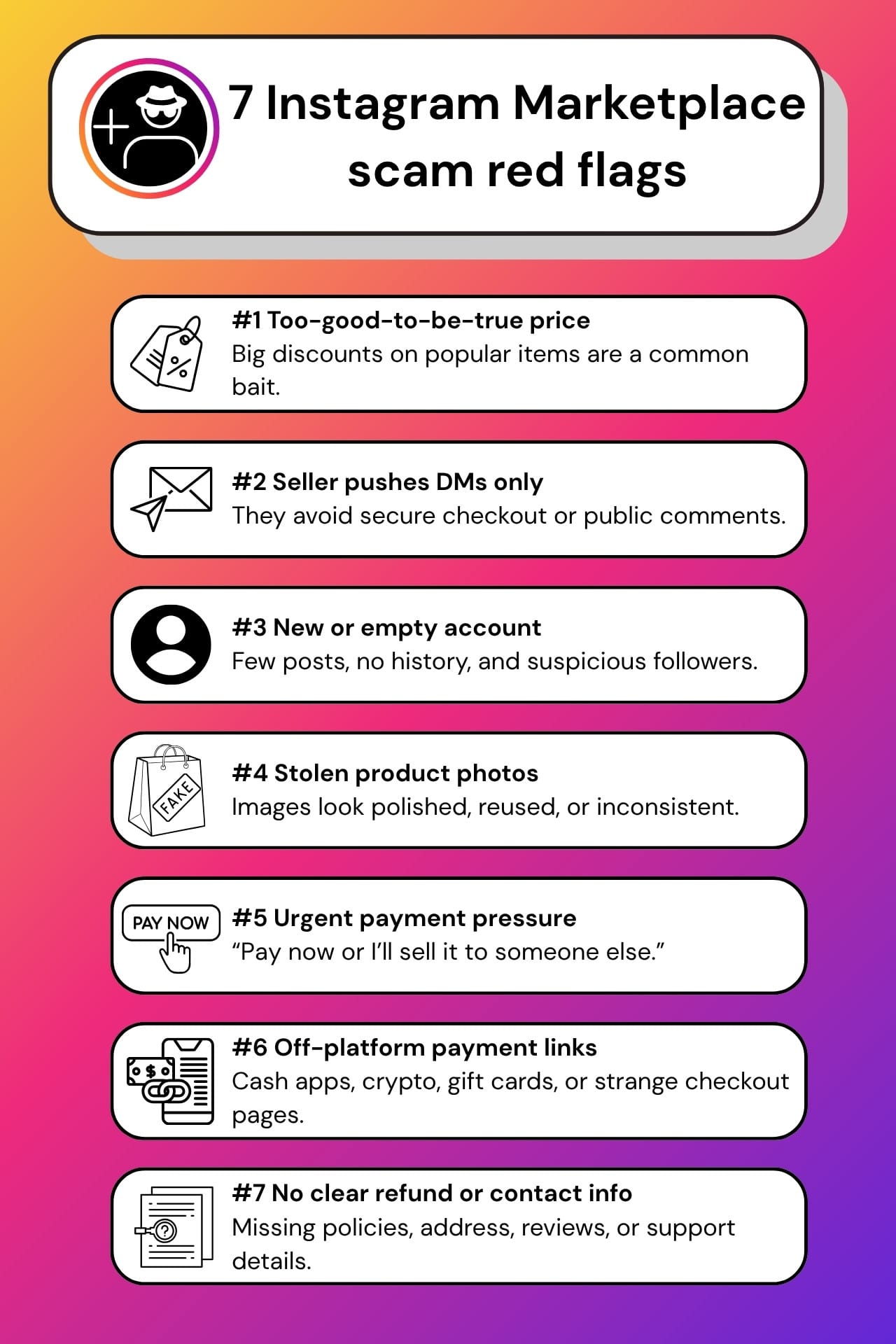
Instagram seller scam red flags
Some fake shops are convincing enough to fool careful shoppers, so look for patterns rather than a single obvious mistake.
Watch out for sellers that:
- Offer prices far below normal retail with no credible explanation.
- Have many followers but little genuine engagement, repetitive comments or newly uploaded posts.
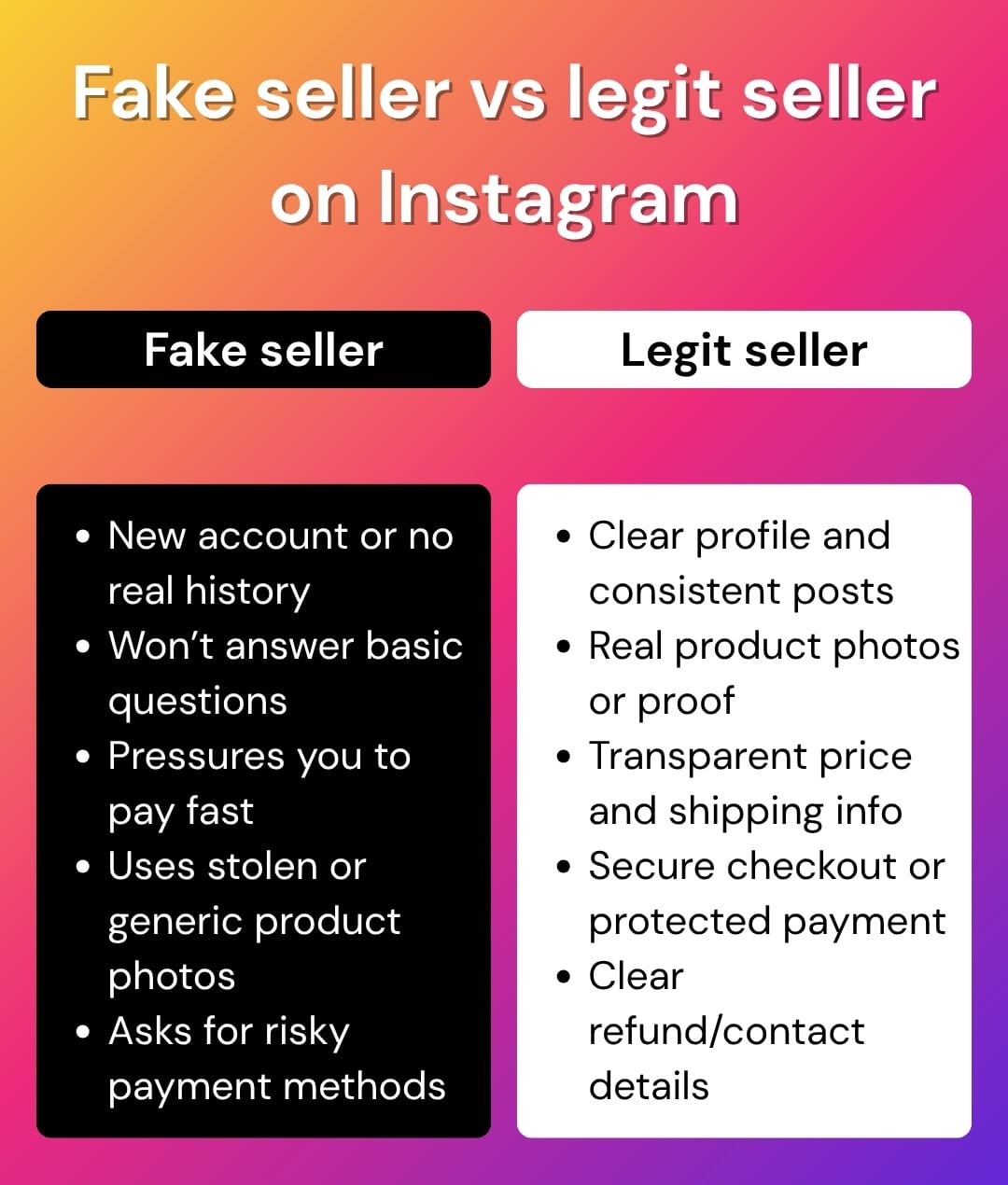
- Push you to pay quickly, move to another messaging app, or avoid secure checkout.
- Use stolen product photos, inconsistent branding or captions copied from other stores.
- Refuse to provide a business website, return policy, order confirmation or verifiable contact details.
- Ask for payment through gift cards, crypto, wire transfer or friends-and-family options.
The danger is not always a sloppy fake shop with poor spelling. Our 2026 Global Scam Report notes that the most effective scams don’t seem suspicious at first; they appear to come from recognizable brands, business accounts, familiar platforms or trusted contacts. That’s exactly why fake Instagram sellers can be convincing when they use stolen product photos, copied brand language, fake reviews and accounts that look like real small businesses.
How to check if an Instagram seller is legit
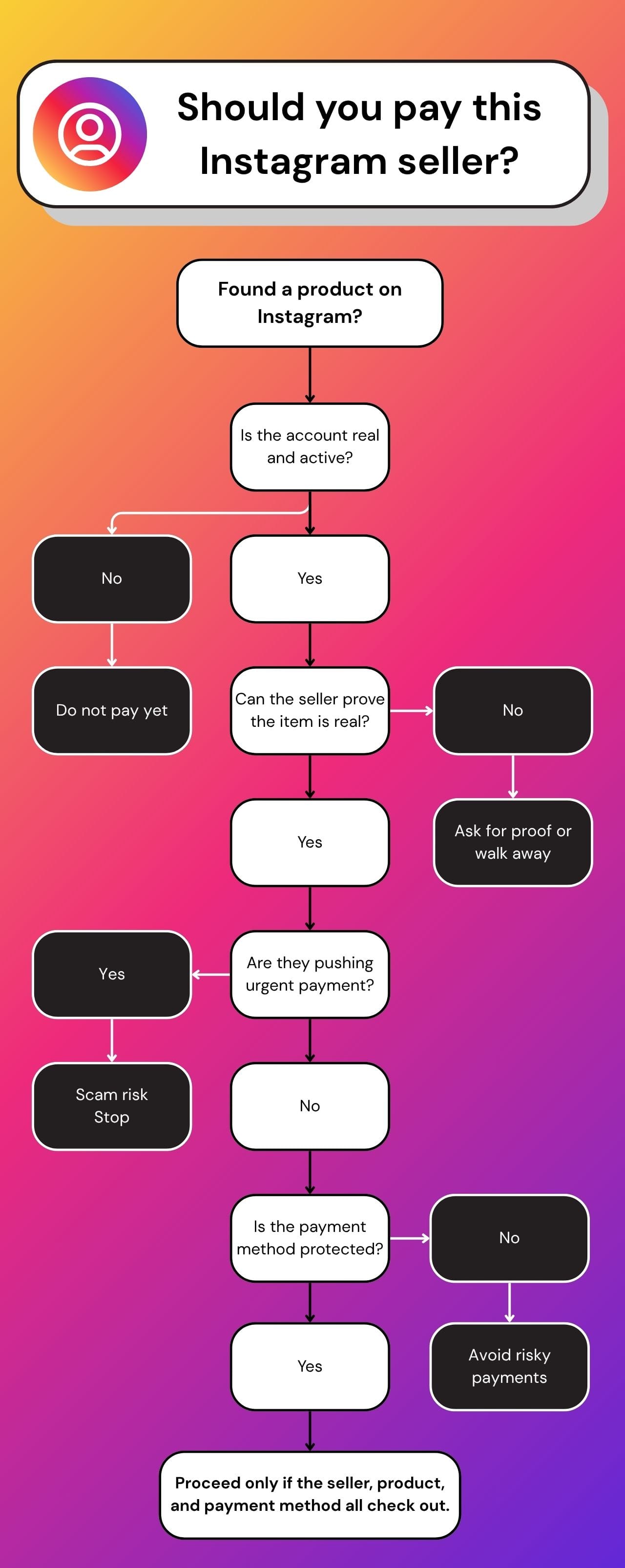
Before buying from an Instagram seller, slow down. Scammers rely on impulse and emotion to carry out their deceptive campaigns.
Cross-check
Start by checking whether the seller exists outside Instagram. Search the shop name plus words like “scam,” “reviews,” “complaint” and “refund.” You should check a company before buying, especially when the purchase starts on social media.
Inspect the website
Next, inspect the website. Look for a real domain, a clear return policy, business address, customer support contact, secure payment options and consistent branding. A website that was created recently, uses awkward copy, has unrealistic discounts on every product, or mimics a known brand too closely deserves suspicion.
Use reverse image search
Reverse-search product images when possible. If the same photo appears on multiple unrelated shops, marketplace listings or old product pages, the Instagram seller may be using stolen images. Also compare prices with the official brand or reputable retailers. A “90% off today only” offer on a product that rarely goes on sale is not a bargain; it’s bait.
Creators need to be extra careful
For creators, small businesses and influencers, the risk can go further. A compromised Instagram account can be used to promote fake products to followers, post malicious comment links or impersonate a trusted seller. Bitdefender Security for Creators is built to help protect creator accounts, content and devices across Instagram, Facebook and YouTube, with features such as account monitoring, anti-scam email protection and account recovery assistance.
What to do if you already paid or clicked
If you paid a suspected fake Instagram seller, act quickly. Contact your bank, card issuer or payment provider and ask whether the transaction can be reversed. You should contact the company used to send the money, report the transaction as fraudulent and ask for recovery options; cryptocurrency payments are typically not reversible.
Change your password
If you entered your Instagram password, change it immediately. Then enable two-factor authentication, log out of unknown sessions and check whether your email or phone number was changed. If you used the same password elsewhere, change it there too. Use a trustworthy password manager like Bitdefender SecurePass to avoid password fatigue.
If you shared personal information, monitor for identity misuse. Bitdefender Digital Identity Protection can help by monitoring personal information across the surface web and dark web, alerting users about data breaches and helping detect possible social media impersonation.
Report suspicious accounts
Finally, report the seller, post, message or comment to Instagram and keep the evidence: screenshots, usernames, links, receipts, tracking numbers and messages. Scammers often delete accounts once complaints start coming in.
Conclusion
Instagram shopping is convenient, but convenience should not replace verification. Fake Instagram sellers exploit the same things that make social commerce appealing.
Before buying, check the seller, the website, the payment method and the link. If the offer only works when you rush, ignore warning signs and pay outside protected channels, it is probably not a deal worth taking.
FAQ
How do you know if an Instagram seller is legit?
A legitimate Instagram seller usually has a consistent history, real customer interaction, clear contact details, transparent return policies, secure payment options and an online presence outside Instagram. Search the shop name alongside terms like “reviews,” “scam” and “complaint.” Verify the website domain and compare product photos and prices with trusted retailers before buying.
How to tell if a seller is scamming you?
A seller may be scamming you if they pressure you to pay quickly, offer unrealistic discounts, avoid secure checkout, request gift cards, crypto, wire transfers or friends-and-family payments, refuse to provide order details, or send you to a suspicious link. Other warning signs include copied product images, fake-looking comments, poor policies and accounts that were recently created or suddenly changed identity.
What can a scammer do with my Instagram?
If a scammer gets access to your Instagram, they can lock you out, change your account details, impersonate you, message your friends, post fake product links, run scams under your name, or use your account to make fraudulent offers look trustworthy. They may also use private messages, personal details and connected accounts to target you or your contacts with more convincing scams.
tags
Author

Vlad's love for technology and writing created rich soil for his interest in cybersecurity to sprout into a full-on passion. Before becoming a Security Analyst, he covered tech and security topics.
View all postsYou might also like
Bookmarks
