Booking.com says breach exposed travelers’ data

April 16, 2026
Planning a trip soon? You may want to take a closer look at any messages related to your reservation.
Booking.com has confirmed a security incident involving unauthorized access to customer data.
Key takeaways
- Booking.com confirmed a data breach: Unauthorized parties accessed customer booking information
- Sensitive travel data may be exposed: Names, contact details, and reservation info could be affected
- Users have been notified: Customers received alerts and reservation PINs were reset
- Scams may follow: Attackers can use real booking data to send convincing messages
What happened in the Booking.com breach?
Booking.com says that unauthorized third parties gained access to customer booking information through compromised systems.
While the company has not disclosed the full scale of the incident, it confirmed that the breach involved data linked to reservations, rather than financial information.
The company has since taken steps to secure affected systems and limit further exposure.
What data may have been exposed?
According to Booking.com, the accessed information may include:
- Customer names
- Email addresses
- Phone numbers
- Physical addresses
- Reservation details (such as dates and accommodation)
- Information shared directly with hotels or hosts
According to a customer’s post on Reddit, Booking.com sent notifications to affected users while also resetting reservation PINs as a precaution. The message reassures customers that steps have been taken, but it also signals that their data may now be circulating beyond the platform.
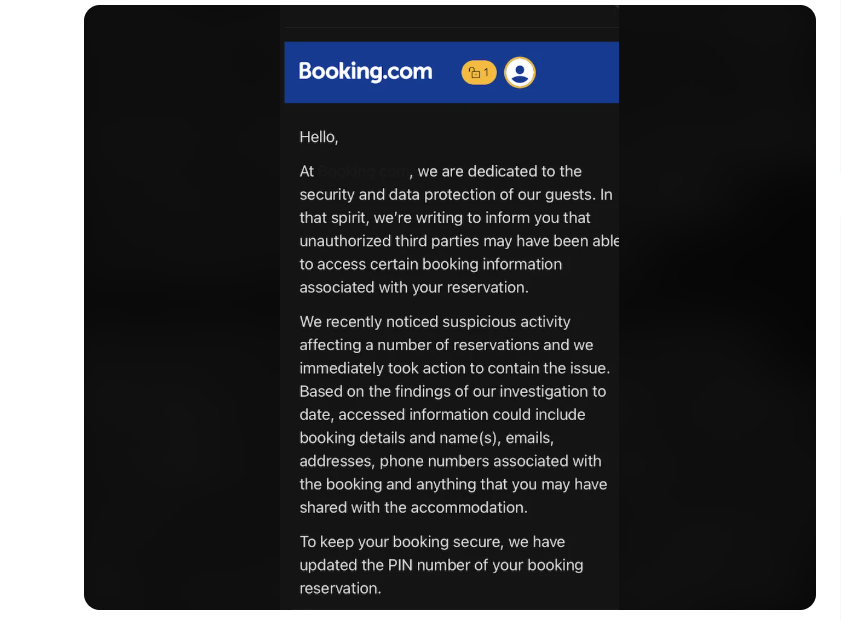
Source: Reddit
What can travelers expect?
With access to booking details, attackers can:
- Know when you’re traveling
- Know where you’re staying
- Contact you at exactly the right moment
This makes it much easier to create fraudulent messages that feel legitimate, especially when they reference real reservations. And incidents like this are often followed by a wave of targeted phishing attempts, with attackers impersonating hotels or booking platforms to send out phishing emails, texts and other messages. In some cases, they may even use official communication channels linked to bookings, making scams much harder to detect.
This type of abuse has already been observed in the wild.
Bitdefender Labs reported a malicious campaign targeting Booking.com partners, in which attackers impersonated the platform and sent fake messages about guest complaints or reservation issues.
The goal was to trick recipients into downloading malicious files, installing malware designed to steal credentials and take control of systems.
Once attackers gain access to hotel or partner accounts, they can escalate, potentially reaching out to real customers using legitimate booking data, making scams even more convincing.
The hidden risk: Malware and account takeover
Some of the most dangerous follow-up attacks involve more than just phishing.
Fraudulent messages may include:
- Attachments disguised as invoices or booking confirmations
- Links to fake payment or login pages
Interacting with these can:
- Install malware on your device
- Steal login credentials
- Hijack accounts or active sessions
How to stay safe
With attacks becoming more realistic, the safest approach is to focus on what a message asks you to do, not just how it looks.
- Be wary of urgent requests, especially those asking for payment or sensitive information
- Avoid clicking links or downloading attachments: Even if the message looks legitimate
- Verify outside the initial messages: Log in to the official platform or contact the provider directly
- Don’t make payments outside the platform
- Use tools to double-check suspicious content: You can analyze messages with Bitdefender Scamio or scan links using Bitdefender Link Checker
What this means for businesses and travelers
This kind of incident doesn’t just affect individual travelers. It can also create serious risks for small businesses in the hospitality sector.
For small hotels, B&Bs, and rental hosts
For very small businesses, a single compromised device or account can have a ripple effect. If attackers gain access to booking systems or partner accounts, they may be able to view reservation data, impersonate the business, and contact guests directly.
Solutions like Bitdefender Ultimate Small Business Security help reduce that risk by protecting devices, accounts, and daily operations. With advanced malware and phishing protection, behavioral detection that blocks suspicious scripts, and ransomware prevention, it offers a simple way for small teams to secure their systems without added complexity.
For travelers and everyday users
For consumers, the main risk comes after the breach, when stolen data is used to craft highly believable messages.
This is where having an extra layer of protection can make a difference. Bitdefender Premium Security helps block phishing attempts, detect malicious links, and protect sensitive data across devices, especially useful when dealing with travel-related communications.
tags
Author

Alina is a history buff passionate about cybersecurity and anything sci-fi, advocating Bitdefender technologies and solutions. She spends most of her time between her two feline friends and traveling.
View all postsYou might also like
Bookmarks
