Instagram account recovery scams: how fake helpers steal your profile twice

June 16, 2026
Lost access to your Instagram account? Scammers know panic makes people rush. Instagram account recovery scams exploit hacked profiles, fake Meta support pages and stolen login codes to turn a stressful moment into account takeover.
Key Takeaways
- Instagram account recovery scams often pose as Meta, Instagram support, cybersecurity experts or “ethical hackers” who claim they can restore a hacked Instagram account quickly.
- Scammers may steal passwords, recovery codes, two-factor authentication codes or payment details by sending fake Instagram recovery links.
- A hacked Instagram account can be used to scam followers, spread malicious links, impersonate the owner, steal private messages or damage a creator’s reputation and income.
- Users should recover accounts only through official Instagram and Meta channels, verify suspicious links before clicking and use dedicated security tools to prevent or mitigate damage.
Why Instagram account recovery scams are so dangerous
Instagram account recovery scams work by striking precisely when users are most vulnerable. When someone is locked out of an account, sees unfamiliar posts, receives password reset emails or notices messages they did not send, their first instinct is often to fix the problem fast. Scammers exploit that sense of urgency.
Unlike a random phishing message, a fake account recovery offer can feel helpful. It may appear under posts about hacked accounts, inside Instagram comments, in search results, or through a direct message from someone claiming to know a “trusted recovery expert.” Most scammers pose as Meta support, while others pretend to be ethical hackers, cybersecurity specialists, social media agents or previous victims who “got their account back” using a certain person.
The danger is obvious: the victim is already worried about losing control, making them an attractive target for opportunistic scammers.
How Instagram account recovery scams usually work
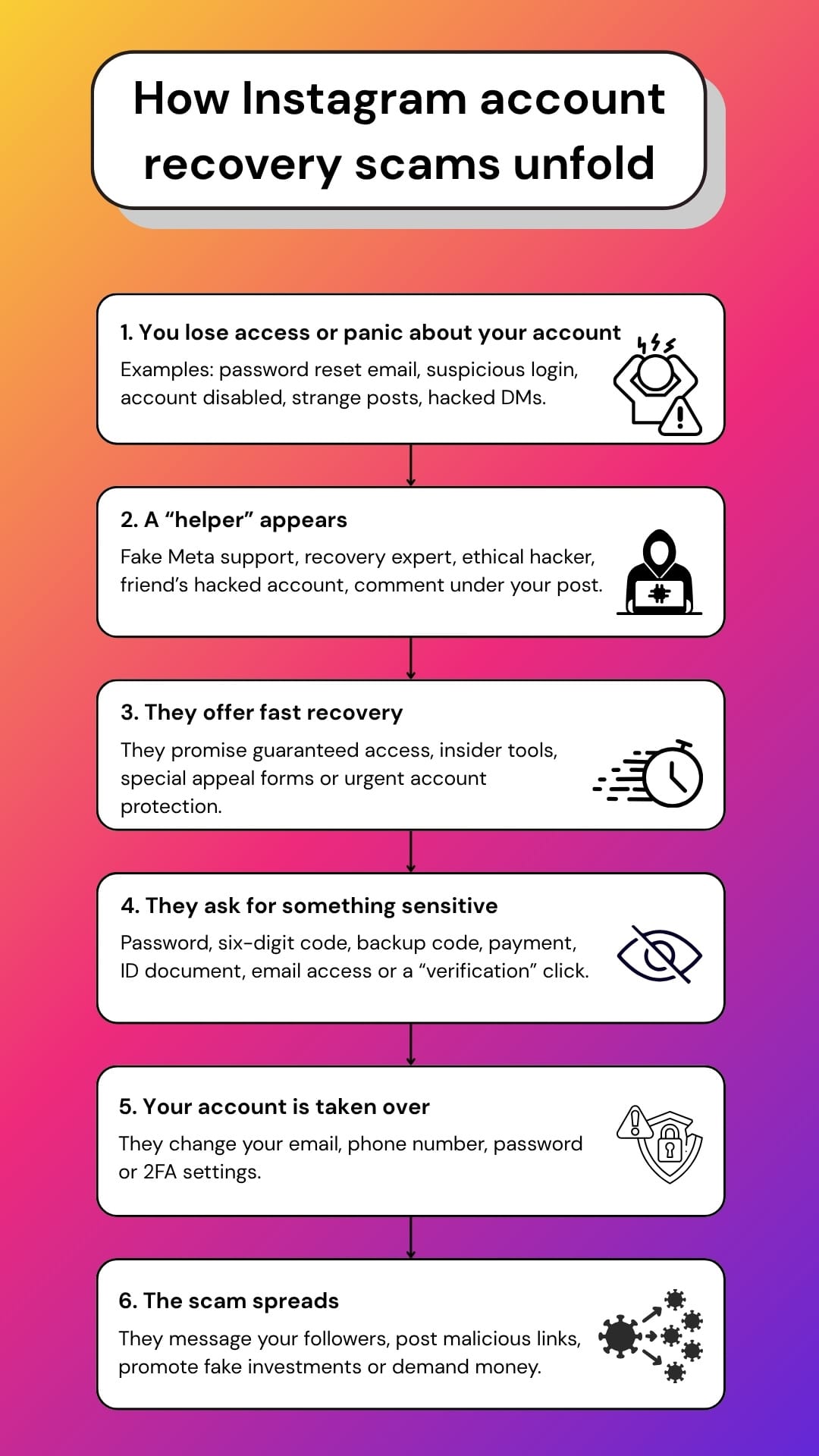
Most Instagram account recovery scams follow a familiar pattern. First, the scammer identifies someone who is locked out, confused or publicly asking for help. Then they offer a shortcut: fast recovery, guaranteed access, special Meta contacts or a private tool that can “unlock” the account.
From there, the scam can unfold in various ways. The scammer may ask for an upfront fee, then demand more money for “server access,” “verification,” “software,” or “final activation.” They may even send a fake Instagram login page to steal your password. Alternatively, they might ask for your email address, phone number, backup codes or a six-digit security code. In some cases, they may persuade you to change your account details yourself, unknowingly granting them access.
A common version involves a message from a friend’s compromised account. The message might say they need your help recovering their Instagram account and ask you to send a code you received. That code may actually be tied to your own account. Once you share it, the attacker can reset your password, change your email address and lock you out.
That’s why recovery-code scams are so effective. The message appears to come from someone you know and may trust. The request sounds small, and the victim may not realize that a legitimate Instagram security code should never be shared with anyone.
The most common Instagram account recovery scams
Fake recovery agent
One of the most visible scams is the fake recovery agent. These accounts often have bios filled with terms like “account recovery,” “cyber expert,” “Meta specialist,” “ethical hacker” or “Instagram unlock service.” They may use screenshots of fake testimonials and claim they can recover lost accounts in minutes.
Fake Meta or Instagram support
Another major threat is fake Meta or Instagram support. These scammers send messages warning that your account will be deleted, suspended or permanently disabled unless you verify your identity. The link usually leads to a phishing page designed to steal your login details. Some fake support pages also appear in comments, especially under posts from creators, small businesses or users complaining about account problems.
Malicious links in Instagram comments
You might also find these scams in the form of malicious recovery links spread through comments and DMs. These links may claim to help you recover a hacked profile, but they can lead to phishing pages, malware downloads or pages that collect personal information. Before opening a suspicious recovery link, users can paste the message, link or screenshot into Bitdefender Scamio to get a quick scam assessment and a second opinion before taking the risk.
For creators and small businesses, account recovery scams can be even more damaging. A hijacked Instagram profile may mean lost income, broken brand relationships, fake giveaways, fraudulent product promotions or malicious links sent to followers. Bitdefender Security for Creators is especially relevant in this context because creators need protection that accounts for social account takeover, scams and the broader digital footprint around monetized profiles.
What scammers can do after stealing your Instagram account
Once scammers gain access, they rarely stop at the account itself. They may change your password, email address and phone number to keep you locked out, delete posts, steal private photos, read direct messages, look for sensitive conversations, and impersonate you to scam your followers.
A hacked Instagram account can be used to promote fake crypto investments, fake giveaways, romance scams, phishing links, counterfeit products or fake emergency requests for money. If the account belongs to a creator, the attacker may exploit it to perpetuate the scam further.
There is also an identity risk. Instagram accounts often expose personal data like names, locations, friends, family members, linked businesses and personal habits. If your details have appeared in data breaches or on the dark web, scammers may combine that information with your social media presence to make impersonation more convincing. Bitdefender Digital Identity Protection can help users monitor exposed personal information and spot signs that their identity or online accounts may be at risk beyond Instagram.
How to spot a fake Instagram recovery offer
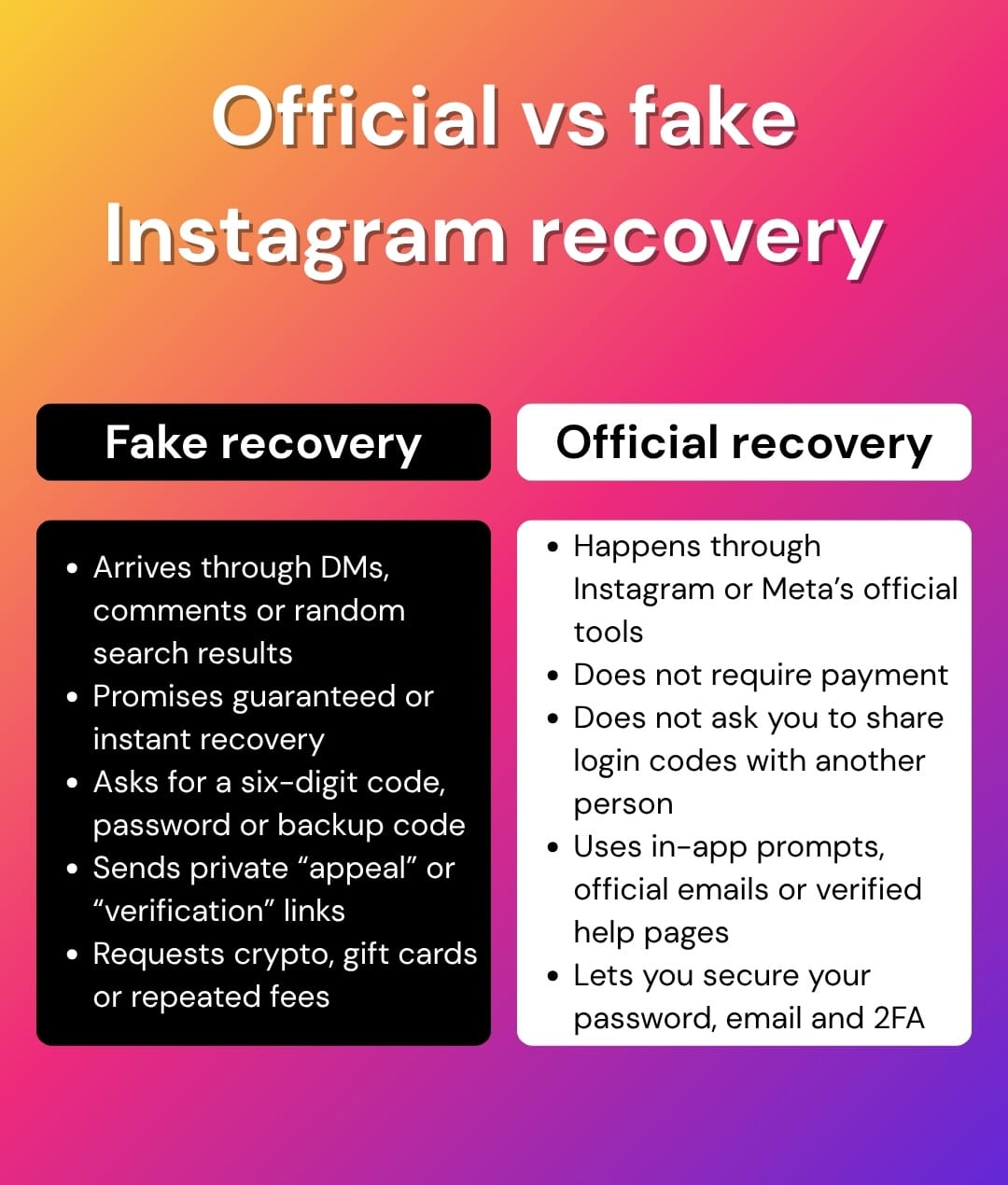
A real account recovery process should happen through Instagram or Meta’s official channels, not via a stranger in your DMs. Be cautious if someone promises guaranteed recovery, asks for payment through crypto or gift cards, claims to work for Meta but contacts you from a normal profile, or asks for login codes.
Other red flags include:
- “I know someone who can recover your account”
- “Send me the six-digit code so I can verify you”
- “Your account will be deleted in 24 hours”
- “Pay now and I can unlock it instantly”
- “Use this private appeal form”
- “Do not contact Instagram support”
Scammers often use urgency, secrecy and technical language to leave victims feeling they have no other option. If you find yourself in this position, try not to panic, take a step back and avoid hasty decisions.
What to do if your Instagram account is hacked
Use Instagram’s dedicated features
Start with the official Instagram recovery process. Use Instagram’s in-app recovery options or Meta’s official account recovery resources. Check whether you received a legitimate email from Instagram about a changed email address or password, because some security emails may allow you to reverse unauthorized changes.
Ignore ‘helpful’ comments and DMs
Do not pay a recovery agent. Do not send authentication codes, backup codes, passwords, ID documents or payment details to anyone who contacted you through DMs or comments. If you still have access to the account, change your password, enable two-factor authentication, log out of unknown devices and review linked emails, phone numbers and third-party apps.
Mitigate damage if you have already fallen prey
If you clicked a suspicious link, change the password for your Instagram account and the email account connected to it. If you used the same password elsewhere, change it there too. Warn your followers that your account may have been compromised, especially if suspicious messages or links were sent from your profile.
How to protect yourself from Instagram account recovery scams
The best protection is to make your account harder to steal before you ever need recovery. Use a strong, unique password and enable two-factor authentication with an authenticator app rather than relying only on SMS. Keep your email account secure, because whoever controls your email may also control your recovery options. Use a dedicated password manager like Bitdefender SecurePass to avoid password fatigue.
Be careful with Instagram comments and DMs that promise help. Do not search randomly for “Instagram recovery expert” and trust the top search results. Scammers optimize their profiles to show up exactly when victims are desperate.
For suspicious messages, recovery links or screenshots, use tools such as Bitdefender Scamio before interacting. For creators, Bitdefender Security for Creators can help address risks around account takeover and malicious campaigns targeting monetized profiles. For broader exposure, Bitdefender Digital Identity Protection can help monitor whether personal data tied to your digital identity has been exposed and could be used in future scams.
Conclusion
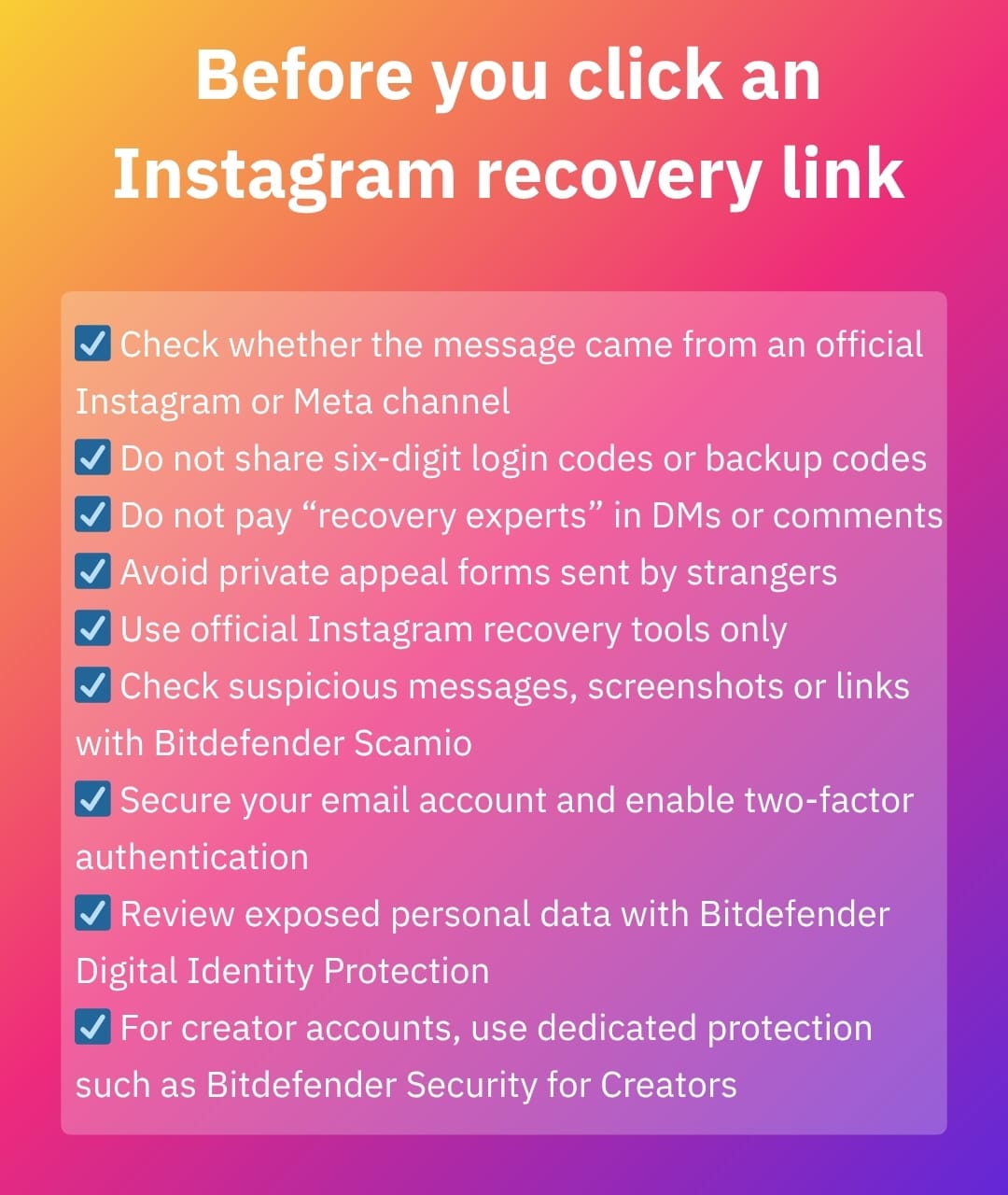
Instagram account recovery scams are a wolf in sheep’s clothing. They pose as helpful hands but target people who are already stressed, locked out or afraid of losing years of activity on the platform. The safest rule is simple: recover your account only through official Instagram and Meta channels, never through strangers promising shortcuts.
If someone asks for your password, six-digit code, backup code, payment or “verification” through a private link, assume they’re trying to steal your account and not helping you recover it.
Frequently asked questions (FAQ)
Can a hacked Instagram account be recovered?
Yes, a hacked Instagram account can often be recovered, especially if you act quickly and use Instagram’s official recovery process. Recovery may involve confirming your email or phone number, reversing unauthorized changes, verifying your identity or completing security checks. Avoid third-party “recovery experts,” because many are scams.
What can a scammer do with my Instagram account?
A scammer can lock you out, change your login details, read private messages, impersonate you, contact your followers, post malicious links, run fake giveaways, promote investment scams or demand money to return the account. For creators and businesses, a hacked account can also damage revenue, reputation and audience trust.
What does account recovery mean on Instagram?
Account recovery on Instagram means regaining access to an account after you forgot your password, lost access to your login method, were hacked or had your account details changed without permission. Legitimate recovery should take place through Instagram’s official app, Help Center or Meta account recovery tools, not through DMs, comments or paid recovery agents.
tags
Author

Vlad's love for technology and writing created rich soil for his interest in cybersecurity to sprout into a full-on passion. Before becoming a Security Analyst, he covered tech and security topics.
View all postsYou might also like
Bookmarks
