Scam request verifier for jobs, loans, housing, taxes and travel

November 10, 2026
A rental deposit, job offer, loan approval or tax warning can look legitimate when you’re already under pressure. This scam request verifier uses questions tailored to five life events to help you spot suspicious demands, check senders independently and respond before sending money or personal details.
Key takeaways
- Life-event scams exploit urgent needs involving work, credit, housing, taxes or travel
- A convincing offer can turn into a demand for money, credentials or identification
- Pressure, unexpected contact and unusual payment instructions are warning signs
- Verify independently; after exposure, contact your payment provider and secure accounts
How to use this scam request verifier
A life-event scam is a descriptive term, not a strictly defined category. Someone posing as a recruiter, lender, landlord, tax official or travel provider disguises a demand for money or data as a routine step.
If you find yourself in this situation, ask three questions:
- Who is asking?
- What would I send?
- Can I confirm through a website or number I find independently?
A familiar logo, caller ID or polished website doesn’t prove a service is legitimate. If you can’t confirm the entity is genuine, don’t proceed.
Check the request against five life events
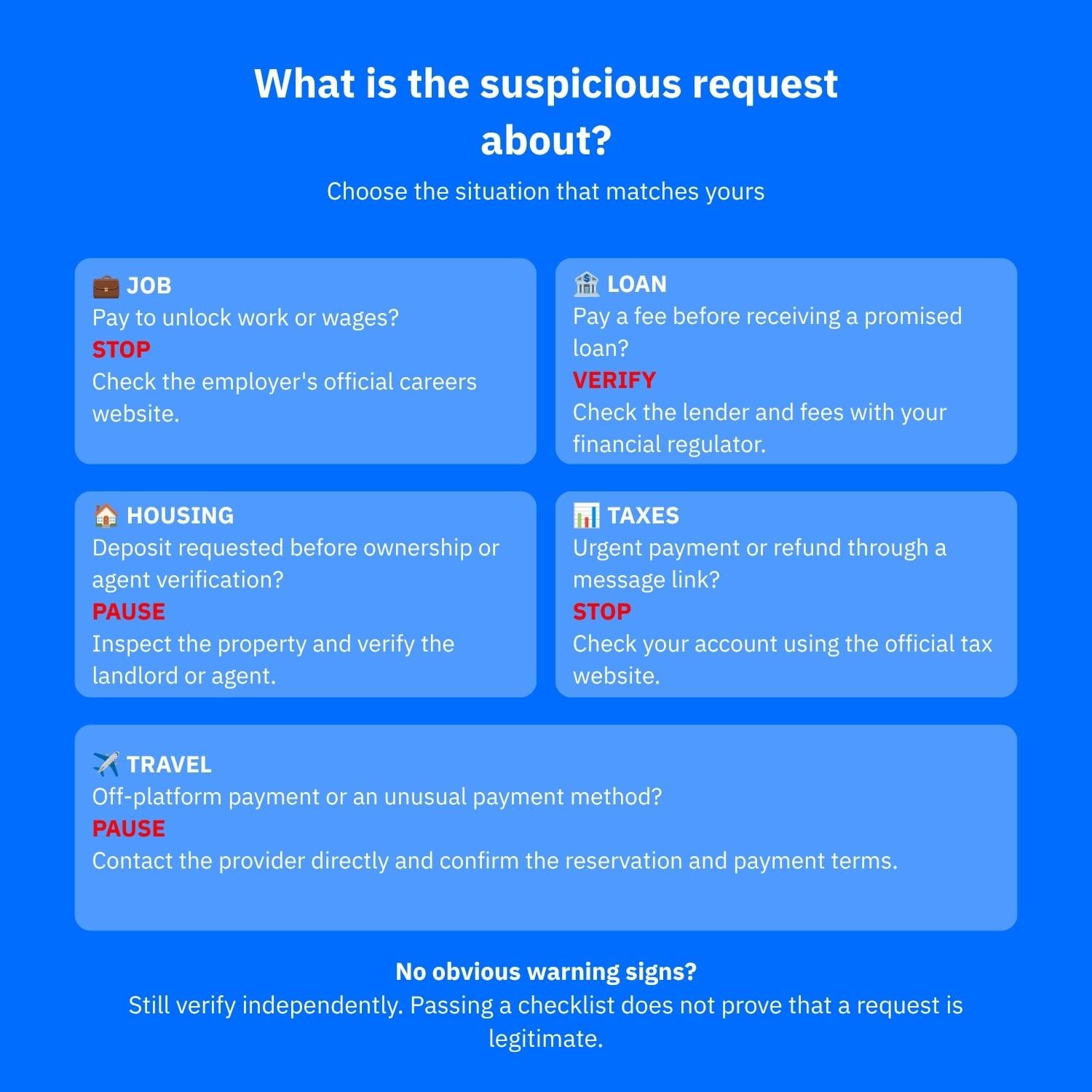
Jobs – paying to unlock wages?
Stop. Fake remote-work recruiters may display fabricated earnings, sometimes paying a small amount first, then demanding cryptocurrency deposits to unlock tasks or withdrawals.
Confirm the vacancy on the employer's independently accessed careers website. Never pay to receive wages. If you need further guidance, check out our guide to task scams and fake online jobs.
Loans – fee before approval?
High risk. Advance-fee scams promise a loan but demand insurance or processing payments first. UK rules allow some genuine brokers to charge disclosed fees, so a fee alone proves nothing.
Check the lender's authorization and contact details with your local financial regulator; don’t use the number in the offer.
Housing – deposit before viewing?
Pause. Fraudsters use real listings, change contact information and demand deposits or identity documents. Compare the address and agent across independent sources.
Inspect the property yourself or through a trusted person, then confirm the recipient is authorized to rent it. Even a self-guided viewing is not proof.
Taxes – demand through a text link?
Do not follow the link. Fake notices may threaten penalties or promise refunds to collect payments and banking details.
The IRS usually first contacts US taxpayers by mail and sends texts only with permission; UK HMRC can send genuine texts. Verify any claim by independently opening your tax authority's website or account.
Travel – pay outside the booking site?
Verify independently. Fake airline and hotel sites, paid search ads and fraudulent travel deals can steal payments.
Confirm reservations with the provider, read payment and cancellation terms, and reject demands to pay only by gift card, cryptocurrency or wire transfer. The FTC also warns about fake toll-fee texts.
What if you’ve already responded?
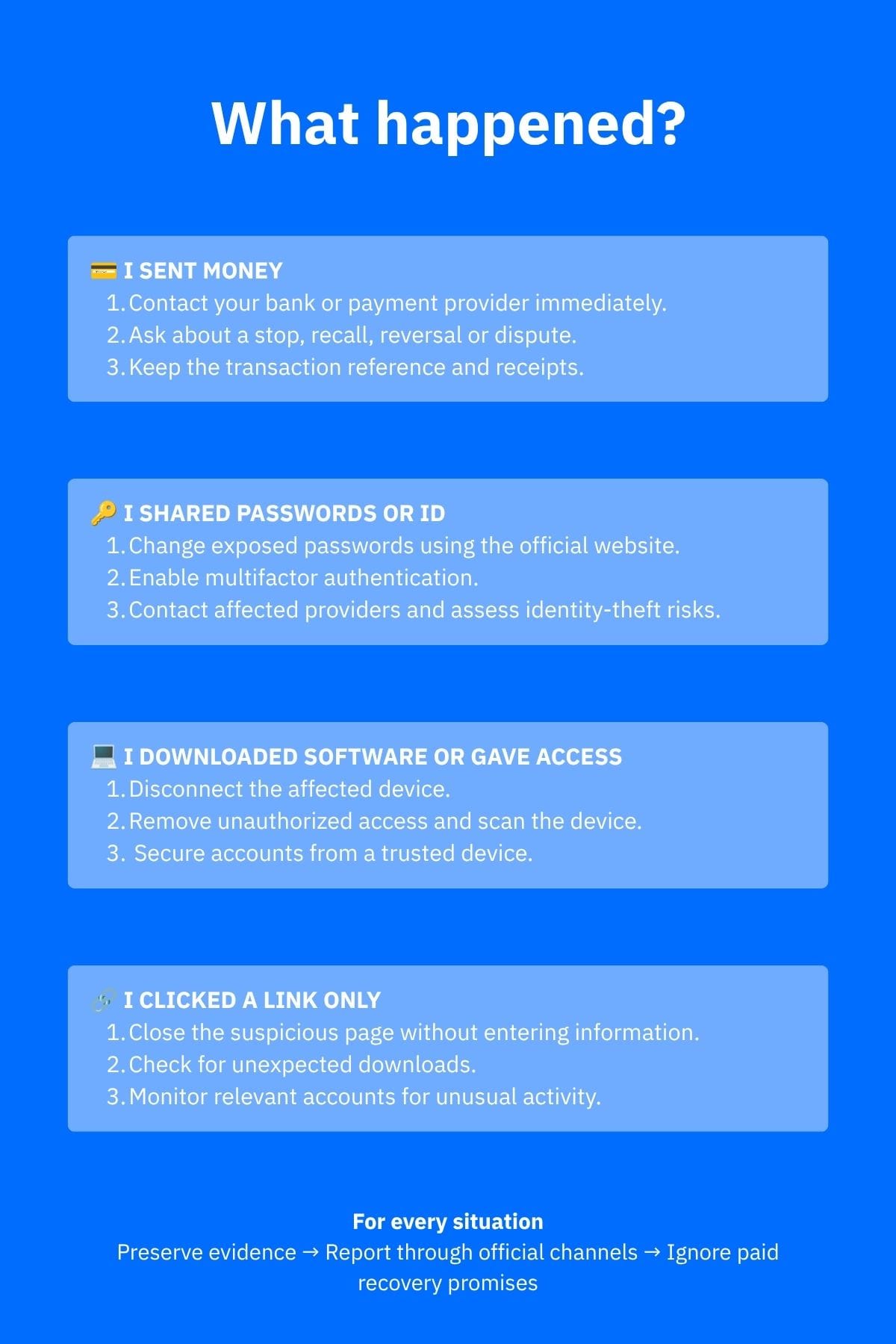
Sent money? Contact your bank, card issuer or payment service immediately; request a stop, recall or dispute, depending on how you paid. Recovery is not guaranteed. Read our comprehensive bank-transfer recovery guide for more in-depth guidance.
Shared passwords or identity documents? Change compromised passwords from the official site, enable multifactor authentication and contact the affected provider. Consider local identity-theft reporting services.
Downloaded software or granted remote access? Disconnect the device, remove unauthorized access, scan it and change passwords using a trusted device.
Save messages, URLs and receipts with our scam evidence checklist. Report the case through the appropriate local authority using our country-specific scam reporting directory. Beware anyone charging to recover lost funds.
Scam request verifier (download)
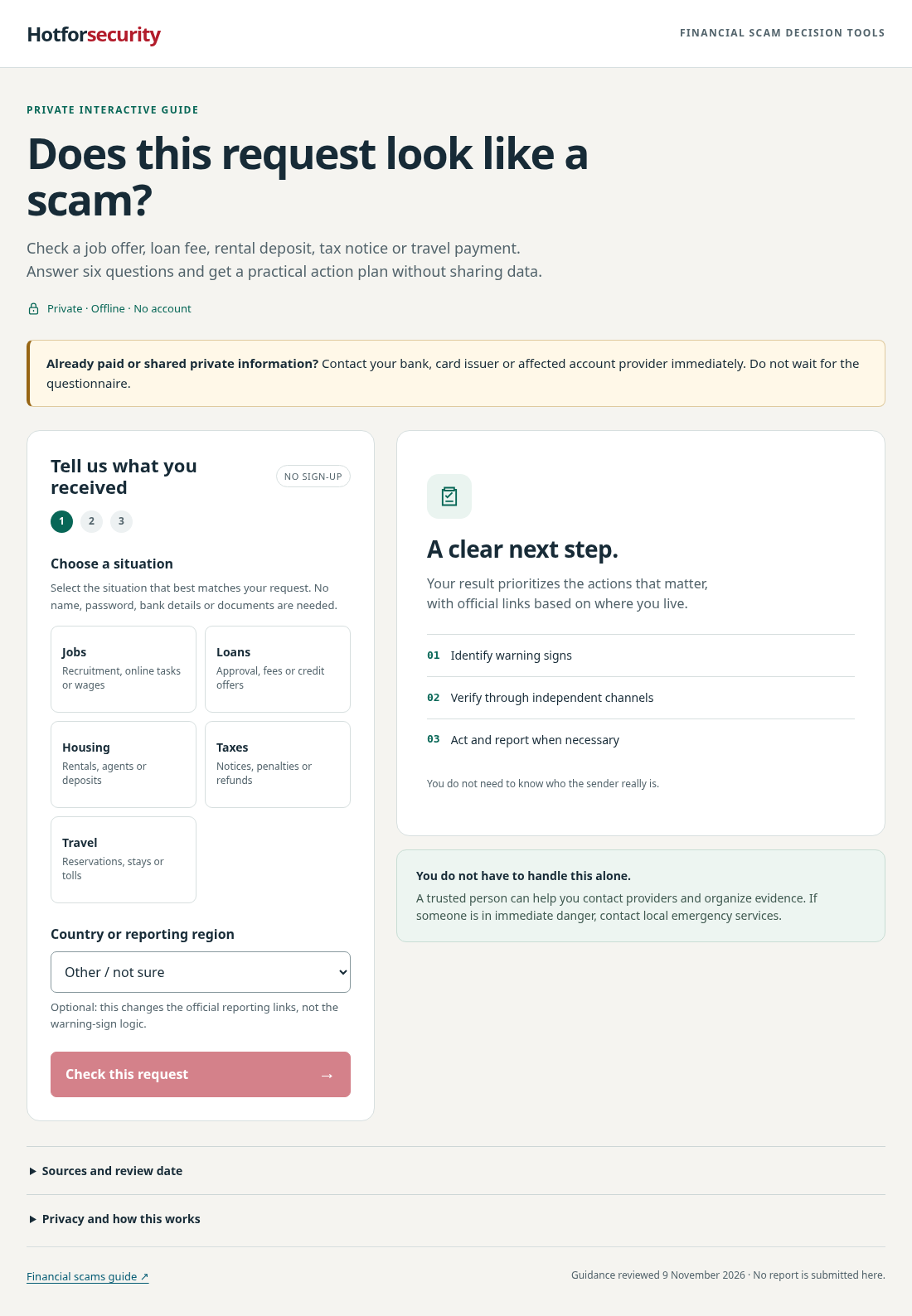
Not sure whether a job offer, loan fee, rental deposit, tax notice or travel payment is legitimate? Download our free Scam Request Verifier, choose your situation and answer six targeted questions. The tool helps you identify warning signs and generates a personalized action plan you can print or save as a PDF.
Everything runs offline, directly in your browser. No account, installation or personal information is required, and your answers are never uploaded or shared. Internet access is only needed to open official reference or reporting links.
Want to see how the Scam Request Verifier works before downloading it? The preview shows the tool's simple interface, where you can choose between jobs, loans, housing, taxes and travel. Each category includes six tailored questions designed to help you spot suspicious requests and understand what to do next. The tool generates a personalized, printable action plan without collecting or sharing your information.
How Bitdefender can help
Free Bitdefender Scamio checks suspicious messages, links, screenshots or QR codes and offers a second opinion, not a guarantee.
Bitdefender SecurePass helps create unique replacement passwords when credentials were exposed. Bitdefender Ultimate Security provides anti-phishing and malware defenses for suspicious sites or downloads.
Bitdefender Digital Identity Protection monitors for exposed personal information and data breaches. Bitdefender Security for Creators monitors supported Instagram, Facebook and YouTube accounts and provides anti-scam email protection, which helps creators spot fake collaboration offers.
Keep in mind that none of these tools can retrieve money already sent or guarantee protection from fraud.
Conclusion
Use this scam request verifier before following an urgent instruction. Stop the conversation and confirm the request through a website, app or phone number you find independently. Avoid using contact details that the sender supplied.
For a broader understanding of payment fraud, impersonation and recovery, explore our financial scams guide.
Frequently asked questions (FAQs)
What are the signs of a financial scam?
Common signs include unexpected contact, pressure to act immediately, impersonation, requests for sensitive information and payment methods that are difficult to reverse. Fraud may also appear inside a legitimate-looking job or rental listing. These clues should trigger independent verification, seeing as their absence does not prove that a request is safe.
What is a life event scam?
A life-event scam exploits a situation such as finding work, borrowing money, moving, filing taxes or arranging travel. Criminals imitate routine steps, including approval, identity checks, deposits or payments, to make their demands seem legitimate. It’s an umbrella term used here for several established scam types, not an official fraud classification.
What is a financial scam?
A financial scam is deliberate deception intended to take money or obtain something of financial value. Criminals may also collect banking credentials, identity documents or account access to steal money later. Unlike a billing mistake or ordinary customer dispute, a scam involves intentional misrepresentation to induce a payment or disclosure.
tags
Author

Vlad's love for technology and writing created rich soil for his interest in cybersecurity to sprout into a full-on passion. Before becoming a Security Analyst, he covered tech and security topics.
View all postsYou might also like
Bookmarks
