Task scams: How fake online jobs pay first, then demand deposits

September 22, 2026

Task scams disguise advance-fee fraud as easy online work. They may pay a small amount first, then pressure you to deposit your own money to unlock tasks or withdraw fake earnings. Here’s how to spot it and what to do if you have already paid.
Key takeaways
- Task scams offer simple online “work,” but the real goal is to get you to send money
- A small early payout can build trust before the platform starts demanding deposits
- Unsolicited recruitment, vague duties and requests to “top up” an account are serious warning signs
- Stop when a job asks you to pay to earn or withdraw money; if you already paid, contact your payment provider quickly
What are task scams?
Task scams are fake-job schemes that turn routine clicks into a financial trap. The “recruiter” offers remote work such as rating products, boosting listings, liking videos or doing supposed “optimization” work. A website or app then displays commissions that appear to grow with every task.
The balance on the screen is part of the deception. The US Federal Trade Commission (FTC) estimated there were about 20,000 task-scam reports in the first half of 2024, versus about 5,000 in all of 2023—those are US reports, not a measure of global prevalence.
The cover story keeps changing. On Sept. 14, 2026, Singapore Police warned about fake remote jobs involving Pokémon and other trading-card tasks, with victims asked for cryptocurrency deposits to unlock higher-value opportunities.
Task scams are a form of advance-fee fraud within the broader financial scams landscape: the “job” exists mainly to justify the next payment request.
How does a task scam work?
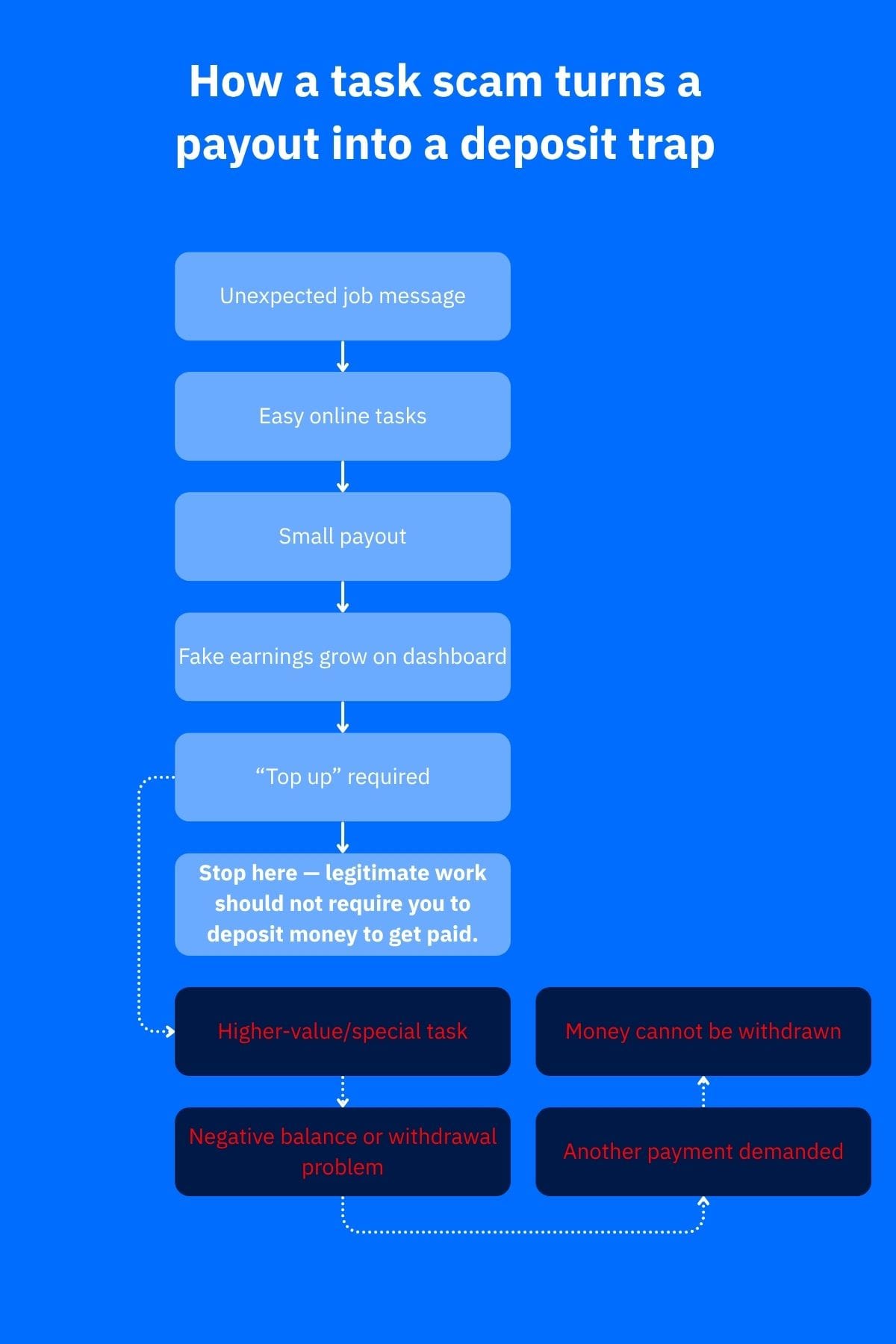
Official warnings describe a common sequence:
- Unexpected recruitment: A text, WhatsApp, Telegram or social-media message offers flexible remote work
- Easy tasks: You rate, like, subscribe, “boost” or “optimize” products or content
- Trust-building: You may receive a small real payout while a dashboard shows higher supposed earnings
- The top-up: You are told to deposit your own money to continue or withdraw commission
- Escalation: Each payment produces another demand until withdrawals fail or the recruiter disappears
Australian Scamwatch warns against job arrangements requiring upfront payment by bank transfer, PayID or cryptocurrency.
Warning signs of a task scam
In May 2026, Scamwatch warned that criminals were impersonating companies including Amazon and YouTube in task-based recruitment messages.
Watch for:
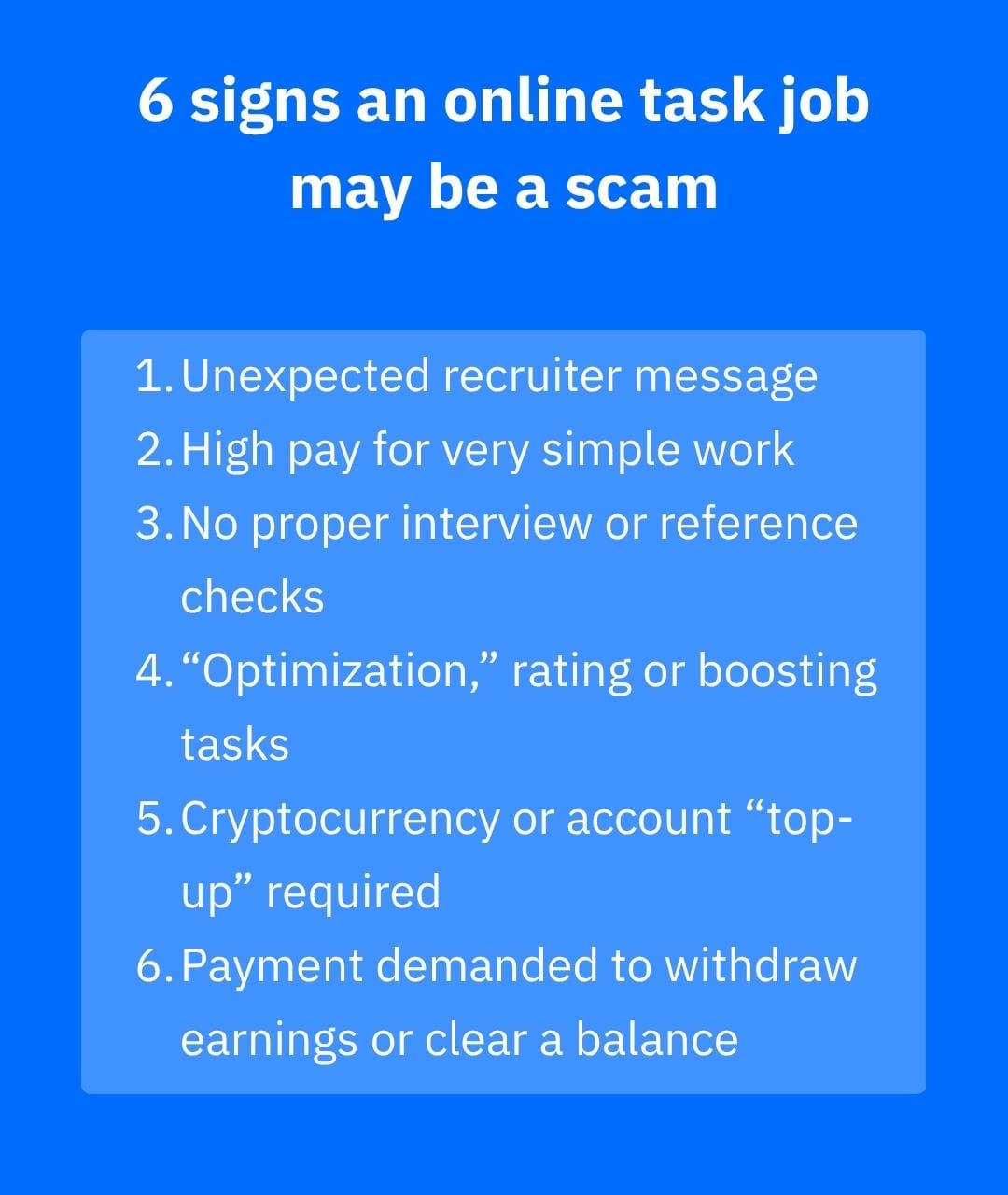
- unsolicited recruiting by text or encrypted messaging
- high pay for little work, with no meaningful interview
- vague duties involving “optimization,” ratings, reviews or simple clicks
- pressure to move to WhatsApp or Telegram
- requests to buy crypto or “recharge” a work account
- extra payments to fix a mistake, clear a balance or release earnings
The core rule is simple: legitimate work should pay you. You should not have to fund a job so you can receive wages or commissions.
How to protect yourself and what to do if you already paid
Verify the employer. Find the company’s official website yourself and contact its HR or recruitment team using independently sourced details. Check whether the role exists and whether the named recruiter works there.
Don’t send identity documents, banking credentials, authentication codes or wallet information to someone you have not verified. A small first payment is not proof of legitimacy. Early payouts are often used to build trust.
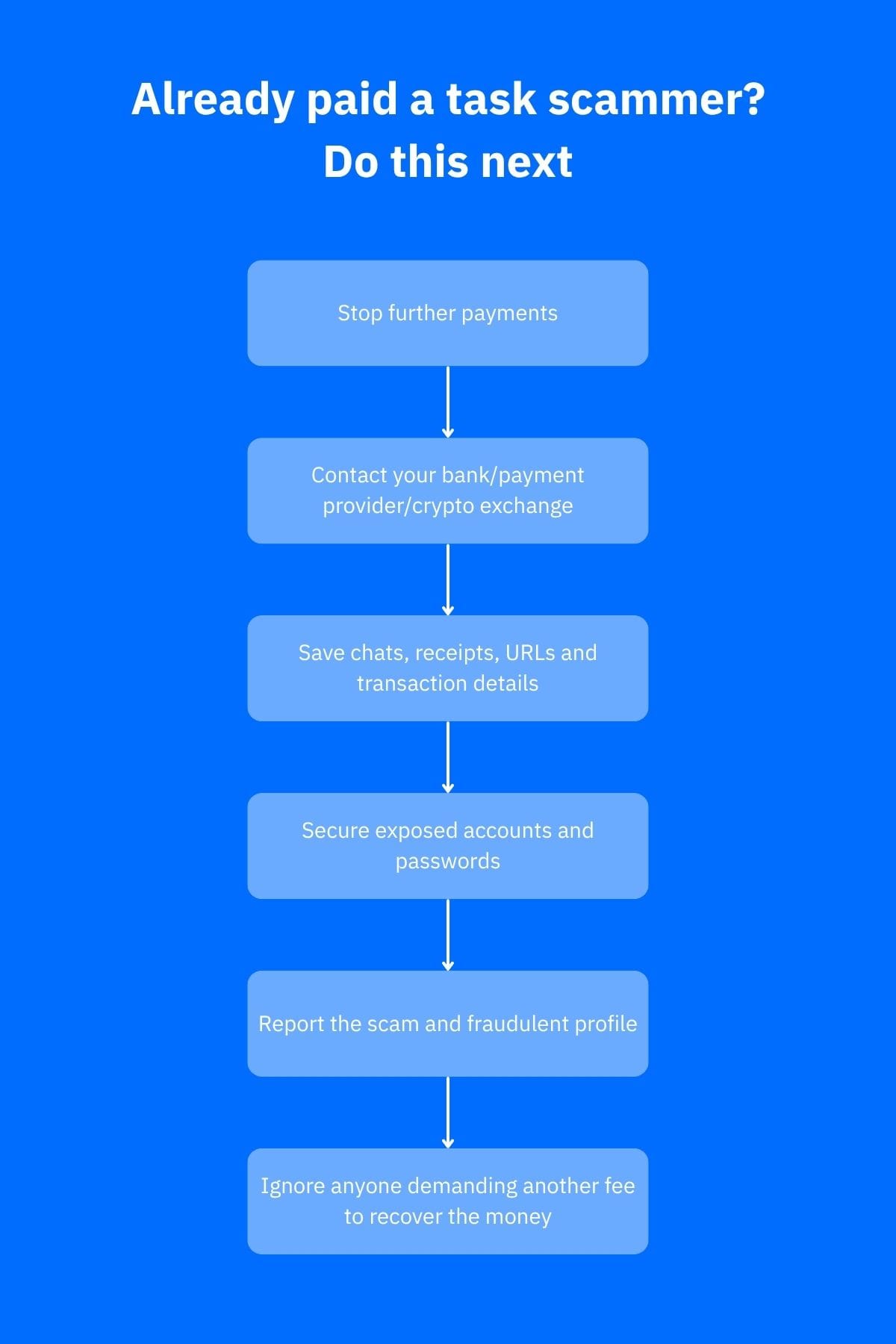
If you already paid, stop immediately. Contact your bank, card issuer, payment service or crypto exchange and explain that the transfer was related to fraud. Recovery depends on the payment method, timing and jurisdiction, so act quickly without assuming a refund is guaranteed.
Save chats, usernames, phone numbers, website addresses, wallet addresses, transaction IDs, receipts and screenshots. Use our scam evidence checklist and scam recovery timeline to organize your next steps. If you paid by bank transfer, follow the specific guidance for people who have sent money to a scammer by bank transfer.
Change any password you disclosed or reused, enable multi-factor authentication, and report the scam to the platform and the appropriate authority. The FBI also warns against paying “recovery” services that promise to retrieve lost crypto for another upfront fee.
How Bitdefender can help
Bitdefender Scamio can analyze suspicious job messages, links, QR codes and screenshots for scam indicators. It does not recover money already sent.
If you clicked dubious links or downloaded files, Bitdefender Ultimate Security combines device protection with Scam Protection Pro. Bitdefender Digital Identity Protection can monitor your digital footprint, breach exposure and dark web findings if you exposed personal information. Bitdefender SecurePass can help store unique credentials after you replace reused passwords.
Bitdefender Security for Creators is a narrower fit, but it can be relevant when a fake recruiter, sponsor or brand targets a creator’s email or social accounts, with social-account monitoring, phishing/scam email protection and recovery guidance.
Conclusion
Task scams make the first payout feel like proof that the job is genuine, then turn fake earnings into a reason to send your own money. Treat any request to deposit funds, “top up” a work account or pay to withdraw wages as a stop signal. Verify the employer independently and, if you already paid, move immediately into recovery mode.
Frequently asked questions (FAQs)
What are task-based scams?
Task-based scams are fake online jobs in which people complete simple activities such as rating products, liking content or “optimizing” listings for supposed commissions. The platform may display fake earnings and even provide a small initial payment, but eventually the victim is told to deposit personal funds to continue working or withdraw the supposed earnings.
What are some examples of job scams?
Job scams include task scams, fake-check jobs, reshipping schemes, money-mule recruitment, bogus recruitment-fee offers and fake work-from-home roles that charge for training or equipment. The recurring warning sign is that the supposed employer wants your money, financial access or identity information instead of simply paying you for legitimate work.
How do I know if I am chatting with a scammer?
No single message proves someone is a scammer, but several warning signs together should stop the conversation: unsolicited recruiting, vague duties, unusually easy money, no proper interview, pressure to switch to WhatsApp or Telegram, and requests for deposits or cryptocurrency. Verify the recruiter through contact details obtained independently from the company’s official website.
tags
Author

Vlad's love for technology and writing created rich soil for his interest in cybersecurity to sprout into a full-on passion. Before becoming a Security Analyst, he covered tech and security topics.
View all postsYou might also like
Bookmarks
