Where to report a scam and what to do next in your country

October 27, 2026
Scammers use fake stores, investment platforms, urgent messages and hijacked accounts to steal money or personal information. If you suspect fraud, choosing the right reporting channel is important, but stopping further damage matters even more. Here's where to report a scam and how to act.
Key takeaways
- A scam is a deception designed to obtain money, personal data or account access
- Fraudsters often impersonate people or organizations you may trust, then pressure you to pay or disclose information
- Unexpected payment demands, secrecy, unfamiliar links and promises of guaranteed returns are warning signs
- Contact your bank or account provider immediately, then notify police and the appropriate official reporting service
Where to report a scam first
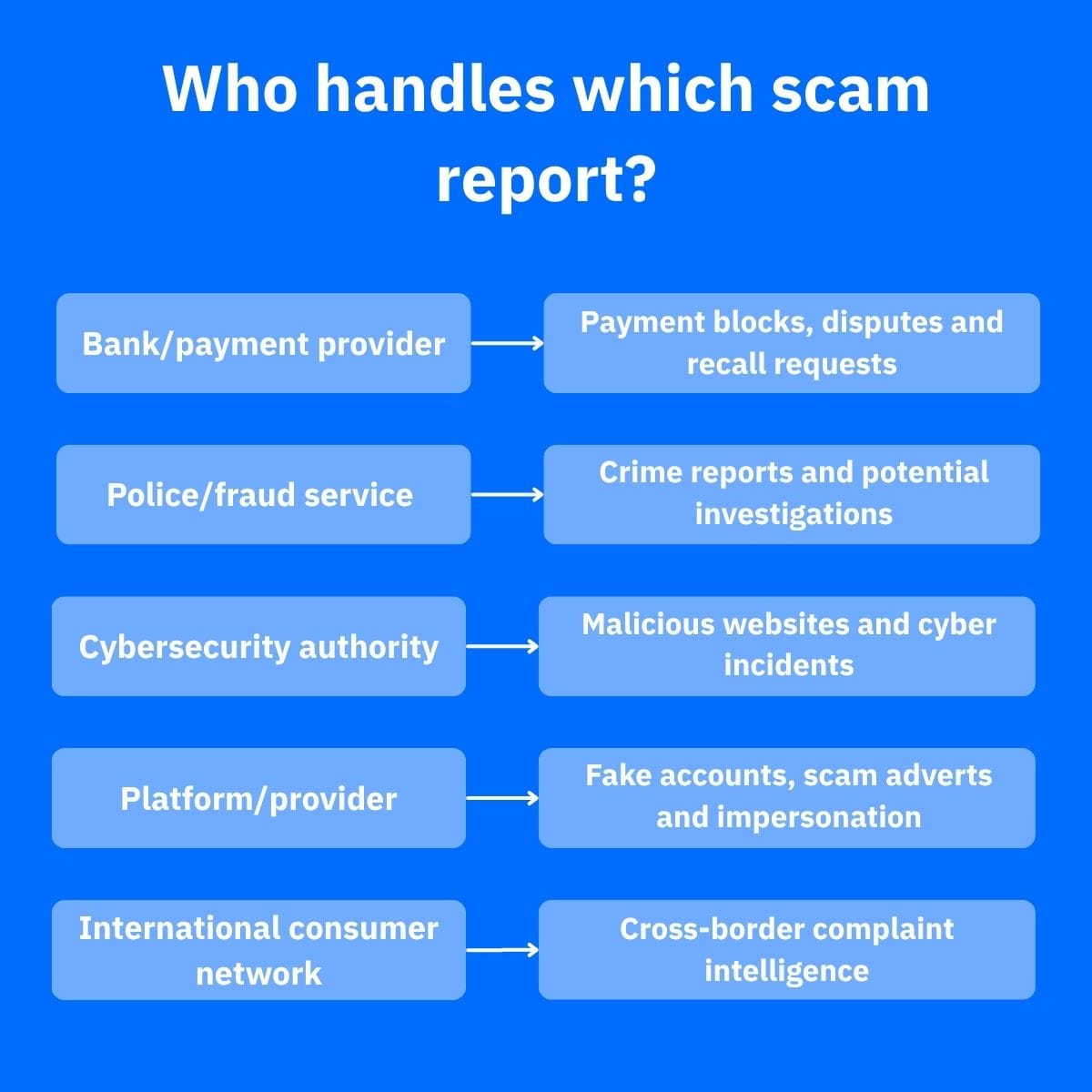
If money or an account is at risk, contact your bank or provider before filling out forms. Then notify police or your country's official fraud service. Consumer and cybersecurity agencies may accept additional reports, but they don’t replace police complaints.
Global scam reporting directory
Start with your country of residence; local police can advise you on cross-border cases.
|
Location |
Official reporting route |
|
United States |
FTC ReportFraud
for consumer scams; FBI IC3 for
internet-enabled crime. |
|
England, Wales and Northern Ireland |
Report Fraud,
which replaced Action Fraud in December 2025. |
|
Scotland |
Police Scotland
on 101 for non-emergencies. |
|
European Union |
Europol's
country directory points to national police reporting channels. |
|
Canada |
Canadian
Anti-Fraud Centre and local police. |
|
Australia |
Scamwatch
for scam intelligence; ReportCyber
for cybercrime. |
|
New Zealand |
NCSC / Own
Your Online; NZ Police 105 if
you lost money. |
|
India |
National Cyber Crime
Reporting Portal; call 1930 for financial cyber fraud. |
|
Singapore |
Singapore
Police for a crime report; ScamShield 1799 for guidance. |
|
South Africa |
South
African Police Service at your nearest station. |
In Romania, report cyber incidents to DNSC, and crimes to police. In Spain, INCIBE takes technical reports and advises at 017; report crimes to police. For cross-border consumer fraud, econsumer.gov offers an additional reporting channel, not refunds.
Europol does not accept crime reports directly from the public; victims should go through their national authorities.
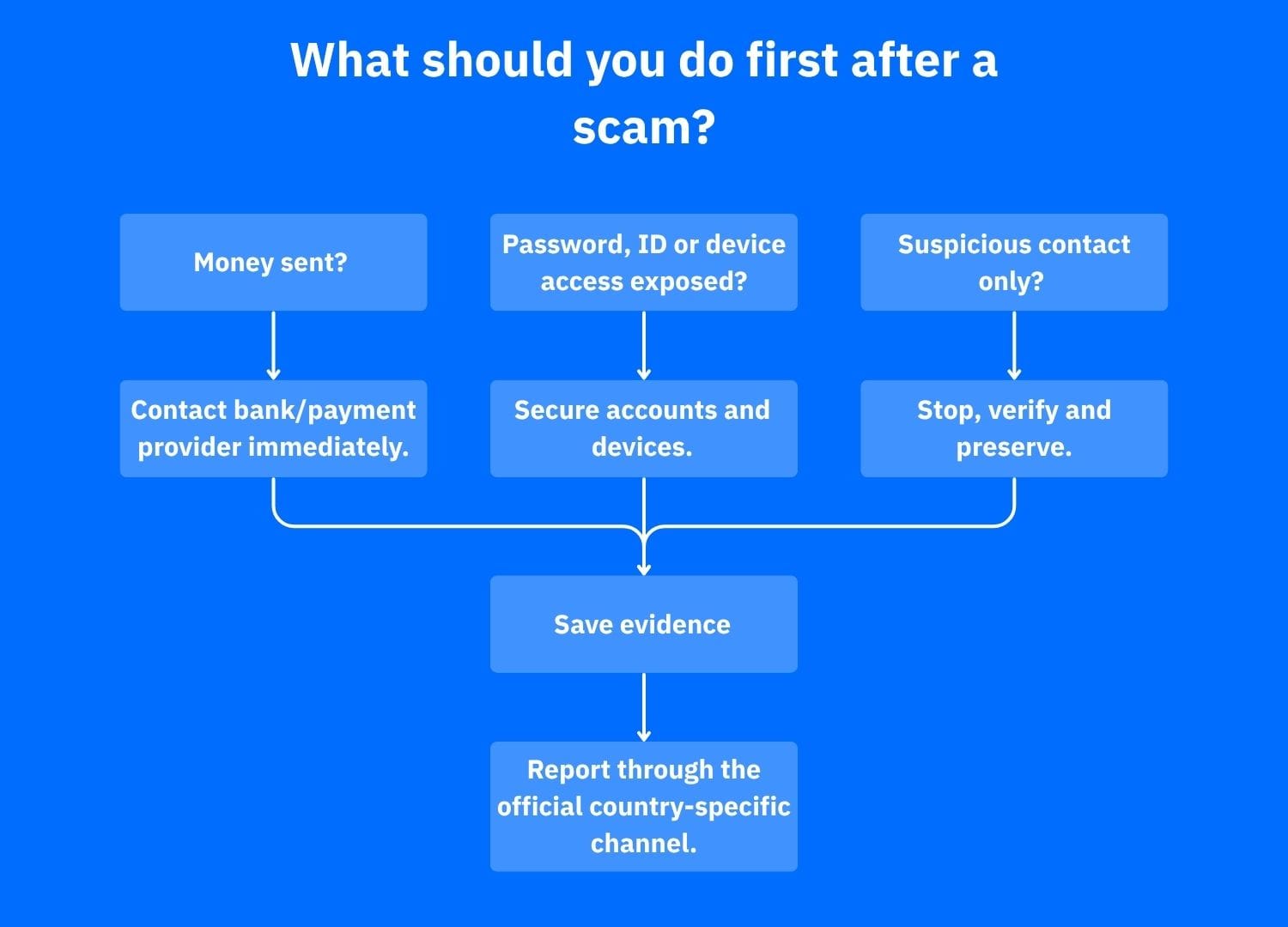
Your action plan depends on what happened
You received a suspicious message but did not engage
Don’t click links, scan unknown QR codes or call numbers in the message. Verify claims through official websites or apps. Save the message and report it through the platform and an official channel. Be wary of impersonators demanding secrecy or immediate payment.
You sent money or revealed payment details
Immediately: Call your bank or payment provider through official channels. Ask about blocking cards, recalling transfers or disputing charges. For cryptocurrency, contact the exchange, but blockchain transfers generally can’t be reversed. Refund options depend on payment method, jurisdiction and whether you authorized the transfer.
Next: File a report and retain its reference number. See our bank-transfer recovery guide and our explanation of authorized vs unauthorized fraud.
You shared passwords, identity documents or device access
From a trusted device, replace exposed and reused passwords, sign out of other sessions and enable two-factor authentication. If you installed remote-access software, disconnect and seek technical help. Contact the issuer of exposed identity documents. Report hijacked profiles, especially when followers may be targeted.
What evidence should you save?
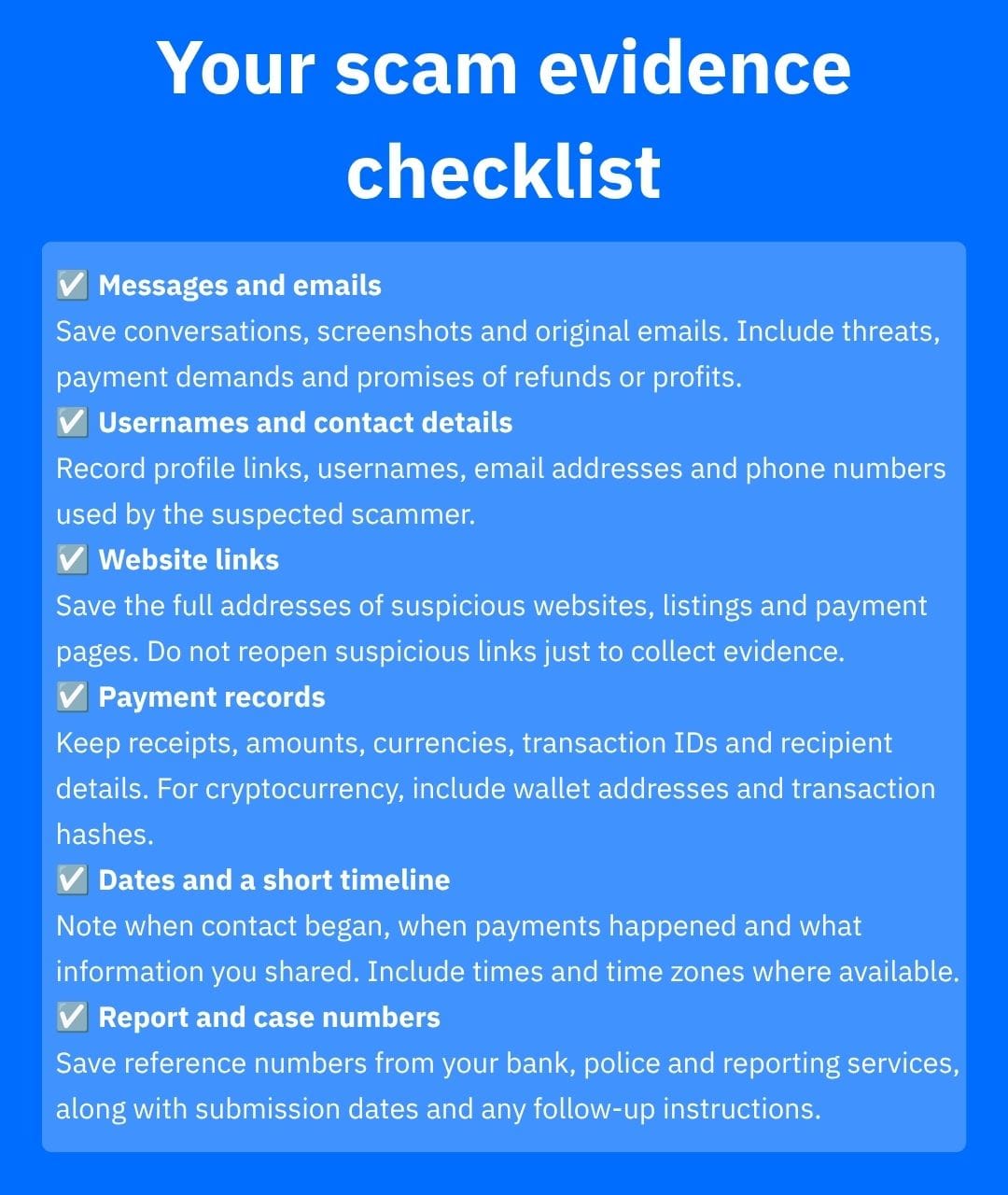
Save receipts, transaction IDs, dates, usernames, URLs, wallet addresses, phone numbers and message screenshots. Preserve original emails. Never upload passwords or identity documents to unofficial sites. Use our scam evidence checklist to create a timeline.
What happens after you report?
Your report can inform an investigation and warnings but it can’t guarantee a refund or investigation. Keep reference numbers and follow up through official channels. Reject promises to recover stolen funds for a fee. Speak with someone you trust or a victim-support service if you need support.
How Bitdefender can help
Before you respond to suspicious communications, Bitdefender Scamio can assess texts, links, QR codes and screenshots for you. After a suspicious download, Bitdefender Ultimate Security provides device protection and scam detection. Bitdefender SecurePass can generate and manage unique replacement passwords.
Where personal information may be exposed, Digital Identity Protection monitors breach-related exposure. For creators whose social accounts are targeted, Security for Creators offers account monitoring and recovery assistance. None of these services files a police report or recovers stolen money.
Conclusion
Knowing where to report a scam helps. First secure your money and accounts, then preserve evidence and report through official channels.
Frequently asked questions (FAQs)
Who do I report an international scam to?
Report to your local police or official fraud service, even if the scammer seems to be abroad. You can also file cross-border consumer complaints at econsumer.gov. If money has moved, contact your bank or payment provider first; filing an international report does not reverse a transaction.
How do I find a scammer’s location?
You generally can’t establish a scammer's location from a phone number, web address or profile. Criminals can fake caller IDs and identities. Preserve the available details for investigators instead of paying someone to trace the scammer or attempting to confront them.
Is there a database of scam numbers?
There is no complete, authoritative global database that identifies every scam number. Caller-ID tools and community reports can offer clues, but numbers may be spoofed or reassigned. Independently verify unexpected requests for money, passwords or login codes, even when a number appears legitimate.
Where should I report a scam website?
Report the URL to your national cybersecurity agency, if applicable. For phishing pages, use Google Safe Browsing; in the UK, use the NCSC form. Notify impersonated brands. If money or data was lost, file a separate fraud report.
tags
Author

Vlad's love for technology and writing created rich soil for his interest in cybersecurity to sprout into a full-on passion. Before becoming a Security Analyst, he covered tech and security topics.
View all postsYou might also like
Bookmarks
