Deepfakes are making romance scams harder to doubt

August 03, 2026

Romance scams have always depended on imagination.
The attractive stranger working overseas. The busy entrepreneur unable to meet in person. The new partner who happens to know an extraordinary cryptocurrency opportunity. The victim is asked to accept a relationship built from messages, carefully selected photographs, and promises about the future.
For years, the gaps in these stories offered a measure of protection. A refusal to speak on the phone or appear on camera could expose the person behind the profile. Stolen photographs could be found elsewhere online. Awkward language and inconsistent details might reveal that several people were operating the same account.
Generative AI is closing those gaps.
Scammers can now create convincing profile pictures, write fluent and emotionally responsive messages, clone voices, and produce manipulated videos. They may even use synthetic media during a brief video call to “prove” that the person in the photographs is real.
Deepfakes do not fundamentally change romance fraud. But they do make lies easier to manufacture, harder to challenge, and more persuasive.
Key takeaways
- Deepfakes can make fictitious online identities seem more credible
- Synthetic photos, voices, and videos are increasingly used in romance and investment fraud
- A video call should no longer be treated as proof of someone’s identity
- An authentic-looking person does not make an investment opportunity legitimate
- Independent verification and a second opinion remain among the strongest defenses
- Bitdefender RealCheck can help assess suspicious videos for manipulation and deceptive intent
When seeing is no longer believing
The power of a romance scam rarely comes from a single message—it comes from repetition.
The scammer checks in every morning, remembers personal details, offers comfort, and gradually becomes part of the victim’s daily routine. Only after trust has formed does money enter the conversation.
Sometimes it’s an emergency: a medical bill, a frozen bank account, a customs fee, or a plane ticket needed to finally meet. In other cases, the relationship evolves into investment fraud. The new romantic interest introduces a trading platform, provides apparent coaching, and shows the victim how much money others are supposedly making.
This hybrid of relationship and investment fraud is widely known as “pig butchering.” Interpol, however, recommends the term romance baiting, arguing that the older expression—borrowed from the criminals themselves—dehumanizes victims.
Whatever term is used, the mechanism is the same: emotional trust is converted into financial trust.
Synthetic media strengthens that conversion. A photograph can reinforce the invented lifestyle. A cloned voice can make the relationship feel intimate. A video clip can explain why the person cannot travel. A short video call can silence a suspicious relative who has been asking whether the online partner is real.
The content doesn’t need to be flawless. It only needs to arrive at the right emotional moment.
Deepfakes repair weak points
Many traditional warning signs focused on what the scammer could not provide.
Why won’t they send a recent photo? Why do they avoid phone calls? Why does their accent not match their story? Why can they never switch on the camera?
AI gives criminals potential answers to all these questions.
The FBI has warned that criminals are using generative AI to create realistic social media profiles, photographs for private conversations, cloned voices, and videos intended to “prove” that an online contact is a real person. The same technology helps scammers produce fluent messages at scale and operate across language barriers with fewer of the spelling and grammar mistakes that often used to give them away.
This creates a dangerous change in perception. Victims may feel they have done their due diligence because they have heard a voice, received personalized images, or spoken to someone on camera.
But there are two separate questions:
1. Is this photo, voice, or video authentic?
2. Is the person—and the opportunity they are promoting—trustworthy?
Answering the first does not answer the second.
Even completely authentic media can be used by a fraudster. The person on camera may be participating in the scam, acting from a script, or working inside one of the organized scam centers now operating around the world. In some cases, the people carrying out these conversations may themselves have been trafficked and forced to commit crimes.
The deeper lesson is that identity verification cannot validate an investment, erase financial red flags, or make an online relationship safe.
From affection to investment
Romance-baiting fraud is effective because the financial pitch does not initially feel like a pitch.
It comes from someone the victim believes knows them.
The scammer may start casually, mentioning trading success or sharing screenshots of supposed profits. The victim is encouraged to try a small amount. The fake platform then displays an impressive return, and an early withdrawal may even be permitted to build confidence.
Larger deposits follow.
When the victim tries to withdraw the money, the platform demands taxes, fees, or additional deposits. The profits never existed. The dashboard, customer-support representatives, investment groups, and reassuring partner were all part of the same controlled environment.
Deepfakes add another layer of manufactured consensus. A convincing “financial expert” can appear in a promotional video. Fake members of an investment group can post AI-generated testimonials. The romantic partner can send a video celebrating the victim’s apparent gains.
The screen fills with proof, yet none of it is independent.
That distinction matters. Fraudsters do not need to make every element believable on its own. They build a closed world in which every person, platform, document, and piece of media supports the same lie.
Social engineering remains cybercrime's most effective weapon

Today's most successful cybercriminals often don't hack computers—they hack people.
Whether it's an investment scam promising unrealistic returns, a fake bank representative requesting urgent verification, a romance scammer building emotional trust, or a business email compromise operation redirecting invoices, these attacks rely on psychological manipulation.
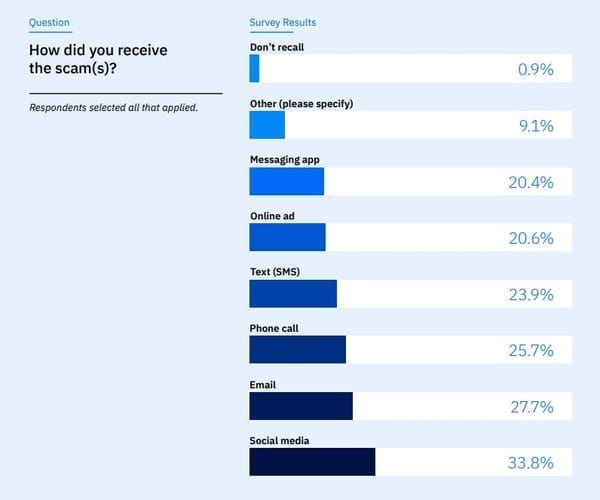
Our 2026 Global Scam Intelligence Report found that scammers increasingly meet victims where they already spend time—on social media, messaging platforms, SMS, phone calls, and online marketplaces.
Social media has evolved into a highly effective scam distribution channel, with 36% of users who encountered scams on social platforms interacting with them. Instead of baiting users hoping to open suspicious emails, scammers now conveniently place traps exactly where people spend hours every day.
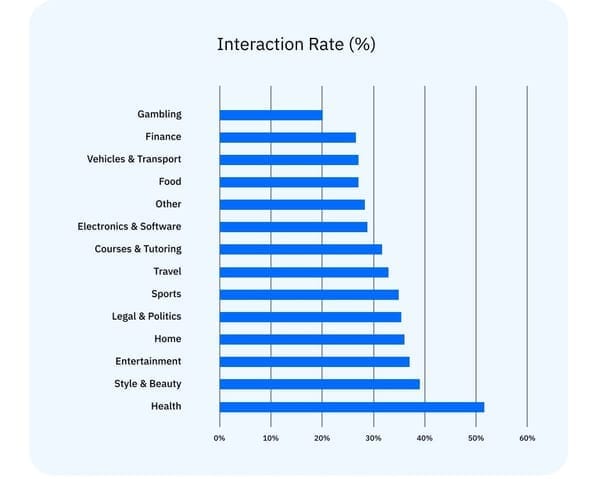
Data from the Bitdefender 2025 Consumer Cybersecurity Survey also supports these findings, with more than a third of respondents reporting they encountered a scam through their social media feed.
A video call is no longer the finish line
Consumers don’t have to entirely abandon video calls and they shouldn’t assume that every unusual image is fake. Most synthetic content is not criminal, and visual anomalies are not always reliable evidence of manipulation.
Instead, the arrival of deepfakes requires a broader verification habit.
- Be cautious when a new online relationship develops unusually quickly, becomes intensely emotional, or moves away from the original platform. Treat any discussion of cryptocurrency, trading, loans, money transfers, or financial emergencies as a major change in risk—regardless of how long you have been talking.
- Search independently for the person’s name and images, but remember that failure to find a duplicate photograph does not prove the profile is genuine. AI-generated faces may never have appeared anywhere else.
- Never use links, apps, or investment platforms supplied by an online romantic interest. Verify the business through the relevant financial regulator and locate its website independently. Screenshots, account balances, testimonials, and successful-looking withdrawals can all be fabricated or controlled by the scammer.
- Most importantly, tell someone you trust before sending money. Fraud thrives in private. A friend or relative who is not emotionally invested in the relationship may notice pressure, contradictions, or financial warning signs more easily.
Use technology to detect fake content
When a suspicious video forms part of the story, you can also use detection tools to obtain more context.
Bitdefender RealCheck is a standalone app for iOS and Android that analyzes uploaded videos or video links for signs of manipulation and deceptive intent. Rather than returning only a simple real-or-fake verdict, it provides a structured report covering suspicious elements, spoken content, and indications that the video may be designed to steal money, credentials, or personal information.
No detector should be the sole basis for trusting a stranger or making a financial decision. Deepfake analysis is best treated as one more layer of scrutiny—particularly when a video is used to sell an investment, explain an emergency, or overcome reasonable doubts.
If you suspect a romance scam
- Stop sending money immediately and contact your bank, card provider, payment service, or cryptocurrency exchange. Speed matters, although recovering transferred funds is not always possible.
- Preserve the conversation, profile details, phone numbers, email addresses, payment records, wallet addresses, and copies of any images or videos. Report the account to the dating app or social platform and notify the appropriate fraud or law-enforcement authority.
- Be wary of anyone who promises to recover the money for an upfront fee. Victim lists are valuable to criminals, and people who have already lost money are frequently targeted by recovery scammers.
- Do not let embarrassment prevent you from asking for help. These operations are designed to manipulate emotions over weeks or months and may involve teams of trained fraudsters, scripted conversations, fake platforms, and increasingly sophisticated AI tools.
Bottom line
Deepfakes are often discussed as spectacular technical deceptions: celebrities saying things they never said or public figures appearing in fabricated videos.
In romance fraud, their role can be quieter—and more dangerous.
A short voice message. A personalized photograph. A smiling face on a late-night video call. Each piece supplies the reassurance a victim needs to continue believing.
That is why consumer awareness can no longer stop at spotting visual glitches. The more useful question is not simply, “Does this look real?” It is, “Who benefits if I believe it?”
You may also want to read:
The deepfake detector in your pocket: introducing Bitdefender RealCheck
tags
Author

Filip has 17 years of experience in technology journalism. In recent years, he has focused on cybersecurity in his role as a Security Analyst at Bitdefender.
View all postsYou might also like
Bookmarks
