Cybercrime now rivals traditional crime across parts of Asia

June 19, 2026

Online threats have become embedded in everyday life across Asia and the South Pacific, according to a new INTERPOL report.
Digital crime now thrives thanks to organized scam operations. In more than half of the countries surveyed, cybercrime now accounts for over 30% of all recorded crime.
Key takeaways
- More than half of surveyed countries reported that cybercrime accounts for over 30% of all recorded crime
- Phishing remains the most widespread and financially damaging cyber threat across the region
- Criminals increasingly use AI, deepfakes, ransomware-as-a-service, and infostealer malware
- Data breaches and credential theft continue to fuel large-scale cybercrime operations
- INTERPOL warns that organized cybercrime networks are becoming more sophisticated and industrialized
- FTC data shows that social media remains one of the most effective channels for scammers
- Bitdefender research supports INTERPOL and FTC findings
Cybercrime continues to evolve at industrial scale
According to INTERPOL's latest Asia and South Pacific Cyberthreat Assessment Report, the rapid growth of digital banking, cloud services, mobile connectivity, and online financial platforms has expanded opportunities for cybercriminals. At the same time, criminal groups have become more organized and technologically advanced.
The findings highlight “a rapidly evolving cyber threat landscape,” according to Neal Jetton, director of INTERPOL's Cybercrime Directorate. He noted that criminals increasingly leverage AI, ransomware-as-a-service models, and sophisticated social engineering techniques.
The report identifies phishing as the most common and costly category of cybercrime. One-third of participating countries reported more than 10,000 phishing incidents.
Data breaches remain a major concern
Data breaches continue to play a central role in the cybercrime ecosystem.
INTERPOL found that system intrusions accounted for roughly 80% of reported data breaches in 2024. Malware was present in 83% of those incidents, while ransomware appeared in more than half.
The report also highlights a sharp rise in credential theft operations powered by infostealer malware that quietly harvests usernames, passwords, browser cookies, and authentication tokens from infected devices.
Stolen credentials are then sold or traded on underground markets, often serving as the first step toward account takeover, financial fraud, or ransomware.
AI is making scams more convincing
One of the most notable findings is the growing use of artificial intelligence by cybercriminals.
INTERPOL warns that AI-enabled attacks are lowering the barrier to entry for fraudsters while increasing the effectiveness of social engineering. Deepfake technology, AI-generated voice cloning, and increasingly sophisticated phishing messages are helping criminals impersonate trusted individuals and organizations with alarming realism.
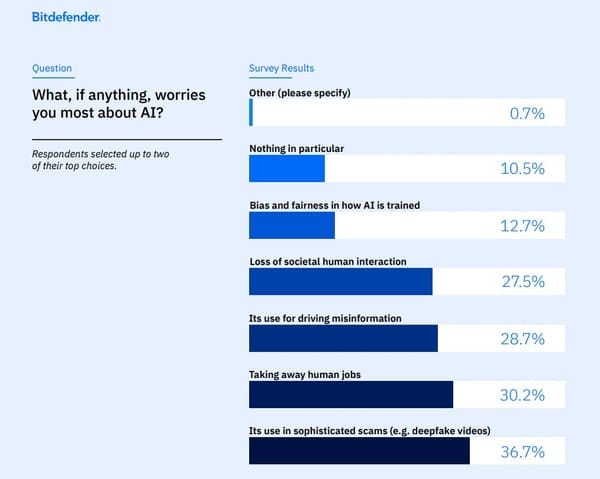
Everyday consumers are noticing the trend as well. In the 2025 Bitdefender Consumer Cybersecurity Survey, respondents across seven countries expressed concern about the growing use of AI for fraud, impersonation, and online deception.
The scam economy keeps expanding
Beyond traditional cyberattacks, INTERPOL's findings align with broader concerns about the growth of industrial-scale scam operations across Asia.
Recent assessments suggest that organized scam centers operating across parts of Southeast Asia generate tens of billions of dollars annually through investment fraud, romance scams, cryptocurrency schemes, and other forms of online deception.
Criminal groups increasingly operate like sophisticated enterprises, combining human trafficking, money laundering, AI-powered fraud, and large-scale social engineering campaigns.
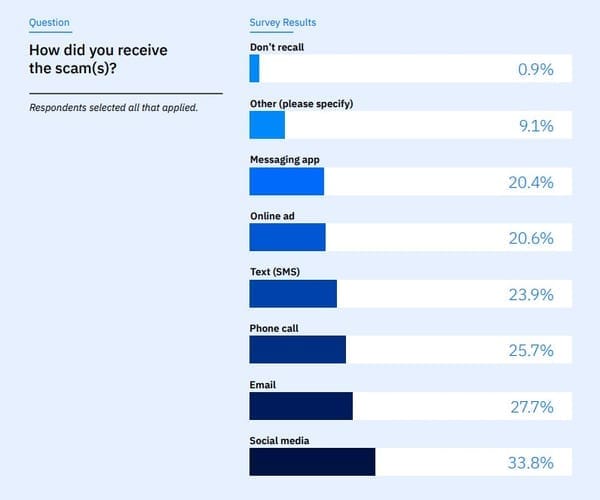
FTC data shows that social media remains one of the most effective channels for scammers. In 2025, nearly 30% of victims who reported financial losses said the scam originated on a social platform, accounting for $2.1 billion in reported losses.
According to the FTC, social media interactions caused far more losses than any other method scammers use to reach consumers — an eight-fold increase since 2020.
Data from our consumer survey supports these findings, with more than a third of respondents reporting they encountered a scam through their social media feed.
A global concern
While the report focuses on Asia and the South Pacific, the threats it describes extend across the globe. Cybercrime frequently operates across borders.
As we highlight in the 2026 Bitdefender Global Scam Intelligence Report, scams have gone omnichannel – fraud now moves across web, SMS, social media, messaging apps, email and voice calls, often as coordinated campaigns:
- malicious ads and fake promotions now blend into feeds, reels, sponsored posts and platform-native content
- scammers abuse familiar brands, caller ID, business accounts, compromised profiles and messages from people victims already know
- investment fraud, banking phishing, crypto lures and fake support schemes are among the most persistent and damaging scam categories
How to stay safe
While governments and law enforcement agencies continue to expand international cooperation, you can take steps to reduce your exposure:
- Enable multi-factor authentication on important accounts
- Use unique, strong passwords and a password manager
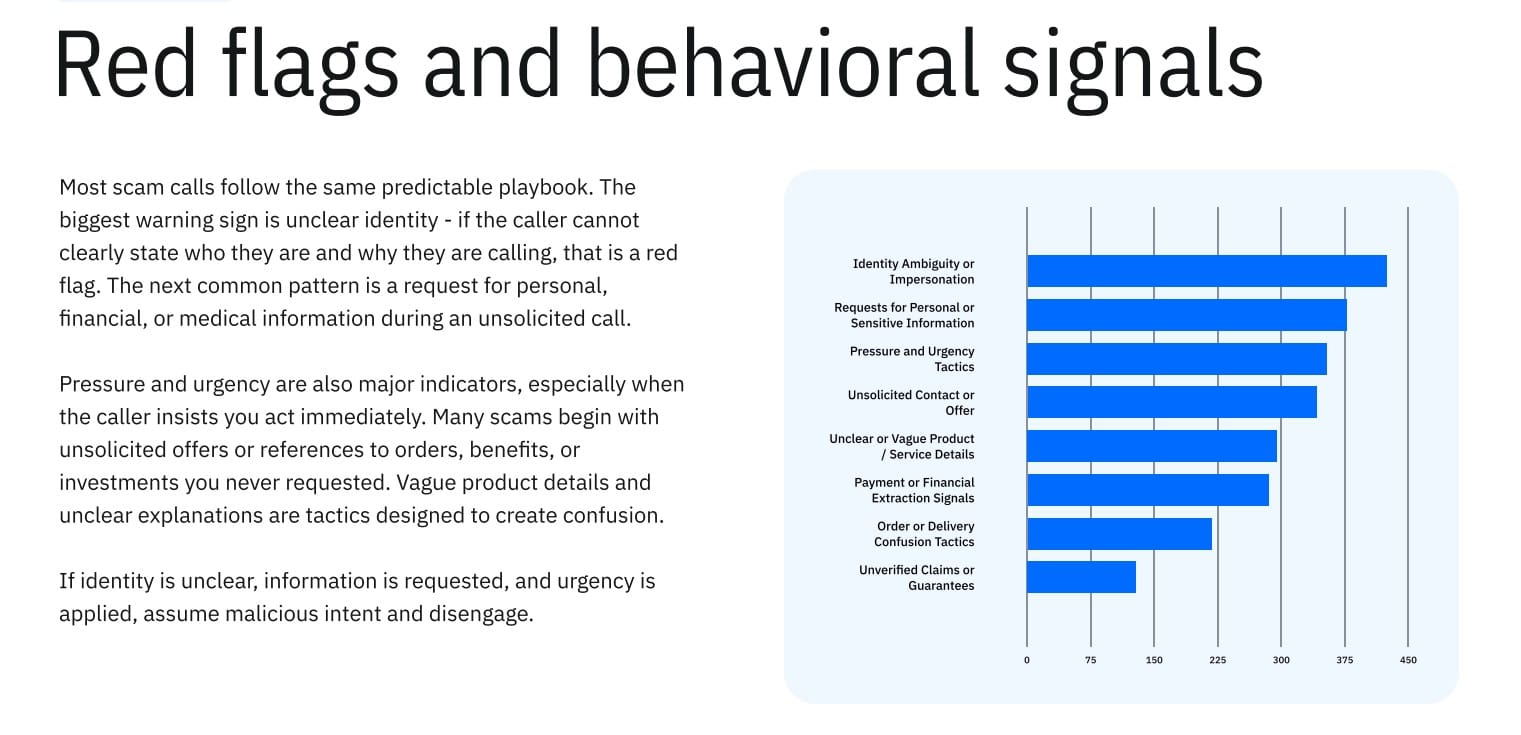
- Be cautious of unsolicited messages, investment offers, and urgent requests
- Verify sensitive requests through a secondary communication channel
- Keep devices and software updated
- Use reputable security solutions that can detect phishing attempts, malware, and credential theft
When in doubt about an unsolicited phone call, text message, email, or social media interaction, use verification tools to help assess whether the communication is legitimate. Solutions such as Bitdefender Scamio and our recently launched Scam Radar can help identify suspicious messages and emerging fraud patterns before users engage.
As cybercriminals increasingly automate and scale their operations, basic security hygiene remains one of the most effective defenses against becoming the next victim.
On this topic:
Scams have gone omnichannel: new global report tracks fraud across Web, SMS, Social and Voice
Americans lost $3.5 billion to imposter scams last year — and the scams are getting harder to spot
Crypto investment scam sends couriers to collect victims' cash, FBI warns
tags
Author

Filip has 17 years of experience in technology journalism. In recent years, he has focused on cybersecurity in his role as a Security Analyst at Bitdefender.
View all postsYou might also like
Bookmarks
