TikTok Job Scams Promise ‘Easy Money.’ How to Stay Safe.

May 21, 2026
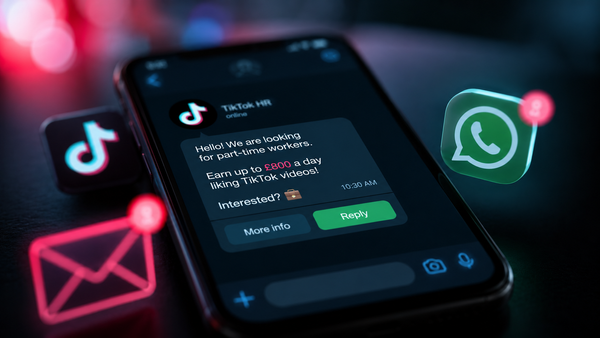
With summer approaching, many teenagers, students, and even adults are starting to look for quick side hustles, flexible remote work, or easy ways to earn extra cash during the holiday season.
And because social media platforms such as TikTok are such a huge part of daily life, it’s no surprise that job opportunities increasingly appear through DMs, text messages, WhatsApp chats, or videos promoting “easy money.” Unfortunately, many of these offers are scams.
Key takeaways
- Scammers impersonate TikTok recruiters with fake remote job offers.
- Victims are promised easy money for tasks such as liking videos or boosting engagement.
- Fraudsters often contact people through WhatsApp, Telegram, SMS, or social media messages.
- Some scams initially pay small amounts to build trust before demanding deposits or crypto payments.
- Many teenagers struggle to distinguish fake recruiter messages from legitimate ones.
- Real employers don’t ask people to pay upfront fees to start a job.
TikTok and consumer protection agencies have previously warned users that fraudsters are impersonating the company with fake recruitment offers. And last year, Virgin Media O2 reported a major increase in scam messages promising victims up to £800 a day simply for liking videos on the platform.
One scam message shared by the provider read:
“Hello, I am from TikTok Human Resources Department.
We sincerely invite you to use your free time to watch TikTok videos and help to click like the videos.
You can get paid by 300-800 pounds a day.”
Murray Mackenzie, director of fraud prevention at Virgin Media O2, warned that scammers are increasingly believable with their fake job offers, discounts, and brand impersonation tactics designed to pressure victims into clicking malicious links or sending money.
How the TikTok job scam works
The scam usually starts with a message from someone claiming to work for TikTok or a recruitment agency connected to the platform.
Victims may be contacted through unsolicited text messages, WhatsApp, Telegram, TikTok DMs, email or even social media ads.
Usually, the fake recruiter will promise you:
- Remote work with a flexible schedule
- Immediate hiring with no required experience
- High daily earnings.
Among the required tasks, users are usually asked to like videos on TikTok, watch content, boost visibility for creators or brands, and even review products.
Many of the tactics seen in TikTok job scams closely resemble the fake recruitment and “task-based” scams we reported on in 2023.
In those schemes, victims were promised easy online income for simple actions, such as liking YouTube videos, completing tasks, or engaging with online content. The scammers often approached targets through messaging apps like WhatsApp or Telegram and framed the opportunity as flexible remote work with unusually high earnings.
One of the most effective manipulation tactics involved sending victims small payments in the beginning.
But after trust was established, the scammers escalated the scheme by requesting deposits, “task unlock” payments, cryptocurrency transfers, or additional fees supposedly needed to continue earning money. In many cases, victims lost far more than they initially earned.
Warning signs of a fake TikTok recruiter
While TikTok clearly states that these messages are scams, it’s always a good idea to be aware of the red flags to ensure your safety:
- You’re contacted unexpectedly by a so-called TikTok recruiter without applying for any jobs.
- Does the pay sound unrealistic? Does it pay hundreds of dollars per day for simple tasks? Then it’s 100% a scam.
- The recruiter avoids official communication channels. If the interaction occurs through messaging apps rather than company email addresses or official platforms, be extremely cautious.
- You’re asked to pay money upfront. No real employer asks candidates to deposit funds, buy crypto, or pay fees to begin working.
- The job description is vague, and the “recruiter” avoids explaining exactly what the role involves. However, the scammer pressures you to act quickly.
How to stay safe
Job scams are becoming more sophisticated, but a few habits can significantly reduce your risk of falling victim.
- Research recruiters independently: Don’t trust profile pictures, screenshots, or logos alone.
- Be skeptical of “easy money” promises: If it sounds unrealistic, it probably is.
- Never pay to get hired: Legitimate employers pay employees, and not the other way around.
- Protect your personal information: Avoid sharing IDs, banking details, or tax information before verifying the company.
- Check suspicious links carefully: Fake job portals are often designed to steal credentials or payment information. Tools like Bitdefender Scamio can help analyze suspicious recruiter messages, while Bitdefender Link Checker can help users inspect suspicious URLs before clicking them.
- Install a security solution on your phone (Android or iOS) with Scam Protection to fend off phishing links and scams.
FAQs
How do you know if a job is scamming you?
A job offer may be a scam if the pay is unusually high for minimal work, or if you’re contacted unexpectedly through messaging apps and you’re asked to pay money upfront.
If something feels rushed, secretive, or overly lucrative, take time to verify the opportunity independently.
How to spot a TikTok scammer?
TikTok scammers often:
- Promise easy money quickly
- Claim to represent TikTok HR or recruitment teams
- Contact victims through WhatsApp, Telegram, or SMS
- Ask users to complete simple “engagement tasks”
- Request deposits, crypto payments, or personal information
Always verify recruiters through TikTok’s official careers website before responding.
Is TikTok actually hiring?
Yes, TikTok does hire employees for legitimate roles across multiple departments. However, real TikTok jobs are posted through official company channels and verified career pages.
TikTok does not randomly recruit people through unsolicited WhatsApp or Telegram messages promising hundreds of pounds per day for liking videos.
tags
Author

Alina is a history buff passionate about cybersecurity and anything sci-fi, advocating Bitdefender technologies and solutions. She spends most of her time between her two feline friends and traveling.
View all postsYou might also like
Bookmarks
