Creepy stalkerware AI apps promise the end of privacy

October 22, 2026
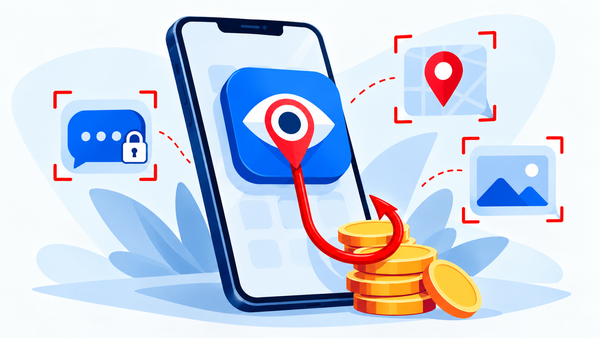
The AI craze is being exploited by people willing to invest time and money to create creepy ads for stalking apps, which are easily available on official app stores. Or at least that’s what wannabe stalkers think, as the apps themselves don’t really provide these services.
The fact that the ads openly promise stalking features in paid ads on social media platforms is not only worrying, but hints at a societal shift in which somehow this behavior is permitted or at least tolerated.
Stalkerware apps have been around for years. The really dangerous ones are barred from official app stores, but that hasn’t stopped the developers of such apps from offering such services.
The market for stalking apps is well established, prompting authorities to provide guidance for potential victims. For example, the FTC has a comprehensive website about stalkerware and warns that abusive partners or ex-partners could use these applications to track your device and your online activity secretly.
The unofficial ones
This article examines how some companies and developers promote apps by invoking real stalking scenarios or practices. Stalking is illegal in many jurisdictions, although the legal definition and penalties vary by country.
Legal ambiguity often arises when vendors argue that selling a monitoring app is lawful, and any unlawful use is solely the responsibility of the buyer. That argument may not hold where an app is marketed for covert surveillance, built to hide from the device owner, or otherwise enables non-consensual monitoring.
One example frequently cited by researchers and consumer-protection organizations is mSpy, which has been marketed in ways that emphasize covert monitoring. It is not available in the official app stores, and users must install it manually.
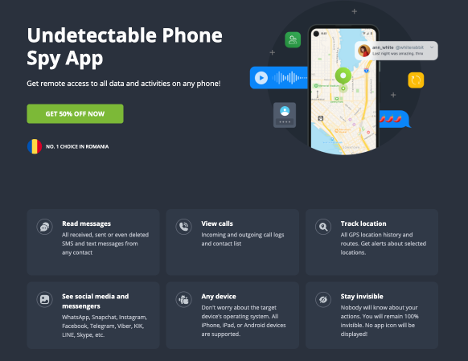
‘Official’ apps with stalking potential
The only way to keep stalking apps in official app stores is to promote them as something else, and that is usually under the guise of parental control.
These types of apps offer features that overlap with stalkerware. They can provide the location of a phone to parents, for example. For this reason, some security solutions, including Bitdefender’s, alert users when such an app is installed from the official Google Play Store.
It wouldn’t be fair to say all parental control apps are used as stalkerware at some point, but the overlap remains problematic, even when legitimate apps offer features that make their presence known.
Ads via TikTok don’t care about legality
Some social media ads, particularly those observed on TikTok, raise concerns. Several ads we reviewed claim features ranging from finding lost or deleted online images and hidden online accounts to discovering a target's GPS location, which suggests their advertisers may not expect enforcement under platform advertising rules.
Promising to be able to find out if your girlfriend is cheating on you, if your coworker has an OnlyFans account or to find photos that the victim has long since deleted feels wrong from the get-go. And the use of creepy AI imagery doesn’t help.
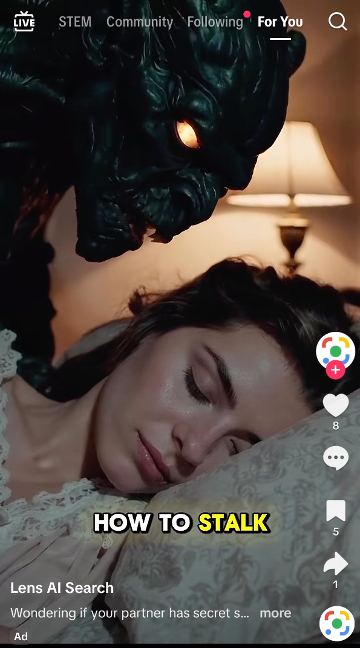
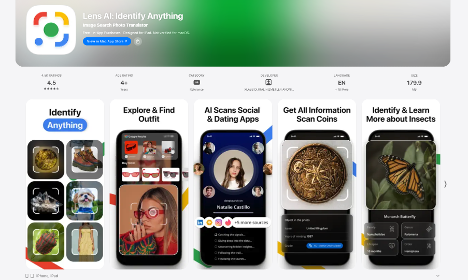
For one app, Lens AI, we found it's part of a vast campaign, with more than 3000 ads in the last month alone, from the same company that lists itself as a developer in the Google Play Store.
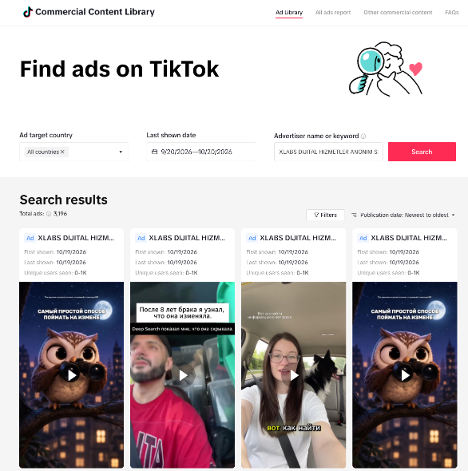
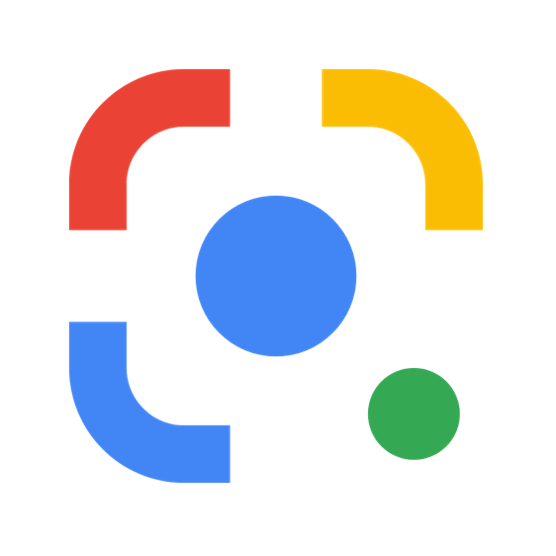
It’s worth noting that the developers changed the App icon in the Google Play Store because the old one was very similar to the official Google Lens icon.
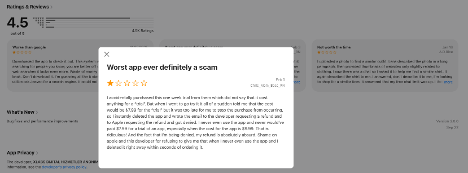
The same app is also present in the iOS ecosystem, where it has the same suspicious indicators: an app icon that looks very much like Google Lens, a very high rating and only negative reviews. People complain about the same things. The app doesn’t work, users get charged for the trial version, and it manifests numerous bugs.
For reference, this is the Google Lens icon the company used between 2019 and 2023:
Two types of apps
They can be broken down into two major categories: AI-driven online searches and online tracking apps.
All the AI-driven searching apps promise pretty much the same thing: that you can find details about your wife, mother, boyfriend, etc, just by typing in their names. Sometimes, the ads say that it’s the best stalking app online and don’t shy away from leaning into this narrative.
Also, keep in mind that, while these are the most prevalent, there are likely others that offer the same “features.”
The reasons for the bizarre AI-generated ads are harder to discern. The most likely reason is simple shock value. In a world with billions of ads and TikTok videos, they have to somehow grab the attention of the user.
So, they use the image of a demon asking kids on the street if they know everything there is to know about their mothers.

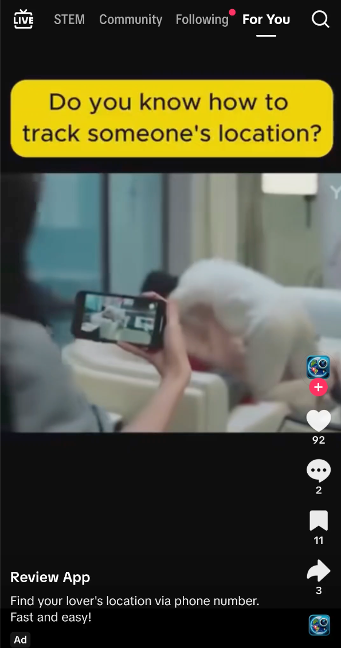
Another kind of stalkerware app is all about tracking people. They promise impossible things, like getting the victim's real-world location just by entering the phone number. Or they say you can read all of their private messages. Whatever the case, it’s likely a ridiculous claim, but it has the same goal — to redirect the user to the official app store.
Some of the ads are actually very specific in their promises. For example, they say they can help the stalker get full access to WhatsApp (it’s a lie, of course) or to the device itself. Reasons vary, but it’s mostly about catching a cheating partner.
A closer look
There are too many apps to verify, but we can determine that if we look strictly at their store description and their behavior, they don’t seem to do anything out of place.
In fact, the Google Play Store descriptions don’t have the outlandish, stalking promises found in the TikTok ads. They would be immediately kicked out of the store if any of them promised to find anyone by using the phone number or to view WhatsApp messages remotely.
We took a closer look at GPS Cam: Timestamp & Location, an app that one of the reviewed ads directed users to. The ad warns viewers not to waste money on tracking devices and suggests that entering a phone number is enough to find out what another person is doing. Tracking someone this way without their consent would likely be unlawful in many jurisdictions. We have not determined who created or paid for the ad.
The store description tells a different story:
“Unlock the full power of location-aware photography and videography with GPS Cam: Timestamp & Location. Whether you’re a traveler, field researcher, real estate agent, or outdoor explorer, this app helps you capture and organize your memories with exact time, date, and GPS location data.”
Our analysis of the installed version found only this limited functionality, much of which is already covered by default Android features.
The package com.amo.gps.geo.map.location.gpscamera, v1.1.8 (2026-09-09), was installed from the Play Store. The app's own code is only about 91 classes:
- A camera (CameraActivity, CameraActivity2) that stamps photos and videos with GPS position, a map snapshot, the date/time and the temperature.
- Templates, a photo editor, a gallery of saved photos and videos, and a map The rest is SDKs: AdMob, Meta Audience Network, Unity Ads, Pangle/ByteDance, Adjust, Firebase (Remote Config, Messaging, Crashlytics), Qonversion and Play Billing.
What do they actually want?
In the cases we reviewed, the apparent goal appears to be the same: persuade people to subscribe, even for a limited time. According to user reports, in some cases a trial presented as free is accompanied by a small payment.
Revenue may come from small upfront payments and from recurring subscriptions that users may not remember to cancel.
For the apps we reviewed, many user reviews report that the advertised features do not work and that the ads are misleading. Several apps nonetheless have high overall ratings, and some positive reviews share characteristics often associated with automated or inauthentic reviews.
Here are a few excerpts from publicly posted user reviews (reproduced as written, without reviewer names):
“l installed this app after seeing the ads which claimed it could track someone’s location just by a phone number 😡. I thought it might be useful in emergencies, like if a child is late coming back from school. But after installing, I checked everywhere—settings, help, guides—and found nothing that actually works 🤬. Total waste of time; in my case, none of the features worked 🤮. I even tried unlocking some extra access, but still no difference 🤮🤮.”
“I'll change the two star if someone can explain something to me. I went to check this out and I thought it said a 7-Day trial and I clicked it and it charged me $5.40. ask Google for a refund they would not request the refund. my question is did I read it wrong. was there not or was there a 7-Day free trial?”
“absolutely the worst AI app I have ever used. Stated it was free, downloaded, charged me for a "free" 7 day trial. Issued the first task, nothing, and I mean nothing, not even a response, reissued task, came back with error, try later, I'd did, nothing, reported issues to support, stated that program would work immediately. nothing. reissued task, used the restroom, went to the kitchen. NOTHING. THEN OUT OF NOWHERE, 20 minutes into the 7 day trial, I was out of credits w/ nothing!”
Conclusion
It is unclear how these ads pass the advertising review processes of TikTok and other platforms. They promise features that, if real, would likely be unlawful in many jurisdictions, yet they continue to run, and advertising on this scale is not cheap.
There also appears to be a market for people willing to pay to spy on others or intrude on their private lives, because that is what the ads promise. That those who respond to the ads appear, based on our analysis and user reports, not to receive the advertised functionality is a further reason for platforms and app stores to look closely at these practices.
Stalkerware ads pointing to Google Play Store apps:
tags
Author

Silviu is a seasoned writer who followed the technology world for almost two decades, covering topics ranging from software to hardware and everything in between.
View all postsYou might also like
Bookmarks
