Spain seeks TikTok suspension for all ages over child abuse content

November 11, 2026
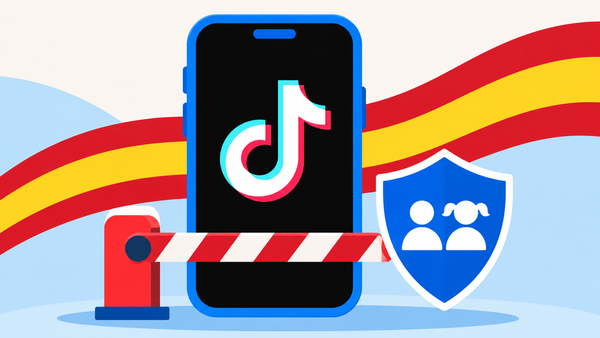
Spain's Ministry of Youth and Childhood (Ministerio de Juventud e Infancia) has asked the country's data protection regulator (AEPD) to temporarily suspend TikTok following an investigation that found child sexual abuse material on the app.
Minister Sira Rego made the announcement following meetings with TikTok and Maldita.es, a Spanish foundation specializing in fact-checking and investigative journalism.
The inquiry is raising concerns for families right across Spain and the rest of the world, especially since researchers have documented instances of public abuse material and live streams in which adults are offering children money to engage in sexual activity.
Key Takeaways
- Researchers found abuse material with about 48 million views
- TikTok removed five of 50 reported videos and restricted another 13 in Spain
- Adults offered children money for sexual requests during livestreams
- Parents can restrict contact and help children report unwanted approaches
What the investigation found
Maldita.es investigators say they have found over 1,000 public posts containing explicit child sexual abuse material, with some 48 million views.
For 35 days (Sep 11 to Oct 15), Maldita.es recorded 12,068 Spanish-language comments from 7,725 profiles relating to child sexual abuse material (CSAM). They lodged a complaint with Spain's cybercrime prosecutor.
Please keep in mind that these are Maldita.es' findings, not the outcome of any judicial process determining who the people behind those accounts are.
The reporting also identified 780 accounts that allegedly used TikTok to attract buyers of abuse material.
Children faced sexual requests during livestreams
Researchers documented 91 live streams involving minors in 17 countries where viewers had requested that they do things (some of which were sexual) in return for money.
For the parents, the live stream findings are particularly disturbing as kids can be the subject of sexual harassment while live streaming, even if they haven't posted any explicit content.
TikTok's virtual gifts add a financial dimension to the interactions. Users can purchase Coins to send Gifts, and eligible creators can earn Diamonds from the Gifts they receive during a live stream. TikTok says users must be adults to access these features.
Reporting content and removal
Maldita.es tested TikTok's reporting mechanism by submitting 50 videos that they had said contained illegal content. The result was that TikTok removed five and had blocked another 13 in Spain alone.
TikTok has disputed the foundation’s treatment of the findings. In comments obtained by EFE, TikTok said Maldita.es hadn't provided the full scope of its investigation and as a result it was unable to identify and remove the material or report it to the authorities.
According to sources quoted by EFE, TikTok says it prohibits child sexual abuse material and has in place detection technology and enforcement mechanisms to deal with it.
What Spain’s suspension request means
Spain's ministry has asked the Spanish Data Protection Agency (AEPD) to take action. This is in relation to a proposed temporary suspension rather than a full ban.
According to the Maldita.es account, the ministry invoked an emergency mechanism under EU data protection rules that would allow provisional restrictions to be put in place for up to three months in Spain. The independent regulator would be the one to decide whether or not to take any action.
What parents can do now?
Start with a discussion about who your child interacts with online. Find out if anyone has ever offered them a gift, asked for private photographs, made sexual comments or otherwise encouraged them to carry on the conversation elsewhere. Be very clear that they can let you know about an unpleasant experience.
Go through the account settings with the child and use TikTok's Family Pairing to link their account to an adult's account and then use that to manage the controls (including the ability to restrict DMs).
Talk specifically about live streaming. Agree in advance as to what your child should do if a viewer makes a sexual request or offers them money: simply end the interaction and come to you. Gifts in no way create an obligation to perform, to share images or to keep a conversation secret.
If you come across suspected child sexual abuse material, don't download it, don't copy it and don't forward it to anyone else. Report it via the platform and contact the police or your local child protection reporting service.
FAQ
Does the investigation indicate how widespread abuse material is on TikTok?
Answer: No. The figures are what the researchers actually found during their study. They don't represent the proportion of all TikTok content that contains abuse.
Can parental controls stop every bad interaction?
They can help families to restrict contact and manage access. It's important to keep checking in with your child so they know how to respond if someone's behaviour makes them uncomfortable.
What if my child has already responded to a sexual request?
Answer: Stay calm and reassure them that the abuse isn’t their fault. Contact local police or a child protection service for guidance, and avoid copying or forwarding any sexual images.
tags
Author

Silviu is a seasoned writer who followed the technology world for almost two decades, covering topics ranging from software to hardware and everything in between.
View all postsYou might also like
Bookmarks
