Bitdefender Labs warns of Pinterest ad scams impersonating Amazon clearance sales

May 15, 2026

For years, online shopping scams mostly affected platforms like Facebook, Instagram, or TikTok. But scammers never stick to a single modus operandi—they invade spaces where they’re not as expected, such as Pinterest.
A recent analysis from Ionuț Baltariu of Bitdefender Labs reveals a growing wave of scam ads on Pinterest that impersonate major brands like Amazon to lure unsuspecting users into fake “clearance sales.”
Note: Amazon, Pinterest, and other brands mentioned in this article are cited solely for identification and informational purposes. No affiliation, endorsement, or sponsorship is implied.
Key takeaways
- Pinterest is being used as a distribution channel for scam ads, not just inspirational content
- Fake “Amazon clearance sale” campaigns are widespread, using a sense of urgency and deep discounts
- Users are redirected to lookalike e-commerce sites, not legitimate brand domains
- Suspicious domains are often newly registered, sometimes linked to overseas registrars
- The same ad scripts and templates are used across multiple campaigns, suggesting organized operations
From inspiration to impersonation
Although Pinterest isn’t traditionally associated with scams, fraudulent or fake ads on the platform aren’t entirely new. Shopping and survey scams have surfaced before, often flying under the radar because ads blend naturally into organic content. A product pin showcasing a luxury watch or a stylish piece of furniture looks the same as legitimate content. The shift happens after the click. Users are taken to websites that mimic real online stores, complete with product grids, discounts, and familiar checkout flows.
This makes it harder to distinguish between legitimate recommendations and paid promotions. Combined with a shopping-focused mindset, this creates the perfect environment for scams to succeed.
What’s changed now is the scale and consistency. Instead of occasional sightings, researchers are seeing repeated, structured campaigns that use the platform to distribute scam ads at a much larger volume.
Baltariu observed coordinated campaigns promoting fake “Amazon clearance sales,” which redirect users to fraudulent webpages designed to steal personal data and credit card information.
These campaigns rely heavily on a sense of urgency and deep discounts, often advertising products at 90% off or more. Behind the scenes, many of the domains involved are either newly registered or recently updated, with some linked to overseas registrars. The structure of the ads and landing pages also points to reusable templates, suggesting organized, large-scale operations rather than isolated incidents.
The “Amazon clearance sale” trap
One of the most common lures uncovered in this campaign is the fake “Amazon clearance sale.”
These ads promise limited-time deals, “last day” discounts, and massive price drops on high-demand products. It’s not unusual to see luxury watches listed for under $20, or professional tool kits offered at a fraction of their real value.
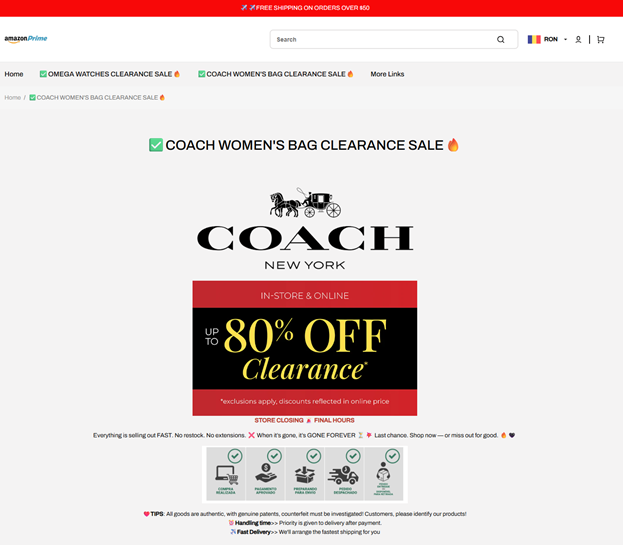
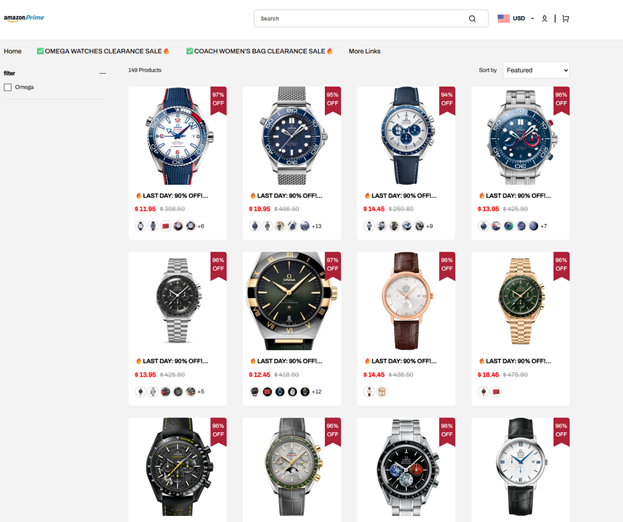
One of the clearest indicators that these campaigns are coordinated is the repetition and templating.

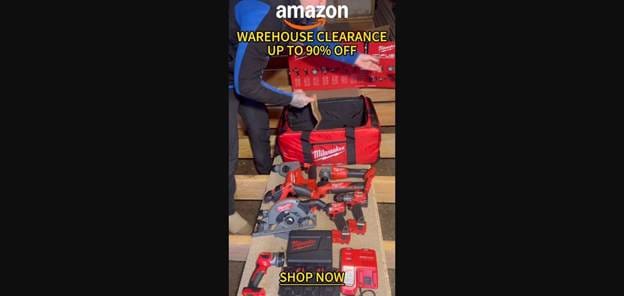






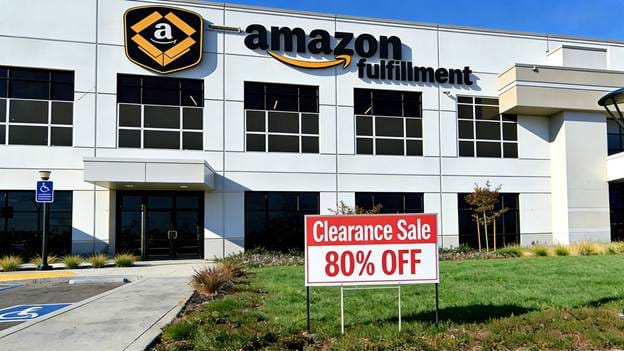
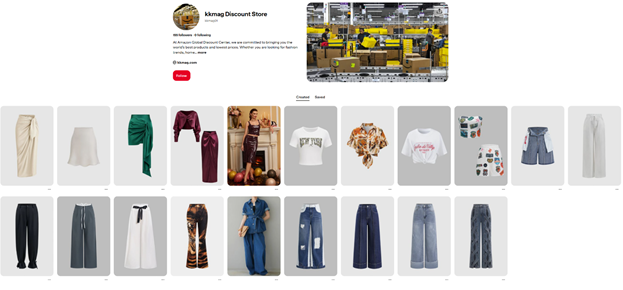
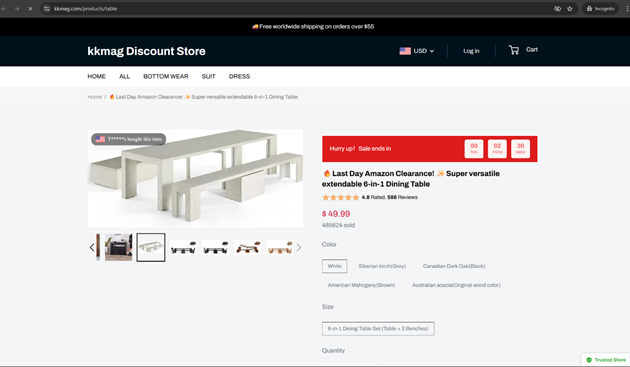
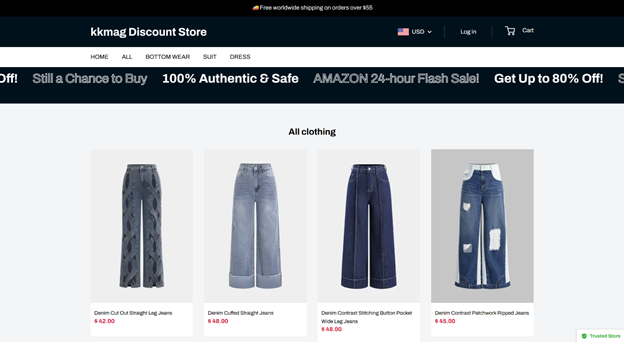
Across multiple Pinterest accounts and domains, Baltariu observed nearly identical headlines and descriptions, often reused with minor tweaks:
Ad titles include:
- “Amazon 72-hour clearance sale”
- “Amazon Warehouse Sale! MILWAUKEE 18V FUEL™ 11 Piece Combo Kit”
- “Last Day Amazon Clearance! Super versatile extendable 6-in-1 Dining Table”
- “BUY 2 GET 1: 32-Inch Portable TV with Touch Screen”
- “Multifunctional 1200W Portable Table Saw”
Descriptions follow the same script:
They typically open with urgency:
“LAST DAY!! Amazon Clearance”
“Limited-time clearance sale! You’ll regret missing it!”
Then move to exaggerated benefits:
“Everything you didn’t know you needed”
“Upgrade your home instantly”
“Perfect for DIY & professional needs”
And close with pressure tactics:
“Don’t wait… once it’s gone, it’s GONE”
“LAST CHANCE! Stock running low!!”
Some even mix in unrelated elements, like fake review signals or random testimonials, to look more legitimate.
The branding and layout are designed to reinforce trust, often imitating Amazon’s look and feel. But the domains tell a different story. Instead of amazon.com, users land on unrelated websites with no connection to the brands advertised.
The investigation identified multiple domains tied to these campaigns, including kkmag.com, quietbeauti.com, and shenmall.com. Some were registered recently, others updated shortly before the ads appeared.
This pattern is often associated with scam networks that frequently rotate domains to evade detection. The sites use polished visuals, too-good-to-be-true prices and easy checkout flows.
What happens after the click?
Once users land on these sites, the outcome can vary. In some cases, they may pay for products that never arrive. In others, they receive low-quality or counterfeit items that don’t match the description.
There are also scenarios in which personal and payment data are collected and later reused, or where hidden terms result in unexpected recurring charges.
How to spot and avoid these scams
- Check the domain carefully
If the site isn’t amazon.com or the official brand domain, it’s not legitimate. - Be wary of extreme discounts
Prices slashed by 80–97% on premium products are a major red flag. - Don’t fall for urgency tactics
“Last day” or “final hours” messages are often reused and not real. - Verify offers independently
If a deal looks tempting, search for it directly on the official retailer’s website. - Use scam detection tools to double-check suspicious content
You can scan links with Bitdefender Link Checker or even paste ad text, screenshots, or messages into Bitdefender Scamio to quickly find out if something looks like a scam.
tags
Author

Alina is a history buff passionate about cybersecurity and anything sci-fi, advocating Bitdefender technologies and solutions. She spends most of her time between her two feline friends and traveling.
View all postsYou might also like
Bookmarks
