Forget the Nigerian prince; scammers are now selling oil tankers stolen from the Strait of Hormuz

June 11, 2026
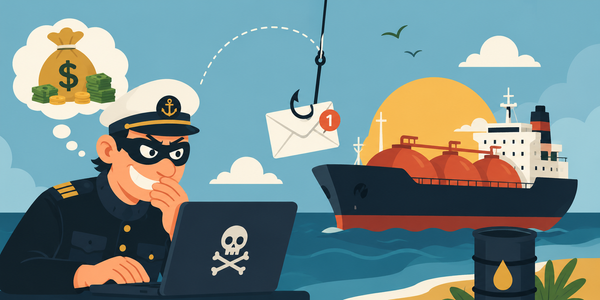
A scammer claiming to be a U.S. Marine contacts you with what appears to be a lucrative opportunity: help sell a secretly seized oil tanker cargo allegedly recovered during military operations near the Strait of Hormuz and earn a share of the profits.
If this sounds very familiar, you’re not wrong. It’s a lot like the infamous Nigerian prince emails that flooded inboxes for decades. Instead of hidden inheritances and frozen bank accounts, the scam revolves around military operations, Iranian-linked oil shipments, maritime security missions and international commodity trading.
The Nigerian prince hasn’t disappeared. He simply changed uniforms.
Key takeaways
- Scammers are modernizing classic advance-fee fraud schemes by incorporating current geopolitical events.
- A recent scam email impersonated U.S. military personnel and offered access to a supposedly seized oil tanker cargo.
- The scheme uses authority, secrecy, urgency, and promises of large profits to manipulate victims.
- Fraudsters increasingly build scams around real-world conflicts to make their stories seem more credible.
- The underlying mechanics remain identical to traditional inheritance, lottery, and Nigerian prince scams.
What is the seized oil tanker scam?
The email claims to originate from a member of the U.S. Marine Corps assigned to the 31st Marine Expeditionary Unit. The sender says that a team operating in the Strait of Hormuz is now actually in control of an oil tanker allegedly linked to hostile Iranian-affiliated forces.
According to the email, the military personnel involved secretly recovered the vessel and its cargo during maritime security operations. The sender then seeks assistance from private buyers, storage operators, energy traders, and logistics providers to discreetly sell the oil before U.S. authorities become aware of the operation.
“During a recent interdiction mission, our team neutralized an hostile threat involving the attempted seizure of a commercial oil tanker by IRGC-affiliated forces. The vessel and its cargo have been secured in international waters, During this routine maritime security patrol operations conducted within international waters, Our Marine Expeditionary Unit (31st MEU) team (12 Elite naval personnel) recently secured control of an oil Tanker-loaded vessel discovered under unusual operational circumstances within international waters of Strait of Hormuz by the Islamic Revolutionary Guard Corps Navy (IRGC-affiliated forces) Hijackers.”
This is just a small sample; the email is long and full of details that could seem legitimate to the unwary.
The proposal promises access to a valuable cargo of oil. The sender even claims that documentation, bills of lading, cargo manifests, vessel records and other supporting paperwork are available for interested parties.
On the surface, the story appears sophisticated and very specific. And it has some grammar errors, which is weird given how easy it is to generate a perfectly worded text. But this is the point, not to look perfect.
How the scam works
Despite its elaborate military backdrop, the scam follows the familiar pattern of the old “Nigerian prince” scam.
The scammer claims access to a valuable asset that can’t be sold through normal channels. The recipient is invited to participate in a transaction that promises substantial financial rewards.
This structure mirrors classic advance-fee fraud schemes:
Present a valuable asset
↓
Create an unusual obstacle preventing normal access
↓
Offer the victim a chance to help
↓
Promise significant profits
↓
Introduce fees, complications, or legal hurdles
↓
Collect money from the victim
The email never directly asks for money, which can make potential victims less wary.
Instead, fraudsters establish trust first. Once a target shows interest, the scammers can introduce storage fees, customs costs, legal expenses, insurance requirements, documentation charges or any number of fictitious expenses.
Why scammers are evolving the Nigerian prince narrative
For years, advance-fee fraud relied on stories involving wealthy foreign officials, hidden inheritances, lottery winnings and frozen bank accounts. But that story is now widely recognized as a scam. Even so, you should not be surprised to know that Nigerian prince scams are still going strong, many years after they first appeared.
Modern scammers now face a different challenge: creating stories that feel relevant to today’s headlines, and the US - Iran conflict is just what they need.
By incorporating real-world events, criminals can create a story that feels more plausible than a message from a fictional prince.
How to protect yourself from modern advance-fee fraud
Whether the story involves a Nigerian prince, a cryptocurrency investment, a seized oil tanker, a secret government operation or anything similar, the defense remains the same.
Ask critical questions:
- Can the sender’s identity be independently verified?
- Does the opportunity require secrecy?
- Does the promised reward seem disproportionately large?
- Are there requests for upfront payments?
- Does the story rely on urgency?
- Would a legitimate organization conduct business this way?
If the answer raises doubts, stop communication and verify claims through official channels. And just as important is the use of security solutions, like Bitdefender Ultimate Security, which can protect users by informing them when one of these fraudulent emails hits their inbox.
FAQ
What is an oil tanker scam?
Answer: An oil tanker scam is a type of advance-fee fraud in which criminals claim to control valuable petroleum cargo and promise victims access to discounted oil or large profits.
Are Nigerian prince scams still active?
Answer: Yes. Modern versions often replace stories about royalty and inheritances with narratives involving cryptocurrency, military operations, oil shipments, sanctions or international business opportunities.
How can I identify an oil trading scam?
Answer: Common warning signs include promises of unusually high profits, requests for secrecy, free email accounts, unverifiable claims and demands for upfront payments before a transaction can proceed.
Why do scammers use real-world conflicts in their schemes?
Answer: Current events make scams more believable. Fraudsters frequently exploit wars, sanctions and geopolitical tensions to create stories that appear legitimate and relevant to potential victims.
tags
Author

Silviu is a seasoned writer who followed the technology world for almost two decades, covering topics ranging from software to hardware and everything in between.
View all postsYou might also like
Bookmarks
