How to spot a fake social media profile

August 13, 2025
Fake social media profiles are often built to impersonate real people, run scams, spread spam, or manipulate users into sharing money or personal information. Some use stolen photos, while others rely on AI-generated images and carefully crafted bios to appear convincing. The best way to spot them is to look beyond the profile picture and check whether the account’s history, engagement, behavior, and personal details actually add up.
Key takeaways
- Look for inconsistent bios, recently created timelines, low engagement, stolen photos, and unusual follower patterns.
- Be cautious if someone quickly asks for money, personal information, favors, or clicks on suspicious links.
- Reverse image searches and independent verification can help uncover impersonation and stolen identities.
- Bitdefender Scamio can help analyze suspicious profiles, messages, screenshots, and links before you engage.
Why fake profiles are a real threat
Digital intimacy is perhaps the best way to describe our relationship with our online lives. We connect, befriend, and even fall in love with people we’ve never even met in person. While it sounds like a digital utopia on paper, the reality couldn’t be further from idyllic; online threats, like fake media profiles, have quickly grown into an epidemic.
Many such profiles are crafted with disturbing precision, as their puppeteers aim to wield them for manipulation, deception, and even theft. These masks take many forms, often cloaking fraudsters impersonating businesses, bot farms pushing political narratives, and scammers running romance cons.
While platforms like Facebook, Instagram, TikTok and X have ramped up their detection systems, the responsibility still falls on everyday users to recognize red flags. Let’s walk through how you can spot a fake social media profile and protect yourself before any damage is done.
The allure of perfection
The first thing most people notice about a profile is the photo. This is exactly what most scammers count on – fake accounts often use profile photos that seem too good to be true. Whether it’s flawless lighting, professional-looking headshots, or model-tier appearances, threat actors frequently use such photos for fake accounts.
Sometimes, perpetrators steal images from other profiles. Other times, they use AI to generate them. Either way, a fake profile picture usually stands out.
- Stolen profile pictures tend to have a lower resolution than the original. Social media platforms heavily compress photos to reduce storage and allow for faster loading times. Sometimes, a scammer may steal the profile picture of another fake account, perpetuating clarity loss.
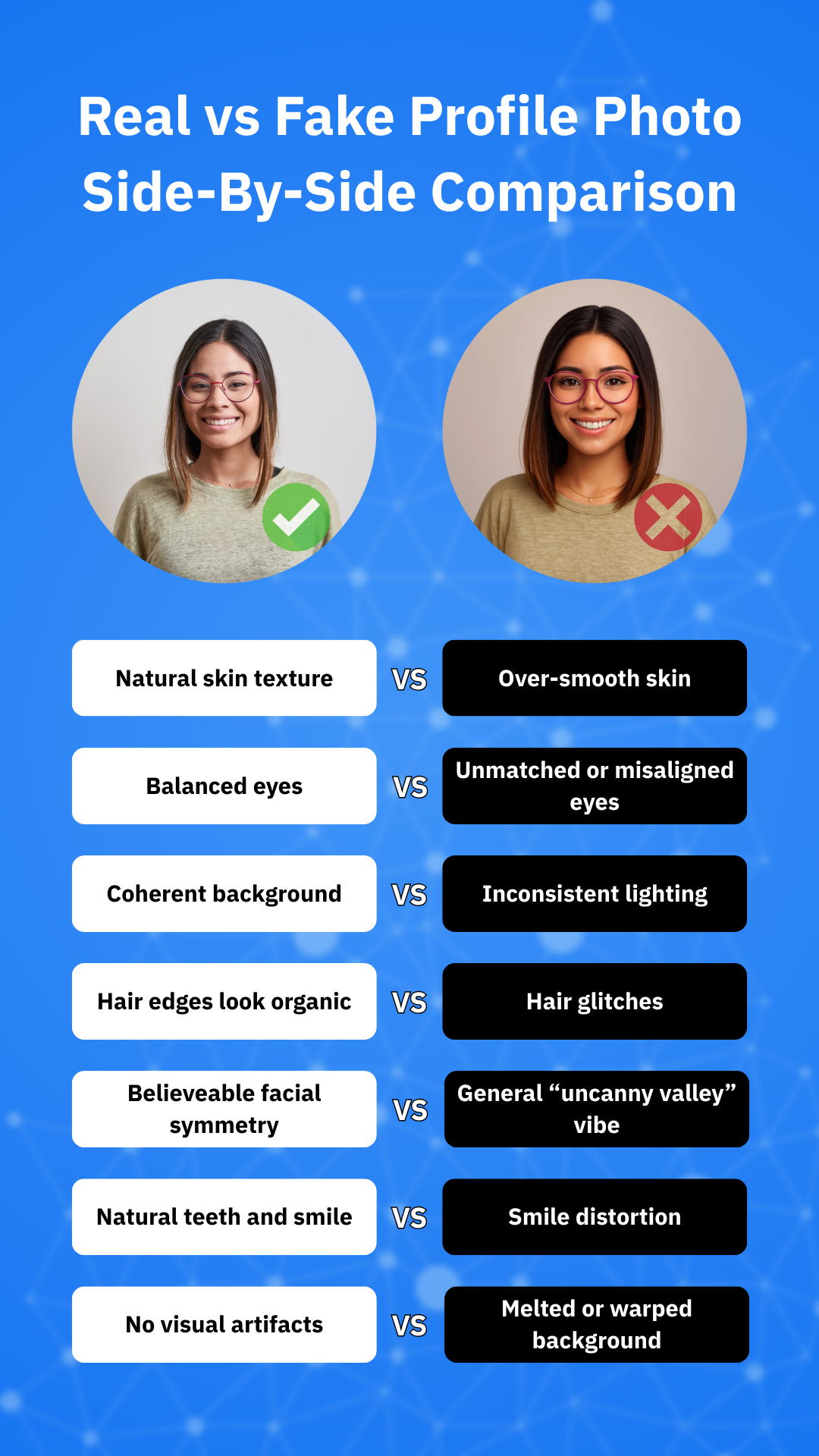
- AI-generated profile photos can be tricky, as they are usually high-quality. However, they do have that “uncanny valley” feel to them, like something seems off but you can’t quite put your finger on it. Check for inconsistencies, like asymmetrical eyes, weird reflections in the eyes (or none at all), inconsistent lighting, backgrounds that don’t quite make sense, or blurry earrings.
A quick reverse image search using Google Images or TinEye can help determine whether a photo is used elsewhere on the web. It won’t do much for AI profile photos, though.
Empty words or contradictory details
After the photo, the next most-viewed part of a profile is the bio. A quick glance at a profile’s bio or description can reveal a lot to a keen eye. Some fake profiles adopt a minimalist approach, writing things like “living life to the fullest” or simply dropping an emoji, which could complicate things. Others overcompensate, packing bios with fake jobs, international locations and suspiciously generic interests.
Often, there’s a disconnect between what’s claimed and what’s posted. A person claiming to be a freelance photographer in Paris may have zero original photos, or their tagged locations suggest they’re halfway across the world. Fake profiles tend to crumble under scrutiny because they lack the organic complexity of real human lives. If details don’t quite connect, you’re probably dealing with a fake.
This is especially common in business impersonation scams, where fraudsters copy a logo and name but leave contact details blank or suspiciously redirect links. A little digging could uncover the inconsistencies.
A timeline devoid of stories
Genuine social media accounts often tell a story, whether it’s photos from a birthday party, public event attendance, or friends interacting. Fake accounts, on the other hand, tend to have timelines that either feel lifeless or curated. You might see a few reposted memes, scattered quotes, or content that was all posted within a short window of time.
There’s rarely any engagement on the posts, minimal comments (if any), and no one seems to tag them anywhere. Sometimes, all the content appears to be reposted from other creators. In more advanced scams, there might be a handful of original-looking posts, but they still feel hollow, missing that natural sense of being part of a real person’s life.
Messaging feels off
A fake profile isn’t inherently dangerous when it’s inactive, but things can go south fast when they start messaging people. One of the most important things to keep an eye on is the tone and speed of communication. Fake profiles often initiate contact quickly, jumping into private messages right after connecting. However, that’s not a foolproof way to detect a scam, as some fake accounts intentionally lurk for a while before establishing contact.
The conversation might start friendly, even charming, but it can escalate fast. Within a few exchanges, the scammer may start asking personal questions, trying to build emotional rapport, or even telling stories of hardship. Some of them could even ask you for apparently benign favors, like voting for them in a competition.
Some will ask for favors, money, or gift cards under the guise of emergencies, while others might lure users into clicking suspicious links or downloading attachments. If you’re dealing with a supposed friend or romantic interest who won’t video call or always has an excuse to avoid face-to-face interaction, that’s a red flag.
Keep in mind that scammers rely on speed; the faster they can earn your trust, the less time you have to think critically. If something feels even slightly rushed, take a step back and reassess the situation.
Engagement that doesn’t add up
Numbers can lie. Fake profiles might boast thousands of followers, yet not a single meaningful interaction on their posts. In some cases, their entire following list consists of blank profiles or users with names in other alphabets and no content. Keep in mind that it’s not unheard of for scammers to set up entire bot account networks, following and interacting with each other to create a sense of legitimacy.
Conversely, they might have an unusually high following-to-follower ratio, where they follow hundreds of people, hoping someone will follow them back. These bot-like patterns are common in fake accounts used to inflate visibility and send spam at scale.
Even in professional-looking profiles, engagement matters. Real people reply to comments, get tagged in stories, and have some back-and-forth with others. If the account feels like a monologue in an echo chamber, that should tell you something.
Verification is your friend
When in doubt, verify. Reverse image search tools are a great first step. On platforms like Instagram or X, check if the account is verified, especially if they claim to be someone notable or affiliated with a business. For phone numbers and emails, services like NumLookup or Social Catfish can provide quick context.
But even if the profile looks right, don’t ignore your instincts. If something feels off, it probably is. Scammers have become more adept at crafting real-looking personas, but they still tend to stumble on authenticity. They forget how real people behave over time, not to mention that setting up a “verified” account is now easier than ever.
Dedicated software like Bitdefender’s Scamio can be your trusted ally in identifying scams. Paste a text snippet, upload a screenshot, share a link, or even drop in a QR code and let Scamio work its magic. Using AI, natural language processing, and a robust threat database, Scamio can analyze the content in seconds and deliver a clear verdict on its perceived legitimacy.
What to do when you spot a fake social media account
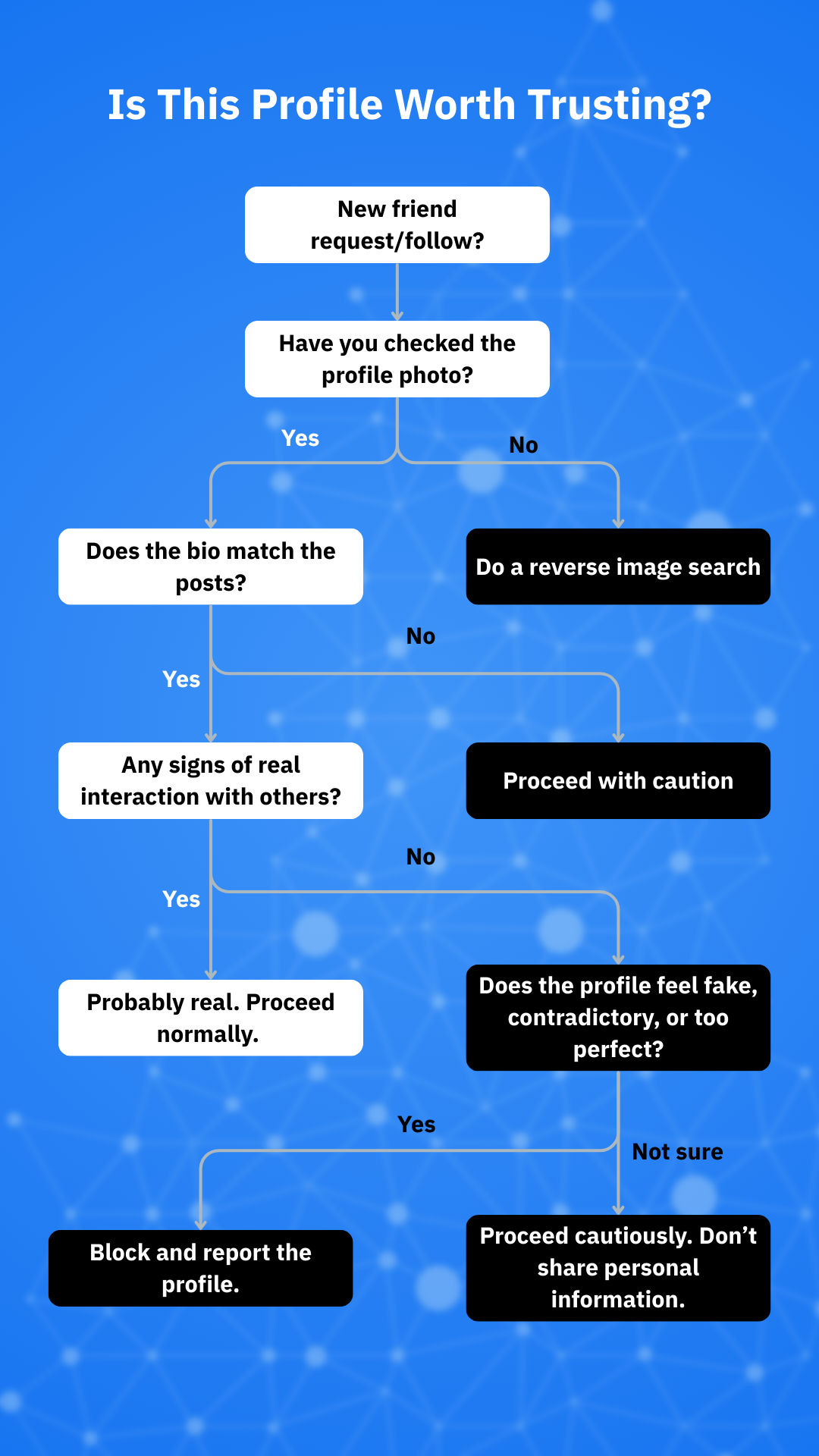
If you suspect a social media account is fake, don’t engage, and don’t confront or try to “trap” the person behind it. If they contacted you first and it’s obviously a scam, report it to the platform using their built-in tools and cease communication. Facebook, Instagram, TikTok and X all offer reporting mechanisms for impersonation, scam and abusive behavior.
However, keep in mind that most of these platforms have switched to AI-driven reporting mechanisms. This can be frustrating; sometimes reporting questionable content or fake accounts can seem like hitting a brick wall; the systems may tell you that they detected nothing wrong. If that happens, block the account and try to tell others of your suspicions.
If the fake account is impersonating someone you know, or a business, inform the real party so they can act as well.
Conclusion
Not every friend request or follower is a threat; following that mindset would severely undermine the purpose of social media platforms. However, those that do pose a danger can deal serious damage. Recognizing a fake social media profile can help you protect your data, but also your identity, your time, your emotions, and sometimes even your finances.
Trust is a wonderful thing online, but it should be earned, not freely given. The next time you get a message from someone new, take a moment to look closely. Don’t be cynical, be smart.
Frequently Asked Questions (FAQs)
What are red flags for fake profiles?
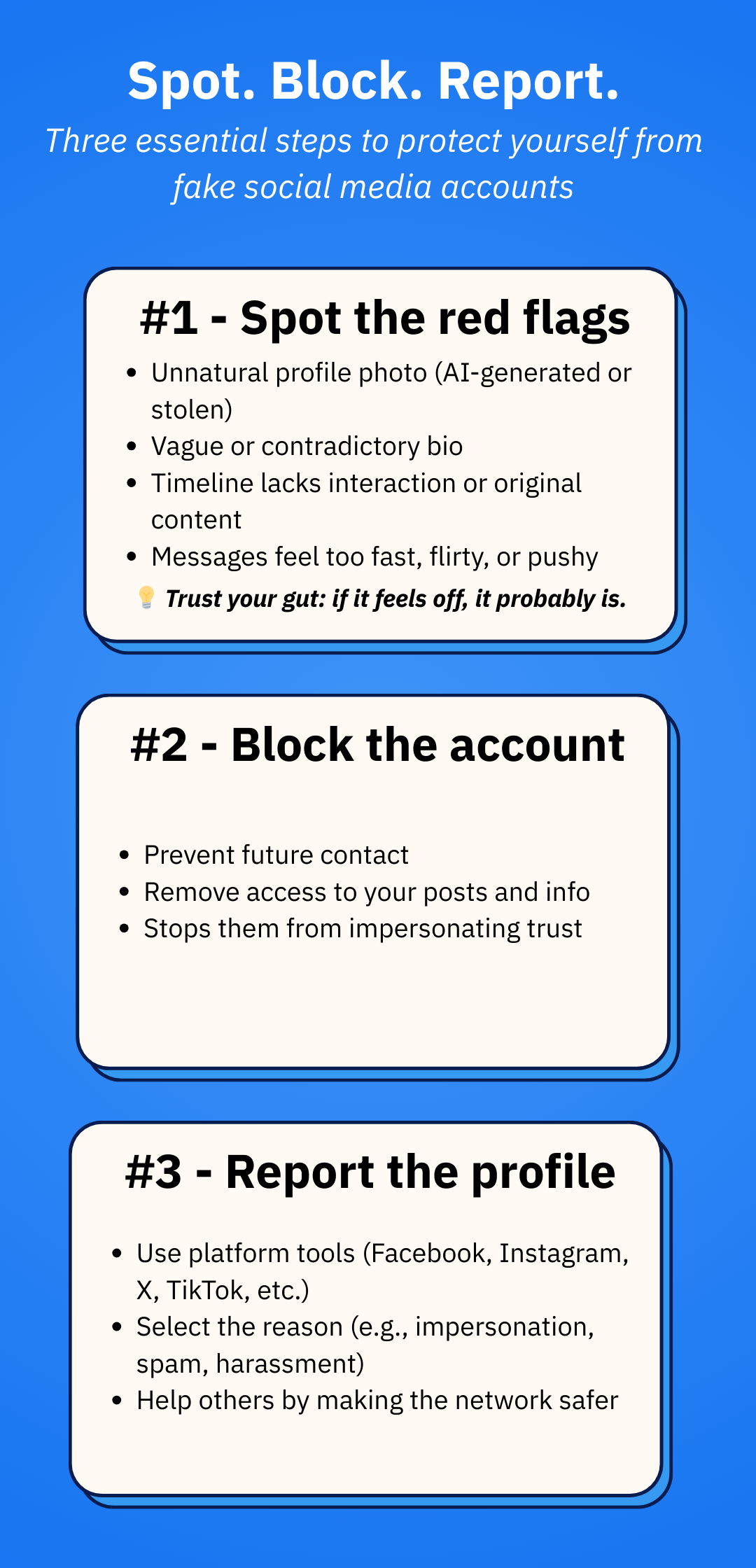
Common red flags include very few posts, inconsistent personal details, stolen or overly polished photos, strange follower patterns, little genuine engagement, and messages that quickly become personal or urgent.
How do I find out who’s behind a fake profile?
You can check profile photos with reverse image search, compare usernames across platforms, and look for inconsistencies in the account’s history. However, identifying the real person behind a fake profile may require help from the platform or law enforcement.
How do I identify a dummy account?
Check whether the account has a believable posting history, genuine interactions, tagged photos, and consistent information. Empty profiles, copied content, generic bios, and hundreds of random follows can indicate a dummy account.
Can I trace a fake Instagram account?
You usually cannot trace a fake Instagram account to its real owner yourself. Instagram may have technical information such as IP addresses and device data, but this is generally only disclosed through appropriate legal processes.
tags
Author

Vlad's love for technology and writing created rich soil for his interest in cybersecurity to sprout into a full-on passion. Before becoming a Security Analyst, he covered tech and security topics.
View all postsYou might also like
Bookmarks
