Fugitive Crypto Scam Kingpin Gets 20 Years for $73 Million ‘Pig Butchering’ Scam

February 10, 2026

In a victory for US law enforcement and crypto fraud victims, a federal court has sentenced a crypto scam kingpin for his central role in an international pig butchering cryptocurrency investment scam that defrauded victims of more than $73 million.
Authorities identified Daren Li, a 42-year-old dual citizen of China and St. Kitts and Nevis, as a core member of a sprawling global syndicate that used romance-baiting and investment fraud tactics to separate victims from their crypto holdings.
These schemes, known in police circles as pig butchering, involve cultivating relationships — often on messaging platforms, social media, or dating apps — to gain trust and then lure victims into fraudulent cryptocurrency investment “opportunities” promising unrealistic returns.
Li and co-conspirators orchestrated a complex laundering operation that funneled victim funds through dozens of shell companies and bank accounts, where funds were converted into digital assets like Tether, according to court records.
Investigators uncovered over $341 million in cryptocurrency held in wallets tied to the scheme — far more than the $73 million stolen from victims — underscoring the broader scale of the operation.
Fleeing justice
Li’s sentencing took place in absentia after he cut off his ankle monitor and fled federal supervision in late 2025, becoming a fugitive in the lead-up to his sentencing in a California federal court.
Despite his disappearance, the court imposed the 20-year term along with three years of supervised release after his prison term.
Assistant Attorney General A. Tysen Duva emphasized the impact of the crime on American victims, noting the sentence reflects “the gravity of Li’s conduct” and the devastating financial toll on individuals across the country.
Anatomy of the scam
Unlike simple phishing or account takeover crimes, pig butchering schemes are social and psychological in nature. Fraudsters:
- Build relationships with victims via chat apps and social profiles
- Gain trust over time before suggesting “investment opportunities”
- Use fabricated trading platforms that show fake returns to encourage larger deposits
- Close out victims once large sums are invested
Once funds were in the shell company accounts Li and his network controlled, millions were routed internationally and converted to crypto. Court documents revealed that at least $73.6 million in victims’ money flowed through these accounts.
Scams abound
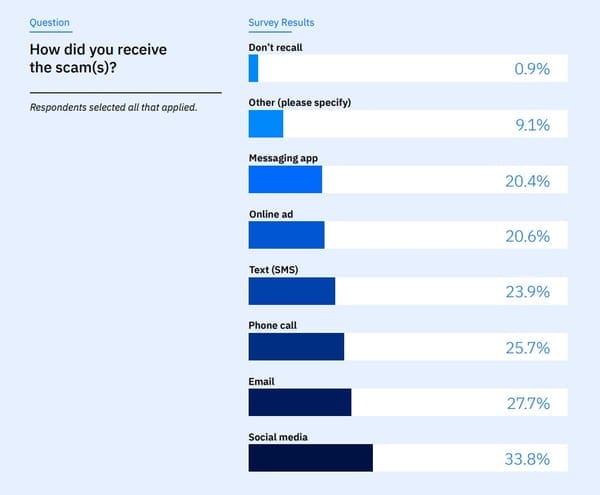
Bitdefender’s 2025 Consumer Cybersecurity Survey paints a worrying picture of consumer risk behavior and scam exposure.
- 7 in 10 consumers encountered scams
- 1 in 7 consumers worldwide fell victim to a scam in the past year
- Social media (34%) is the most common scam enabler
- 26% of scams take place over the phone
Broader enforcement efforts
Li is the first defendant directly tied to the stolen funds in this network to be sentenced, though multiple co-conspirators have already pleaded guilty. The Justice Department has signaled continued focus on similar scams, as other defendants tied to related pig butchering investigations have also faced charges or convictions.
This case arrives amid a broader surge in crypto investment fraud: the FBI’s Internet Crime Report showed reported losses from investment scams — many involving digital assets — reaching billions of dollars annually.
Advice for consumers
Here’s how everyday users can reduce their risk:
Recognize the channels where scams occur
Be wary of unsolicited messages on social media — even if they’re from seemingly friendly accounts. Watch out for offers that push you to communicate outside official platforms (e.g., moving from a public app to private messaging).
Slow down and verify
If someone contacts you about an investment (especially crypto) with crisis or urgency language, take a moment. Scammers rely on emotional reactions. Cross-check company names, email domains, and usernames against official sources before acting.
Protect your devices
Use dedicated security solutions on your phone and computers. According to our survey, nearly half of consumers who carry out financial transactions on phones don’t have independent protection installed — a gap scammers exploit.
Be skeptical of too-good-to-be-true offers
If something seems off — whether it’s unusually high returns, urgent pleas for help or unexpected “account problems” — pause and verify.
Use a scam detector
Consider using Scamio if you’re suspicious of a certain phone call, email, or text message. Our chatbot is designed to combat socially engineered attacks.
Educate yourself on emerging trends
Awareness of the latest scam techniques — especially those using AI and social platforms — is one of the best defenses. Read the cyber-news bulletin from time to time. Keep up with how attackers are using new technologies and how defenses evolve. Friends and family — particularly younger people — may be targets of similar social engineering tactics. Sharing best practices helps protect everyone.
You may also want to read:
Hacker Accused of Stealing Women’s Private Snapchat Photos Pleads Guilty
tags
Author

Filip has 17 years of experience in technology journalism. In recent years, he has focused on cybersecurity in his role as a Security Analyst at Bitdefender.
View all postsYou might also like
Bookmarks
