FTC Warns Farmers About Fake Farm Equipment Dealers

September 24, 2026
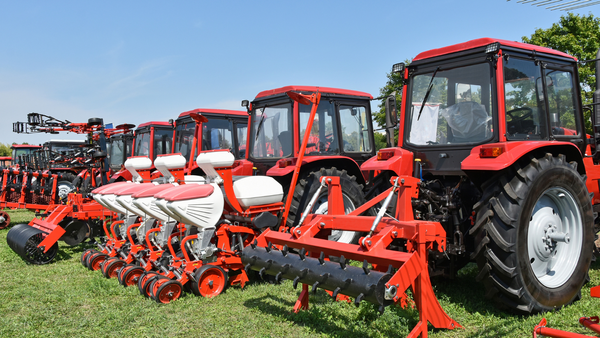
The Federal Trade Commission (FTC) is warning farmers about scammers impersonating farm equipment businesses online. The schemes can be remarkably convincing, with scammers advertising tractors and other expensive machinery, posing as legitimate dealerships and convincing buyers to send thousands of dollars for equipment that doesn’t exist.
Key takeaways
- Scammers are impersonating legitimate farm equipment dealerships and advertising tractors, backhoes and other expensive machinery online
- Fake websites can include professional-looking equipment photos, business information, invoices and purchase agreements
- Scammers may advertise through social media or manipulate what buyers see when they search for equipment online
- Requests to wire thousands of dollars before seeing the equipment should be treated with extreme caution
- For expensive equipment, seeing the machinery in person or arranging an independent inspection can provide an important additional layer of verification
How the farm equipment scam works
According to the FTC, the scam may begin with a simple online search or through a scroll on social media. You see an ad for some equipment you need, and the price is just right.
The seller may look like an established farm equipment business—even one you recognize or have dealt with before. After you make contact, everything can continue to look like a normal business transaction.
The supposed seller may provide a purchase agreement and invoice and arrange a delivery date. You, as the buyer, are then instructed to send a deposit or the entire purchase price by wire transfer. After the transaction, the equipment never arrives.
The supposed dealership may stop responding altogether or offer excuses for the delay. By the time you realize what happened, it’s too late, and the money … extremely difficult to recover.
Scammers can impersonate real farm equipment businesses
Key to understanding this scam is that finding the company and confirming it exists may not be enough.
The Georgia Department of Agriculture issued its own warning this summer after receiving multiple reports of sophisticated scams targeting farmers looking for equipment online.
Investigators said scammers were creating convincing websites and online advertisements that appeared to represent legitimate farm equipment dealerships. In some cases, the impersonated dealerships were real businesses. The department said scammers were using AI and other technology to imitate businesses through websites, ads, emails and other communications.
That makes verification more complicated.
If you search for the company name and discover a legitimate business with years of history and good customer reviews, that information may all be genuine. The problem is that the person you're communicating with might have nothing to do with that business.
A Colorado farmer lost $20,000 buying farm equipment that never arrived
A Colorado farmer recently told Denver7 Investigates that his son found a website while looking for a backhoe for him. The man wanted the machinery to help build a log cabin on his 37-acre property.
The website looked legitimate and showed photos of heavy machinery and what appeared to be an equipment yard. A backhoe was advertised for $21,000, and the farmer negotiated the price down to $20,000. The seller even offered to deliver it.
He was also instructed to wire the money to a bank account.
According to the man, he spoke with his bank and was told that the company and website looked legitimate. But the backhoe didn't arrive on delivery day. When he called, he was given an explanation for the delay.
The equipment still never came.
The farmer also said investigators later determined that the money was transferred internationally shortly after reaching the account. When he and his son eventually drove to the Denver address connected to the website, they discovered an empty lot.
The case highlights an uncomfortable reality about modern impersonation scams: looking professional is easy to fake.
A polished website, an invoice, equipment photos, a business address and a bank account can all make a transaction feel legitimate. None of those things, on their own, proves that the person asking for your money actually owns the machinery or represents the business they claim to work for.
Search results and social media ads aren't proof that a seller is legitimate
Another trap is assuming that a company that appears prominently in an online search must have been vetted.
The FTC specifically warns that the first results people see when searching online may be paid ads, and scammers can buy those ads too. A fraudulent ad can impersonate a real company while directing prospective buyers to a different website, phone number or contact person controlled by the scammers.
How to verify farm equipment before paying
For a major purchase such as a tractor, combine several verification steps rather than relying on one sign that everything looks legitimate.
- Find the dealership independently. If you discovered the equipment through an ad, don't automatically use the website, phone number or email address shown there. Search independently for the dealership and compare the contact details.
- Call the business using a verified phone number. Find the company's phone number independently, ideally through its official website or another trusted source, and ask whether the equipment is actually in its inventory and whether the person you've been communicating with works there.
- Look up the phone number. A reverse phone lookup can sometimes reveal inconsistencies between the person or business supposedly contacting you and the information associated with the number. You can also search for the number online alongside words such as "scam" or "fraud" to see whether other people have reported suspicious activity. Keep in mind that phone numbers can be spoofed, so a number appearing to belong to a legitimate business is not proof that the caller really represents it.
- Check the website before trusting it. If you've been sent a link to an equipment dealership or listing, inspect the domain carefully. A scammer may register a lookalike address that differs from the legitimate company's domain by only a letter, word or character. You can also check suspicious URLs with Bitdefender Link Checker, a free tool that analyzes links for signs of phishing, fraud and other online threats.
- Ask Scamio for a second opinion. If something about an equipment offer doesn't feel right, you can share suspicious links, messages, emails, QR codes or screenshots with Bitdefender Scamio. The free AI-powered scam detector can analyze the content and help identify potential warning signs. This can be particularly useful when an offer arrives through social media, text message or another channel where it may be difficult to tell at first glance who is really behind it.
No automated tool should replace independent verification when you're preparing to send thousands of dollars. Think of these tools as additional checks that can help you spot warning signs before money changes hands.
- Check the physical address. Look at the dealership's location independently and verify that the address corresponds to an actual business. An address printed on an invoice doesn't prove the seller operates there.
- Ask for specific information about the equipment. Request the serial number, model details, maintenance history and additional current photos or video. You can also ask the seller to show a particular detail of the machine that isn't visible in the original listing.
- See the equipment whenever possible. For a purchase worth thousands or tens of thousands of dollars, inspecting it in person can be worth the trip. The Georgia Department of Agriculture specifically recommends visiting the dealership, inspecting the equipment and completing the purchase in person.
- Consider an independent inspection. If the equipment is too far away for you to visit, an independent local mechanic, equipment inspector or other trusted professional may be able to verify that the machinery exists and that the seller has access to it before money changes hands.
- Be extremely wary of wire transfers. The FTC warns consumers about sellers who insist that payment can only be made by wire transfer, cryptocurrency, gift card or payment app because recovering the money can be extremely difficult once it has been sent.
- Talk to your financial institution before sending a large payment. For an expensive piece of machinery, another check before authorizing the transfer is worth the extra time.
Farm equipment scams are also a small-business security problem
For many farmers, a tractor or backhoe isn't simply a personal purchase. It's a business investment.
That means a successful scam can affect much more than the amount stolen. Losing thousands or tens of thousands of dollars can disrupt planned work, delay purchases, strain cash flow and leave a small operation scrambling to replace equipment it thought was already on the way.
It also shows why cybersecurity for a small business isn't limited to protecting laptops from malware. Employees and family members involved in the business may encounter fake invoices, phishing emails, fraudulent websites, impersonated suppliers and scam calls as part of their everyday work.
Bitdefender Ultimate Small Business Security helps small businesses protect the devices and people they rely on against phishing, scams, malicious websites, ransomware and other online threats. Businesses can manage security across Windows, Mac, Android and iOS devices from a centralized dashboard, while additional tools such as scam protection, VPN, password management and identity monitoring add extra layers of protection for everyday business activity.
Technology can't determine whether a tractor sitting hundreds of miles away really exists, so verification still matters. But it can help stop some of the malicious links, websites and messages scammers use to get a fraudulent transaction started.
What to do if you've already sent money
If you believe you've paid a fake equipment dealer, contact your bank or financial institution immediately and explain that the transfer was made as part of a suspected fraud. Ask whether the payment can be stopped, recalled or otherwise recovered.
Keep copies of the advertisement, website address, emails, text messages, invoices, purchase agreements, bank details, phone numbers and any other communications with the seller.
Report the incident to local law enforcement and relevant agricultural or consumer protection authorities. In the US, suspected scams can also be reported to the FTC at ReportFraud.ftc.gov.
And tell other farmers in your community what happened. These scams depend on convincing the next buyer that they're dealing with a legitimate equipment business. A warning shared with a neighbor, family member or local farming community could prevent someone else from wiring away thousands of dollars.
tags
Author

Alina is a history buff passionate about cybersecurity and anything sci-fi, advocating Bitdefender technologies and solutions. She spends most of her time between her two feline friends and traveling.
View all postsYou might also like
Bookmarks
