FTC warns about fake health insurance ads impersonating government programs

June 12, 2026
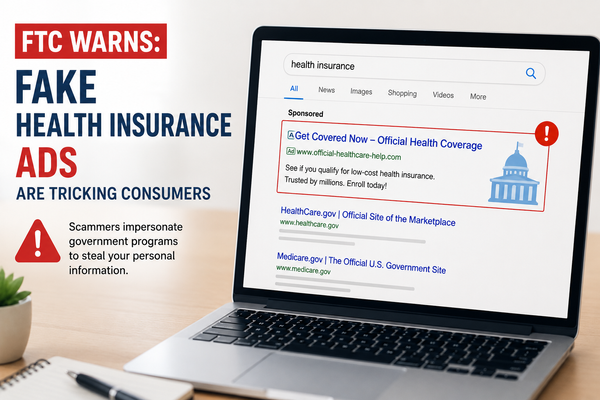
Searching for health insurance online? The first result you see might not be the safest one.
The US Federal Trade Commission (FTC) is warning consumers to watch out for fraudulent online ads impersonating trusted government healthcare programs such as Medicare and HealthCare.gov. These deceptive ads often appear at the top of search results, making them look like official resources when they're actually run by scammers.
Key takeaways
- The FTC is warning consumers about fake online ads impersonating government healthcare programs.
- Scammers pay for top search placements, making fraudulent websites appear above legitimate results.
- These schemes may steal personal, financial, and health-related information.
- Information collected through fake insurance websites can be used for identity theft and financial fraud.
According to the FTC, scammers increasingly use paid ads on search engines to impersonate government agencies and healthcare programs.
Many people searching for health insurance click on one of the first results they see, assuming it must be trustworthy. The fraudulent ads may include language referencing Medicare, Affordable Care Act plans, HealthCare.gov, or other government-backed healthcare programs. Once a user clicks, they may be redirected to a deceptive website or connected to a call center that isn't affiliated with any government agency.
How consumers get caught up in a health insurance scam via fake ads
The scam starts with a basic online search for a health insurance plan, Medicare enrollment, Affordable Care Act coverage or any government health insurance assistance.
Instead of clicking an official government website, you may end up clicking a sponsored ad placed by scammers.
Once on the fake website, you’re usually asked to provide:
- Full name
- Date of birth
- Address
- Medicare number
- Social Security number
- Banking information
- Credit card details
- Health-related information
In some cases, scammers may sell fake insurance plans or discount programs that offer little or no actual coverage.
Many victims don't realize they've been dealing with scammers until they begin receiving suspicious calls, discover unauthorized charges, or learn that their personal information has been compromised.
Here’s a real example of an improper healthcare insurance provider provided by the FTC.
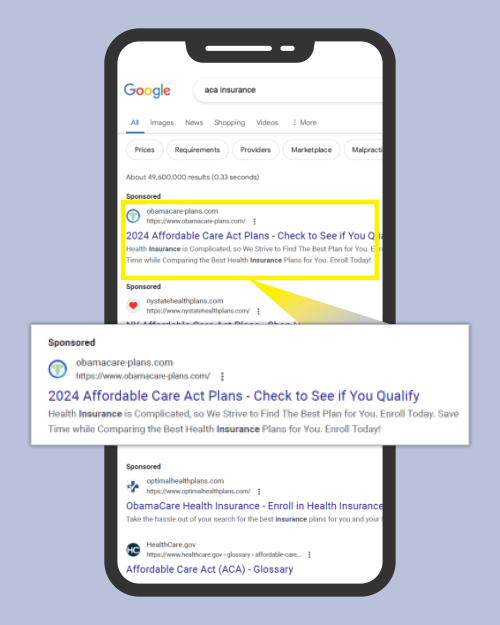
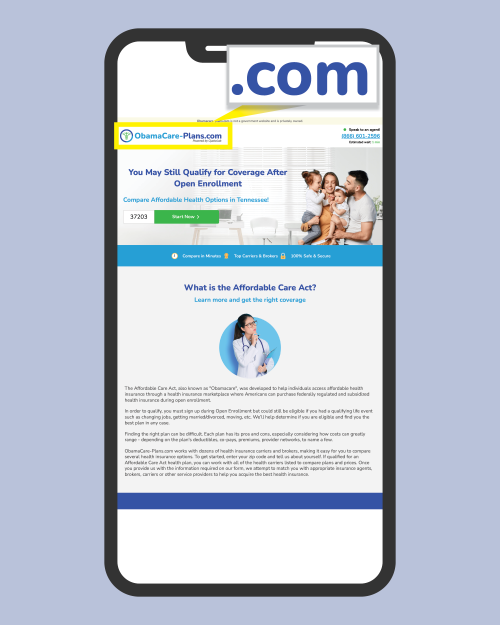
Clicking the first sponsored ad leads consumers to a fake website unrelated to any legitimate government agency.
How to tell if a health insurance website is the real deal
Before providing personal information, take a few moments to verify who you're dealing with.
Look for these warning signs:
The website isn't a .gov domain
Official government websites use the ".gov" domain. If a website claims to represent a federal healthcare program but uses a different domain extension, proceed with caution.
The search result is marked as ‘Sponsored’ or ‘Ad’
Paid advertisements aren't necessarily fraudulent, but scammers often use them to gain visibility. Don't assume the top result is the most trustworthy.
The site asks for sensitive information immediately
Be cautious if you're asked to provide a Social Security Number, Medicare number, banking information, or payment details before you've had a chance to review plan information.
The offer sounds too good to be true
Promises of free healthcare, guaranteed acceptance, unusually low premiums, or limited-time offers designed to create a sense of urgency should raise red flags.
How to stay safe
- Type official website addresses directly into your browser
- Verify before sharing personal information
- Be skeptical of pressure tactics that push you to act quickly
- Research unfamiliar companies
- Monitor for identity theft if you’ve submitted sensitive information to an unfamiliar website, and monitor your financial accounts and credit reports
Get a second opinion on suspicious offers
Received a healthcare-related message, website link, email, or advertisement that seems questionable? Ask Bitdefender Scamio for free. Scamio uses AI-powered scam detection to help determine whether a message, offer, or website displays signs commonly associated with fraud.
How Can security software help protect against scam ads?
While healthy skepticism is your first line of defense, security software can provide an additional layer of protection against the tactics scammers use to reach potential victims.
Fraudsters behind fake health insurance ads often rely on a combination of malvertising, phishing websites, scam pages, identity theft schemes, and social engineering to trick you into sharing sensitive information. A comprehensive security solution can help identify and block many of these threats before they cause harm.
What Should You Do If You Encounter a Suspicious Ad?
If you come across a potentially fraudulent health insurance advertisement:
- Avoid clicking the link
- Do not provide personal information
- Report the ad to the search engine platform
- Report suspected fraud to the FTC at ReportFraud.ftc.gov
- Share the warning with friends and family who may be searching for health insurance coverage
tags
Author

Alina is a history buff passionate about cybersecurity and anything sci-fi, advocating Bitdefender technologies and solutions. She spends most of her time between her two feline friends and traveling.
View all postsYou might also like
Bookmarks
