Fake Cadbury Christmas Giveaway Spreads on WhatsApp: Here’s What You Need to Know

December 10, 2025

Christmas scams are back in season. Consumer protection agency Which? is alerting users that a fake Cadbury Christmas giveaway is once again making the rounds on WhatsApp. The scam claims you can win a chocolate hamper just by clicking a link and completing a short quiz.
What the Scam Looks Like
Victims receive a WhatsApp message claiming that Cadbury is giving away free Christmas hampers or “Chocolate Magic Baskets.” The message includes branded Cadbury images, holiday-themed text, a link to a suspicious website, as well as a prompt to share the giveaway with friends
Some versions even include your name or address, details that scammers may have collected from previous data breaches to make the message feel more convincing.
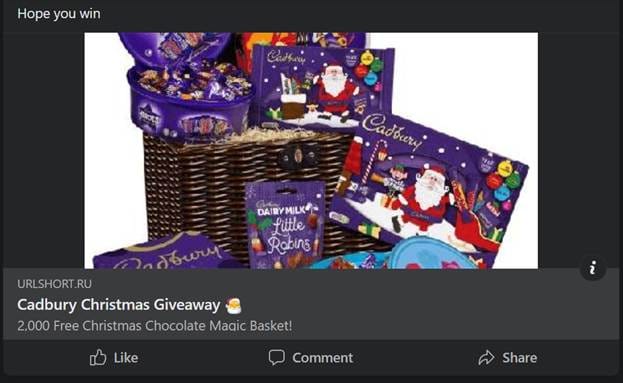
Source: Which?
Once you tap the link, you’re taken to a webpage styled to look like a Cadbury promotion. From there, the scam usually unfolds in four steps:
1. A fake quiz or survey
You’re asked a few harmless questions.
2. A ‘choose your gift box’ game
This is engineered to ensure you always “win,” typically after a couple of attempts (three attempts) to build excitement.
3. A request to share the link
To “claim the prize,” you’re prompted to forward the message to 5 WhatsApp groups or 20 friends. This element helps scammers spread the scam rapidly through trust networks.
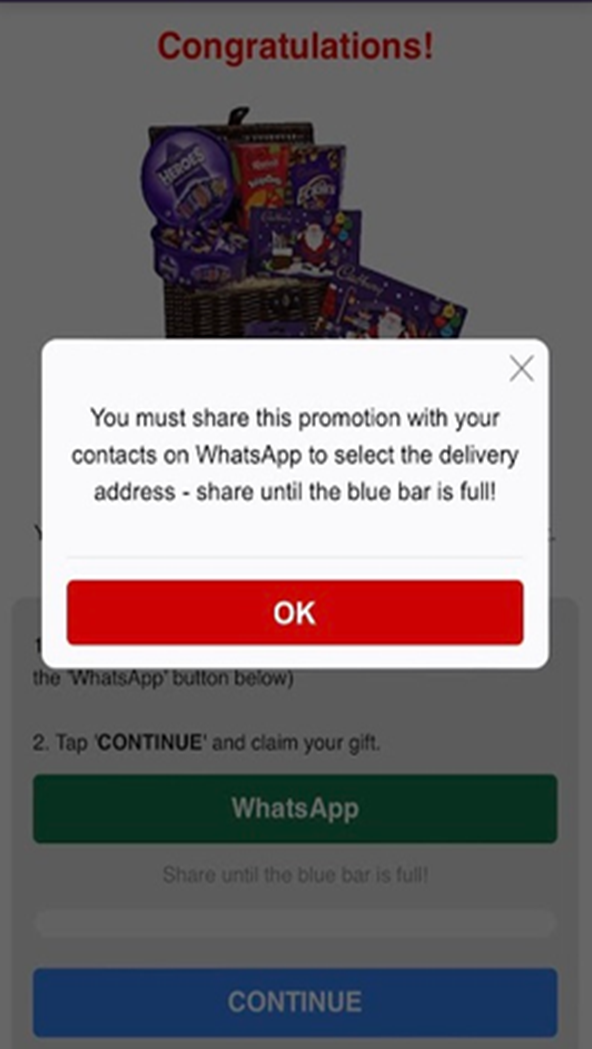
Source: Which?
4. A form requesting personal or payment information
Some versions ask only for your contact details.
Others ask for a small “delivery fee” – a cleverly disguised attempt to capture your card information.
No matter what version you encounter, no hamper is coming.
The fake Cadbury Christmas hamper giveaway is almost identical to several high-profile scams circulating this year. Seeing the pattern makes it easier to spot the next one.
We recently reported on a fake Sephora Advent Calendar scam spreading across WhatsApp and social media in Europe.
The setup was nearly identical to the Cadbury scam:
- Victims received ads or WhatsApp messages claiming Sephora was giving away luxury Advent Calendars.
- The link led to a bogus page with Sephora branding.
- Users had to complete a phony “survey,” then share the offer with their contacts to “unlock” the gift.
The promotion was completely fake and Sephora confirmed it wasn’t running any such giveaway. This example shows how scammers swap the prize but keep the tactic the same.
How to Spot This Scam Quickly
Here are a few red flags that suggest the promotion is fake:
- Legitimate companies like Cadbury do not run giveaways through random WhatsApp messages.
- The website URL looks nothing like Cadbury’s official domain, which is Cadbury.co.uk
- There’s pressure to share the message with contacts to unlock the “prize.”
- The offer seems too good to be true and arrives out of the blue.
How to Stay Safe
Report and handle WhatsApp scams safely
If you receive a fake Cadbury giveaway message (even if it's from a friend or family member), you should assume it’s a scam. Let the sender know, delete the message, and do not click the link.
Forwarded scams don’t mean your contact had bad intentions; they may have fallen for the trick themselves. You can also report suspicious messages directly in WhatsApp by tapping:
Chat → Contact name → Report → Block
Turn on WhatsApp two-step verification
Adding an extra layer of protection helps prevent unauthorized access if scammers ever obtain your login code or SIM details.
To enable WhatsApp’s built-in two-step verification (2SV):
- Open Settings
- Tap Account
- Tap Two-step verification
- Select Turn on or Set up PIN
- Choose a six-digit PIN and confirm it
- Add an email address so you can reset your PIN if needed
This ensures that, even if someone tries to log into your WhatsApp account, they can’t proceed without your custom PIN.
Check suspicious messages directly with Scamio … even via WhatsApp
If a giveaway, prize message, or odd link comes your way, you can quickly ask Bitdefender Scamio for help. Upload a screenshot, paste the message, or share the link and Scamio will tell you within seconds whether it's legitimate.
You can also chat with Scamio on WhatsApp for FREE, making it even easier to verify suspicious messages right where you received them.
Use Bitdefender Link Checker before clicking any link
Links sent via WhatsApp or social media can look legitimate but may lead to malicious sites. Scan any link instantly with Bitdefender Link Checker (free service) to check whether it’s safe before you open it.
Protect your phone with automatic scam detection
Most people open these scams on their smartphones, which is why device-level protection matters. Bitdefender Mobile Security for Android includes Bitdefender Scam Alert, a feature that immediately flags phishing and scam links, including fake giveaways like this one when they arrive via: SMS, WhatsApp, Messenger, other instant messaging apps
This gives you a real-time warning before you even think about tapping a risky link.
Don’t forget to warn your contacts
If you accidentally forwarded the scam or clicked on it, let your contacts know right away. A quick heads-up can stop the scam from spreading further.
tags
Author

Alina is a history buff passionate about cybersecurity and anything sci-fi, advocating Bitdefender technologies and solutions. She spends most of her time between her two feline friends and traveling.
View all postsYou might also like
Bookmarks
