Author invitation scams: How writers can spot fake offers

August 25, 2026
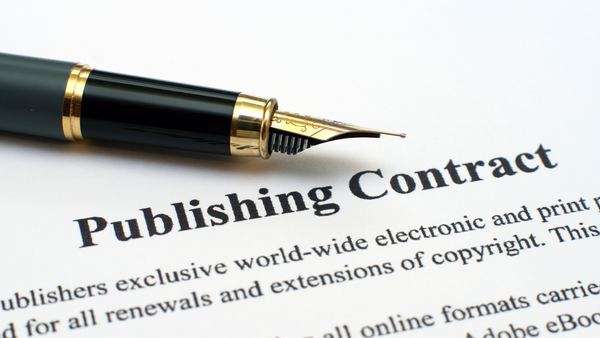
Scammers are targeting authors with fake invitations to appear at well-known book festivals, conferences, podcasts and radio programs.
They impersonate real organizations and employees, praise the author’s work and, eventually, demand payment for an appearance, promotion or special placement.
Key takeaways
- Scammers are impersonating real book festivals, employees, interviewers and literary organizations
- The initial invitation may contain personalized praise gathered from online reviews, summaries and author websites
- The scams usually lead to a request for a fee for participation, promotion, placement, production or another supposed benefit
- Authors should verify invitations through the organization’s official website and contact details before responding, paying or sharing files
Real book festivals are being impersonated
Earlier this year, the Edinburgh International Book Festival has warned authors about fraudulent emails inviting them to its August festival.
According to organizers, scammers used the names of current employees as well as people with no connection to the festival. They have also continued conversations with targeted authors to make the invitations appear more authentic. Eventually, the exchange may lead to a request for money in return for an appearance.
The festival stressed that:
- Official invitations come only from an @edbookfest.co.uk address
- Authors are not charged to appear at the festival
- Organizers will not request card or bank details or ask authors to make an online purchase
The festival also clarified that its systems had not been breached. Scammers were apparently using contact information the authors had made publicly available.
The Edinburgh warning is not an isolated example. Writer Beware has documented fraudulent invitations impersonating events including the Turin International Book Fair, the LA Times Festival of Books, the Pike’s Peak Writers Conference, the Nantucket Book Festival and the PEN America Literary Gala.
How author invite scams work
1. Scammers research the author and their work
They collect information from book summaries, retailer pages, reviews, interviews, author websites and social media. This gives them enough material to mention specific characters, themes or ideas and create the impression they have read the book.
The Society of Authors and the Writers’ Guild of Great Britain warn that AI can help scammers gather and reuse this information at scale.
2. They impersonate a real organization or employee
The invitation may appear to come from an established book festival, conference, radio station, podcast or literary organization. Scammers can also create professional-looking websites, staff profiles and testimonials to support the fake opportunity.
3. They send a flattering, personalized invitation
The author is told that their work stood out, would resonate with the event’s audience or has been selected for one of a limited number of appearances. The message sounds like recognition rather than a sales pitch, making the author more likely to respond.
4. They use real information to create false reassurance
An online search may confirm that the festival, media outlet or employee named in the message exists. However, that does not prove the sender represents them. The organization may be real while the invitation, email address and payment request are entirely fraudulent.
Then comes the payment demand
Scammers may avoid mentioning money in the first email, exchanging several friendly messages with the author before introducing a fee.
It might be described as a:
- Participation fee
- Program placement fee
- Administration or coordination fee
- Promotional contribution
- Production fee
- Interview fee
- Book-display package
- Marketing or visibility upgrade
One example documented by Writer Beware offered an author festival “placements” for as much as $650. When the author said the price was unaffordable, the scammer offered a reduced $175 package.
The author was also asked for promotional materials, including a book mockup and trailer. This could have opened the door to further charges for producing items the author did not already have.
The smaller fee is not necessarily the scammer’s final goal. It can be used to identify an author who is willing to pay. Additional services and upgrades may then follow.
Major publishers are warning authors too
In May 2026, Penguin Random House (PRH) warned of a “significant rise” in large-scale phishing scams targeting authors. Fraudsters were impersonating real PRH editors and employees to obtain personal information, manuscripts or money.
The author typically receives an unsolicited email from someone claiming to be a senior editor or editorial director at a specific imprint. The message may mention one of the author’s books, essays or earlier projects and include detailed, highly flattering comments, sometimes based on an AI-generated summary taken from the author’s website.
The scammer may then ask whether the author has literary representation or suggest an informal conversation about future projects. Once the author engages, the scammer can request sensitive information, a manuscript or fraudulent publishing fees.
Penguin Random House stressed that its employees don’t ask an author for money upfront while considering a new title. Official messages come from @penguinrandomhouse.com or @penguinrandomhouse.co.uk, not Gmail, Yahoo, Outlook or unofficial “private company” accounts.
Not every literary-event fee is fraudulent
Some legitimate literary events charge application, exhibitor or table fees. An author who independently applies to sell books at an event may have different arrangements from an author who is invited to speak on a panel or take part in an official program.
The danger appears when someone sends an unsolicited invitation while impersonating a real organization, hides the cost until later or asks for payment through unofficial channels.
Before paying, authors should contact the event using the email address or phone number published on its official website. Do not use the contact information supplied in the invitation itself.
Ask the real organizers:
- Did this invitation come from you?
- Does the sender work for your organization?
- Is this fee part of your official program?
- Where is the cost published?
- Who should receive the payment?
- Is there a written agreement explaining what is included?
Warning signs that help you spot fake author invitations
Be cautious if:
- The invitation arrives from Gmail or another personal account instead of the organization’s official domain
- The sender’s address contains extra words, misspellings or an unusual domain ending
- The praise sounds impressive but does not show a genuine understanding of the book
- The invitation promises extraordinary visibility, sales or industry connections
- The sender avoids a phone or video conversation through the organization’s official channels
- A fee appears only after several messages have been exchanged
- You can participate remotely by paying someone to “represent” or display the book
- The price suddenly drops when you say NO
- Payment must be made by wire transfer, cryptocurrency, gift card, or to an unknown third party
- The sender creates urgency or says a limited placement will be lost
- You are encouraged to purchase a trailer, mockup, marketing package or another service from a recommended provider
Remember, a professional tone is not proof of legitimacy. AI can help scammers produce polished emails, answer questions, and maintain longer conversations without the obvious spelling or grammar mistakes once associated with fraud.
Bonus scam: Fake book clubs target authors too
Book festivals are not the only trusted literary communities being imitated.
Authors have also reported emails from supposed book-club organizers who claim that the group has selected or voted to feature their book. The message may say that hundreds or even thousands of members are eager to discuss it.
After a few friendly exchanges, the organizer requests an administration, coordination or spotlight fee.
One author described receiving two similar approaches from supposed clubs in different US cities. In both cases, the messages contained enthusiastic but vague praise, and the first eventually turned into a demand to pay to be featured. The author also warned that scammers can borrow a real person’s name, photograph or community profile to support the invented identity. Read the author’s account.
Real book clubs may invite writers to join a discussion, answer reader questions or make a virtual appearance. Some larger groups may even offer an honorarium. An unsolicited request for the author to pay for the privilege should prompt immediate scrutiny.
Fake interview invitations follow the same script
The same tactic is also used in fraudulent podcast and radio invitations.
Writer Beware documented an email impersonating UK radio station LBC. The message appeared to invite an author to an interview but eventually introduced a $350 “participation fee” supposedly covering production, placement and promotion.
Calling the payment a production or promotional expense does not make the invitation legitimate. Authors should verify media invitations directly with the publication, station or podcast using independently sourced contact details.
Steps authors can take to stay safe
Verify through a separate channel. Visit the organization’s official website by typing its address into your browser. Contact its general office, festival team or media department without replying to the original message.
Check the entire email address. A recognizable display name can be faked. Look closely at the domain after the @ symbol.
Do not rely on a quick online search. Finding the festival, employee or interviewer online only proves they exist. It does not prove they sent the message.
Avoid sharing sensitive materials too early. Do not send bank information, identity documents, account credentials, unpublished manuscripts or high-resolution files until the opportunity has been independently confirmed.
Talk to your agent, publisher or author organization. A second opinion can be especially helpful when an invitation is exciting or time-sensitive.
Reduce publicly exposed contact information. The Society of Authors recommends using a website contact form or a trusted organization’s forwarding service instead of displaying a personal email address publicly.
Report impersonation. Notify the real festival, book club, media outlet or employee whose identity is being misused. Report the sender to the email provider and, if money was lost, contact your bank and the appropriate fraud-reporting authority immediately.
Bitdefender can help authors check suspicious invitations
If an unexpected invitation feels suspicious, send the email, message, link or a screenshot to Bitdefender Scamio for a free second opinion.
Before visiting a website included in the message, paste its address into Bitdefender Link Checker. It can help identify phishing pages, fraudulent websites, and links that may expose you to malware.
For ongoing protection, an all-in-one security plan such as Bitdefender Premium Security can add several layers of defense, including advanced AI-driven scam protection that provides proactive alerts, multiplatform detection, and a specialized AI scam assistant that helps stop scammers in their tracks, all while benefiting from our award-winning anti-malware protection.
Security tools can help expose malicious messages, links and files, but they cannot confirm that someone genuinely represents a festival, publisher or media outlet. Always verify an invitation directly with the organization before sharing information, sending a manuscript or making a payment.
FAQs
Is it normal for publishers to ask for money?
Traditional publishers do not ask authors to pay upfront to acquire or publish their work. They pay authors through advances, royalties or both. Legitimate publishers and literary agents also do not charge manuscript evaluation, reading or representation fees.
Self-publishing companies and legitimate hybrid publishers operate differently and may charge for publishing services. Always research the company, understand which publishing model it follows and read the agreement carefully before paying.
What are some common scams targeted at writers?
Common writer and author scams include:
- Fake offers from publishers, editors or literary agents
- Fraudulent book festival and conference invitations
- Fake podcast, radio and interview opportunities
- Book-club invitations that lead to participation or promotion fees
- Vanity publishers presented as traditional publishing companies
- Bogus book marketing, review, award and adaptation offers
- Phishing emails seeking manuscripts, personal information or account credentials
- Requests for reading, evaluation, representation or publishing fees
Scammers often impersonate legitimate companies or real industry professionals, so recognizing the name in an email is not enough to establish that the offer is genuine.
Who is targeted in scams?
Anyone can be targeted, from first-time and aspiring writers to self-published, independent and established authors. Scammers may focus on writers whose email addresses, books and professional information are publicly available because this makes it easier to create personalized messages.
tags
Author

Alina is a history buff passionate about cybersecurity and anything sci-fi, advocating Bitdefender technologies and solutions. She spends most of her time between her two feline friends and traveling.
View all postsYou might also like
Bookmarks
