MSP Strategic Defense: Why Dual-Layer Email Security (SEG + API) Is Now Essential

May 19, 2026
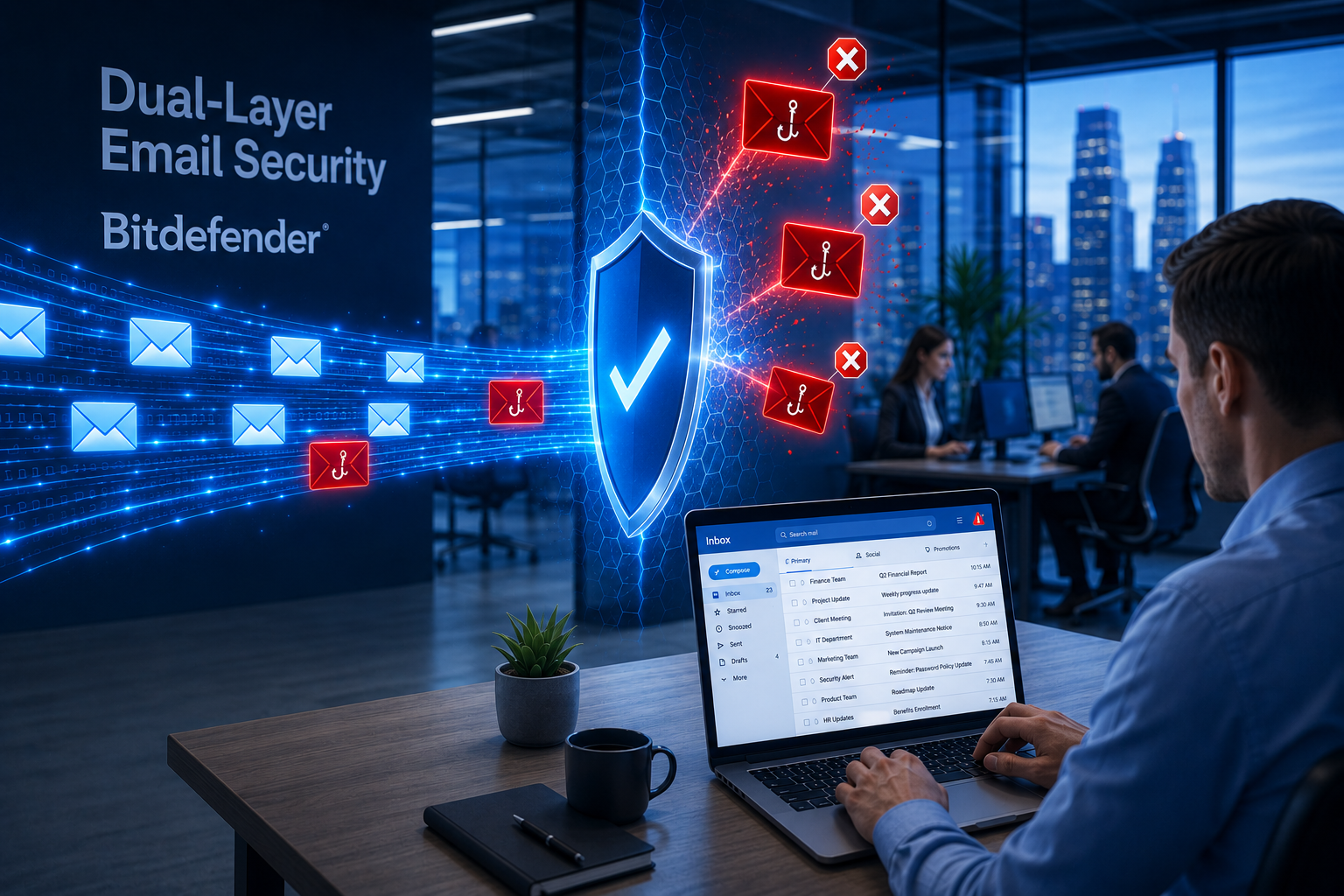
Email is the front door to your customers’ environments.
Despite years of investment in security tools, email remains the easiest way into an organization and the primary entry point for cyberattacks. Modern threats often appear legitimate at delivery, which makes them difficult to detect and forces MSPs to rethink email security as a core part of their strategic defense.
In our recent webinar, Shut the Front Door on Email Attacks, we shared practical, real-world insights on how MSPs can strengthen security, improve operational efficiency, and protect customers at scale.
Why Is Email Still the #1 Attack Vector?
Email is the top attack vector because it is simple, scalable, and highly effective. Attackers do not need advanced exploits when phishing emails can be sent at scale, credentials can be stolen through social engineering, and trusted domains can be reused once compromised.
The human element is involved in around 60% of breaches, and AI-generated phishing emails can reach click rates of up to 54%. One unfortunate click is often enough. From there, attackers move laterally among mailboxes and escalate access to internal systems, sensitive data, and full network compromise.
How Did Email Threats Become Harder to Detect?
The main answer is that email threats no longer look malicious. Modern attacks often use legitimate infrastructure, such as email delivery platforms, or come from trusted senders, including compromised partners or vendors. They are designed to contain no obvious malicious links or attachments and are increasingly enhanced with AI-generated content and proper grammar for your region.
In some cases, phishing emails achieve better engagement rates comparable to legitimate marketing campaigns. This makes signature-based detection and basic filtering used by legacy email solutions insufficient. Effective protection requires post-delivery visibility and rapid response capabilities.
What Is Dual-layer Email Protection (SEG + API) and How Does It Work?
Dual layer email security consists of SEG (Secure Email Gateway), which provides pre-delivery protection by filtering inbound email and blocking known threats before they reach the inbox. And it also includes API-based protection that operates inside the email environment, detecting threats that bypass initial filtering and enabling post-delivery remediation, such as removing malicious emails from inboxes.
Each layer addresses a different stage. SEG is strong at prevention but lacks internal visibility, while API-based protection provides deep visibility and response, but only after delivery. Combined, they enable continuous inspection, faster detection of sophisticated attacks, and immediate remediation across users.
Dual-layer protection closes the gap between prevention and response, which is where modern attacks succeed. By combining pre-delivery filtering with post-delivery detection and remediation, MSPs can protect organizations against phishing, impersonation, BEC, zero-days, and insider threats. This makes dual-layer email security a foundational element of a modern MSP strategic defense.
Why do MSPs Struggle to Scale Email Security, and How Does Centralized Visibility Help?
Most tools are not built for how MSPs operate. Managing multiple tenants across fragmented systems leads to limited visibility, manual processes, and an inability to share threat intelligence between customers. This creates blind spots that attackers can exploit.
Centralized visibility changes this by enabling MSPs to act globally rather than locally. Instead of treating each customer in isolation, they can detect a threat in one tenant, instantly check if it exists across others, and remove it everywhere in seconds. This allows MSPs to operate more efficiently and securely at scale, shifting from reactive response to proactive, cross-tenant protection, which is essential for building a scalable strategic defense model.
Why Are Fast Remediation and Automation Critical for Email Security?
Automation is essential for rapid response at scale. Manual processes are too slow to keep up. Email attacks spread quickly and a single missed phishing email can be clicked within minutes, leading to credential theft, internal compromise, and lateral movement.
With the right platform, MSPs can identify, search, and remediate threats across tenants in seconds, while also onboarding customers faster, applying global policies, automating reporting, and reducing configuration errors.
This not only improves operational efficiency but also strengthens security outcomes, allowing MSPs to focus on higher-value activities such as threat hunting and incident response.
What Is Extended Email Security and How Does It Support MSPs?
Extended email security builds on the dual-layer approach by combining pre-delivery filtering, post-delivery detection and remediation, and centralized multi-tenant visibility in a single platform. This enables MSPs to manage email security across customers from one console, apply consistent policies, share threat intelligence, and respond to incidents in seconds.
Solutions such as Bitdefender GravityZone Extended Email Security bring these capabilities together, enabling a more scalable approach that supports both operational efficiency and a stronger strategic defense.
Does Email Security Help with Compliance and Cyberinsurance?
Yes, and its role is growing as frameworks such as NIS2, ISO standards, and cyber insurance providers increasingly require visibility into incidents, the ability to trace attack origins, and proof that security controls are working.
Email data is often the starting point for investigations and reporting. This makes email security not just a protective layer, but a critical source of evidence for compliance and risk assessment.
Email remains the primary entry point for modern attacks, but it is also where MSPs can gain the most control. By combining dual-layer protection, centralized visibility, and automated remediation, MSPs can move beyond reactive security and build a scalable, proactive strategic defense.
To see how this approach works in practice, watch the on-demand webinar or book time with an expert to explore Bitdefender GravityZone Extended Email Security.
tags
Author
You might also like
Bookmarks
