Americans lost $3.5 billion to imposter scams last year — and the scams are getting harder to spot

June 17, 2026

Scammers posing as government agencies, banks, tech support representatives, employers, and even romantic partners stole $3.5 billion from Americans in 2025, according to newly released data from the U.S. Federal Trade Commission (FTC).
The figure represents nearly a 20% increase from the previous year and re-confirms a troubling reality: imposter scams were the most commonly reported type of fraud in the United States for the ninth consecutive year.
Key takeaways
- Americans reported losing $3.5 billion to imposter scams in 2025
- The FTC received more than 1 million imposter scam reports last year
- Government imposter scams increased by 40%, fueled in part by fake toll payment messages
- Romance scam losses rose 22% year over year
- Scammers increasingly use AI, spoofed phone numbers, and social engineering to look legitimate
Imposter scams work well
Imposter scams succeed by exploiting trust.
Rather than relying on technical tricks, scammers pretend to be someone victims recognize or feel obliged to obey. The fraudster may claim to be a government official, a bank employee, a tech support representative, a delivery company, a celebrity, or even a family member in distress.
According to FTC data, consumers submitted more than 1 million imposter scam reports in 2025, with reported losses reaching $3.5 billion. The agency notes that imposter scams have remained the most frequently reported fraud category for nearly a decade.
The actual financial damage is likely much higher because many victims never report their losses.
The spread of government impersonation scams
One of the fastest-growing scam categories involves criminals posing as government agencies.
The FTC reported a 40% increase in government imposter scam reports during 2025. A major contributor was the surge in fake toll payment messages claiming recipients owed money for unpaid road tolls. These texts often mimic legitimate toll programs and threaten penalties, late fees, or vehicle registration suspensions if payment is not made immediately.
As the FTC notes:
People are convinced to move money to “protect” it, with their losses often limited only by their available funds.
The tactic works because it creates a sense of urgency. Victims fear legal or financial consequences and act without checking whether the message is genuine.
The FTC has seen an increase in reported fraud losses to all types of fraud, with an all-time record of $16 billion reported lost in 2025 alone — an increase of about 25% compared 2024.
Romance scams continue to extract massive losses
The FTC also identified growing losses from romance scams.
Reported romance-scam losses increased by 22% in 2025. While many victims lose money after developing emotional relationships with fraudsters, modern romance scams often evolve into investment fraud schemes or cryptocurrency scams, inflicting even greater financial losses.
Increasingly, criminals use social media platforms and dating apps to seek victims, build trust over weeks or months, and eventually request money or encourage investments in fraudulent platforms.
Social media has become scammers’ favorite hunting ground
Separate FTC data released earlier this year revealed that social media played a major role in fraud losses across multiple scam categories.
Nearly 30% of people who reported losing money to scams in 2025 said the interaction began on social media. Reported losses linked to social media scams reached $2.1 billion, making social platforms the costliest scam contact method of the year. Investment scams, shopping scams, and romance scams accounted for much of the damage.
Data from the Bitdefender 2025 Consumer Cybersecurity Survey supports those findings, with more than a third of respondents reporting they encountered a scam through their social media feed.
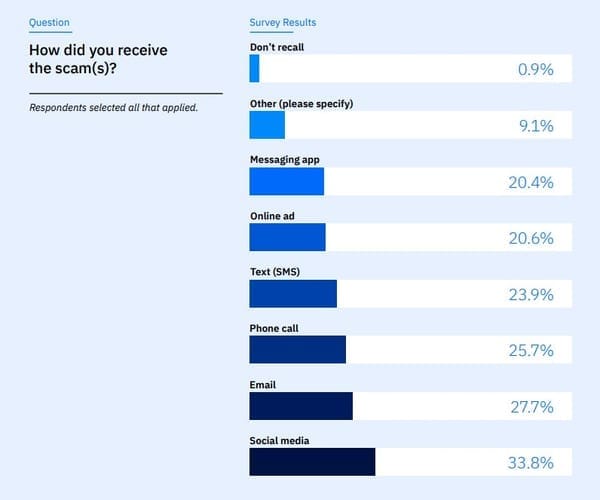
Scammers benefit from the enormous amount of personal information people share online. Public profiles, friend lists, photos, and life updates make it easier to craft convincing impersonation attempts.
AI is making impersonation scams more convincing
Today's imposter scams look very different from the obvious scam emails of a decade ago.
Fraudsters now routinely use caller ID spoofing, stolen personal information, professionally designed websites, and AI-generated content to appear credible. Some scams use cloned voices or manipulated images to imitate trusted individuals, making it harder for consumers to distinguish legitimate communications from fraudulent ones.
As generative AI tools become more accessible, impersonation attacks are likely to become more personalized and convincing.
Read: The Deepfake Boss Scam: How to Verify Requests Before It's Too Late
Warning signs of an imposter scam
While scam stories vary, many follow familiar patterns.
Be suspicious if someone:
- Seeks to create a sense of urgency or panic
- Demands immediate payment
- Requests payment through gift cards, wire transfers, cryptocurrency, or payment apps
- Asks you to keep the conversation secret
- Claims there is a problem that only they can solve
- Contacts you unexpectedly with threats, prizes, or investment opportunities
Legitimate organizations rarely rush people into making financial decisions.
How to protect yourself
A few simple habits can dramatically reduce your risk:
Verify independently
If someone claims to represent a government agency, bank, utility company, or business, contact the organization using a phone number or website you already know is legitimate. Do not use contact details provided in suspicious messages.
Slow down
Scammers rely on emotional reactions. Taking a few minutes to verify a claim can prevent costly mistakes.
Limit what you share publicly
The less information criminals can gather about your life, family, work, and finances, the harder it is for them to create convincing impersonation attempts.
Use security tools
Security solutions that block malicious websites, phishing attempts, and scam messages can help stop fraud before it reaches you. We encourage consumers to use deepfake detection technology as synthetic media becomes more realistic and harder to spot with the naked eye.
Talk about scams
Many victims feel too embarrassed to discuss fraud. Sharing experiences with friends and family can help others recognize warning signs before becoming victims themselves.
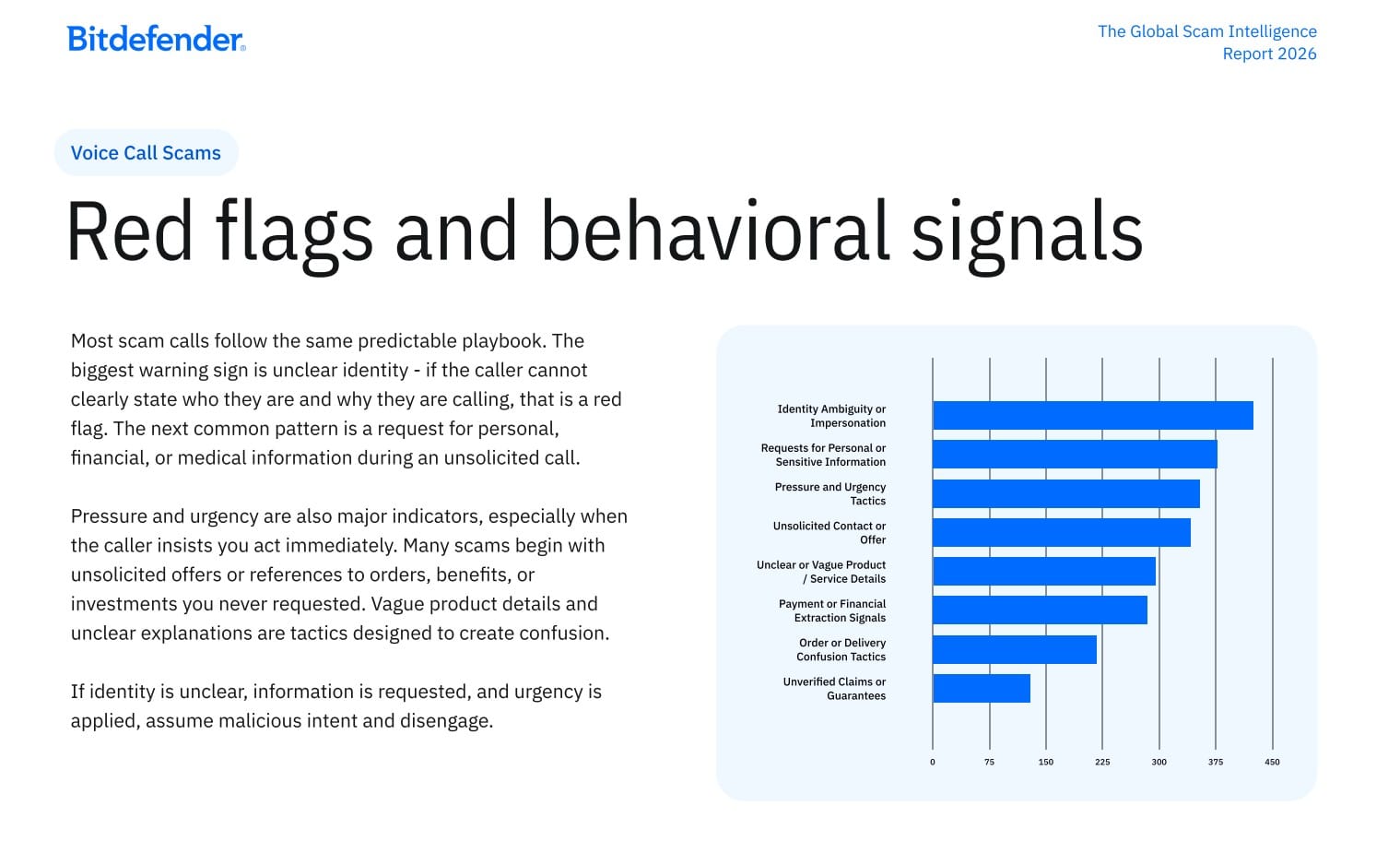
Download the free Bitdefender Global Scam Intelligence Report (2026) for a comprehensive look at clear signs you’re interacting with a scam:
The bottom line
The FTC's latest figures show that imposter scams are on the rise. With reported losses reaching $3.5 billion in 2025 and criminals increasingly using social media, AI-generated content, and sophisticated impersonation techniques, consumers face a threat landscape that is becoming more convincing and costly every year.
As a rule of thumb, the best defense is (more often than not) healthy skepticism: whenever someone demands money, personal information, or urgent action, verify first.
However, it always helps to use security software while staying informed about emerging scam tactics.
When in doubt about an unsolicited phone call, text or social media interaction, consider using a scam detector like Scamio.
Bitdefender has also recently introduced Scam Radar, a new scam-fighting feature integrated into Bitdefender Mobile Security for Android and Bitdefender Mobile Security for iOS.
You may also want to read:
Crypto investment scam sends couriers to collect victims' cash, FBI warns
Social Media Scams Cost Americans $2.1 Billion in 2025, FTC Warns
The Deepfake Boss Scam: How to Verify Requests Before It's Too Late
tags
Author

Filip has 17 years of experience in technology journalism. In recent years, he has focused on cybersecurity in his role as a Security Analyst at Bitdefender.
View all postsYou might also like
Bookmarks
