iPhone-to-Android Texts Are Finally Encrypted – Here’s What That Means for You

May 13, 2026
For years, texting between iPhones and Android devices came with a stubborn privacy gap. Messages sent through Apple’s iMessage system were encrypted. Google Messages chats between Android users could also be encrypted. But once a conversation crossed the “blue bubble vs. green bubble” divide, those protections largely disappeared. That is finally starting to change.
Apple announced that end-to-end encrypted (E2EE) RCS messaging is now rolling out in beta through iOS 26.5, developed in collaboration with Google and the GSMA, the organization behind the RCS standard. The update brings a major privacy upgrade to cross-platform texting.
Key takeaways
- Apple and Google are rolling out end-to-end encrypted RCS messaging between iPhones and Android devices.
- Messages protected with E2EE can’t be read by Apple, Google, carriers, or hackers intercepting traffic.
- The feature is rolling out in beta and depends on carrier support.
- Users will need updated software and compatible messaging apps to benefit.
- Encryption only works when both sides support the new standard.
What is RCS and why it matters
Rich Communication Services (RCS) is a communication protocol standard for instant messaging developed and defined by the GSM Association (GSMA). It’s the modern successor of SMS and MMS on cellular networks with more modern features including high-resolution image and video support, typing indicators, file sharing, and improved group chat functionality, among other things.
Traditional SMS text messaging is decades old and notoriously insecure. Even modern RCS messaging lacked full encryption in many iPhone-to-Android chats, which meant messages could potentially be exposed during transmission.
The new system changes that. By using end-to-end encryption, it ensures only the sender and intended recipient can read the messages.
In practical terms, this helps protect:
- Private conversations
- Shared photos and videos
- Sensitive personal information
- Verification codes and login details
- Financial or medical discussions
It also reduces risks from network interception, rogue Wi-Fi attacks, and certain forms of carrier-level surveillance.
The move is especially significant because cross-platform texting has historically been the weak link in mainstream messaging security.
From Apple’s May 11 announcement:
Apple and Google have led a cross-industry effort to bring end-to-end encryption to Rich Communication Services (RCS), making the cross-platform messaging format that replaces traditional SMS more secure and private.
Starting today, end-to-end encrypted RCS messaging begins rolling out in beta for iPhone users running iOS 26.5 with supported carriers and Android users on the latest version of Google Messages. When RCS messages are end-to-end encrypted, they can’t be read while they’re sent between devices. Users will know that a conversation is end-to-end encrypted when they see a new lock icon in their RCS chats. Encryption is on by default and will be automatically enabled over time for new and existing RCS conversations.
What consumers will notice
For most users, the biggest difference may simply be peace of mind. Encrypted RCS chats still look and feel like regular modern messaging experiences, including support for:
- High-quality media sharing
- Read receipts
- Typing indicators
- Group messaging
But users may also start seeing visual indicators that a conversation is protected, such as a lock icon or “Encrypted” label.
The rollout is gradual, however. Not every device or carrier supports encrypted RCS yet. The feature currently requires:
- iOS 26.5 on iPhone
- The latest Google Messages app on Android
- Carrier support for the updated RCS profile
How to activate end-to-end encrypted RCS messaging in iOS
In the Settings app, tap Apps
- Tap Messages
- Tap RCS Messaging
- Turn End-to-End Encryption (Beta) on or off
(Starting with iOS 26.5, the feature is on by default)
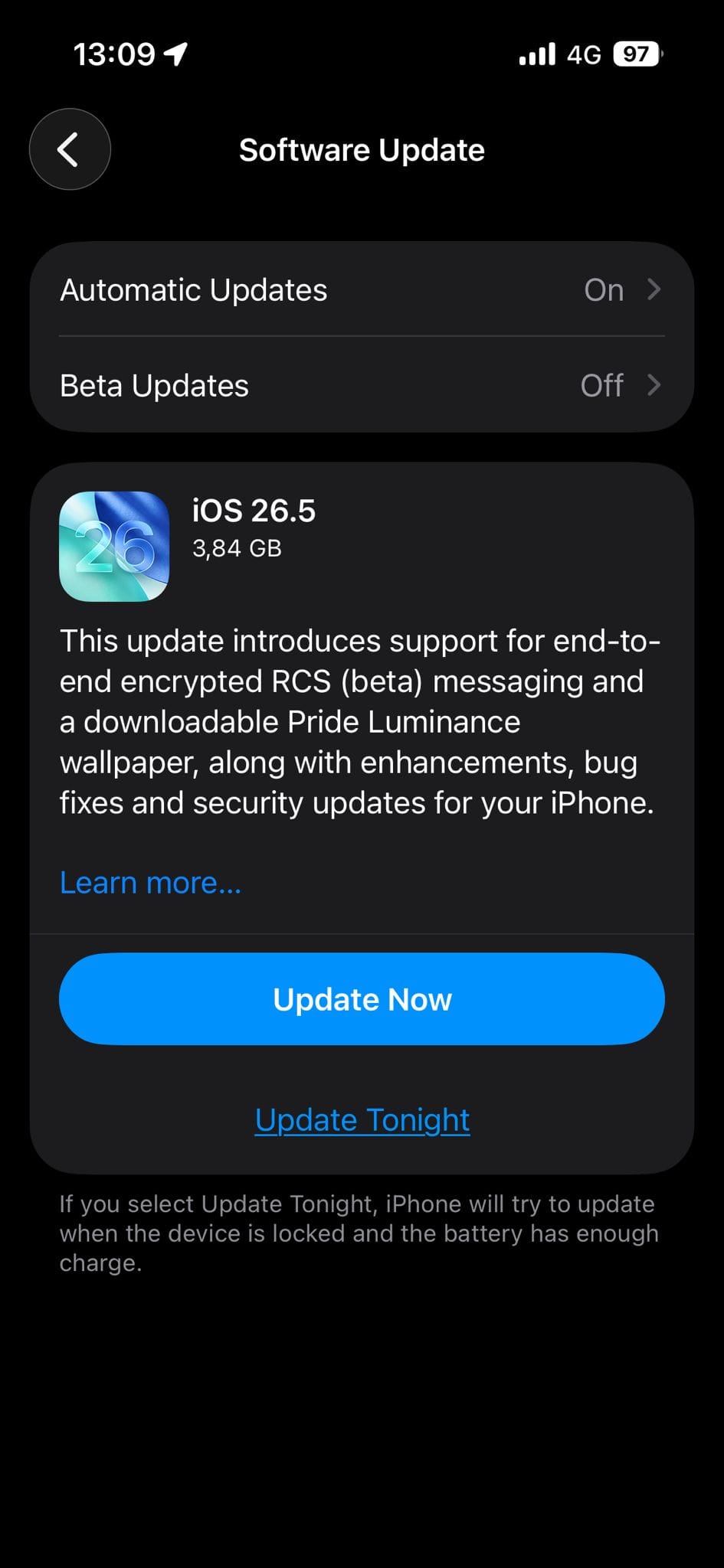
Apple informs iPhone users that, starting now, iOS supports end-to-end encrypted RCS messaging.
What RCS brings to the table
According to Google support, when RCS chats is turned on, you can:
- Share high-resolution photos and videos.
- Know when someone is typing.
- Get read receipts, which show when someone has read or received your message. Read receipts also show your contact when you read their message.
- Send messages over mobile data and Wi-Fi.
- Rename, edit, and remove yourself from group chats.
- Keep your conversations secure with end-to-end encryption if you are communicating with other Google Messages users.
Not every conversation is encrypted yet
Consumers should understand an important limitation: encryption is not guaranteed in every cross-platform chat — at least not yet.
Because the rollout is gradual and depends on carrier compatibility, some conversations may still fall back to unencrypted messaging.
Security researchers and tech outlets warn users to check for encryption indicators rather than assume every RCS chat is protected.
That means consumers should still be cautious about sending highly sensitive information over text if they are unsure whether encryption is active.
What you should do now
If you use both iPhone and Android contacts regularly, here are a few simple steps to strengthen your privacy:
Update your devices
Install the latest operating system updates:
- iPhone users should update to iOS 26.5
- Android users should update Google Messages and Android software
Older devices or outdated apps may not support encrypted RCS.
Look for encryption indicators
Pay attention to lock icons or “Encrypted” labels in conversations. Those indicators confirm the chat is protected with end-to-end encryption.
Avoid SMS fallback when possible
If encryption is unavailable and a conversation falls back to SMS, messages lose the modern protections and remain vulnerable to interception.
Continue using secure messaging apps for highly sensitive conversations
Apps like Signal and WhatsApp still offer mature end-to-end encryption systems with broader cross-platform support and fewer carrier dependencies.
It’s important to note that iOS 26.5 also carries a long list of security fixes, making it all the more important to update your iPhone or iPad. Many of those fixes are also offered to older-generation device models in iOS 18.7.9 and iPadOS 18.7.9, iPadOS 17.7.11, iOS 16.7.16 and iPadOS 16.7.16, and iOS 15.8.8 and iPadOS 15.8.8.
Mac users also get the security fixes as part of their corresponding OS updates. Visit Apple Support to see all the updates available from Cupertino this week.
You may also want to read:
Android ‘Quick Share’ Now Supports iOS ‘AirDrop’ – Here’s How to Use It Securely
Apple Taps Google’s Gemini to Power Siri, Says Privacy Remains a Priority
Which Big Tech Companies Do You Trust (or Not)? We Asked Netizens
tags
Author

Filip has 17 years of experience in technology journalism. In recent years, he has focused on cybersecurity in his role as a Security Analyst at Bitdefender.
View all postsYou might also like
Bookmarks
