Fake shop ads on Snapchat show how scammers continue to abuse social media

June 30, 2026

Scrolling through social media and stumbling across an amazing bargain has become part of everyday life. Unfortunately, not every deal is what it appears to be.
Bitdefender researchers recently came across scam ads on Snapchat promoting newly registered websites offering steep discounts on a wide range of products.
Key takeaways
- Bitdefender researchers observed multiple Snapchat ads promoting websites that displayed characteristics commonly associated with phony online stores.
- Several domains were registered only days before the ads appeared.
- The sites advertised unusually large discounts, even claiming up to 80% off.
- Some websites redirected visitors to additional shopping domains.
- Most observed ads were eventually disapproved and removed.
- The findings reflect tactics previously observed across other social media advertising platforms.
- Consumers should carefully evaluate unfamiliar online stores before making purchases.
A taste of suspicious shopping ads observed on Snapchat
Among the examples recently observed by Bitdefender Labs researcher Eduard Prozoreanu were several Snapchat ads promoting newly registered shopping websites that showcased the telltale signs often associated with fraudulent online stores.
Zalandasport[.]shop

First observed on June 5, 2026, this ad displayed messages such as:
Limited stock available, only €23
🔥 Seulement aujourd'hui
The domain had been registered on May 29, 2026, only days before the advertisement appeared.
Researchers also observed redirection to another website, veepee-vente[.]life, where heavily discounted products were advertised. Redirect chains are often used by malicious advertisers because they allow operators to change destinations while keeping advertising campaigns active.
Styleinsummer[.]shop
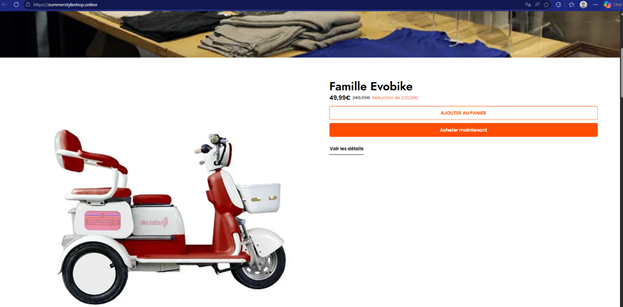
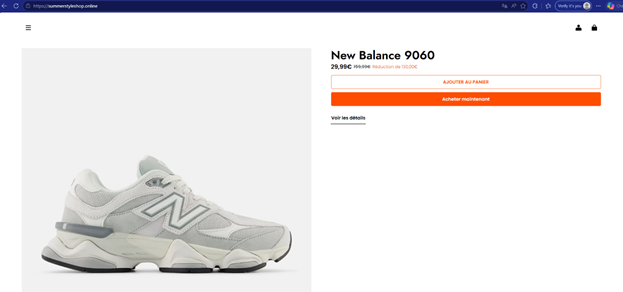
Observed on June 6, 2026, this website promoted summer products and footwear using advertising messages such as:
🔥19€-Pantoufles d'été pour vous
One promotion advertised an electric bike for around €50, a price low enough to make most shoppers stop scrolling and take notice. The domain itself was registered on June 2, 2026.
Tasfiya[.]shop
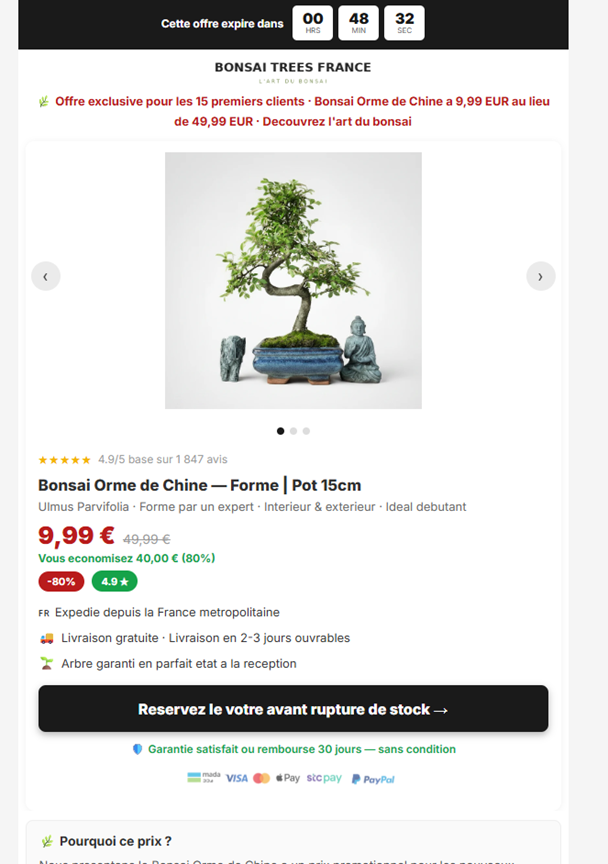
Observed on June 13, 2026, this ad used a simple but familiar marketing hook:
80% off
The promotion directed users to a shopping website advertising heavily discounted products, including bonsai trees. The domain had been registered on June 1, 2026.
StradivariusMall[.]com
Another advertisement observed on June 17 directed users to stradivariusmall[.]com, a domain whose name evokes a well-known fashion retailer. However, instead of a clothing store, visitors were presented with a generic online shop selling unrelated products.
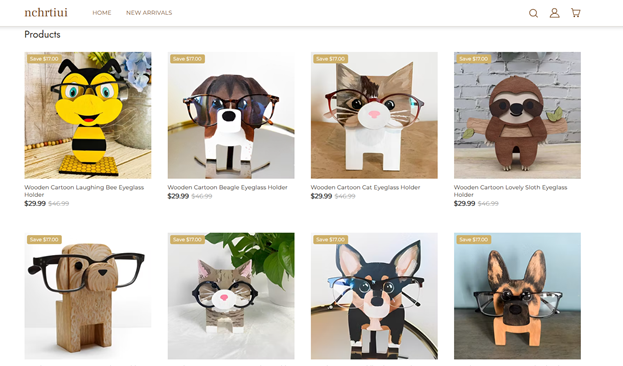
The domain had been registered only days earlier, on June 9, 2026, was classified as malicious, and the advertisement was later disapproved.
While many of the scam ads were eventually disapproved and removed, the findings highlight an ongoing challenge facing social media platforms: scammers continue to exploit advertising systems to promote questionable storefronts, fake shops, and offers designed to entice users with deals that seem too good to be true.
The activity mirrors tactics Bitdefender has observed across Meta platforms, Reddit, Pinterest, and X, reinforcing the idea that scammers follow users wherever they spend time online.
Common themes observed in scam ads on Snapchat
Although the products varied, the ads shared a number of recurring characteristics that consumers should learn to recognize:
- Recently registered domains
- Massive discounts and unrealistic pricing
- Disposable storefronts using generic e-commerce templates, sometimes paired with domains that evoke recognizable retail brands
- Limited online reputation
- Scarcity and urgency messaging
- Short operational lifespans
- Redirects to additional domains
In several cases, the websites appeared online only days before advertisements began running. This type of disposable infrastructure lets operators quickly launch new campaigns, collect traffic, and replace domains when advertisements are removed or websites become flagged.
Why fake shop ads continue to thrive
The Snapchat examples are not isolated incidents.
According to Bitdefender's Global Scam Intelligence Report 2026, approximately 60 million people were targeted by scam advertisements on social media and video-content platforms in 2025. The report also found that fake shops and fraudulent advertising rank among the leading scam categories observed globally.
The report further notes that malvertising has evolved into a major scam delivery mechanism rather than a niche tactic used by a small number of threat actors.
Part of the reason these scams continue to work is simple: people tend to trust what they see inside apps they use every day. If an offer appears as a paid advertisement, many users assume someone has already checked that it's legitimate.
Threat actors exploit that trust by creating professional-looking ads that resemble legitimate promotions from real retailers.
The challenges facing social media platforms
Major social media companies actively work to identify and remove deceptive ads.
Snapchat's advertising policies prohibit deceptive content, misleading claims, and scam-related promotions. The platform also provides educational resources to help users recognize fraudulent ads and suspicious offers.
Notably, many of the advertisements observed by Bitdefender researchers were eventually marked as disapproved and removed.
However, scammers often operate faster than enforcement systems can respond. A newly registered domain can be advertised within hours, attract traffic for days, and disappear before many users realize something is wrong.
Many malvertising campaigns today leverage newly created advertising accounts, compromised advertiser profiles, and accounts funded through stolen payment methods. These tactics can make enforcement more difficult and allow scammers to quickly return after previous campaigns are disrupted.
How to stay safe from fake shop ads
Whether consumers are browsing Facebook, Instagram, Reddit, Pinterest, X, Snapchat, or the next popular social platform, scammers are constantly looking for opportunities to place their fraudulent content in front of potential victims.
The faster they can convince someone to click, the less likely that person is to investigate whether an offer is legitimate.
Verify before committing to any purchase, even if it looks like a bargain
Before entering payment details:
- Be skeptical of discounts that seem unusually large.
- Check how long the website's domain has been registered.
- Search for independent reviews outside the retailer's website.
- Verify that the business provides legitimate contact information and customer support channels.
- Compare prices with established retailers.
A few minutes of research can help prevent financial loss and identity theft.
Use free scam-checking tools from Bitdefender
If an ad, message, or online offer seems suspicious, consider checking it before clicking.
Free tools such as Bitdefender Scamio can help analyze suspicious messages, social media posts, emails, screenshots, and online offers for signs of fraud.
If an advertisement contains a link, Bitdefender Link Checker can help determine whether the destination appears suspicious before you visit it.
Scammers count on users acting quickly. Taking a moment to verify an offer can make all the difference.
Protect the device you use the most
Many people discover social media advertisements on their phones, making mobile devices an increasingly important target for scammers.
A mobile security solution for Android and iOS can provide an additional layer of protection by helping identify fraudulent websites, phishing attempts, scam messages, suspicious links, and other threats before they lead to financial loss or account compromise.
Whether you're browsing social media, shopping online, or following links from advertisements, having protection on the device you use every day can help reduce your exposure to online scams.
Remember: A healthy dose of skepticism can save you a lot of trouble. The next time a social media ad promises an unbelievable bargain, pause for a moment. Spending a few extra minutes verifying the seller could save you from losing money, exposing your personal information, or dealing with fraud later.
Disclaimer: This article is published for informational and educational purposes only. The information presented is based on technical research conducted by Bitdefender Labs and publicly available sources. Bitdefender does not make any legal determination regarding the activities described herein. The mention of any company, brand, domain, or individual does not constitute an accusation of illegal activity. The technical indicators and behavioral patterns described reflect observations made at the time of research and may change over time. Readers should exercise their own judgment and consult appropriate authorities or legal counsel if they believe they have been affected by any of the activities described. Domain names and URLs listed in this article are provided solely to help consumers and security professionals identify potentially harmful infrastructure. Bitdefender disclaims any liability for actions taken based on the information in this article.
tags
Author

Alina is a history buff passionate about cybersecurity and anything sci-fi, advocating Bitdefender technologies and solutions. She spends most of her time between her two feline friends and traveling.
View all postsYou might also like
Bookmarks
