Fake job and collaboration offers on Instagram are turning ambition into a scam hook

June 30, 2026
Fake job and collaboration offers on Instagram target people who are trying to grow online. Scammers pose as brands, recruiters, agencies or “collab managers” to steal from unsuspecting users.
Key takeaways
- Fake job and collaboration offers on Instagram often arrive in DMs from accounts impersonating legitimate users or businesses.
- Instagram collaboration scams may ask users to click suspicious links, pay upfront fees, share banking information, install files or give away login codes.
- Fake Instagram job offers often exploit creators, students, freelancers and job seekers with too-good-to-be-true promises.
- Users can stay safe by verifying brands outside Instagram, avoiding upfront payments, protecting accounts with strong security and checking suspicious messages with tools such as Bitdefender Scamio.
Why Instagram is perfect bait for fake opportunities
Instagram evolved into a platform beyond sharing photos. For many, it’s also a possible source of income. That makes it attractive to scammers.
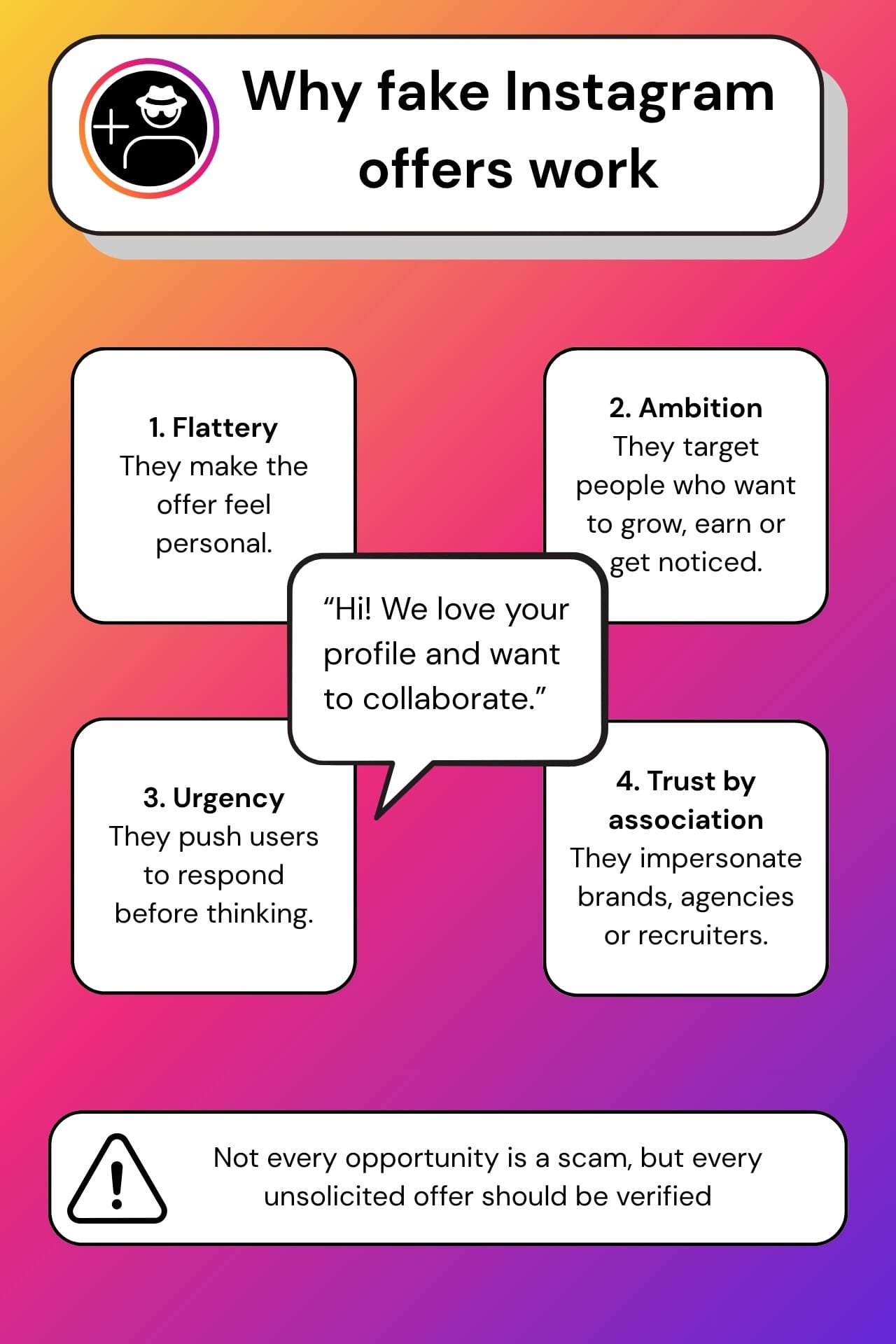
A creator with a few thousand followers may hope for a first paid collaboration. A student may be looking for a flexible remote job. A photographer, makeup artist, fitness coach or small business owner may see a DM from a “brand representative” as a chance to grow. Scammers understand that ambition, curiosity and a sense of urgency can make people overlook warning signs.
These fake offers are part of the broader Instagram scam ecosystem. The same tactics used in phishing, impersonation, malicious links and account recovery scams also appear here. The only difference is the shape these scams take. Instead of pretending to be a prize, a support agent or a friend in trouble, the scam pretends to be a professional opportunity.
How fake job and collaboration offers on Instagram usually work
Most fake Instagram job and collaboration scams start with an unsolicited message. The sender may claim to work for a legitimate business. Common guises include:
- Reputable brands
- Startups
- Talent agencies
- Clothing companies
- Beauty brands
- Crypto projects
- Travel pages
The offer usually sounds flattering and simple. They “love your content,” think you are a “perfect fit,” and want to send free products or pay you for a post, story, Reel or short campaign. In fake job schemes, they may offer remote work that involves product testing, social media management, data entry, app optimization, crypto promotion, review writing or “brand outreach.”
From there, the scam can take several directions:
- They ask you to pay for shipping, registration, samples, equipment or a “collaboration fee”
- They send a link to a fake application, fake brand portal or phishing page
- They ask for your Instagram login, email login, two-factor authentication code or backup codes
- They request banking details, tax information, ID photos or other sensitive documents
- They send files or “contracts” that may contain malware
- They move the conversation to WhatsApp, Telegram or email to avoid Instagram reporting tools
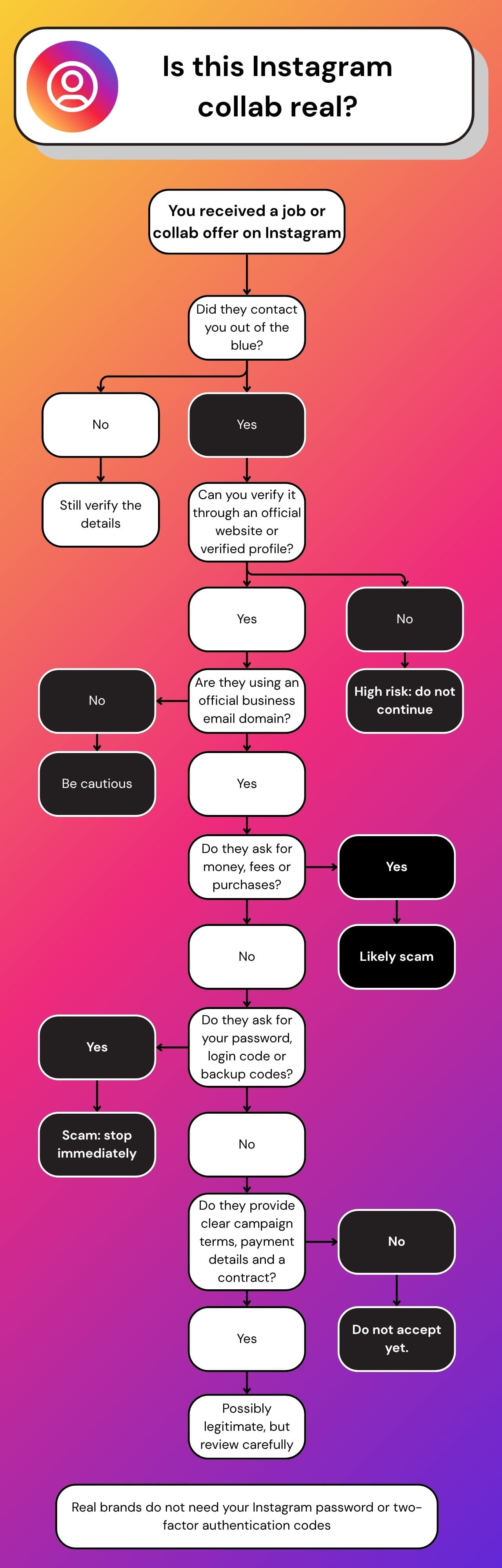
A legitimate opportunity can start on Instagram, but it should not require you to ignore basic security. Real brands do not need your password. Real recruiters do not pay you through strange portals before verifying your identity. Real collaborations should have clear terms, a real business identity and a verifiable contact person.
The most common fake Instagram collab scams
Fake ambassador scam
One common version is the fake brand ambassador scam. The account promises free products, exposure or commission, but the “ambassador” has to buy a product first, pay inflated shipping, or use a discount code that still generates profit for the scammer.
Fake sponsorship scam
Another version is the fake sponsorship scam. The scammer impersonates a known company and sends a link to a fake campaign dashboard. The page may ask you to sign in with Instagram or email, giving criminals access to your account.
Fake modeling scam
Fake modeling, casting and photography offers are also common. They may ask for “portfolio fees,” travel deposits, explicit images, personal documents or private information. Some are designed for financial fraud, while others can morph into harassment, sextortion or identity theft.
Fake remote jobs
Then there are fake remote jobs. These may look less like influencer scams and more like employment offers. The role may involve simple tasks, such as rating products, reviewing apps or “optimizing” online services. The scammer may even send small fake earnings at first, then ask the victim to deposit money to unlock larger payments.
Crypto, NFT and Web3 scams
Crypto and Web3 collaboration scams deserve special caution. Fake NFT promotions, token partnerships and investment communities often target creators who want to monetize their audience. The scam may lead to wallet-draining links, fake mint pages or requests to promote fraudulent projects to followers.
Red flags around fake job and collaboration offers on Instagram
Fake opportunities usually have several small inconsistencies.
Fake accounts
Watch for messages that are vague about the campaign, the company or the person contacting you. Be careful with accounts with stolen images, few posts, recent username changes, or bios that do not match the company they claim to represent. If they pressure you, treat it as a serious red flag, especially if they want you to act “today,” avoid questions or move the conversation immediately to another app.
Strange requests
The biggest warning signs are requests for money, login details, authentication codes or sensitive documents before you have verified the offer. A “collab” that requires you to pay first is often not a collaboration. A “recruiter” who asks for your banking information before a formal hiring process is not behaving like a legitimate employer.
Suspicious links
Be skeptical of links as well. Scammers often use lookalike domains, shortened URLs or fake landing pages that imitate real brands. Before clicking, check the sender through the company’s official website, verified social profiles or publicly listed contact channels. Suspicious messages, links, screenshots or QR codes can also be checked with Bitdefender Scamio, which is designed to help users assess whether something looks like a scam.
What scammers are really trying to steal
If scammers get your Instagram login, they can hijack your account, impersonate you, scam your followers, delete content or demand payment for recovery. This can cost creators years of work, audience trust and income. Bitdefender Security for Creators is relevant in this context because creator accounts are business assets, not just personal profiles. Protection against phishing, malicious links, account takeover and suspicious activity matters when your Instagram presence is tied to your reputation.
If scammers collect your personal documents, phone number, address, email, date of birth or banking details, identity theft can become a risk. That information can be reused in future scams, sold, or combined with breached data from other sources. Bitdefender Digital Identity Protection can help users monitor their digital footprint, receive alerts about exposed information and understand where personal data may already be circulating online.
What to do if you receive a suspicious offer
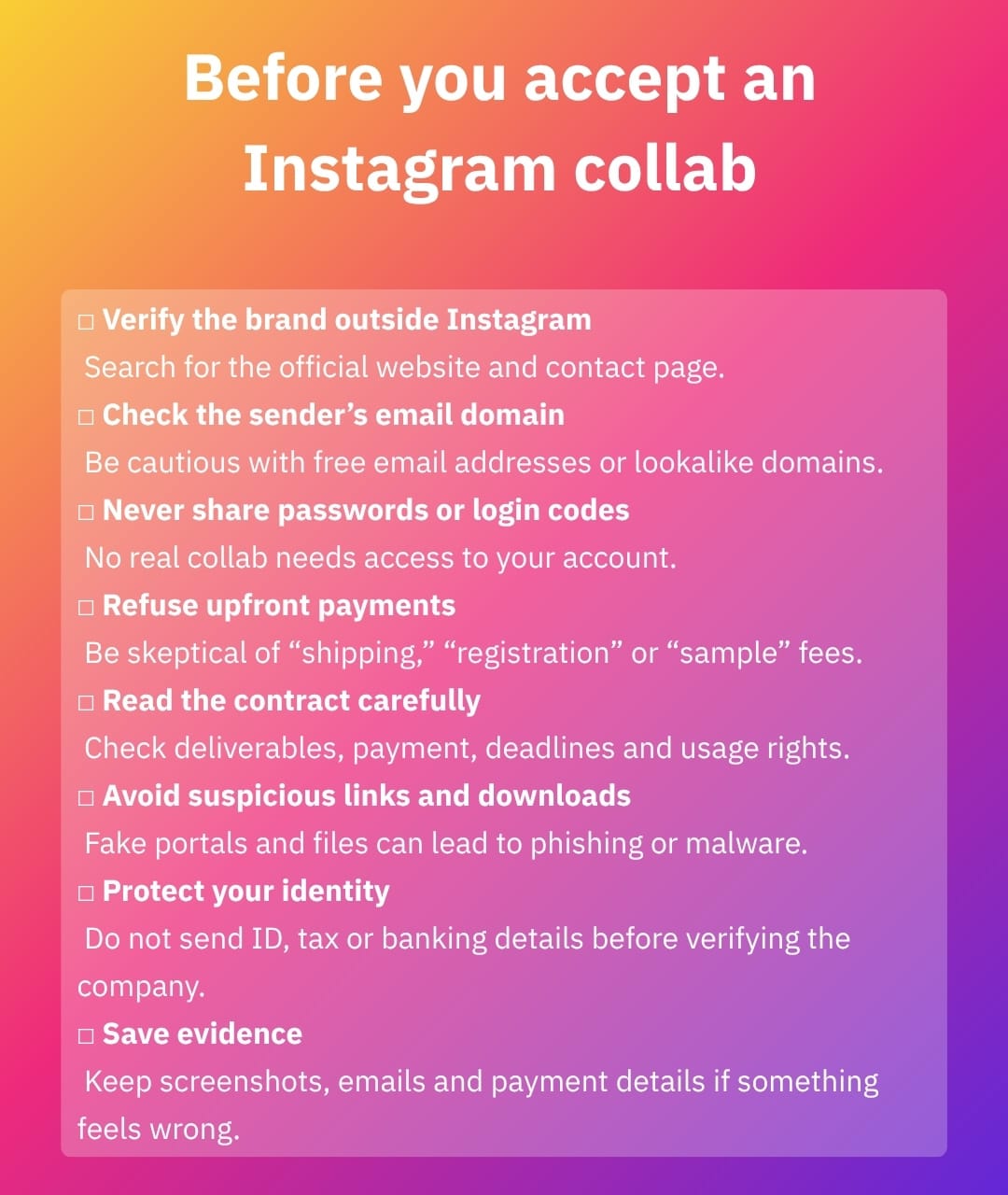
Do not click the link or send any information immediately. Take a screenshot, inspect the profile, look up the company independently and compare the contact details with the brand’s official website. If the message claims to come from a known brand, contact the company through a verified email address or contact form, not through the link in the DM.
Mitigate damage after exposure
If you already clicked a link but did not enter information, close the page and avoid downloading anything. If you entered your Instagram password, change it immediately, enable two-factor authentication and log out of unfamiliar sessions. Use a password manager like Bitdefender SecurePass to avoid password fatigue. If you shared banking information, contact your bank. If you shared personal documents, monitor for identity misuse and consider using identity protection tools.
Report the account
Report the account to Instagram. If money was lost or identity theft is involved, report the incident to your local consumer protection or cybercrime reporting channel.
How to safely evaluate real Instagram collaborations
Legitimate collaborations do exist, including for small creators. The goal is not to become paranoid and reject every possible opportunity, but to slow the process down and vet it more carefully.
A real collaboration should include a verifiable company, a professional email domain, clear campaign requirements, transparent compensation, realistic timelines and written terms. You should understand what content is expected, how it will be used, whether the brand wants usage rights, when payment happens and what data you need to provide.
Never give a brand direct access to your Instagram account unless there is a clear reason for it. Avoid sending personal documents through DMs. Do not install unknown apps or browser extensions for a campaign. Last but not least, keep your creator email separate from your personal email, use unique passwords and protect all accounts with two-factor authentication.
Conclusion
Fake job and collaboration offers on Instagram work because they appear to be real opportunities. They use the language of creator culture, remote work and brand partnerships to lower suspicion and push people into fast decisions.
The safest response is not cynicism, but verification. Treat every unsolicited offer as untrusted until it proves otherwise. Check the sender outside Instagram, avoid upfront payments, protect your login credentials and be careful with personal data. In the Instagram scam ecosystem, a fake collab is rarely just a bad deal. It can be the first step toward account takeover, identity theft or financial fraud.
Frequently asked questions (FAQ)
How to spot fake collab on Instagram?
A fake Instagram collab often comes from an unverified or suspicious account, uses vague language, offers unrealistic rewards, pressures you to respond quickly, asks you to pay for shipping or samples, or sends links to external “campaign portals.” The clearest red flags are requests for money, passwords, login codes, banking details or personal documents before the offer has been verified.
What should you do if you receive a fake job offer on social media?
Do not click links, download files, send money or share personal information. Screenshot the message, report the account, block the sender and verify the company through official channels. If you already shared login details, change your password immediately, enable two-factor authentication and check active sessions. If you shared financial or identity information, contact your bank and monitor for misuse.
How to know if a collab is legit?
A legitimate collab should come from a verifiable brand or agency, use an official business email domain, provide clear campaign details, include written terms and never ask for your Instagram password or upfront payment. Check the sender on the brand’s official website or verified profile, search for complaints, review the contract carefully and make sure payment, rights and deliverables are clearly explained before accepting.
tags
Author

Vlad's love for technology and writing created rich soil for his interest in cybersecurity to sprout into a full-on passion. Before becoming a Security Analyst, he covered tech and security topics.
View all postsYou might also like
Bookmarks
