US Navy tells sailors and their families: scrub your social media, enemies are watching

August 27, 2026
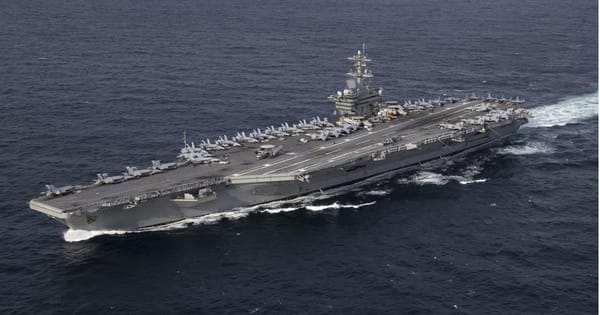
The US Navy has told its entire workforce of 340,000 active-duty personnel, 58,000 reservists, and 210,000 civilian employees to clean up their social media profiles, because adversaries might be using them to determine who they are, where they live, and when they may not be at home.
The advice comes in the form of a newly-published bulletin called "Epic Vigilance: Immediate Actions for Force Protection and Personal Security."
According to the advisory, "a coordinated, multi-domain campaign" is being run by adversaries against the US Navy as part of a "deliberate effort to gather intelligence, test our defenses, disrupt our operations, and intimidate our force."
The warning, of course, comes amid the on-going US-Israeli military campaign against Iran.
US Navy workers and their families are being told that they should ensure that their social media profile privacy settings are enabled, and to remove anything that connects them to the Navy, or reveals "patterns of life" that an attacker could exploit.
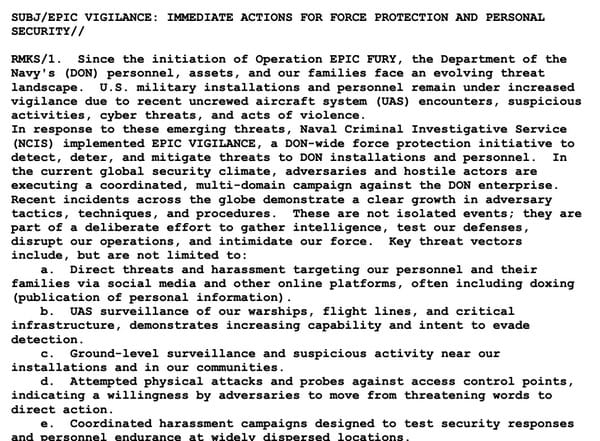
Additionally, affected individuals are being advised to report any suspicious activity, and to remain on their guard.
Furthermore, personnel have been asked to report:
- anyone taking photographs of gates, fences, ships, airplanes, or housing.
- drones flying near installations at night.
- anyone asking questions about ship movements or the schedules of Navy leadership.
- if they are followed off-base while in uniform.
- any fake social media accounts impersonating fellow shipmates.
The sad truth is that geolocation data, and casual over-sharing online has resulted in a vast amount of potential for digital surveillance to succeed - often from people who never intended to create any breadcrumbs which might suggest they are linked to the US Navy.
This wouldn't, of course, be the first time that military staff have accidentally leaked information about themselves online. For instance, fitness-tracking apps like Strava have exposed the jogging routes of military staff in the past as they exercise around sensitive sites, however careful individuals might have been to not ever refer to where they worked.
It is important to remember that it is not just what you post about your job that could put you (and others) at risk. It is also patterns of behaviour that can tell a fuller story when pieced together, and provide useful intelligence for an adversary.
Not everyone has taken the notice at face value. It has arrived at the same time as there has been increased media scrutiny into poor conditions aboard the USS Abraham Lincoln during a long deployment.
Some commentators have wondered out loud whether the timing of an announcement telling sailors to be much more careful about what they and their families share online, conveniently coincides with Navy leadership trying to silence bad press.
Whatever the politics behind the timing, the underlying advice to lock down what you share, be on the look out for social engineering, and not to assume that your online "private life" is actually private, makes sense for all of us - whether we work for the US Navy or not.
tags
Author

Graham Cluley is an award-winning security blogger, researcher and public speaker. He has been working in the computer security industry since the early 1990s.
View all postsYou might also like
Bookmarks
