Why your smart bulbs may need a border-router update

January 09, 2026
If your smart bulbs aren’t responding properly, the issue might not be the bulbs at all. Modern smart homes rely on technologies like Matter and Thread, where a key component, the border router, keeps everything connected. When that piece is outdated, your entire smart lighting system can start to fail.
Key Takeaways
- Smart bulb issues often stem from outdated border routers. Connectivity problems are frequently caused by old firmware on devices managing Thread/Matter networks—not the bulbs themselves.
- Thread border routers are essential for smart home communication. They act as bridges between low-power smart devices and your Wi-Fi or internet network.
- Outdated software can break compatibility and performance. Without updates, devices may fail to sync, respond slowly, or disconnect from the network entirely.
- Keeping your smart home ecosystem updated improves reliability and security. Regular firmware updates ensure better interoperability, stronger connections, and fewer failures across devices.
Why smart lighting is more than just the bulb
Smart bulbs are no longer mere “Wi-Fi lights.” Many newer models – especially Matter-over-Thread bulbs – rely on a Thread border router. A Thread border router is a device that bridges the low-power Thread mesh to your home’s IP network (Wi-Fi/Ethernet), giving you a reliable, convenient way to control your lights through your phone and apps.
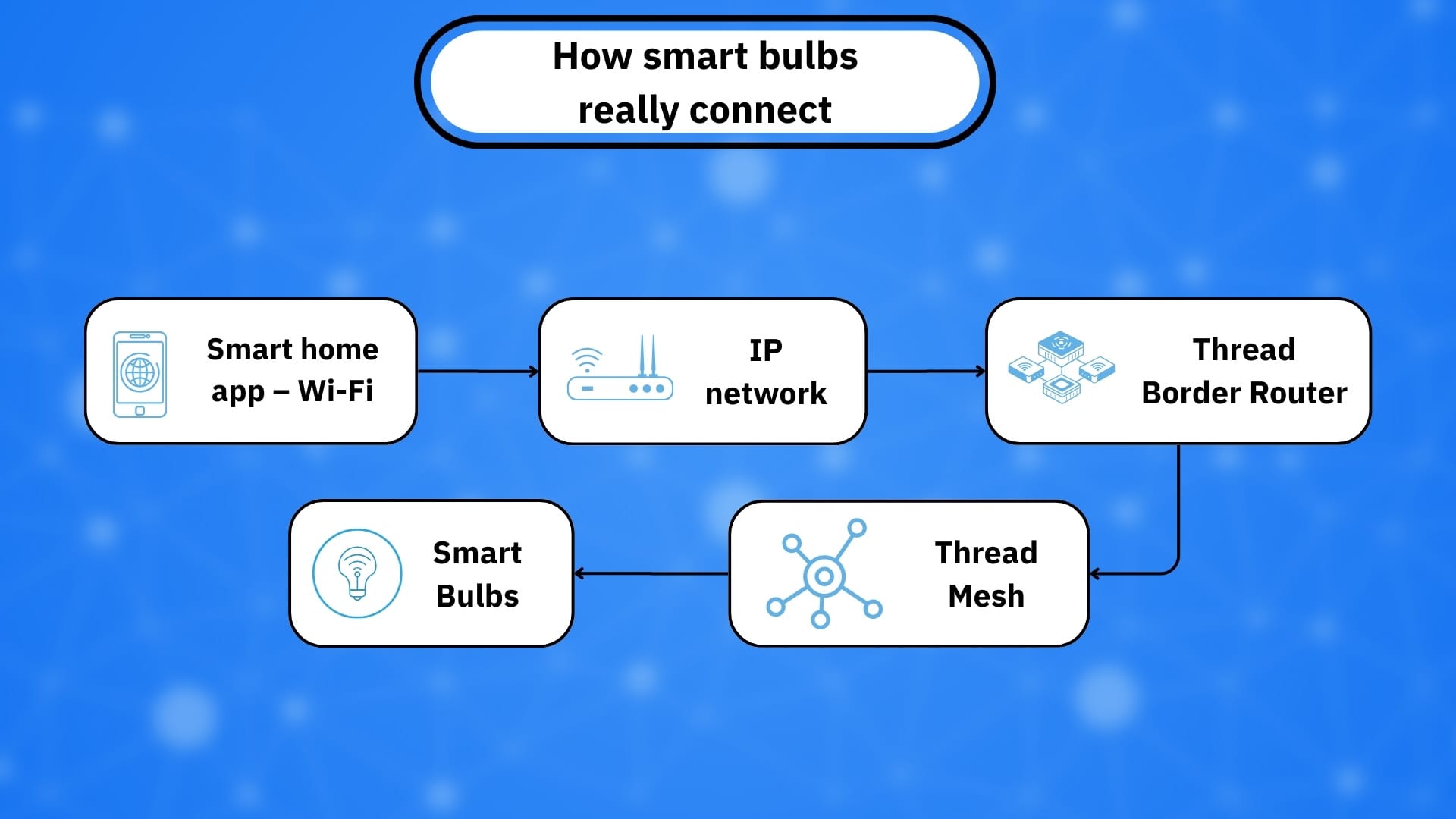
In practice, that border router is something you may already own (a smart speaker, set-top box or, more commonly, a mesh router) and not a standalone hub. When that border router is behind on firmware, your “bulb problem” may actually grow into a network infrastructure issue.
Border router 101 (in plain terms)
As its name suggests, a Thread border router routes traffic between the Thread mesh and other IP networks like Wi-Fi or Ethernet. That matters because your phone typically doesn’t speak Thread language natively – it speaks Wi-Fi and the border router bridges this translation gap.
Also, in Thread, mains-powered devices (like many lights) can act as mesh extenders, helping messages hop across the home. It makes sense that a healthy mesh depends on stable routing and credential management.
Thread 1.4 and a less fragmented home
A major recent shift is touch, which improves interoperability, especially in mixed-brand households. The practical issue here is that if you add multiple border routers from different ecosystems, you can end up with separate Thread networks, which not only undermines the range and reliability you expected from a single mesh but also paves the way for serious security issues.
Thread 1.4 is designed to help border routers join existing Thread networks instead of creating new ones for each brand ecosystem. However, this perk greatly depends on platform support and rollout timing.
Thread 1.4 also introduces Thread Credentials Sharing, a system designed to reduce the friction of commissioning new Thread devices when the right credentials aren’t on the device you’re using to set things up.
This is why a border-router firmware update can suddenly make your lighting feel “fixed,” even if you never touch the bulbs.
Signs your bulbs could use a border-router update
If your smart bulbs are Matter-over-Thread (or you’re not sure but you’ve been buying “Matter” lighting lately), watch for these patterns:
- Random “No Response” in your smart home app that suddenly resolves itself after a reboot
- Slow commands (lights lagging by seconds), especially across rooms/floors; this is a classic mesh fragmentation symptom
- Pairing failures when adding a new bulb, or commissioning only works from one specific phone in the household
- Two ecosystems, double the headaches: bulbs behave differently depending on whether you control them via Apple, Google, Amazon or SmartThings
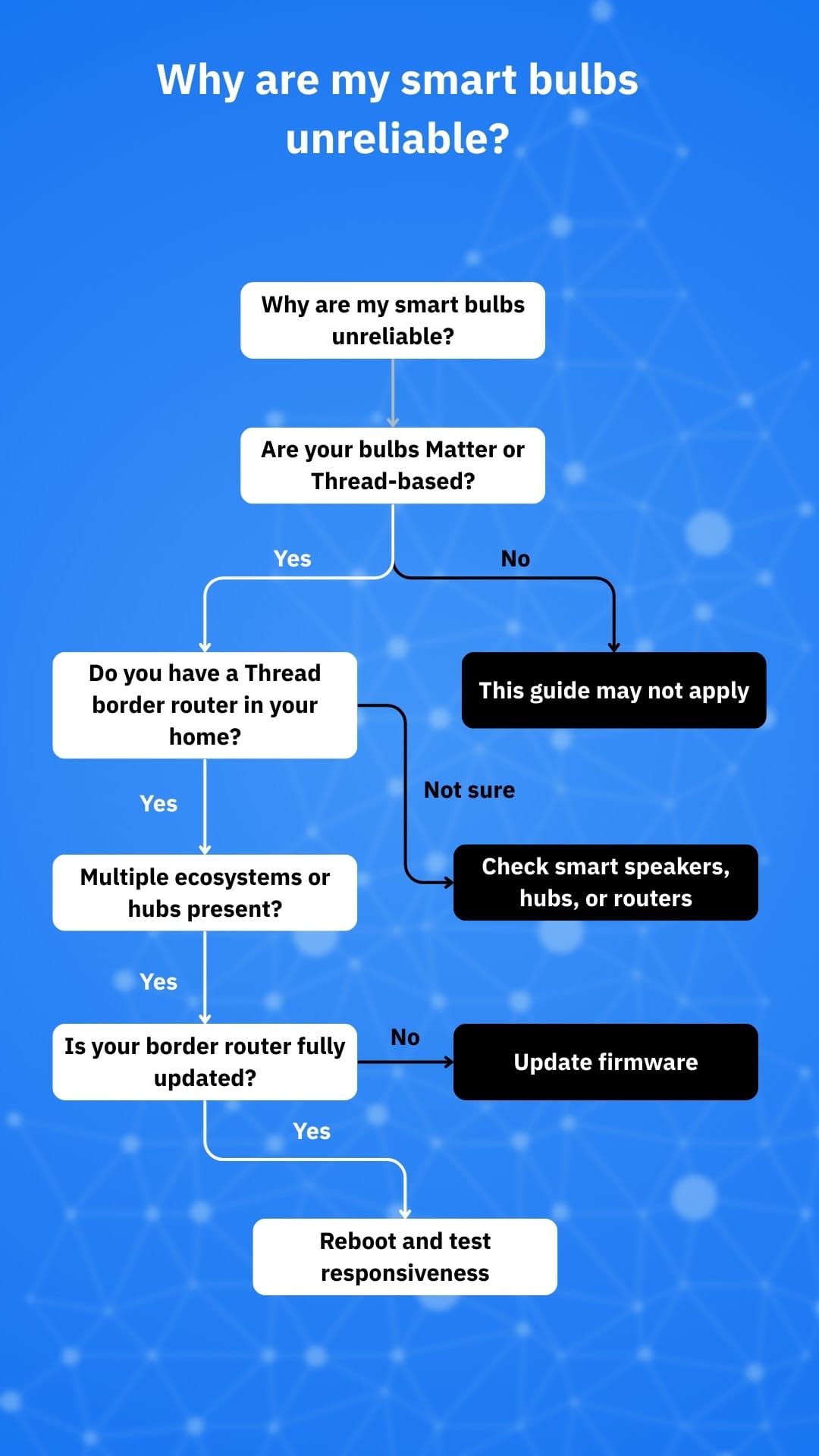
Thread network unification is still rolling out across vendors and platforms. With that in mind, keeping your border router up to date is the most realistic way to avoid being stuck on older behavior.
What to update (and what most people miss)
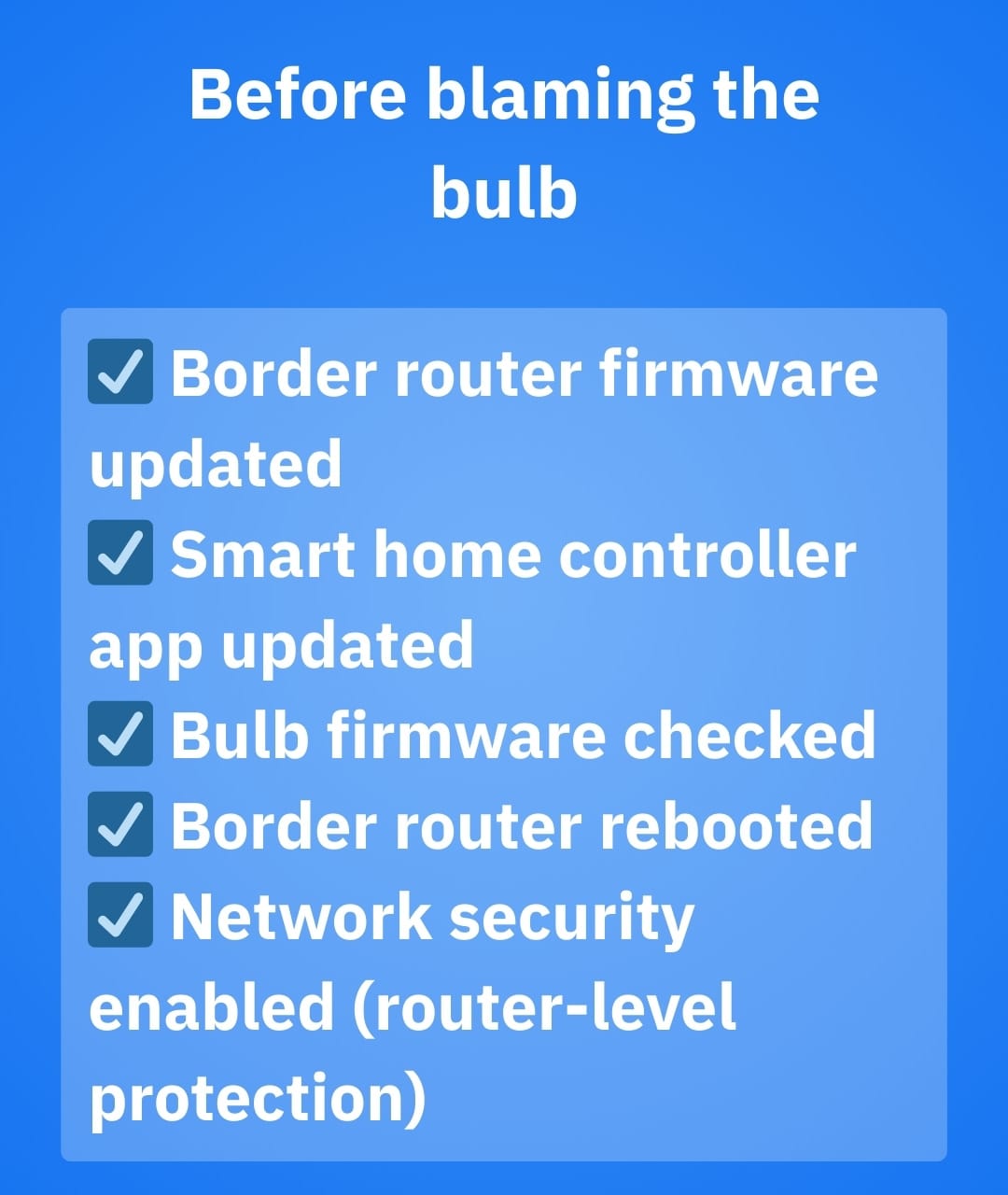
Generally speaking, there are three major update targets you should look after, but only one is the hidden culprit:
1. The bulb firmware: Important, but not always the root cause for the abovementioned issues
2. The smart home controller/app: Whether it’s Google Home, Apple Home, Alexa, SmartThings or Home Assistant, your smart home app should always be up to date. This is important – but it’s still not the culprit
3. The Thread border router firmware: Although you probably expected it by now, this is the one people frequently forget about. Updating the Thread border router firmware can save you from a world of headaches
Border router functionality often lives inside products like mesh routers, smart speakers or set-top boxes, meaning that the “fix” might be a simple routine OS/firmware update on that device.
Simple, practical steps:
- Update the border-router device OS/firmware first
- Reboot the device after updating (yes, rebooting is still a thing)
- If possible, go for a border router with Ethernet backhaul for stability, a common best practice in Thread/Matter setups
Where security software fits in (and why it’s not ‘either/or’)
A border-router update improves how your smart lighting network functions. However, just because your home network is fast, reliable and functional doesn’t make it impervious to cyber threats. Specialized software like NETGEAR Armor enhances your home network’s security.
NETGEAR Armor is designed to help protect devices connected to your network, including IoT devices, by adding security controls at the router layer, with capabilities positioned around threat detection and device protection beyond what individual smart gadgets can do on their own.
A sensible consumer posture is:
- Keep the Thread/Matter plumbing stable through border-router updates
- Add a network security layer that can help reduce exposure across the household through specialized software like NETGEAR Armor, especially since IoT devices don’t always get long-term, consistent patch support
Frequently Asked Questions (FAQ)
What are Thread border routers?
They are devices that bridge low-power Thread networks to your home’s IP network, whether Wi-Fi or Ethernet, letting apps and controllers communicate with Thread-based smart devices.
What smart bulbs are Thread-compatible?
Select Matter-enabled bulbs from brands like Nanoleaf, Eve and some newer Philips Hue models (via Matter over Thread) support Thread connectivity.
Which Google devices are Thread border routers?
Devices such as Google Nest Hub (2nd gen), Nest Hub Max and Nest Wifi Pro include built-in Thread border router functionality.
Is Alexa a Thread border router?
Some newer Echo devices – such as Echo 4th gen and Echo Hub – act as Thread border routers, but not all Alexa-enabled devices support Thread.
Bottom line
If your smart bulbs are part of a modern Matter/Thread setup, a border-router update is no longer optional; it makes the difference between a resilient mesh and a flaky lighting experience.
With that in mind, you should make sure that your border router stays current. For added peace of mind, add NETGEAR Armor to the mix for a pragmatic, router-level security layer for the many devices that share your home network.
tags
Author

Vlad's love for technology and writing created rich soil for his interest in cybersecurity to sprout into a full-on passion. Before becoming a Security Analyst, he covered tech and security topics.
View all postsYou might also like
Bookmarks
