Scammers Are Telling Norwegians to Drop Gold in Forests for ‘Safekeeping’

October 26, 2026
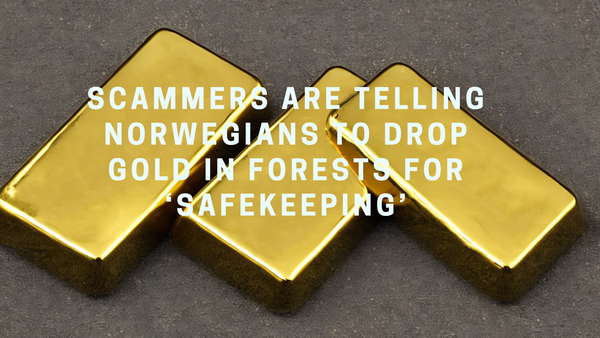
Financial institutions in Norway have recently issued a warning about an unusual, yet extremely concerning, scam tactic where criminals seek to persuade victims to buy large amounts of gold and then leave it in forests, parks, or other isolated locations for collection.
Key takeaways
- Banks in Norway are warning about scams in which victims are told to buy gold and leave it in parks, forests or other locations
- The request may be framed as an investment or a way to protect savings from fraud
- Variations of this scam have already appeared in the US, Australia and the UK, often involving a courier who collects gold, cash or even a bank card
- No legitimate bank, police force or government agency will ask you to buy gold, hide valuables, or hand over your savings for “safekeeping”
- If someone makes such a request, stop communicating and verify independently
How the scam works
Usually, when we read about these types of scams, we think few people would ever fall for them. But here’s the thing: The scam doesn’t begin with a stranger asking you to simply abandon gold in the woods.
It usually starts with a phone call, with criminals pretending to be from a bank, the police, local government or another trusted entity. The caller may claim your identity has been stolen, your account has been compromised, or that criminals are about to take your savings. Then comes the supposed solution: move your money somewhere “safe.”
In this case, that means buying gold and following instructions about where to leave it.
In some cases, they are then instructed to leave the gold in an unusual place outdoors so it can be collected later. While this scam variant seen in Norway seems extremely unusual, the scam playbook isn’t.
We’ve already seen related gold-bar scams in the United States and Australia, where criminals impersonate government officials, law enforcement officers or technical-support staff. They tell victims their identity, computer or bank account has been compromised and buying gold is the only way to protect their money.
But across the Atlantic, after the gold has been purchased, a “courier” is usually sent to collect it. Either way, the outcome is the same: the criminals obtain assets that are valuable, portable and extremely difficult to recover.
When a scam moves from the phone to your doorstep
The forest drop-off is one variant of a broader tactic: making an online or phone scam feel more credible by bringing it into the real world.
In a related bank-card collection scam, victims receive a text or call claiming that their card has been compromised. The caller then offers to send a supposed bank employee to the victim’s home to collect the card.
The valuables may differ, from gold, cash, or a bank card, but the manipulation is similar. A message or phone call creates fear, and then a convincing voice on the other line offers a solution, and a courier or unexpected visitor arrives at your door to make the story even more believable.
Related articles:
- Woman Loses Nearly $2 Million in Gold Scam: Never Hand Over Money for ‘Safekeeping’
- No, Real Government Agents Don’t Want You to Buy Gold Bars: How to Spot and Stop This Scam
- Police Warning: Your bank is not coming to your house for your card
Red flags to watch for
Stop and question the situation if someone:
- Claims that your bank account, identity or computer has been compromised
- Poses as a bank, police officer, government official or technical-support representative
- Tells you to withdraw cash, buy gold, purchase cryptocurrency or move money to a “safe account”
- Pressures you to act immediately
- Tells you not to speak to your family, friends or bank
- Keeps you on the phone while you visit the bank, store or gold dealer
- Sends a courier to collect valuables, cash or a bank card
- Instructs you to leave money or valuables in a public place
- Gives you a code word to “verify” a collector or courier
Pressure and secrecy are not signs of legitimate investigations.
What you need to remember: No authority needs your savings for safekeeping
- No legitimate bank will ask you to hand over your card, PIN, cash or valuables to an unexpected visitor.
- No legitimate government agency or police force will tell you to turn your savings into gold and leave it in a forest.
- No real investigation requires you to hide financial decisions from people close to you.
If you receive a call, message or pop-up that makes you fear for your money, end the conversation. Do not use a phone number, website or link supplied by the person who contacted you. Instead, open your banking app, call the number printed on your card, visit a branch, or find the organization’s contact details through its official website.
You can also ask a trusted family member or friend to look at the message with you. A short pause and a second opinion can prevent a devastating loss.
Bitdefender Scamio can help you assess a suspicious message or claim, while Bitdefender Link Checker can check an unfamiliar URL before you open it.
tags
Author

Alina is a history buff passionate about cybersecurity and anything sci-fi, advocating Bitdefender technologies and solutions. She spends most of her time between her two feline friends and traveling.
View all postsYou might also like
Bookmarks
