Instagram charity scams use emotion to steal donations

July 14, 2026
Instagram charity scams exploit compassion, urgency and social proof to make fraudulent appeals feel trustworthy. An emotional Reel, desperate DM or donation link in the comments may conceal a story fabricated to steal your money and data.
Key takeaways
- Instagram charity scams use emotional stories and urgent deadlines to discourage donors from verifying who controls the fundraiser.
- Fake Instagram fundraisers may impersonate charities, copy real campaigns, hijack trusted accounts or direct users to malicious donation links.
- Consumers should independently verify the organizer and beneficiary, inspect the payment method and donate through an official website that they find themselves.
- Suspicious Instagram donation requests should be reported and treated as potential phishing or identity-theft attempts if personal data was entered.
Why Instagram charity scams are convincing
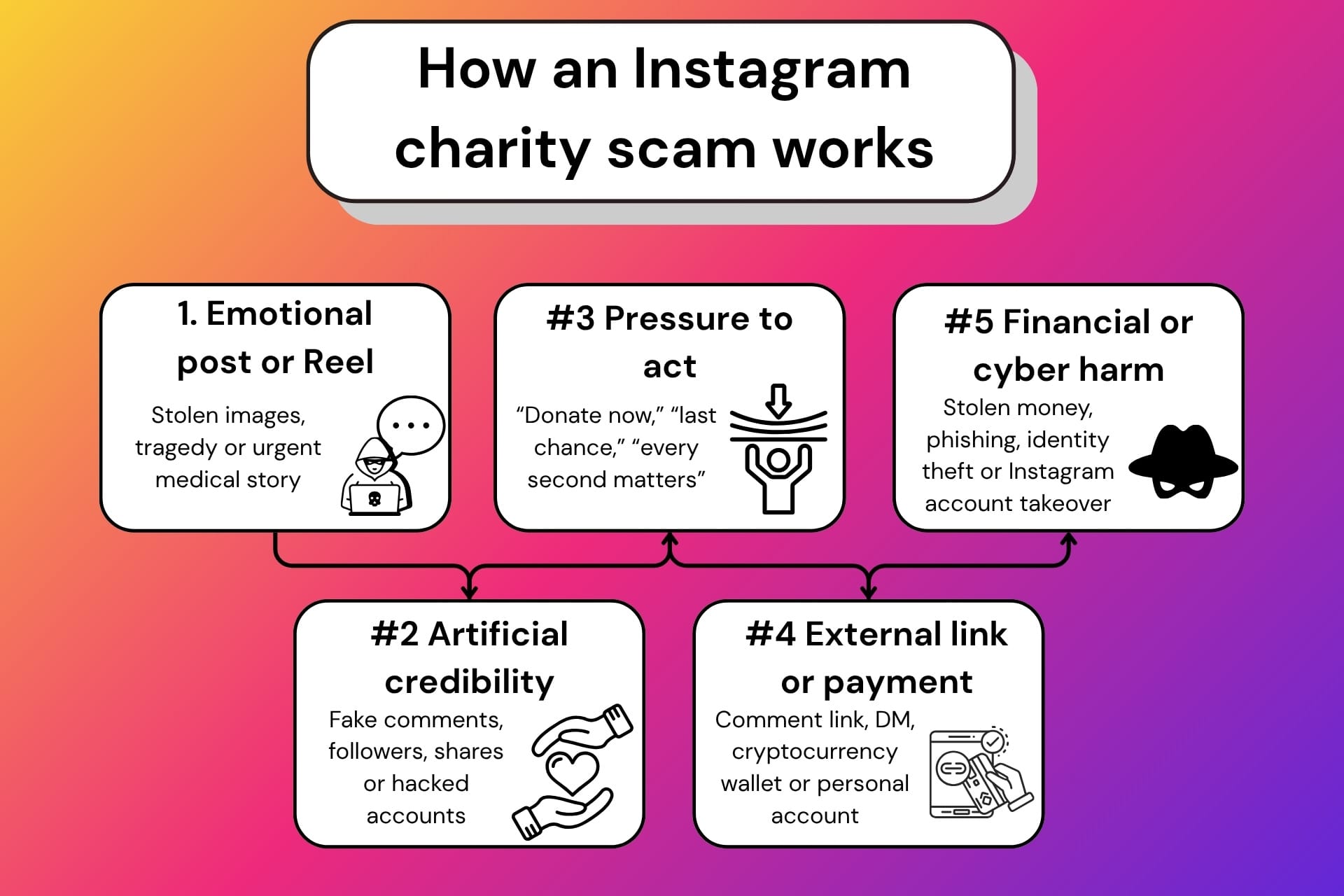
Instagram is built for rapid visual storytelling. A video of an injured animal, a sick child or families affected by disaster can trigger an immediate desire to help. Scammers encourage that response with phrases such as “donate before midnight” or “you are their only hope.”
The story may be invented, copied from a real appeal or even attached to a genuine tragedy without permission. Research on donation fraud on social platforms has identified fake fundraising sites, fraudulent crowdfunding and attempts to move donors toward external contact and payment channels. The FBI and FTC also warn that charity fraud becomes particularly common on social media after major disasters.
These schemes often overlap with other Instagram scams, including account hijacking, impersonation, bot-driven engagement and malicious links posted in comments.
Common Instagram donation scams
Fraudsters may clone established charities by copying logos, biographies and posts, while slightly changing the username. Others steal images from past humanitarian causes and present them as evidence of a new emergency.
A hacked account can be more persuasive because the appeal appears to come from someone the victim knows. Followers may receive a Story or DM claiming that a friend urgently needs help. Scam comments beneath legitimate charity or disaster posts sometimes also redirect donors to a different payment page.
Common schemes include fake disaster relief, fraudulent medical crowdfunding, staged animal-rescue content, celebrity impersonation and fabricated emergencies. Some links request money directly while others collect Instagram passwords, card details, authentication codes or identity information.
Emotional manipulation tactics to recognize
Emotional content alone does not mean a fundraiser is fraudulent. Legitimate charities also tell moving stories. The warning appears when emotion is combined with secrecy, pressure and poor verification.
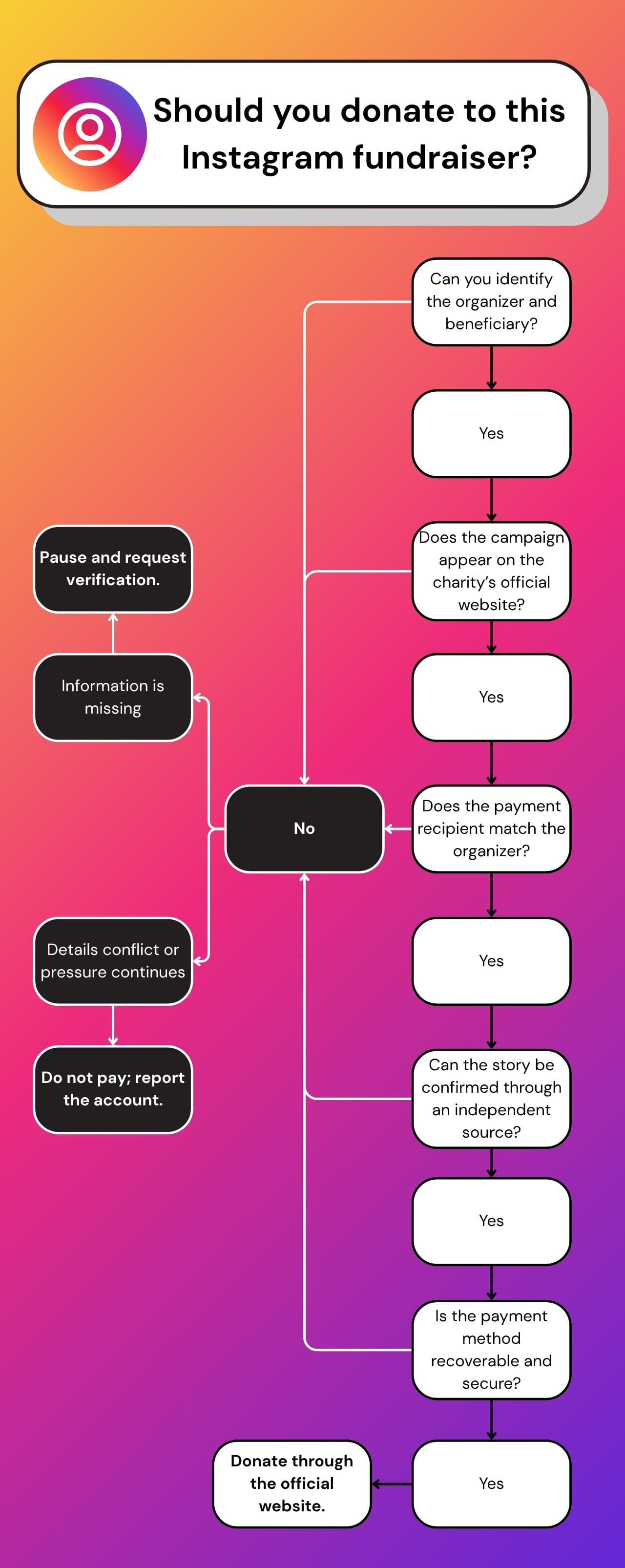
Be cautious when an appeal:
- demands immediate payment or discourages questions;
- uses graphic content but offers few checkable details;
- hides the beneficiary, charity registration or destination of funds;
- requests gift cards, wire transfers, cryptocurrency or payment to a personal account;
- comes from a new profile with copied comments or suspicious engagement;
- asks you to share a code, sign in again or follow a comment link before donating.
Follower counts and supportive comments don’t equal credibility. Bots, fake engagement and compromised accounts can simulate trustworthiness around fraudulent campaigns.
How to verify an Instagram fundraiser
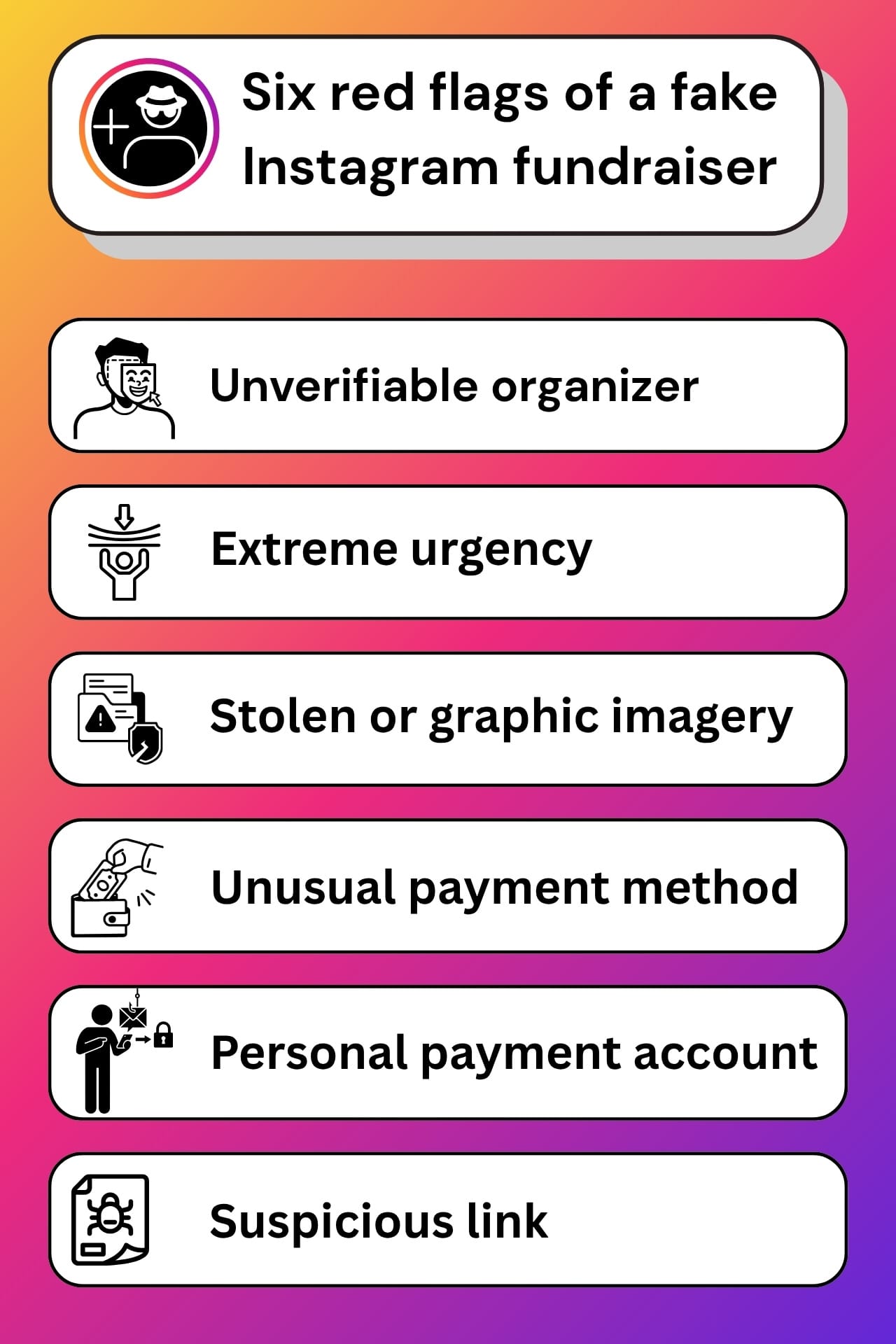
Pause and investigate outside Instagram. Search the charity’s exact name alongside terms such as “scam,” “complaint,” “review” or “rating.” In the US, the IRS Tax Exempt Organization Search can confirm tax-exempt status and filings, while BBB Wise Giving Alliance and national charity registers provide additional accountability checks.
Type the organization’s website address yourself rather than following a DM or comment link. Confirm that the campaign appears on the official website and that the payment recipient matches the named charity or organizer. For personal crowdfunding, contact the stated beneficiary through a separate, trusted channel.
Use a credit card where possible, and keep the receipt. The FTC advises avoiding requests for gift cards, cash, wire transfers and cryptocurrency because these payments can be difficult or impossible to recover.
What malicious charity links can cause
A fake donation link may capture login credentials, payment information, recovery codes or personal details that can later be used for account takeover, impersonation or identity theft.
Users can submit a suspicious URL, message or screenshot to Bitdefender Scamio for a second opinion before interacting with it.
Creators and organizations at risk of having their accounts hijacked for fake appeals can use Bitdefender Security for Creators for Instagram account monitoring, phishing protection and account-recovery guidance. Bitdefender Digital Identity Protection can also help users monitor their digital footprint and receive alerts when personal information is exposed.
What to do after an Instagram charity scam
Immediately contact your bank, card issuer or payment service and ask whether the transaction can be stopped or reversed. Change any password that you entered on the fraudulent page, enable two-factor authentication and review active Instagram sessions. The FTC recommends contacting the payment provider even when recovery is uncertain.
Save screenshots, usernames, URLs, receipts and messages before reporting the account, post or comment to Instagram. Report the fraud to the consumer-protection or law-enforcement authority in your country, and warn the person or charity being impersonated, without publicly reposting the malicious link.
Conclusion
Instagram charity scams succeed when a sense of urgency outweighs the urge for verification. Compassion should include a pause: confirm who is asking, where the money goes and whether the donation page belongs to the real organizer. A few minutes of independent checking can protect both donors and genuine causes.
Frequently asked questions (FAQs)
How to deal emotionally with being scammed?
Avoid blaming yourself; scammers deliberately exploit trust, fear and empathy. Tell someone you trust, take practical recovery steps and seek professional or peer support if shame, anxiety or anger begins affecting daily life. Empathetic support and open conversation can help victims process what happened without reinforcing stigma.
What is a toxic charity?
“Toxic charity” is not the same as charity fraud. One example is an aid program that repeatedly gives away, for free, some of the goods that a community could produce locally, undermining livelihoods and creating dependency instead of strengthening long-term local capacity.
How can I find out if I’m being scammed?
Pause all payments and verify the person, charity, website and story through independent sources. Contact the organization using details you found yourself, inspect the payment recipient and use Bitdefender Scamio to assess suspicious messages, links or screenshots.
tags
Author

Vlad's love for technology and writing created rich soil for his interest in cybersecurity to sprout into a full-on passion. Before becoming a Security Analyst, he covered tech and security topics.
View all postsYou might also like
Bookmarks
