WhatsApp usernames explained: how to reserve yours and stay safe

July 01, 2026
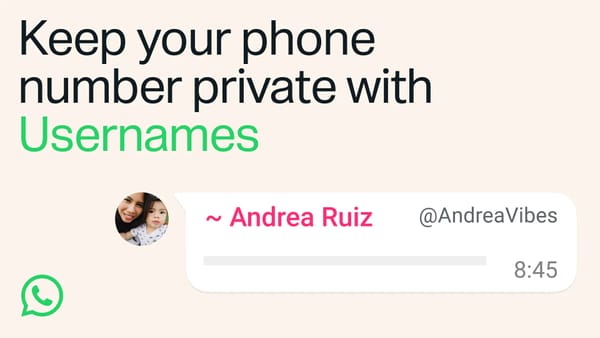
For more than 15 years, WhatsApp has tied every account to a phone number. While simple, that design has always created a privacy dilemma: every time you joined a community, contacted a business, or messaged someone new, you exposed your personal number.
That's finally changing.
WhatsApp has officially announced usernames, a long-awaited feature that lets people communicate without revealing their phone numbers. Instead of sharing a mobile number, you'll be able to share a unique username — similar to Telegram, Signal, Discord, or X (formerly Twitter). Username reservations are beginning now, with a gradual global rollout planned over the coming months.
The update represents one of WhatsApp's biggest privacy improvements in years — but like every new identity system, it also comes with new security considerations.
Key takeaways
- WhatsApp is introducing optional usernames, allowing people to connect without sharing their phone numbers
- You can reserve your preferred username before the wider rollout reaches everyone
- Usernames aren't publicly searchable, helping reduce unwanted contact
- A new optional Username Key adds another layer of protection against unsolicited messages
- While usernames improve privacy, they also introduce new impersonation and phishing risks users should understand
What are WhatsApp usernames?
A WhatsApp username is a unique identifier attached to your account that people can use to start a conversation without knowing your phone number.
Your phone number isn't going away — it will still be required to create and maintain your WhatsApp account. However, for new conversations, your username can become your public identity instead of your phone number.
Unlike social media usernames, WhatsApp usernames aren't designed for public discovery or building a following. They're primarily a privacy feature.
Why WhatsApp is introducing usernames
The change addresses one of WhatsApp's longest-standing privacy limitations.
Previously, anyone who knew your phone number could potentially contact you on WhatsApp. Likewise, participating in certain group conversations often meant exposing your number to people you didn't know.
Usernames make it possible to:
- Share a contact without revealing your phone number
- Communicate with businesses more privately
- Join communities while exposing less personal information
- Separate your public identity from your mobile number
- Reduce unwanted collection of your personal phone number
For creators, freelancers, and small businesses, usernames also provide a more memorable way for customers to reach them.
How to reserve your WhatsApp username
If the feature is available on your account:
1. Update WhatsApp to the latest version
2. Open Settings
3. Go to Account
4. Tap Username
5. Choose an available username
6. Confirm your selection
If the option doesn't appear yet, don't worry — WhatsApp is rolling out reservations gradually.
WhatsApp username rules
According to WhatsApp, usernames must follow several requirements, including:
- Be unique
- Contain between 3 and 30 characters
- Include at least one letter
- Use only lowercase letters, numbers, periods, and underscores
- Not begin with "www"
- Not end with a web domain such as ".com"
- Not start or end with a period
- Not contain consecutive periods
Certain usernames may also be “reserved” to prevent impersonation of celebrities, organizations, and public figures.
A second privacy layer: Username Key
WhatsApp is also introducing an optional Username Key.
Think of it as an extra verification code for your username. Even if someone learns your username, they may still need your Username Key before they can start a conversation with you.
This gives users more control over who can initiate contact, particularly if they share their username publicly on websites or social media.
Will your phone number disappear?
Not entirely.
Your phone number will still exist behind your WhatsApp account, and existing contacts who already have your number will continue seeing it in many situations.
The biggest change applies when interacting with new people who don't already know your phone number.
WhatsApp has also confirmed that there will be no public directory where anyone can browse usernames. Someone must know your exact username to contact you.
Privacy benefits
For everyday users, usernames offer several meaningful advantages.
Better protection in public groups
If you join neighborhood groups, hobby communities, or event chats, you no longer need to expose your phone number to dozens — or even hundreds — of strangers.
Easier networking
Professionals can share a username on business cards or LinkedIn without revealing a personal phone number.
More control over personal information
Phone numbers have become valuable pieces of personal data that are often reused for scams, spam calls, and identity verification attacks. Reducing how often you share yours can help limit your digital footprint.
The security risks you should know about
Like any new online identity system, usernames create fresh opportunities for cybercriminals.
Username impersonation
Attackers may attempt to register usernames that closely resemble legitimate people or brands.
WhatsApp says it is reserving usernames for high-profile individuals and organizations to reduce impersonation, but scammers will likely try to spoof them.
Fake support accounts
Expect scammers to create usernames pretending to be:
- Banks
- Delivery companies
- Cryptocurrency exchanges
- Government agencies
- Technical support teams
Remember that legitimate organizations rarely contact people unexpectedly through messaging apps.
Username harvesting
If you publish your username on social media, forums, or websites, it becomes another identifier scammers can collect.
Although sharing a username is safer than sharing a phone number, it can still increase unsolicited contact attempts.
Also, pause and think before using an existing @username handle from a social platform (Instagram, X, etc.). That account name is already in the public domain.
How to stay safe
To get the most out of the new feature:
- Choose a username that's recognizable but doesn't reveal unnecessary personal information
- Enable the Username Key if you want tighter control over new contacts.
- Be skeptical of unexpected messages — even if the username appears legitimate
- Verify requests involving money, passwords, or sensitive information through another communication channel
- Keep WhatsApp updated to receive the latest security improvements.
- Review your privacy settings regularly to control who can see your profile information
As a rule of thumb, use a security solution to help detect malicious links, phishing attempts, and scams before they cause harm.
Frequently asked questions (FAQ)
Are WhatsApp usernames mandatory?
No. Usernames are optional. Your account will still require a phone number to register, but you can choose whether to create and use a username.
Can someone find me by searching my username?
Not through a public directory. WhatsApp says usernames won't be searchable — you'll need to share your exact username with someone if you want them to contact you. However, if you set your username as your social media handle, it’s easier for someone (anyone really) to find you on WhatsApp.
Will my existing contacts still see my phone number?
Yes. People who already have your phone number and existing conversations won't suddenly lose access to it. Usernames primarily affect new interactions.
Can I change my username later?
Yes. WhatsApp says usernames can be changed, although your previous username may become available for someone else to claim after you change it, subject to WhatsApp's policies.
Can two people have the same username?
No. Like email addresses or social media handles, every WhatsApp username must be unique.
Will businesses use usernames too?
Yes. Businesses and organizations will also be able to claim usernames, making it easier for customers to contact them while reducing confusion and helping prevent impersonation.
Bottom line
WhatsApp usernames are much more than a cosmetic update — they fundamentally change how people connect on one of the world's most popular messaging platforms.
By allowing users to communicate without exposing their phone numbers, WhatsApp closes a longstanding privacy gap while bringing the app closer to competitors like Signal and Telegram. At the same time, usernames introduce familiar risks seen across other online platforms, including impersonation, phishing, and fake support accounts.
As the feature rolls out globally, the best approach is to reserve your preferred username early, review your privacy settings, and stay vigilant against anyone trying to exploit this new way of connecting.
You may also want to read:
WhatsApp detects new spyware activity from Israel’s NSO Group despite court order
The deepfake detector in your pocket: introducing Bitdefender RealCheck
Scam centers keep office hours — because fraud is a business
tags
Author

Filip has 17 years of experience in technology journalism. In recent years, he has focused on cybersecurity in his role as a Security Analyst at Bitdefender.
View all postsYou might also like
Bookmarks
