Scam recovery timeline: what to do in the first 10 minutes, hour, day and week

August 11, 2026
Scam recovery is a race to stem the loss: the sooner you stop payments, contact the provider, secure accounts and preserve evidence, the more options may remain. This scam recovery timeline shows what to prioritize 10 minutes, an hour, a day and a week your suspicions are piqued.
Key takeaways
- A scam recovery timeline starts the moment you suspect fraud, even if you are not yet sure what happened.
- First, stop further payments and contact the bank, card issuer, payment app, exchange or transfer service involved.
- Passwords, identity data, social accounts and devices may also need securing if the scam exposed more than money.
- Recovery is not guaranteed; payment method, reporting speed, available funds and local consumer protections affect the outcome.
The importance of timing after a financial scam
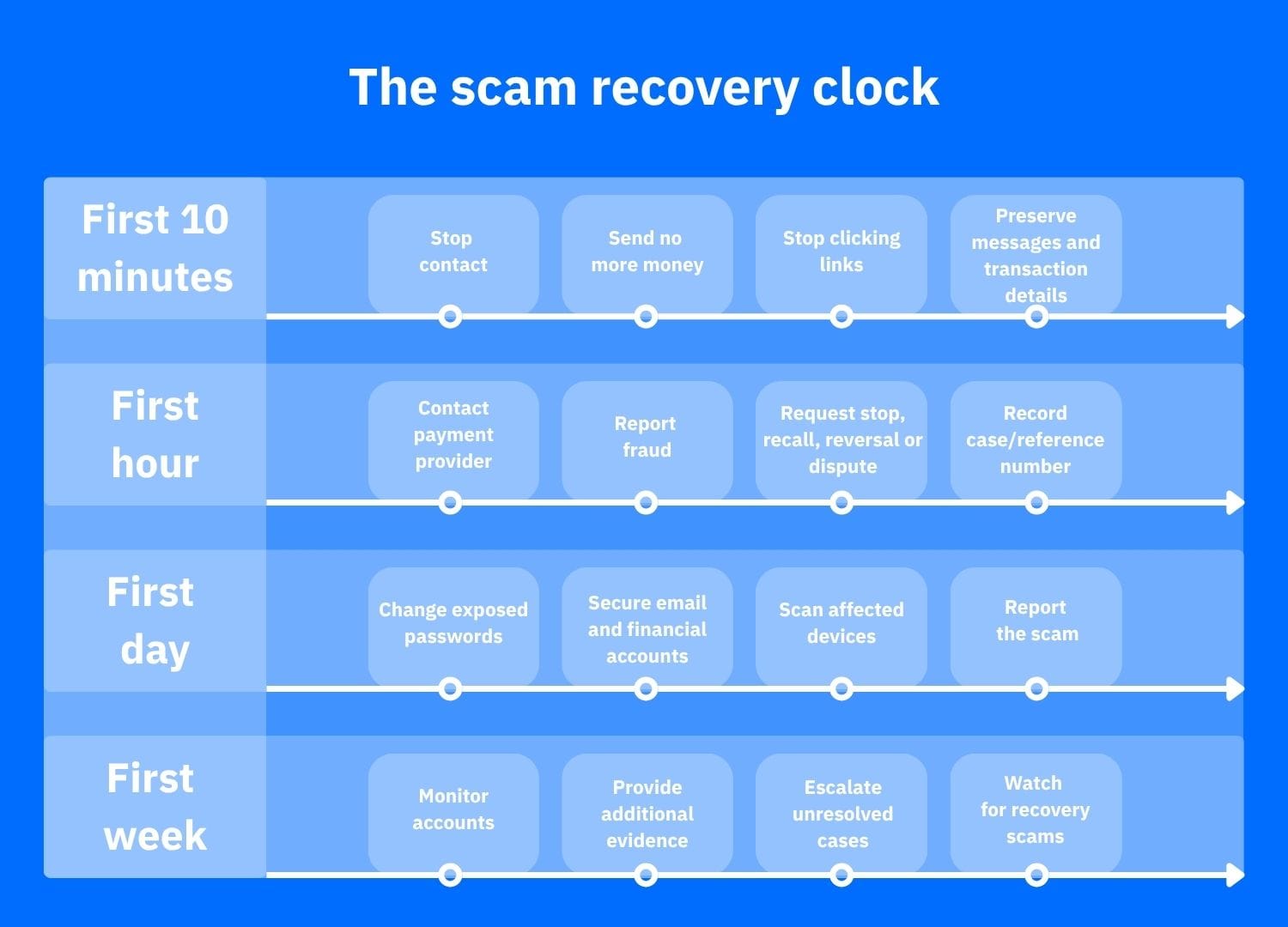
Financial scams may begin with an unexpected call, message, fake website, impersonation or investment pitch. They may then escalate through false urgency, secrecy or demands for money, credentials or remote access. The first 10 minutes, hour, day and week are not legal deadlines; they are a triage order for limiting damage.
First 10 minutes: stop the scam
End the conversation and make no more payments. Do not click new links, pay “verification” fees or move money to a supposedly safe account.
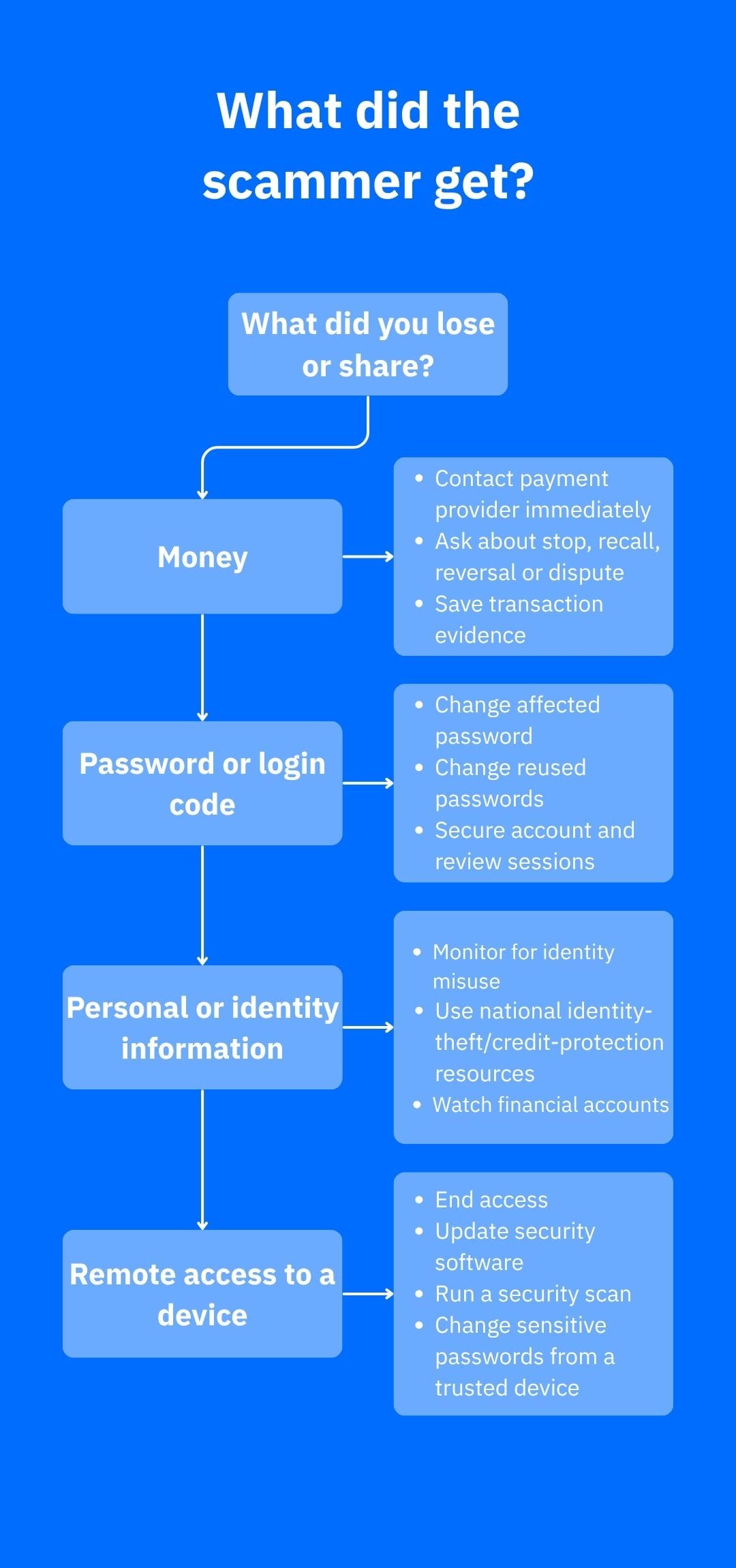
If you shared a password, one-time code or remote access, use a trusted device to begin securing the affected account. Preserve messages, profiles, website addresses, receipts and payment details before blocking or deleting anything; documentation can help with banks, platforms and investigators.
First hour: contact the payment provider
Call the bank, card issuer, payment app, wire service, cryptocurrency platform or gift-card company using contact details you search out independently. Report fraud and ask whether a pending payment can be stopped or a completed payment can be recalled, reversed or disputed.
The FTC advises contacting the company used to send the money regardless of payment method. Cryptocurrency payments are typically difficult to reverse; cards, transfers and payment apps may have different recovery processes.
First day: secure accounts, devices and identity data
Change exposed passwords, especially for email and financial accounts, revoke unfamiliar sessions, enable multifactor authentication and check for account changes you did not make.
If a scammer had remote access to a device, it’s important to update security software, run a scan and remove anything suspicious. If identity information was exposed, use your local identity-theft or credit-protection resources. Then report the incident to the relevant fraud, cybercrime or police service. Europol maintains national cybercrime-reporting links for European countries.
First week: monitor and watch for recovery scams
Keep monitoring financial, email and social accounts. Follow up with the payment provider, supply requested evidence and use its complaint or escalation route if necessary.
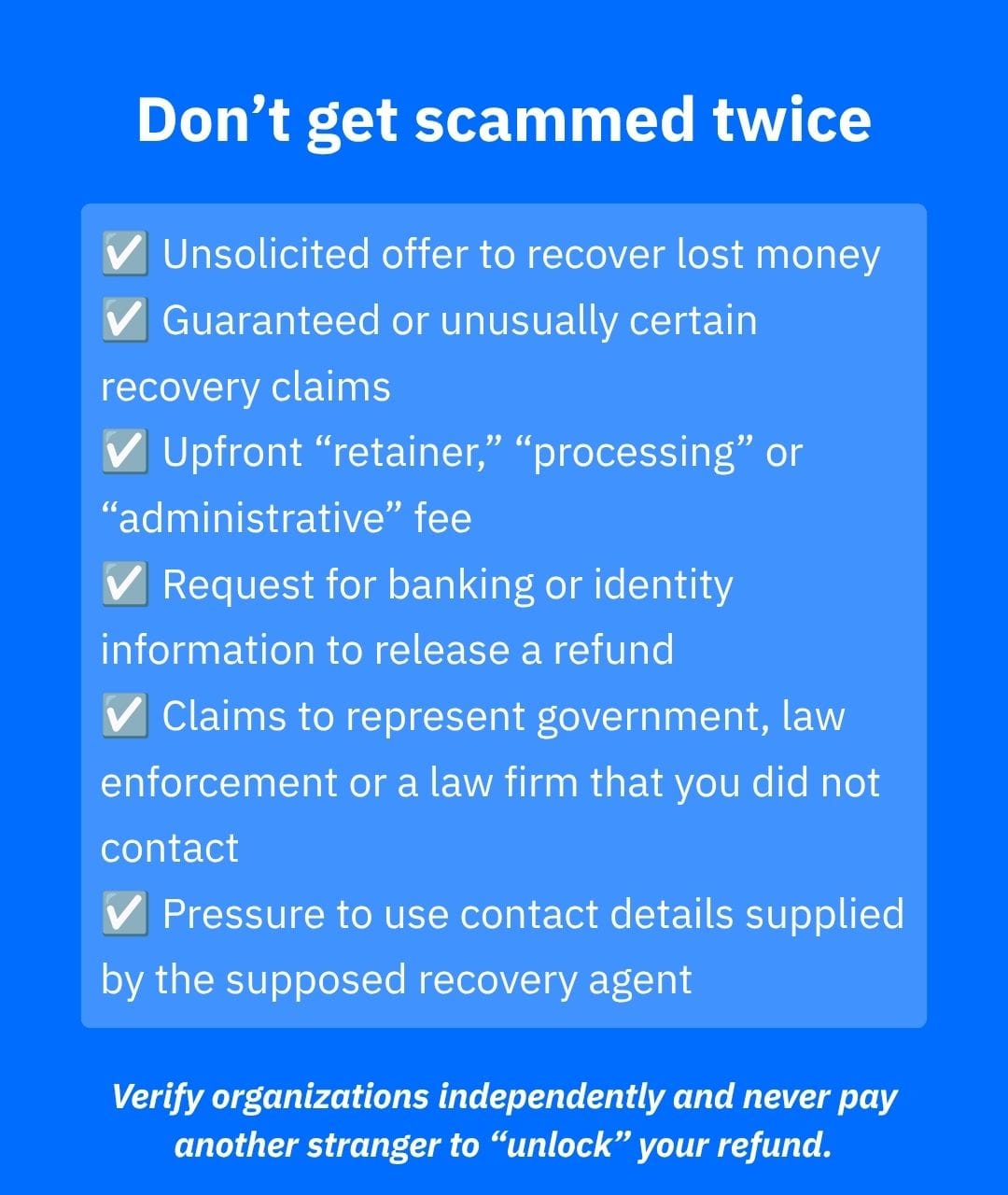
Watch out for anyone unexpectedly offering to recover your money for a fee. In an August 2026 alert, the FTC warned that refund and recovery scammers target people who already lost money, sometimes impersonating government agencies, consumer groups or law firms. Scamwatch issues similar warnings about supposed recovery services approaching previous scam victims.
How Bitdefender can help
Bitdefender Scamio can analyze suspicious texts, emails, social-media messages, links, QR codes, screenshots or described scenarios, which can be useful if a supposed “recovery agent” contacts you after the original scam.
If you have entered a password on a phishing page or shared credentials with a scammer, Bitdefender SecurePass can help with the account-cleanup stage. Its security scan can flag breached, weak, reused or outdated credentials, while its password generator can help you replace exposed passwords with stronger, unique ones. This should complement—not replace—changing compromised passwords immediately and enabling multifactor authentication where available.
For broader post-scam protection, Bitdefender Ultimate Security can help address risks that remain after the immediate financial response. Its security tools can help protect devices from malicious software and scam-related threats, while the included Digital Identity Protection capabilities can monitor for exposed personal information and data-breach activity. That can be particularly relevant if the scam involved a malicious download, remote access, stolen personal data or credentials. These protections can help reduce follow-on risk, but they can’t reverse a fraudulent payment or guarantee recovery of stolen funds.
If the incident also compromised a creator’s YouTube, Instagram or Facebook presence, Bitdefender Security for Creators offers additional account-focused monitoring and recovery support for those platforms.
Conclusion
A useful scam recovery timeline is simple: stop the loss, contact the payment provider, secure what was exposed, save evidence and watch for a second attempt. Acting quickly cannot guarantee recovery, but it preserves options that may disappear as money, accounts or evidence move.
Frequently asked questions (FAQs)
How long does it take to recover money from a scam?
There is no universal recovery time. A pending payment may be stopped quickly, while completed transactions may require a recall, reversal or dispute process. Timing depends on the payment method, whether the transfer was authorized, whether funds remain available and the rules and procedures that apply in your jurisdiction.
How to emotionally recover from a scam?
Talk to someone you trust and separate the practical recovery tasks from self-blame. Scammers deliberately exploit urgency, trust and fear, and dealing with financial loss can be emotionally exhausting. Scamwatch recommends seeking support from family or friends and, when appropriate, financial or professional support if your wellbeing or finances are effected.
Is it possible to recover scammed money?
Sometimes. Banks, card issuers, payment apps and transfer services may be able to stop, reverse, recall or dispute certain transactions, especially when contacted quickly. Recovery becomes harder after money has moved onward, and cryptocurrency payments are typically difficult to reverse.
How likely is it to get money back after being scammed?
There is no reliable global percentage. Chances depend on how you paid, how quickly you reported the scam, whether funds remain, whether you authorized the payment and what local protections apply. Treat anyone promising guaranteed recovery for an upfront fee as a potential recovery scam.
tags
Author

Vlad's love for technology and writing created rich soil for his interest in cybersecurity to sprout into a full-on passion. Before becoming a Security Analyst, he covered tech and security topics.
View all postsYou might also like
Bookmarks
