That Instagram account that looks real might be stolen

January 13, 2026
Aged Instagram accounts may look like shortcuts to instant credibility, but they often come with hidden risks. These older profiles are frequently targeted, stolen, or resold by scammers to exploit trust at scale. Understanding how aged Instagram accounts are used can help you avoid scams and account takeovers.
Key Takeaways
- Aged Instagram accounts are valuable targets for scammers. Older accounts appear more trustworthy, making them ideal for fraud, impersonation, and large-scale scam campaigns.
- Many aged accounts are stolen or reused for malicious activity. Attackers take over legitimate profiles and use them to scam followers or spread phishing links.
- Credential reuse makes account takeovers easier. Weak or reused passwords allow attackers to hijack accounts and repurpose them for scams.
- Strong security practices reduce risk. Enabling multi-factor authentication, limiting oversharing, and using security tools can help protect against aged account abuse.
How Instagram account age is exploited by scammers
If you’ve ever received a suspicious Instagram DM from an account that looks “established” (years-old profile, normal photos, plausible follower count), you’ve seen the scam economy evolve in real time. Criminals don’t always spin up brand-new burner profiles anymore. Increasingly, they prefer aged Instagram accounts – in other words, accounts with history, because those profiles trigger fewer doubts and more ireassurances.
This matters because many of the most costly consumer scams now begin on social platforms, and scammers are better at borrowing credibility rather than building it from scratch. The FTC reports consumers lost $12.5 billion to fraud in 2024, with investment scams leading losses.
What 'aged Instagram account' means in Scamland
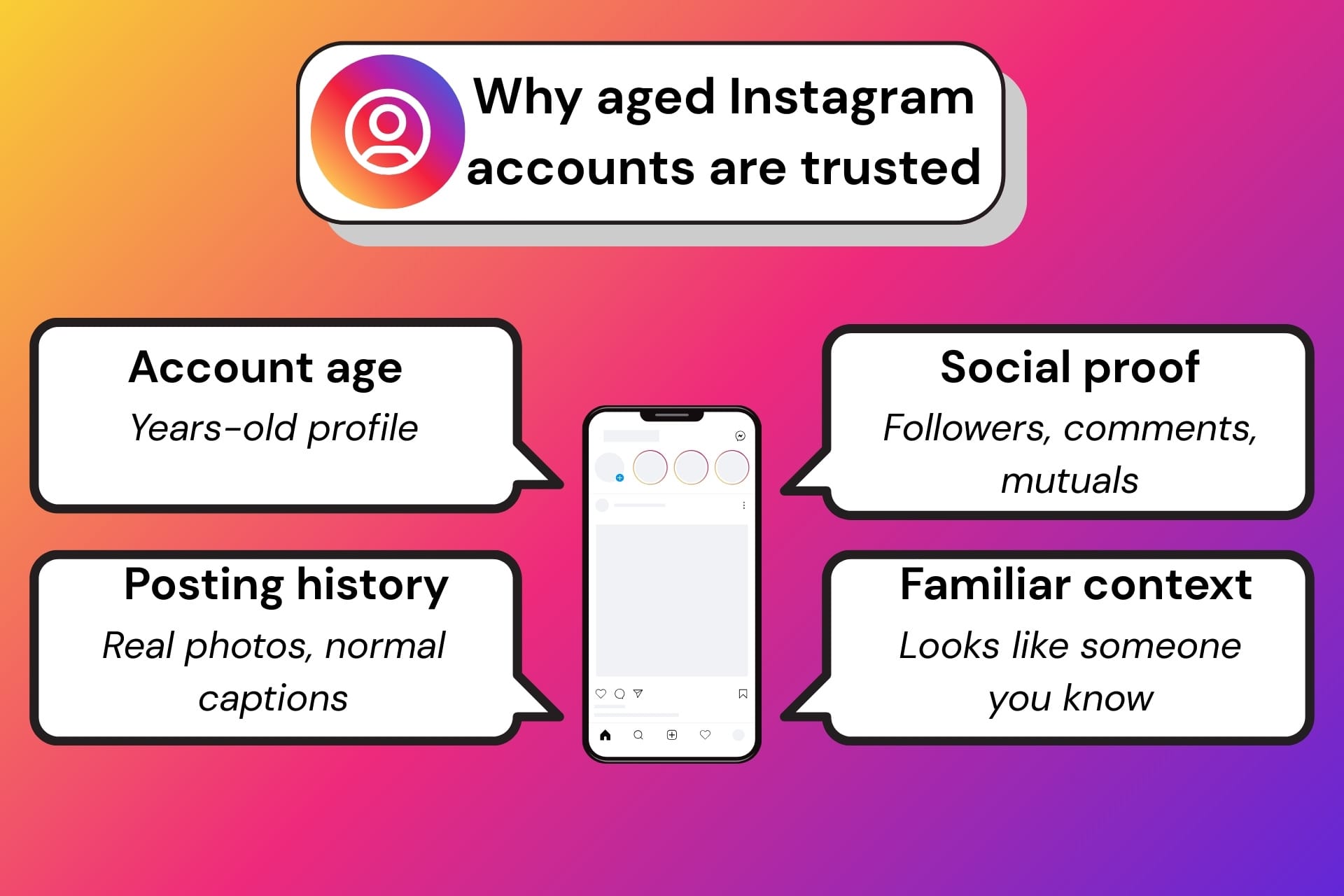
In legitimate marketing circles, “aged” usually means an account created months or years ago with an activity trail. In the underground economy, it often means one of two things:
1. Compromised account: a real person’s profile taken over via phishing, credential stuffing, malware or social engineering. Account takeover is a common fraud pattern broadly, including on social media.
2. Traded/sold account: an account transferred between parties despite platform rules. Instagram’s terms prohibit attempts to buy, sell or transfer accounts and explicitly restrict selling or purchasing accounts or account aspects.
Meta also pursued legal action targeting the black market for Instagram usernames/accounts and “unauthorized” reinstatement services. This could be a solid indicator that the ecosystem is large enough to attract sustained enforcement.
Why aged accounts are so dangerous
Aged accounts are effective because they exploit human trust shortcuts and platform dynamics.
They look 'pre-verified'
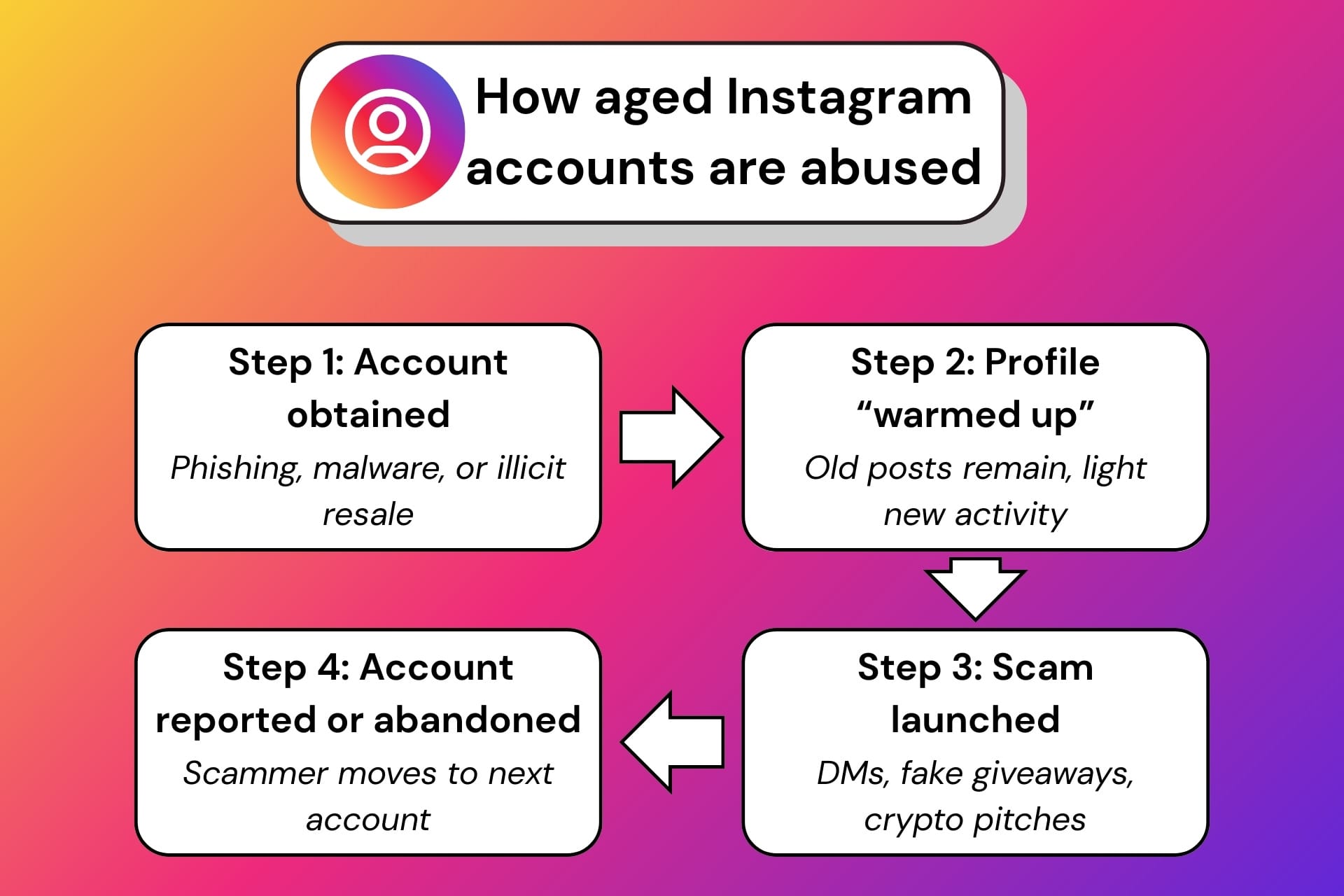
Much like users of other social platforms, Instagram users are conditioned to perceive longevity as legitimacy. A profile that has existed for years with casual photos and comments feels safer than a zero-post account created last week.
They come with built-in victim lists
If the account is stolen, the scammer inherits:
- The victim’s followers (including friends and family)
- Prior direct messages (DMs)
- Social context (shared interests, mutuals and past posts)
That makes impersonation and “urgent request” scams far more persuasive.
They can scale scams faster
Established accounts may face fewer friction points than newly created ones (rate limits, trust barriers, audience reach). Even when they get reported, scammers can rotate to the next compromised profile.
The most common scams deployed from aged Instagram accounts
Below are the patterns users most often encounter where account age is a force multiplier rather than the core trick.
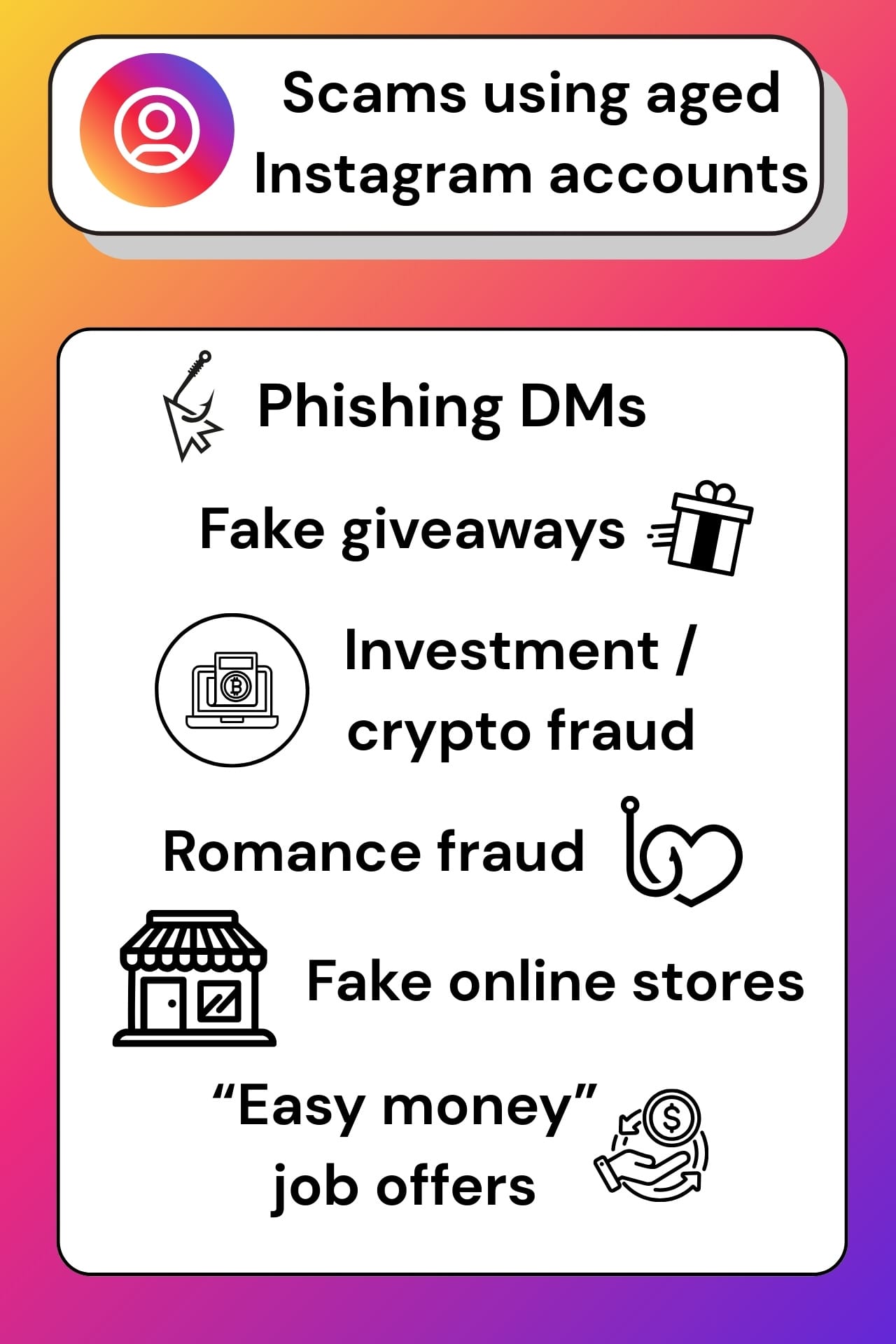
1. Phishing DMs that steal your login
You get a message that looks like a friend, creator or brand, along the lines of:
- “I need you to vote for me, quick favor”
- “I got locked out, can you help me verify my account?”
- “Instagram says I’m reported, appeal here”
These usually push a link, often leading to a fake login page. Social-media phishing is explicitly on the rise, often using impersonation, malicious links and “account recovery” bait.
2. Fake giveaways and “you won” messages
This is a classic scam in modern packaging: “Congratulations, you won our giveaway! Please confirm shipping.” It often leads to credential theft, fund siphoning or identity harvesting. Consumer-focused scam roundups consistently flag these phony giveaways as a top Instagram fraud vector.
3. Investment and crypto 'mentorship' pitches
Aged accounts, especially hijacked ones, are increasingly used to lure victims into investment fraud and confidence scams. The FTC’s data highlights how investment scams dominate losses. Federal advisories note that criminals use realistic social profiles and AI-generated content to make these approaches more convincing.
4. Romance and relationship grooming
These scams can start with a normal-looking profile and long-form conversations, which then shift to emergencies, fake business opportunities or crypto talk. Romance, relationship and investment fraud often intertwine. In all of these, scammers commonly initiate contact via social platforms.
5. Fake shops and “closing down” sale ads
Aged accounts can operate as believable storefronts long enough to run a burst of ads, push a “limited-time” sale and disappear, leaving victims with low-quality goods or nothing at all. This pattern is repeatedly observed in social ad ecosystems.
6. Money mule recruitment and “easy money” DMs
Some scams use Instagram to recruit people, often younger users, to move stolen funds – a practice commonly known as “money muling”) – framing it as quick jobs or easy commissions. This is beyond risky, as it can create serious downstream consequences for the one being recruited.
How to spot an aged account that’s been turned
First of all, you have to keep in mind that age doesn’t necessarily mean safety. Use these quick, practical checks the next time you’re unsure whether an Instagram account is safe:
- Behavior shift: old posts look normal, but recent content is spammy, repetitive, or off-brand
- Urgency + link: “Do this now” paired with a link is part of the phishing starter kit
- The message doesn’t match your relationship: sudden intimacy, financial talk or business pitches from a casual acquaintance
- Engagement mismatch: thousands of followers but unusually low number of real commenters, or comments that look generic
- Odd “support” offers: any offer of paid services like account recovery, reinstatements or verifications should be treated as a red flag; this is an active underground market that Meta has litigated against
What to do when you get one of these messages
If you’re a longtime Instagram user, chances are you’ve been targeted at least once by these so-called aged accounts and their malicious attempts. However, being a veteran on this digital battlefield alone doesn’t grant you immunity, or even some special ability to see through the scammy veils.
In other words, you still have to pay attention to avoid falling prey to Instagram scams, whether they exploit aged accounts or not. Here’s a simple and repeatable response playbook you can rely on:
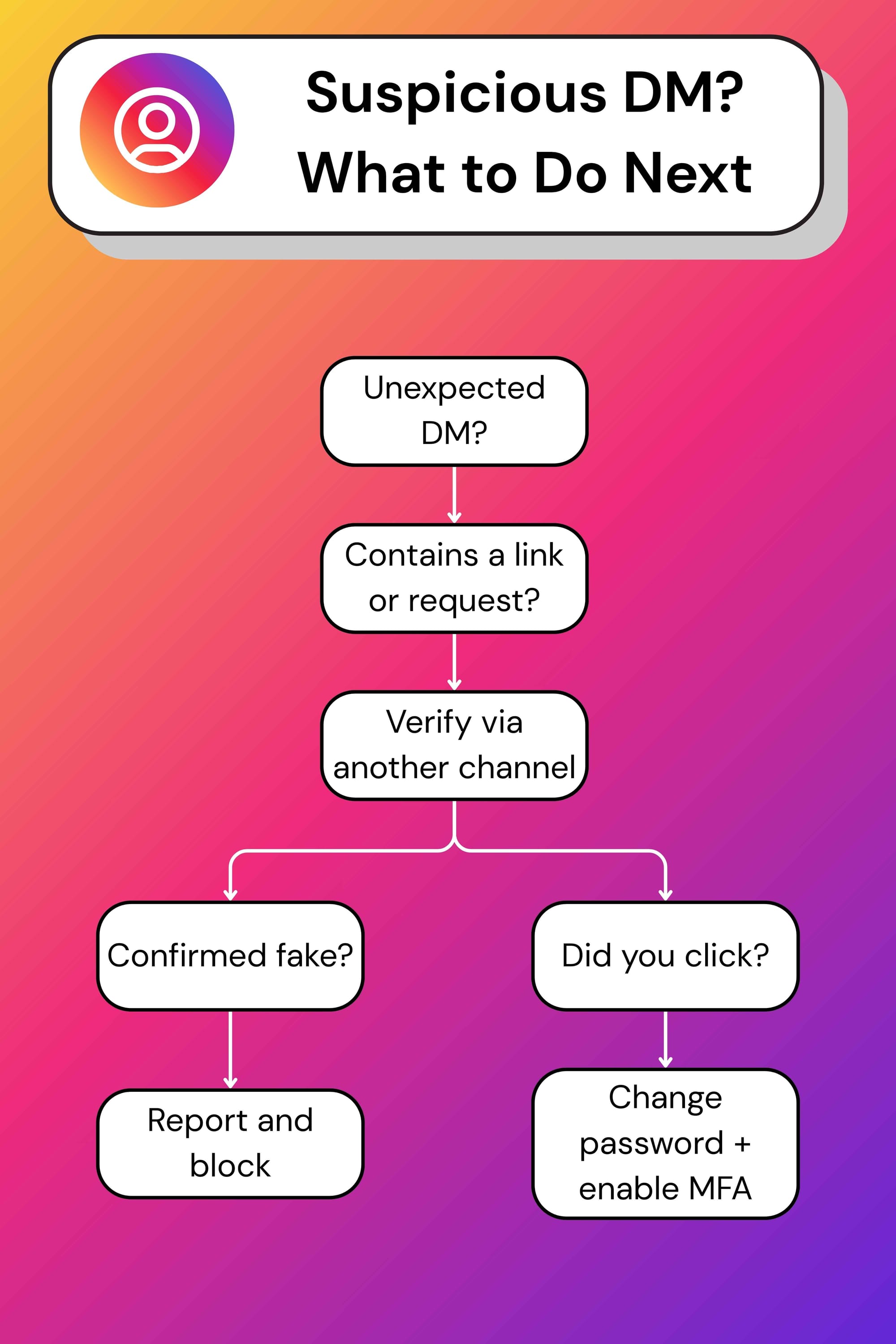
- Do not click links in unexpected DMs, even if the sender seems familiar
- Verify out-of-band: ask the person via a different channel (text, email, another social platform, phone call) if they’re really the one you’re talking to
- Use Instagram’s built-in reporting for suspicious DMs, posts and profiles
- If you entered credentials, assume compromise: change your Instagram password immediately and enable stronger login security such as Multi-Factor Authentication (MFA). Account takeover is common in fraud and often leads to follow-on scams against your contacts
Prevention that actually moves the needle
Unfortunately, being aware that these malicious aged Instagram accounts exist and that they often do evil is only the first step in defending against them. Proactive measures and specialized software can help strengthen your digital resolve.
- Use a password manager like Bitdefender SecurePass to create and manage unique passwords. Credential reuse is a major account takeover enabler
- Turn on MFA for Instagram and for the email account linked to it
- Limit what attackers can learn from your profile – oversharing can help impersonation and targeting
- Bitdefender Scamio can help you identify scam accounts from messages, emails, sites, QR codes, images and even described scenarios
- Consider a security solution like Bitdefender Security for Creators, designed to help protect social media accounts, devices and online activity from account takeovers and phishing attacks
The bottom line
Aged Instagram accounts are dangerous because they’re a haven for threat actors who seek rentability at scale. Whether the account was stolen or traded, the result is the same: a profile that looks trustworthy enough to make you click, pay, share or comply.
With fraud losses rising and social platforms remaining a prime entry point, the safest assumption is to treat old accounts as potential catalysts for scams.
Frequently Asked Questions (FAQs)
Is it bad to use an old Instagram account?
No, an old Instagram account is not inherently risky, but it becomes dangerous if it is poorly secured, as aged accounts are prime targets for takeover and abuse by scammers due to their built-in trust and social reach. This risk is greater if the account also has a wide follower count.
How to tell if an Instagram account is a catfish?
Red flags include a mismatch between the account’s age and its recent behavior, vague or recycled photos, sudden personal or financial questions in stories and DMs, as well as pressure to move conversations off Instagram or click external links.
What are common scammer phrases?
Phrases often rely on urgency or favors, such as “I need your help right now,” “vote for me,” “you’ve been selected,” “my account is about to be deleted,” or “this is a limited-time opportunity.”
tags
Author

Vlad's love for technology and writing created rich soil for his interest in cybersecurity to sprout into a full-on passion. Before becoming a Security Analyst, he covered tech and security topics.
View all postsYou might also like
Bookmarks
