Identity theft risk assessment after sharing personal data

November 24, 2026
An exposed email address doesn’t call for the same response as a leaked password, one-time code or passport scan. This identity theft risk assessment helps you identify what was shared, stop active misuse and choose the next step before a scam becomes a financial problem.
Key takeaways
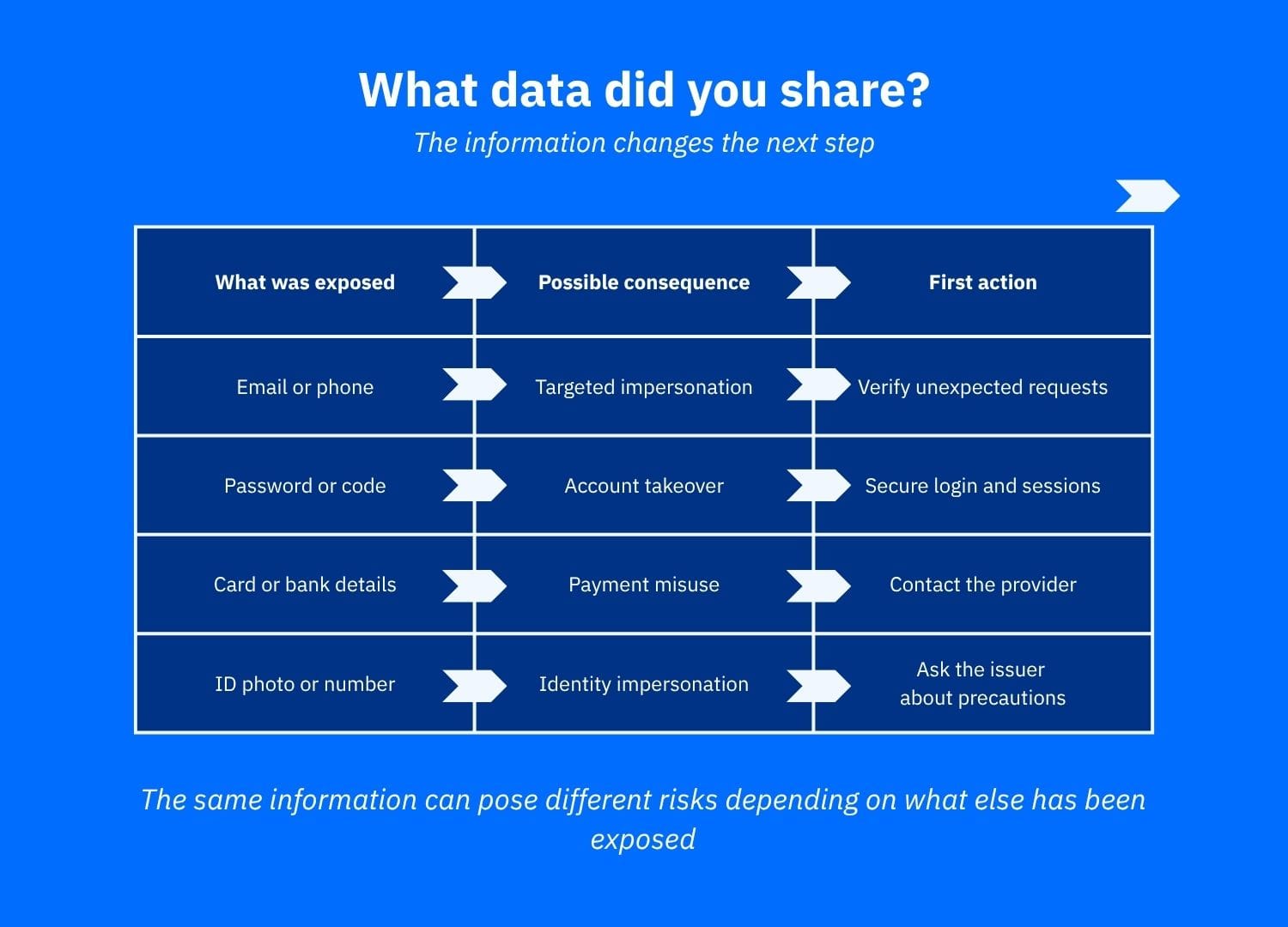
- Shared passwords or login codes: Secure the account immediately; check active sessions and recovery settings
- Exposed card or bank details: Alert your provider through its official app or number
- Leaked ID documents or numbers: Ask the issuer about precautions and monitor for impersonation
- No suspicious activity yet: That’s not proof of safety; responses depend on the data and jurisdiction
Start with what could be done with the exposed information
An identity theft risk assessment starts with two questions: ‘what could someone do with this information’, and ‘has it already been used’? An email address can make phishing more effective. A password may unlock an account, while a one-time code may complete a login or authorize a transaction.
A passport scan, national identity number or selfie might support impersonation, especially when combined with other information. Exposure is not proven identity theft, but stolen details can fuel financial scams. UK Report Fraud distinguishes theft from fraudulent use.
If you shared a password, code or device access
Use the real account's app or website. Change exposed and reused passwords, sign out of unfamiliar sessions, review recovery settings and enable a passkey or multifactor authentication. After sharing a one-time code, check recent logins and transactions immediately; the code might already have been used.
If someone remotely controlled your device, cut off that access and disconnect it if the control continues. Use another trusted device to secure email and financial accounts, then run a reputable security scan. See the FTC's recovery guidance for account and device exposure.
If you exposed financial or identity documents
For card details, contact the issuer about locking or replacing the card and disputing unfamiliar payments. For a bank account number or IBAN, alert the bank and monitor transactions; an IBAN alone is not a banking password. Already transferred money? Follow our bank transfer recovery guide.
For an ID photo, passport scan, national identity number or verification selfie, ask the issuer or service how to flag suspected misuse. A copied document does not automatically need replacing. Watch for unfamiliar loans, mobile contracts, account-opening emails and verification requests.
In the US, an FTC credit freeze is free and must be placed separately with all three nationwide credit bureaus. A fraud alert works differently. These precautions are US-specific and aren’t precisely the same in other countries.
Check for misuse and preserve evidence
Unexpected password resets, unfamiliar devices, charges, debt notices and accounts you never opened merit investigation. Contact the institution directly rather than trusting a caller who claims to represent its fraud team.
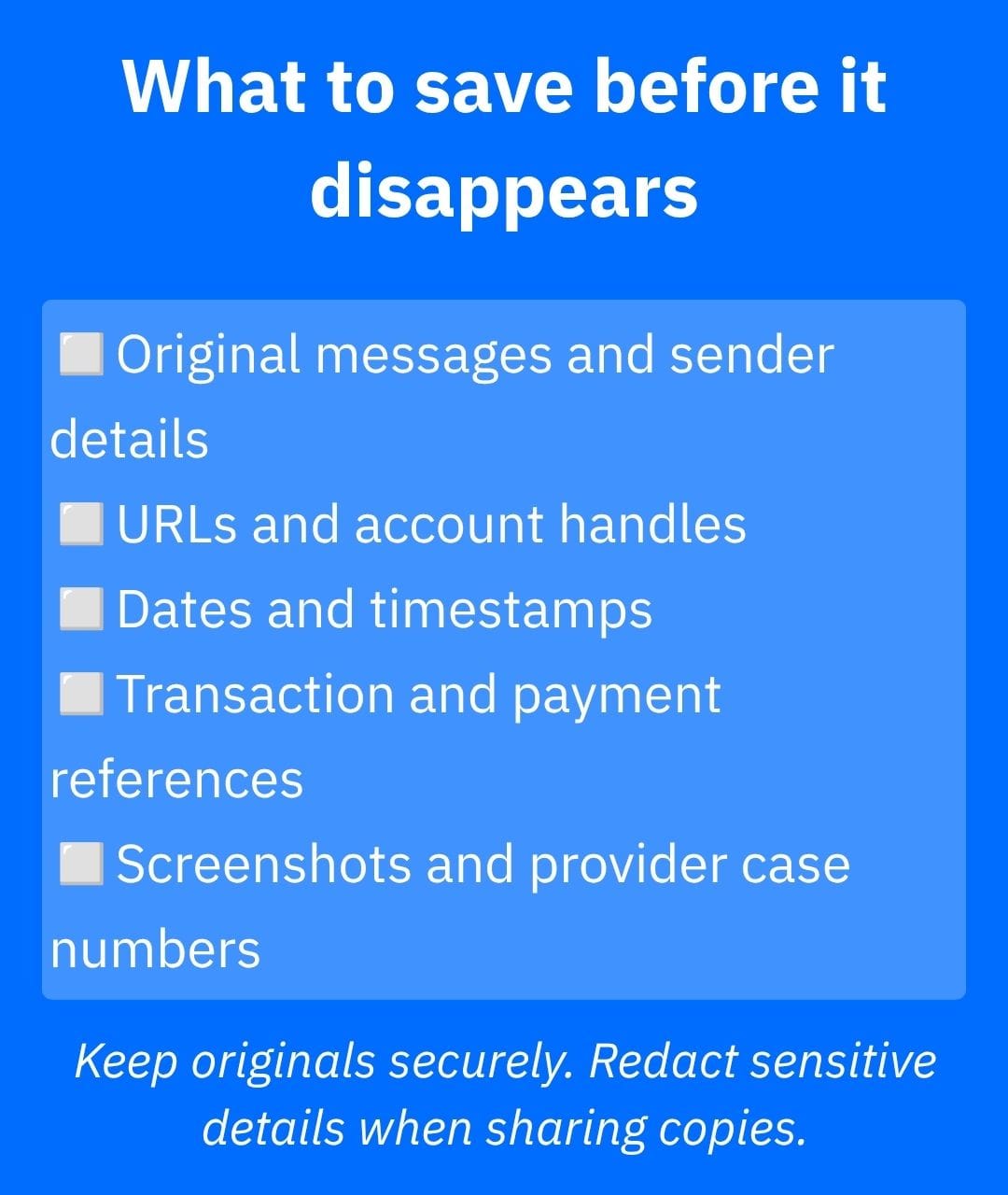
Keep original messages, dates, screenshots, transaction references and case numbers. Our scam evidence checklist explains what to save. Ignore recovery agents demanding more codes, documents or advance fees.
Use the offline identity exposure triage tool
Our downloadable identity exposure triage tool below asks what was exposed, whether money or account access is involved, and your region. It creates prioritized actions, official links and a printable plan. Selections stay offline, without accounts, uploads or tracking. It cannot confirm identity theft or recover funds.
Reporting varies. US readers can use IdentityTheft.gov; England, Wales and Northern Ireland use Report Fraud, while Scotland uses Police Scotland. Romania's DNSC offers cyber assistance via 1911 or PNRISC (National Platform for Reporting Cybersecurity Events). Spain's INCIBE offers advice via 017, not police reporting. ENISA lists EU-country contacts.
How Bitdefender can help
Bitdefender Scamio assesses suspicious messages and links; never submit live codes or unredacted ID photos. SecurePass helps manage unique passwords, Ultimate Security offers malware and phishing protection, and Digital Identity Protection monitors certain exposures and breaches. They don’t guarantee prevention or identity recovery.
Conclusion
Respond to the access exposed information could enable, not a guessed risk percentage. Secure accounts first, verify institutions independently, then monitor and report suspected misuse.
Frequently asked questions (FAQs)
What is the risk of identity theft?
It’s the possibility that someone will use your details to impersonate you, access your accounts or apply for services in your name. Risk depends on the information, what other data the impersonator has on you and signs of misuse. Exposure alone does not prove theft.
What are the 5 most common types of identity theft?
There is no worldwide top-five ranking. Five common forms are financial or credit identity theft, online account takeover, tax or benefits identity theft, medical identity theft, and employment identity theft. A stolen social account and a fraudulent loan need different responses because they affect different services and records.
What is the red flag rule for identity theft?
The US FTC Red Flags Rule requires certain financial institutions and creditors with covered accounts to maintain written programs to detect, prevent and mitigate identity theft. It’s a business compliance obligation, not a five-step checklist that individuals must follow. Other countries have different rules.
What are three ways to prevent identity theft?
First, use unique passwords or passkeys and strong multifactor authentication. Second, verify requests independently before sharing documents, codes or financial details. Third, monitor account activity, transactions and relevant identity or credit records; challenge anything unfamiliar promptly. No single measure eliminates the risk.
tags
Author

Vlad's love for technology and writing created rich soil for his interest in cybersecurity to sprout into a full-on passion. Before becoming a Security Analyst, he covered tech and security topics.
View all postsYou might also like
Bookmarks
