Google ads led travelers to fake government passport services, FTC alleges

October 29, 2026
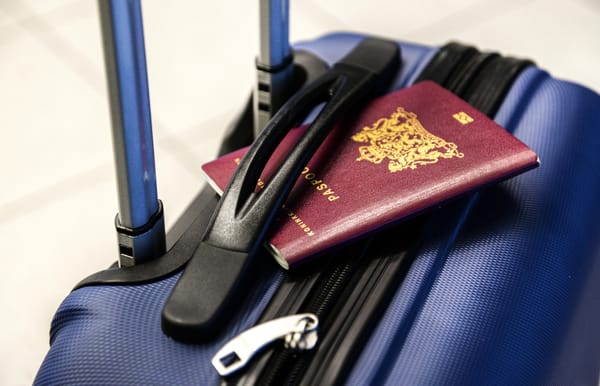
US regulators are suing two companies and their owner over an alleged government impersonation scheme that lured travelers through sponsored Google search results, charged misleading fees, and collected sensitive personal information.
The US Federal Trade Commission (FTC) is suing two companies and their owner for allegedly deceiving travelers seeking passport services by making their websites appear affiliated with the federal government.
According to the FTC's complaint, the operation used paid Google search ads, misleading promises, and fake customer reviews to convince consumers they were dealing with government passport services.
Instead, many customers allegedly ended up paying substantial fees for paperwork they could have obtained free of charge from the US State Department.
Key points
- The FTC is suing GovAssist LLC, Entry LLC, and their owner, Scott Zuckerman, over an alleged government impersonation scheme
- Paid Google search ads allegedly directed travelers to websites that appeared affiliated with the US government
- Customers were charged at least $148 for services that sometimes amounted to filling out freely available passport forms
- The defendants allegedly advertised unrealistic passport delivery times and used fake positive reviews to build credibility
- The FTC says the operation also obtained consumers' financial and personal information
Sponsored Google results made the websites look official
According to the FTC, the alleged scheme has operated since at least October 2023 through websites including GovAssist.com, Entry.com, and IVS.us.
The websites offered passport applications, renewals, visa services, and other travel-related assistance while allegedly creating the impression they were associated with the US State Department.
The defendants used paid Google search ads to rank their websites prominently in results for common passport-related searches, including queries about obtaining or renewing a US passport.
Travelers searching for government services might see these sponsored results before reaching the actual government website, possibly mistaking a paid advertisement for an official service.
The FTC alleges the companies were neither government agencies nor authorized government-affiliated passport providers.
Christopher Mufarrige, director of the FTC's Bureau of Consumer Protection, warned that using paid search advertising to impersonate government services is illegal. The agency says it intends to pursue operators of advertising schemes that mislead consumers or otherwise violate consumer protection laws.
Travelers allegedly paid $148 for forms available free of charge
Although the defendants advertised passport services starting at $89, the FTC says the cheapest available option actually cost $119, plus a $29 shipping fee, for a total of $148.
According to regulators, the websites failed to clearly explain that customers would still need to pay the official government passport fees separately.
In many cases, consumers allegedly received nothing more than a completed passport application form that was already available for free through the State Department.
The companies also advertised expedited passport services, suggesting travelers could receive passports in three to four business days.
The FTC says the advertised timelines were shorter than the fastest expedited processing available through the State Department, the only authority that can issue US passports.
For travelers facing imminent departures, such misleading promises could be particularly appealing.
Fake reviews helped create an illusion of legitimacy
The FTC says the defendants also relied on fake reviews to make their services look trustworthy. Their websites prominently displayed claims of excellent customer ratings, including references to reviews on Trustpilot and other platforms.
According to the complaint, those ratings were inflated by large numbers of fabricated reviews.
This combination of prominent search placement, official-looking websites, and apparently favorable customer feedback can trick ordinary travelers.
The FTC alleges that the defendants violated the FTC Act, its Government and Business Impersonation Rule, and the Gramm-Leach-Bliley Act.
Owner previously faced FTC action involving stalkerware
Notably, Scott Zuckerman – identified as the owner and sole member of GovAssist and Entry – was already subject to an FTC order stemming from an unrelated case involving stalkerware.
That earlier case resulted in a final administrative order addressing data privacy.
According to the FTC, Zuckerman operated the passport-service business while the previous order was in effect.
The allegations have not yet been proven in court, and the case remains subject to judicial proceedings.
How to avoid fake passport websites and misleading government services
A ranking in a Google search doesn't necessarily mean a website is official, trustworthy, or even authorized to provide the service it offers.
Impersonation schemes can exploit this confusion to collect payments and sensitive information, including names, addresses, dates of birth, and identification details.
A few precautions can reduce the risk for travelers:
- Start with the official government website. For US passport applications and renewals, visit travel.state.gov rather than relying on sponsored search results
- Check the website address. Official US federal government websites generally use .gov domains
- Don't mistake advertising for authorization. A sponsored Google result simply means someone paid for placement
- Watch for unrealistic processing promises. Private companies can’t issue US passports or guarantee faster government processing than the State Department allows
- Look for hidden fees. Check whether advertised prices include official government charges, shipping, and additional service fees
- Treat glowing reviews with caution. High ratings alone don't guarantee legitimacy, especially when a website relies heavily on testimonials to establish credibility
- Protect sensitive information. Don’t submit passport details, identification documents, or payment information until you've checked out the service provider
- Use a scam-fighting assistant. If you feel someone may be trying to scam you, start a conversation with Scamio. You can either copy-paste the message, upload an image, send a link, or describe your situation. Scamio analyzes it and lets you know if it’s safe or not.
If you've already paid money to a suspicious passport-service website, contact your bank or card issuer to talk about disputing the charge. If you've disclosed sensitive personal information, consider additional identity-theft precautions through IdentityTheft.gov. Consumers can also report suspected fraud to the FTC at ReportFraud.ftc.gov.
Bitdefender Premium Security can provide an additional layer of protection against phishing websites, malicious links, and other online threats.
Bitdefender Digital Identity Protection scans the web for compromised accounts, exposed passwords and other sensitive information linked to you to protect you from identity theft. We alert you when we discover a breach and give you the tools to prevent account compromises.
Related:
An online ad was enough to deliver spyware—no click required
Booking.com has a scam problem. The EU wants answers
Bitdefender wins Best Scam Protection in H1 2026 from Artifact Security
tags
Author

Filip has 17 years of experience in technology journalism. In recent years, he has focused on cybersecurity in his role as a Security Analyst at Bitdefender.
View all postsYou might also like
Bookmarks
