Sent money to a scammer by bank transfer? What to do in the first 24 hours

July 28, 2026
If you realize you have sent money to a scammer by bank transfer, act immediately: the receiving account may still hold the funds, but recovery becomes harder once they are moved. This guide explains what to do in the first 24 hours, what evidence to preserve and when a bank might reimburse you.
Key takeaways
- A bank-transfer scam tricks you into authorizing payment to an account controlled by a criminal or used to move stolen funds.
- Common tools include impersonation, urgency, secrecy, changed payment details and claims that savings must be moved to a “safe” account.
- Recovery depends on how quickly the transfer is reported, whether funds remain and what rules apply.
- Contact your bank first, request an urgent recall or freeze, preserve evidence, secure exposed accounts and report the fraud.
Sent money to a scammer by bank transfer? Act now
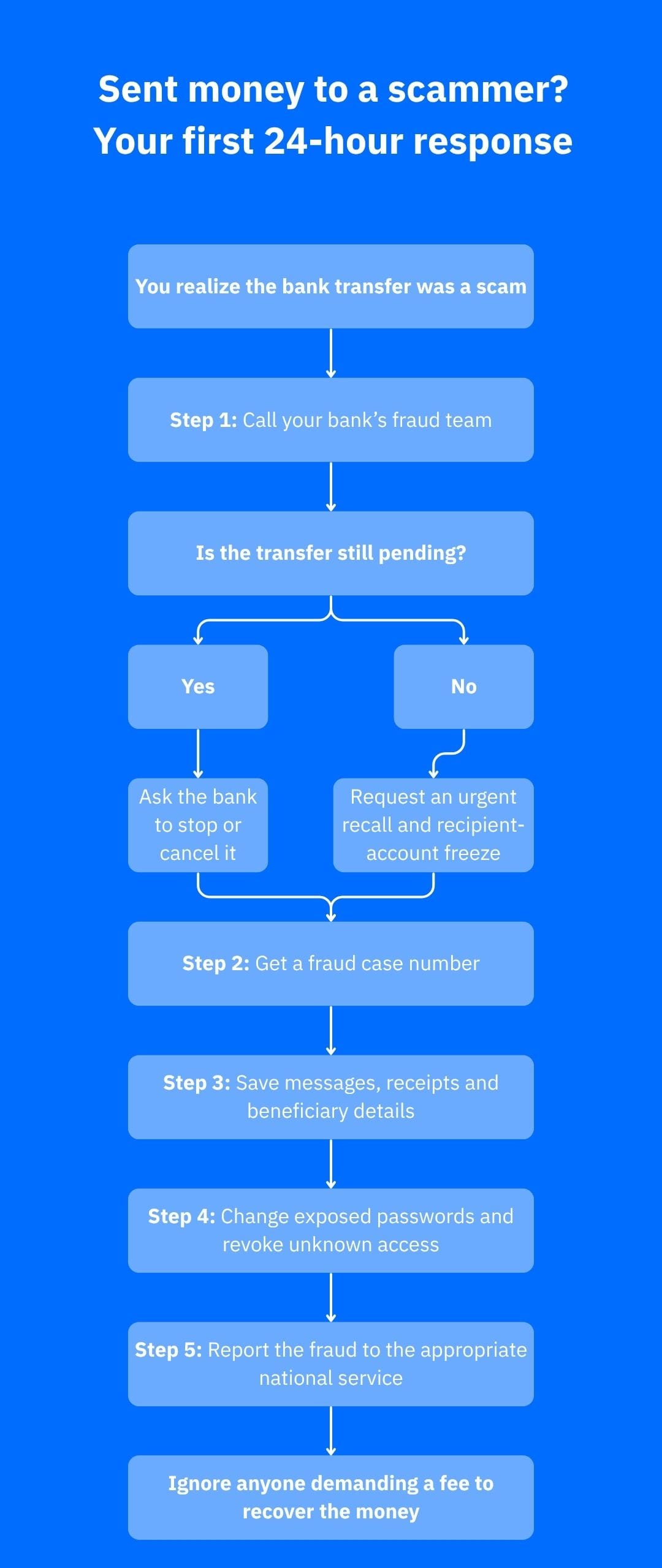
Call the bank that sent the money. Use the number on your card, in the banking app or on the official website—not a number supplied by the scammer.
- Report the transfer as fraud. Tell the bank you were deceived into authorizing it. Ask the bank to stop any pending payment, issue an urgent recall, contact the receiving bank and try to freeze the beneficiary account. Get a case number. The FTC and FBI advise immediate contact.
- Provide exact details. Give the amount, time, recipient name, account number or IBAN, payment reference and related transfers. Mention any access to your device, email or banking.
- Save evidence. Keep messages, emails, usernames, adverts, receipts and screenshots. Write a timeline.
- Secure your accounts. From a trusted device, change banking and email passwords, revoke unknown sessions and enable multifactor authentication. Remove remote-access software.
- Report the crime. US victims can use IC3 and the FTC; UK victims can use Report Fraud; EU residents can find national channels through Europol. However, make the urgent bank call first.
Can a bank reverse a scam transfer?
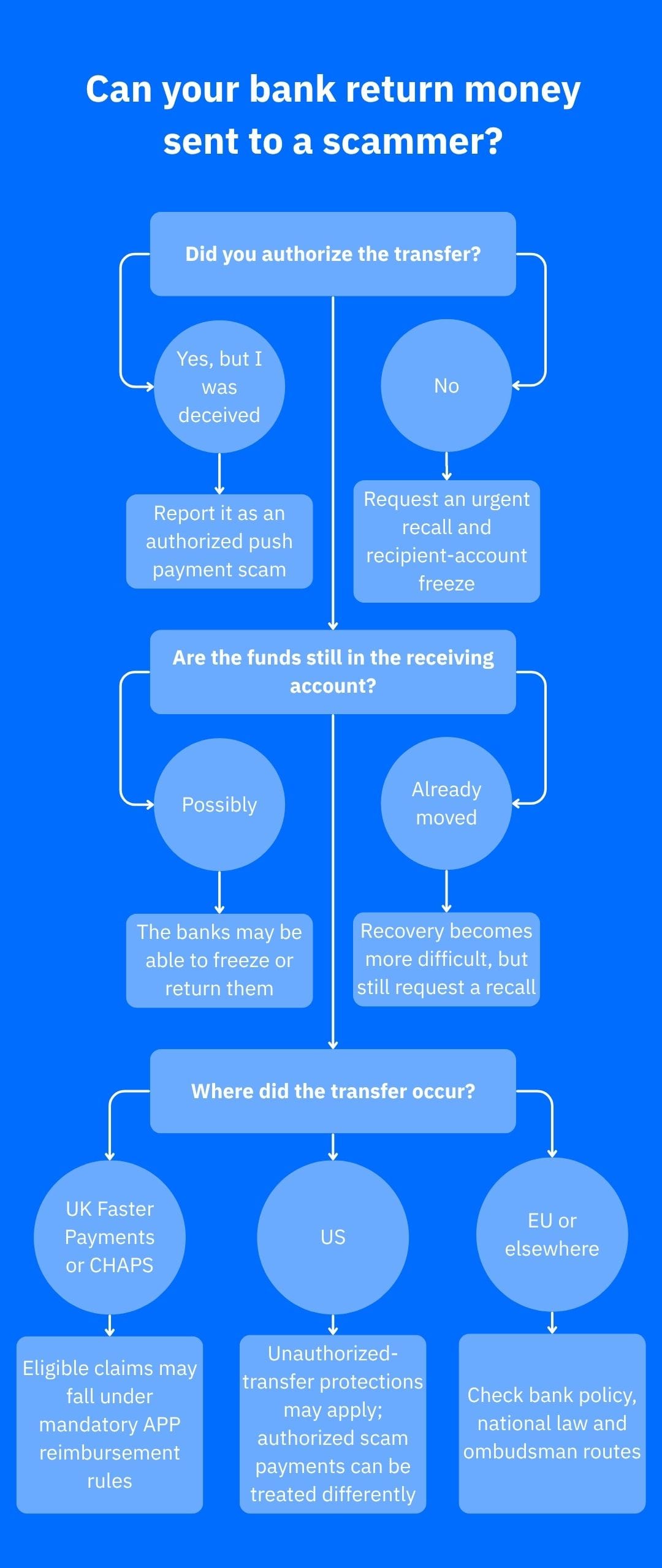
Sometimes you can reverse a scam transfer, but a recall is not always guaranteed. The sender bank can ask the receiving institution to hold or return the money, usually only if funds remain. Request recovery even if the app shows the payment as completed.
In the UK, eligible authorized push payment scam claims involving UK-to-UK Faster Payments or CHAPS transfers made from October 7, 2024, fall under mandatory reimbursement rules, generally capped at £85,000. Claims must be made within 13 months, although exclusions and a possible excess can apply.
In the US, federal error-resolution protections cover qualifying unauthorized electronic fund transfers (payments you did not make or permit). A transfer you approved because you had been deceived may be treated differently. Ask for a written decision and complaint route. Elsewhere, escalate unresolved cases to the bank’s complaints team, ombudsman or national authority.
Avoid recovery scams and further losses
Criminals might pose as recovery agents, lawyers or officials and promise to retrieve the money for an upfront fee. The FTC warns that these schemes target people who have already been scammed. Do not pay a “release fee,” share credentials or allow remote access for a guaranteed refund.
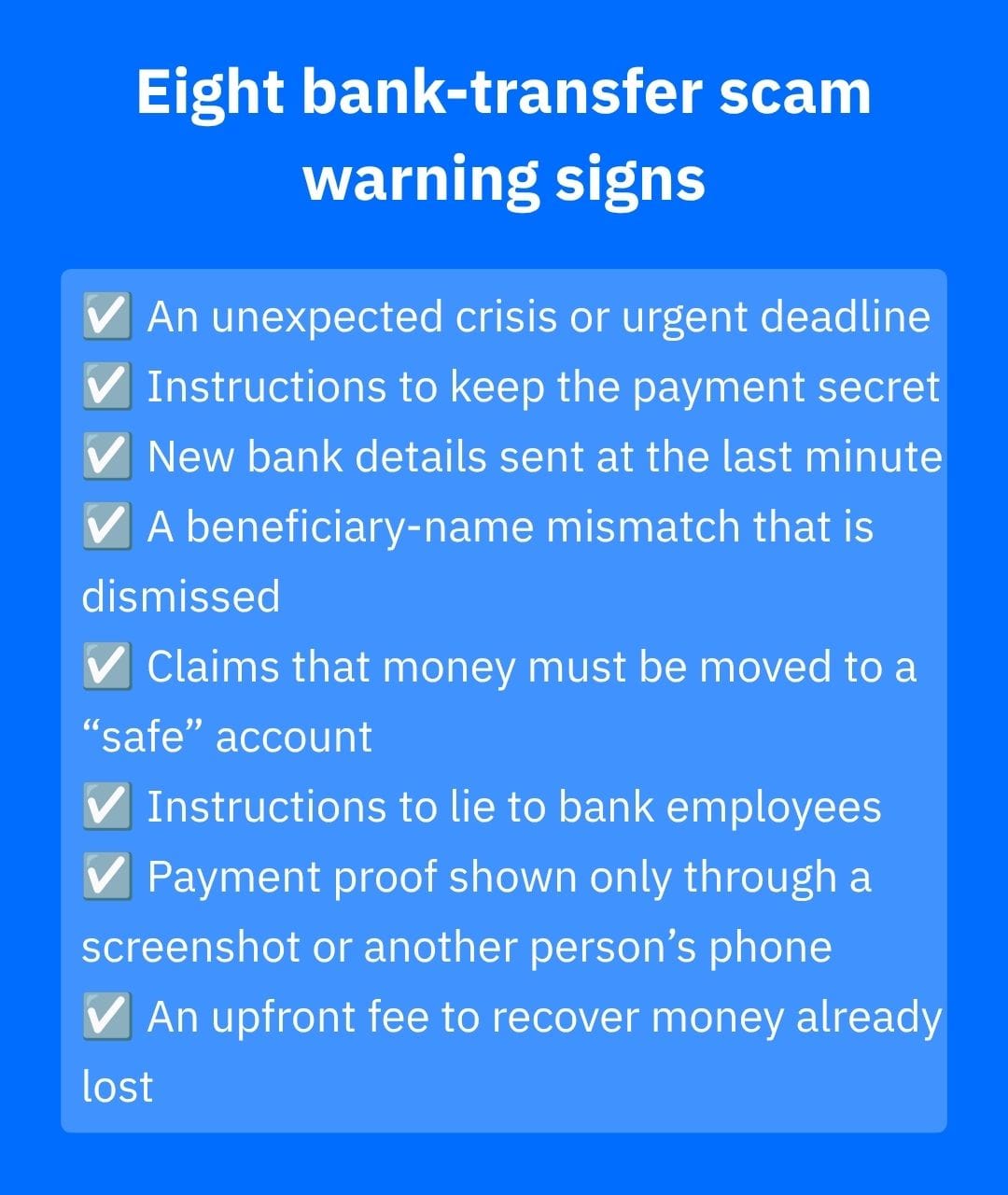
Before making another transfer, stop if someone creates a crisis, demands secrecy, changes bank details, dismisses a payee-name mismatch, tells you to lie or mentions a “safe” account. Verify the request through independently sourced contact details.
Sellers can also be targeted. Never release goods based on a screenshot, email receipt or banking app shown on another person’s phone; confirm cleared funds in your own account. UK police have warned the public about fake banking apps designed to make nonexistent transfers appear genuine.
How Bitdefender can help
Bitdefender Scamio can analyze suspicious texts, emails, social-media messages, links, QR codes and screenshots before you pay. It can’t cancel or recover a transfer.
If you have disclosed personal information, Bitdefender Digital Identity Protection can monitor for exposed data, compromised accounts and breaches. Bitdefender SecurePass can generate and manage unique replacement passwords. They reduce follow-on risk but do not replace your bank or the police.
Conclusion
If you sent money to a scammer by bank transfer, call the bank’s fraud team now, request an urgent recovery attempt, preserve evidence and secure exposed accounts. Then report the crime and reject anyone promising guaranteed recovery for another payment.
Frequently asked questions (FAQs)
What to do after sending money to a scammer?
Contact the sending bank immediately, describe the transfer as fraud and request a stop, recall or reversal. Save evidence, secure accounts and report the incident to the police or national fraud service. Do not pay further fees for a supposed refund.
Can I get my money back from the bank after being scammed?
Possibly. Recovery depends on the payment system, whether you authorized the transfer, whether funds remain and what local rules apply. UK consumers have specific protections for eligible APP scam transfers; elsewhere, reimbursement may depend on bank policy, recall success or unauthorized-payment protections.
Can you recover money sent to a scammer?
Yes, some transfers are recovered when banks act before the funds are moved onward. Request a recall even if the payment appears completed. Besides your bank or the police, anyone who guarantees recovery for an upfront fee is likely a scammer.
Can you be scammed by someone paying by bank transfer?
Yes. A fake buyer may show a fraudulent banking app, screenshot or email, then collect the goods before you notice no money arrived. Confirm cleared funds in your own account and never refund an alleged overpayment until your bank verifies the original payment.
tags
Author

Vlad's love for technology and writing created rich soil for his interest in cybersecurity to sprout into a full-on passion. Before becoming a Security Analyst, he covered tech and security topics.
View all postsYou might also like
Bookmarks
