Nearly 4 in 10 Valentine’s Day Emails Are Scams: What Bitdefender Antispam Lab Is Seeing in 2026

February 12, 2026
Valentine’s Day is meant to celebrate love, connection, and thoughtful gestures. But inboxes around the world get stuffed with Valentine’s Day scam messages throughout January and February. An analysis of Valentine’s-themed email traffic observed between early January and early February 2026 shows that nearly four in 10 Valentine’s-themed spam emails were scams, exploiting seasonal expectations through dating lures, fake gifts, misleading surveys and pharmaceutical promotions.
While promotional emails still accounted for most Valentine’s traffic, many crossed the line from marketing into scam alley.
Here’s what Bitdefender telemetry gathered by our one and only online spam hunter, Viorel Zavoiu, shows for 2026.
Where Valentine’s Spam Is Headed
The United States was the most targeted destination, accounting for more than half of all Valentine’s-themed spam, detected at about 55%. Germany followed at 13%, with Ireland (8%), the United Kingdom (6%), and India (5%) rounding out the top five. Other frequently targeted countries included Japan, South Africa, Poland, Italy, Australia, France, and Canada.
The focus on English-speaking and European audiences reflects how attackers tailor campaigns to regions where Valentine’s promotions are expected, making scam messages easier to blend into legitimate seasonal noise.
Where It Comes From
Looking at sending infrastructure, the United States also ranked as the top source, responsible for over 43% of Valentine’s-related spam. Brazil, Hong Kong, China, Italy, South Africa, Poland, India, France, and Hungary followed, highlighting the distributed, global nature of seasonal spam operations.
Marketing vs. Scams: The Valentine’s Day Split
When campaign types are grouped together, the picture becomes clearer: around 59% of Valentine’s-themed emails were promotional, while roughly 41% were scam-related.
In other words, nearly four in 10 Valentine’s emails had deceptive or malicious intent, including phishing attempts, dating scams, fake giveaways, advance-fee schemes, and misleading surveys.
Dating-Themed Scams Increase with the Season
As Valentine’s Day approached, dating-themed spam and scams became more visible, accounting for around 10% of all scam-related Valentine’s messages.
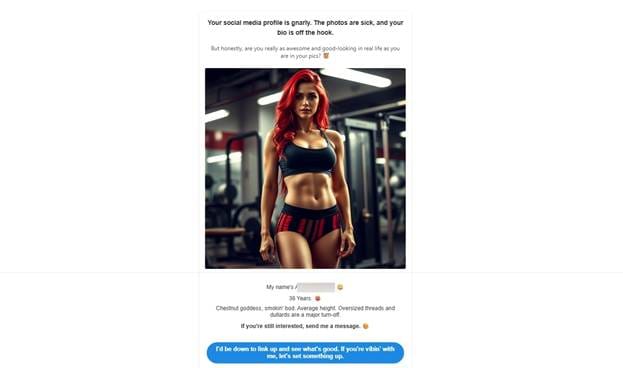
These campaigns relied on flirtatious language, fast engagement prompts, and polished profiles designed to spark curiosity and move conversations forward quickly. In the samples observed, profile images showed obvious signs of being AI-generated, making them relatively easy to spot for experienced users.
That doesn’t make the trend insignificant. AI-generated imagery lowers the cost of running dating scams, allowing attackers to create large numbers of unique personas without reusing stolen photos. Even when the images aren’t particularly convincing, they only need to work some of the time, especially during emotionally charged periods like Valentine’s Day.
Fake Gifts, Surveys, and Luxury Brand Impersonation
A large share of Valentine’s-themed scams relied on brand impersonation, with attackers posing as well-known retailers and luxury brands to make their messages look legitimate at a glance.
During the period analyzed, scammers impersonated brands such as Dior, Sephora, ICI Paris XL, Walmart, Omaha Steaks, and well-known courier services, using familiar logos, and Valentine’s-themed language to promote fake gift offers. Recipients were told they had been “specially selected” to receive premium skincare sets, candles, or romantic dinner packages without having entered any promotion in the first place.
Many of these campaigns redirected users to fake survey pages or reward portals, where victims were asked to answer a few questions before claiming their prize. From there, the flow frequently escalated into requests for personal details or small “shipping” or “handling” fees. This is a classic advance-fee tactic designed to keep perceived risk low while harvesting valuable data.
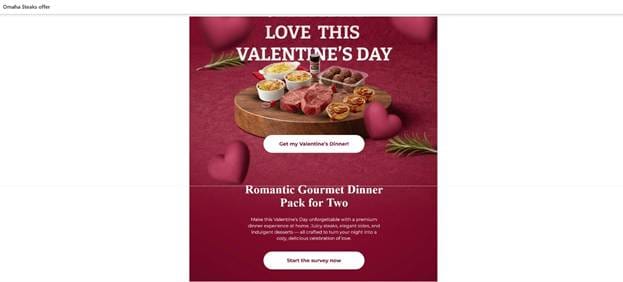
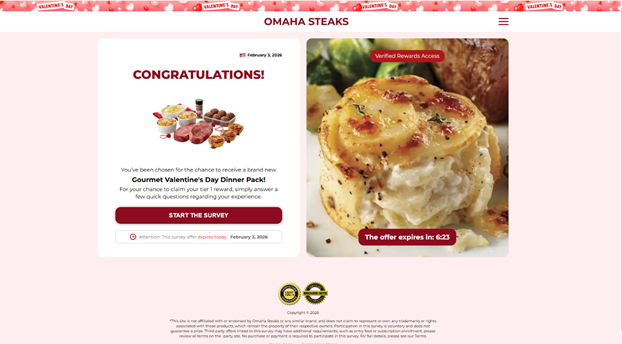
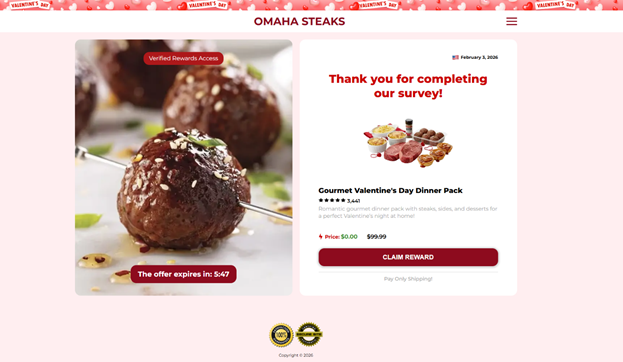
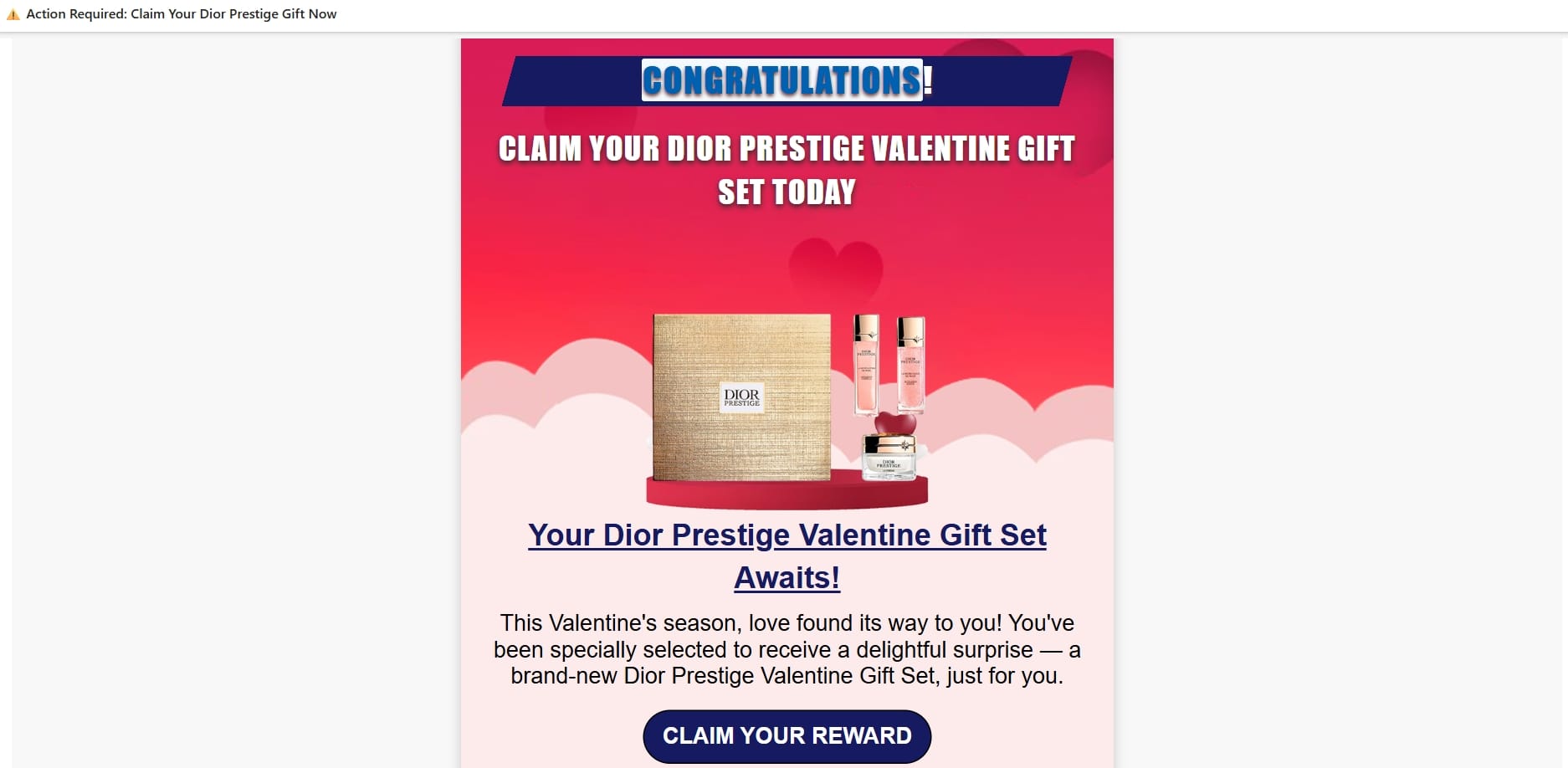
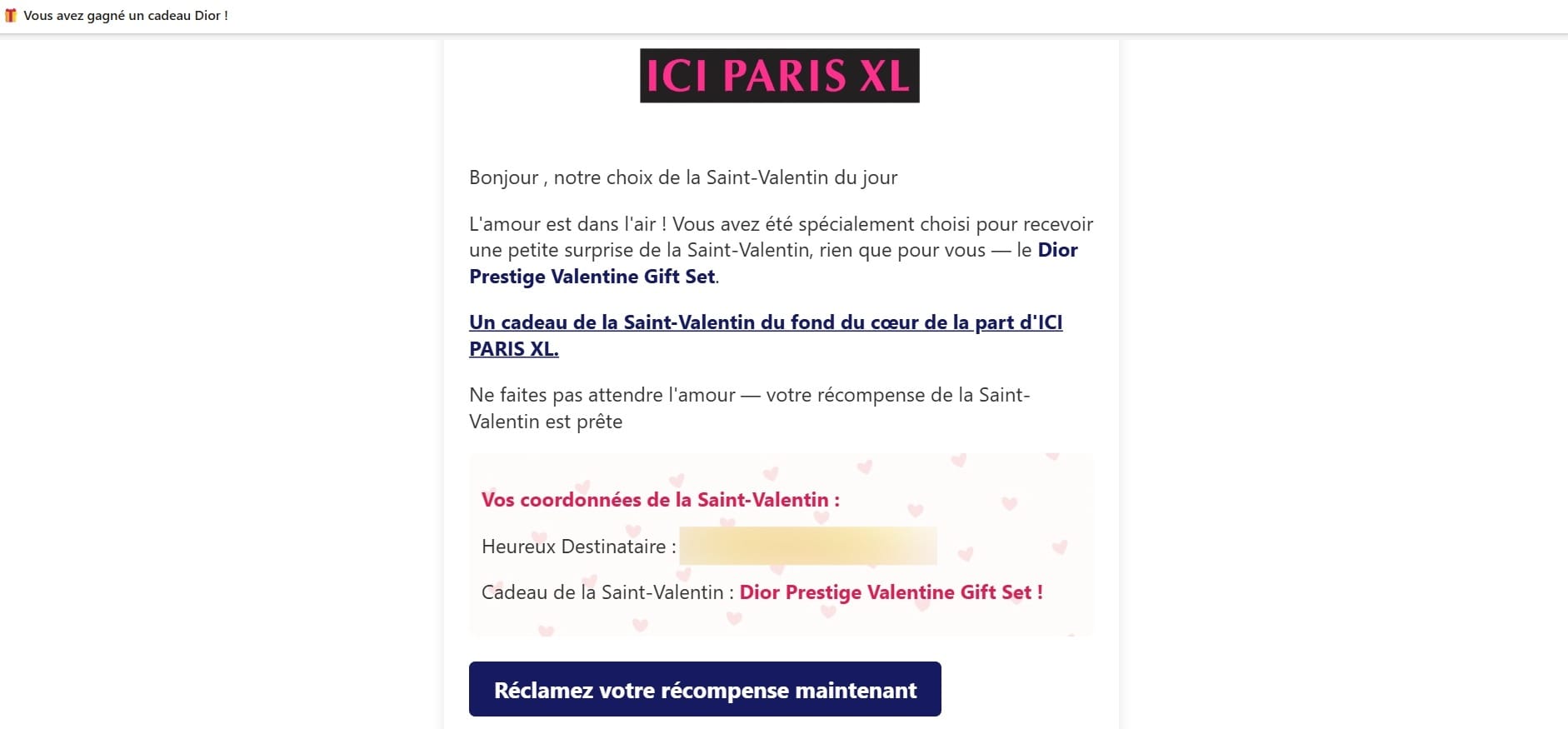
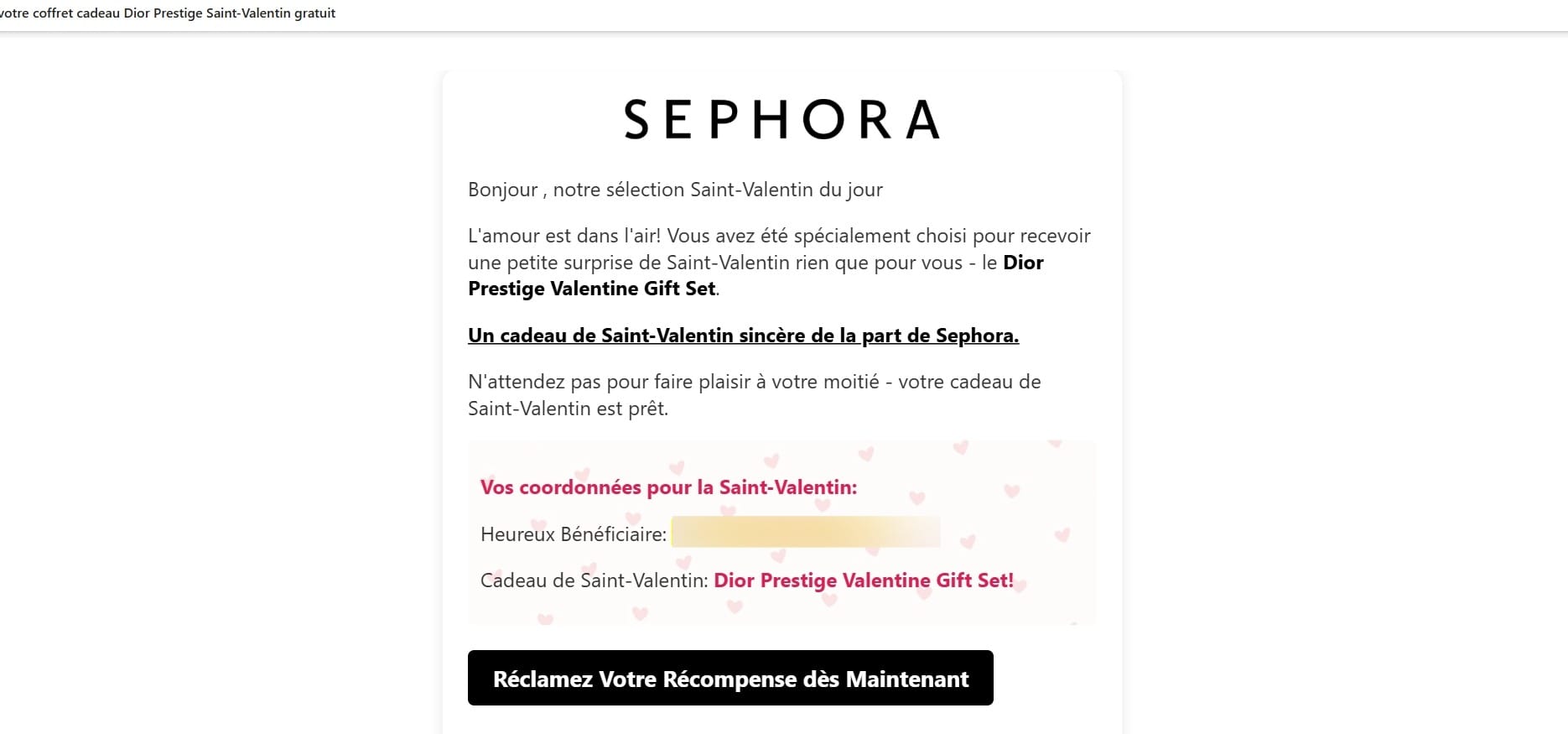
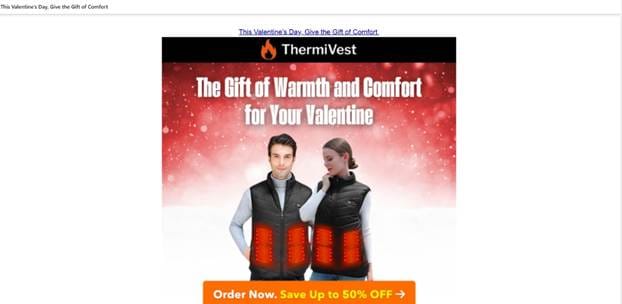
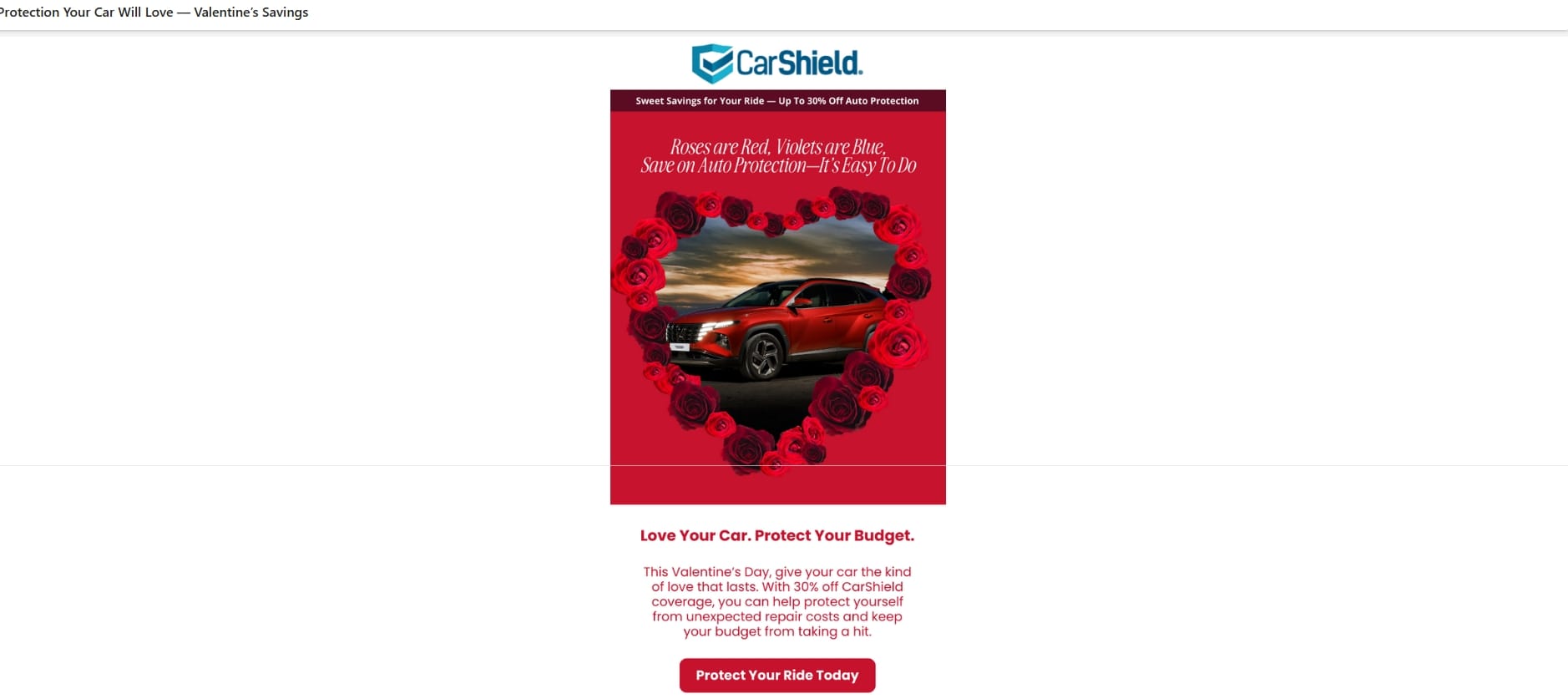
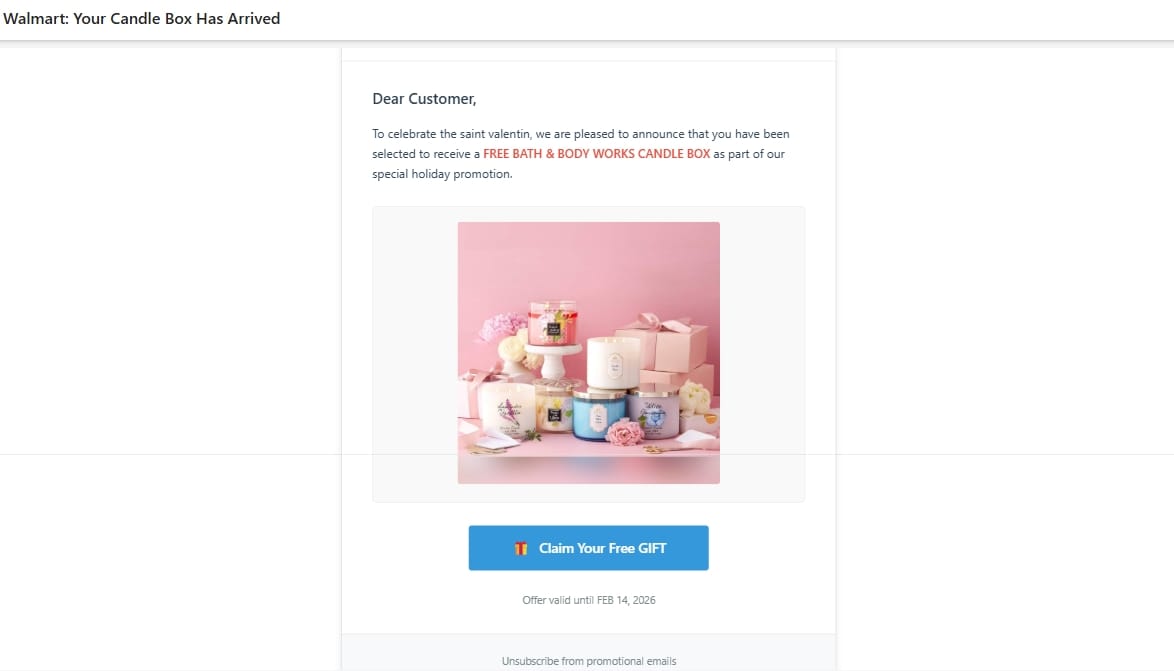
A sense of urgency played a key role throughout these campaigns. Countdown timers, limited-time banners, and warnings that offers would expire within minutes were commonly used to pressure recipients into acting quickly rather than verifying the sender or the offer.
Pharmaceutical Spam Targets Intimacy and Performance
Valentine’s-themed spam also included a persistent stream of pharmaceutical promotions, particularly for intimacy-related medications. While pharma-related messages accounted for a smaller share of overall Valentine’s spam, they followed a familiar pattern: steep discounts, bundled “multipacks,” and emotionally charged messaging tied to romance.

Many of these emails promoted unregulated or prescription-only drugs. These offers typically bypass medical oversight entirely, posing not only financial risks but health risks as well.
Healthcare Impersonation: One of the Largest Campaigns in Germany
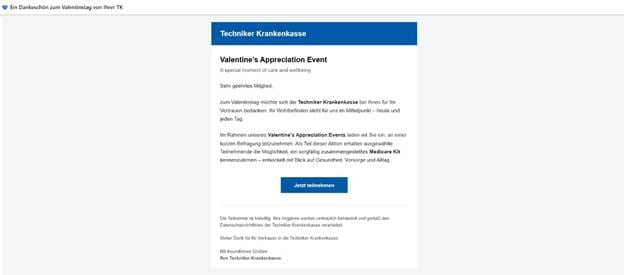
One of the most notable Valentine’s-themed scam campaigns observed this year involved impersonation of a major German health insurance provider, Techniker Krankenkasse. Posing as a Valentine’s “appreciation event,” the emails thanked recipients for their trust and invited them to participate in a short survey, promising access to a curated healthcare or wellness kit.
Fake Deliveries and Mystery Messages
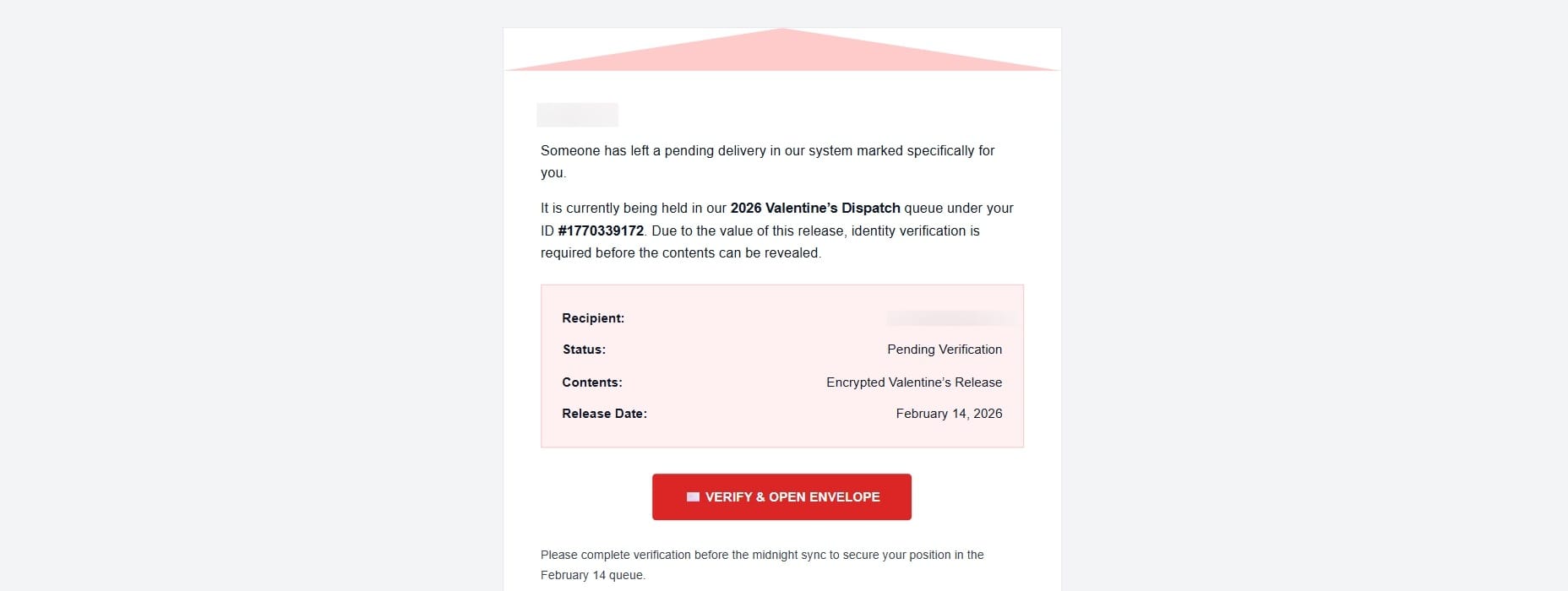
Not all scams relied on romance, brands, or institutions. Some campaigns leaned on curiosity and secrecy, teasing “encrypted Valentine’s deliveries” or pending releases that required identity verification before February 14. Others impersonated delivery services, advising recipients that a Valentine’s gift was arriving and urging them to confirm details.
These messages exploited the expectation of surprise gifts during Valentine’s season — and the fear of missing one.

How to Stay Safe This Valentine’s Day
With Valentine’s Day still a week away at the time of analysis, the volume of deceptive messages is unlikely to slow down. Historically, the days leading up to February 14 tend to bring last-minute spikes in delivery notifications, as scammers seek to capitalize on the expectation of surprise gifts arriving just in time. Based on current trends, we also expect continued activity around dating-themed lures and survey-based giveaways, as attackers lean into urgency, curiosity, and emotional pressure in the final stretch before Valentine’s Day.
Here’s what netizens should keep in mind during this time:
- Be skeptical of unexpected gifts or rewards. If you didn’t enter a giveaway or survey, treat “you’ve been selected” messages with caution.
- Slow down when urgency is involved. Countdown timers, expiring offers, and last-minute Valentine’s warnings are common pressure tactics.
- Be cautious with dating messages. Fast emotional engagement, requests to move conversations off-platform, or overly polished profiles should raise red flags.
- Verify links before clicking. Use tools like Bitdefender Link Checker to scan suspicious URLs before opening them.
- When in doubt, ask. If a message feels off, Bitdefender Scamio can help analyze suspicious emails, texts, or messages and flag potential scams.
- Avoid online pharmaceutical offers sent via spam. Prescription drugs sold through unsolicited emails are often unregulated, counterfeit, or unsafe.
- Protect your personal information. Never enter sensitive data through links received in unexpected messages, and verify delivery or account alerts through official channels.
tags
Author

Alina is a history buff passionate about cybersecurity and anything sci-fi, advocating Bitdefender technologies and solutions. She spends most of her time between her two feline friends and traveling.
View all postsYou might also like
Bookmarks
