As F1 Returns, So Do the Risks of Free Streaming



Free F1 streaming sites may seem like an easy way to watch races—but they often come with hidden risks. Behind the promise of “free access” lies a complex ecosystem of tracking, malware, and aggressive monetization. Understanding these risks is essential before clicking on unofficial streams.
Key Takeaways
- Free streaming sites are rarely truly “free.” Many operate as traffic monetization networks, using redirects, hidden ads, and scripts to generate revenue from every click.
- Malware and data tracking are major risks. Users can be exposed to malicious downloads, hidden trackers, and data harvesting mechanisms that collect browsing behavior.
- Sites often use deceptive infrastructure to avoid detection. Domains rotate frequently, and hidden elements like pop-unders and iframes run in the background without user awareness.
- Children face additional exposure to harmful content. Unregulated streaming sites may display gambling ads, explicit material, and unsafe chat environments.
Why Free F1 Streaming Sites Are Risky and What to Watch Out For
Spring signals the return of major global sporting events, including Formula One and the start of baseball season, with this year drawing even greater worldwide attention due to the FIFA World Cup 2026.
Global audiences are once again searching for ways to follow live action across time zones and devices. At the same time, the steady rise in subscription costs, the continued decline of traditional cable bundles, and the reality of watching while traveling have driven more viewers toward “free” streaming alternatives.
Easy-to-find websites that promise free streaming can seem like a great deal, especially when subscription costs continue to rise. But they are rarely free in any real sense. The people behind these services do not need sophisticated scams to attract users. They simply rely on demand, curiosity, and the appeal of saving money. Once someone visits the site, the real business model begins. Every click, redirect, and interaction becomes an opportunity to generate revenue, often in ways users never see.
What begins as a visit can quickly turn users into victims, exposing them to malware infections and data harvesting. When children are involved, the risks escalate even further, with exposure to gambling promotions and adult content adding another layer of harm.
To better understand the risks, Bitdefender researchers analyzed a range of free streaming sites and uncovered consistent patterns of aggressive monetization, hidden tracking mechanisms, and malicious infrastructure operating behind the scenes.
How free streaming is gaining visibility
It’s not surprising that millions of people worldwide turn to their favorite search engine or AI assistant each day, using queries like “watch free live sports,” “free F1 stream,” or “no subscription football.”
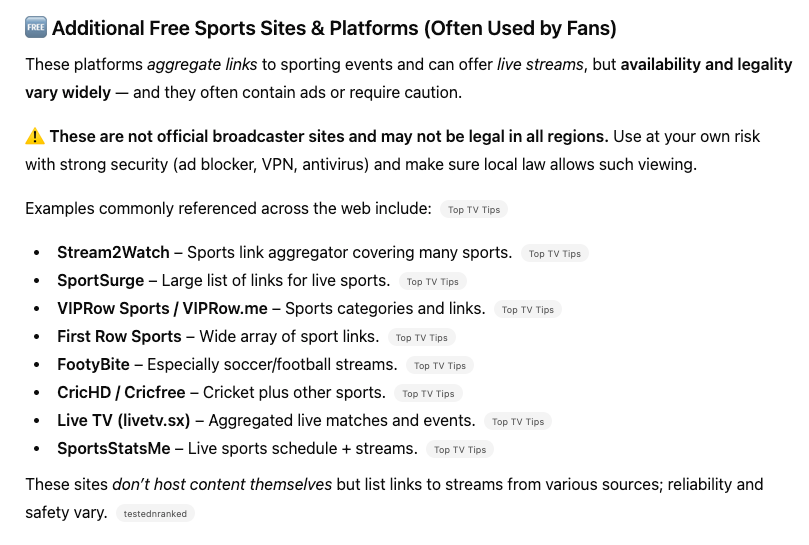
With the right search terms, these websites will appear on the first page of Google. And even LLMs recommend them when queries are framed in certain ways.
Here’s a snippet from a discussion with ChatGPT:
Live sports and other events naturally create a sense of urgency. When a major game, race, or pay-per-view broadcast is about to begin, fans want immediate access. In that moment, some turn to alternative platforms, believing they’ve found a convenient and cost-effective solution.
Websites, IPTV apps, M3U playlists, Telegram channels, addons for video players, and “fully loaded” Android TV boxes promise access to streaming without monthly fees.
While the offer feels simple, the infrastructure behind it is anything but. When a platform does not charge users directly, it monetizes them indirectly.
What our technical review revealed
When we took a closer look, we immediately saw clear patterns that these are very well-organized operations.
Many of these free platforms rely on redirect chains. The user accesses a domain via a Google search, only to be redirected to a secondary site that later rotates to newly registered addresses. This domain pivoting will help the website operators bypass ISP blocks and quickly return after takedowns.
Here are a few examples:
- livesport24[.]watch → redirects to livetv[.]sx → which rotates to livetv873[.]me
- viptrans[.]info → redirects to sharkstreams[.]net
- streamshub[.]site → redirects to streameast[.]gl
- streamarena[.]fit → redirects to crackstreams[.]gl
- streamspass[.]fit → redirects to methstreams[.]gl
- xtremeast[.]com → associated with variations of the streameast brand (including domain pivots such as streameasts[.]com and previously streameast[.]fun)

What appear to be independent websites often have similar layouts, and one backend can power dozens of streaming storefronts.
The goal of most of these platforms is simple: to get users to open their websites with the promise of free live stream so that they can serve extremely aggressive ads.
The bigger problem, which is more concerning than the ads themselves, is the monetization techniques embedded in the code.
Another dangerous aspect is the use of invisible iframes. Regular iframes are used everywhere, and they are basically windows that embed content from another source into a host page, such as video players or ads.
However, some pages contained invisible iframes (they function like regular ones, but are not visible to the website visitor) placed off-screen at coordinates such as -1000 pixels, which means that hidden elements load third-party pages in the background without the user knowing.
<iframe width="0" height="0" style="position: absolute; top: -1000px; left: -1000px; visibility: hidden; border: medium none; background-color: transparent;"></iframe>
<a href="https://frwibqgkiqzpz.site/ad/visit.php?al=1" style="display: none; visibility: hidden; position: relative; left: -1000px; top: -1000px;"></a>
This technique can generate advertising revenue, start various background redirects and even silently connect users to other monetization networks.
We also observed DNS prefetch instructions that prepare connections to obscure external domains before any visible interaction occurs. This accelerates the loading of hidden traffic and improves ad delivery performance behind the scenes.
<link rel="dns-prefetch" href="//ieenhjxbigyt[.]space">
<link rel="dns-prefetch" href="//adexchangeclear[.]com">
<link rel="dns-prefetch" href="//frwlbqgkiqzpz[.]site">
The reason for those strange domain names is simple. The website operations are trying to stay ahead of ad blockers, as older domain names get blacklisted.
Tracking and profiling
Several analyzed pages embedded Google Analytics and Meta (Facebook) Pixel tracking scripts, and one of the websites even used tracking from Yandex, which is a Russian search engine.
Pixel tracking means the website sends browsing event data to Meta’s servers. or whichever service is used. That data can include the URL of the visited page, timestamp, IP address, browser configuration and other unique cookie identifiers.
This means that if a user is logged into Facebook or has Facebook cookies stored in the browser, Meta can associate that visit with an advertising profile. That profile will be used to server similar ads when visiting other websites.
The user's data trail doesn't disappear when the “free streaming website” is closed. There’s no such thing as a free lunch.
The malware and ad-fraud layer
Other free streaming websites also integrate aggressive pop-under scripts and high-risk advertising networks. There’s no guarantee that a simple and annoying ad loaded today can’t be replaced with a much more dangerous one tomorrow.
Furthermore, these scripts can trigger automatic redirects to online casinos, sports betting platforms, adult content portals, fake antivirus alerts or cryptocurrency investment scams. The variations are endless and are usually served depending on the location of the user.
Because these platforms operate outside regulated advertising frameworks, they might not filter inappropriate categories. In this model, the live stream serves as bait. The real revenue flows from traffic manipulation and advertising.
It’s a well-known pattern
These problems are not isolated observations. A 2026 study published in the Journal of Cybersecurity and Privacy analyzed 260 free live sports streaming sites and found that nearly one in three sites (31.5%) contained malicious JavaScript capable of injecting ads, redirecting users or loading harmful content.
Their analysis also revealed malware that could install itself, create persistence, and communicate with external command-and-control servers.
Investigators also identified eight clusters of co-owned domains, including one cluster of 12 different sports streaming sites targeting North American audiences that all shared the same Google AdSense ID. What appear to be separate websites often belong to the same centralized operation.
During the study, the number of confirmed phishing redirect URLs increased from 37 to 51, which showed that malicious pages remained active before being flagged by public blacklists.
Also, in the European Union, a 2023 study found that streaming has become the most popular method to access illicit TV content, with 58 % of piracy in the EU occurring via streaming.
Why children face a higher level of risk
The danger escalates when minors are involved. A kid searching for “watch cartoons free” or “free football stream” can land on the same piracy infrastructure.
Unlike licensed streaming platforms, these websites don’t enforce age verification, content segmentation or advertising standards.
Kids will get to see banner ads for online gambling and explicit websites often appear directly next to the video player. Some pop-ups open adult pages automatically in new tabs.
Sports streams frequently embed betting promotions that normalize gambling behavior and kids getting repeated exposure to this type of messaging might start to believe that it’s normal.
Licensed streaming platforms must comply with child-protection and advertising regulations; these services don’t have the same constraints or even consider the user's age. Because they are so focused on ad revenue, they don’t really care about trivial stuff like age.
The hidden risks of “fully loaded” Android TV boxes
Android TV boxes themselves are not inherently unsafe and major and well-known brands ship devices that get security patches, have app-store controls and operate within licensed streaming ecosystems.
The problem starts with devices marketed as “fully loaded,” “jailbroken,” or “pre-configured with free sports.” For the most part, all of these devices use IPTV (Internet Protocol Television), the technology needed to bring users television content, such as live channels and movies) to your screen, over the internet.
Here’s how one of these boxes look , with Live TV running:
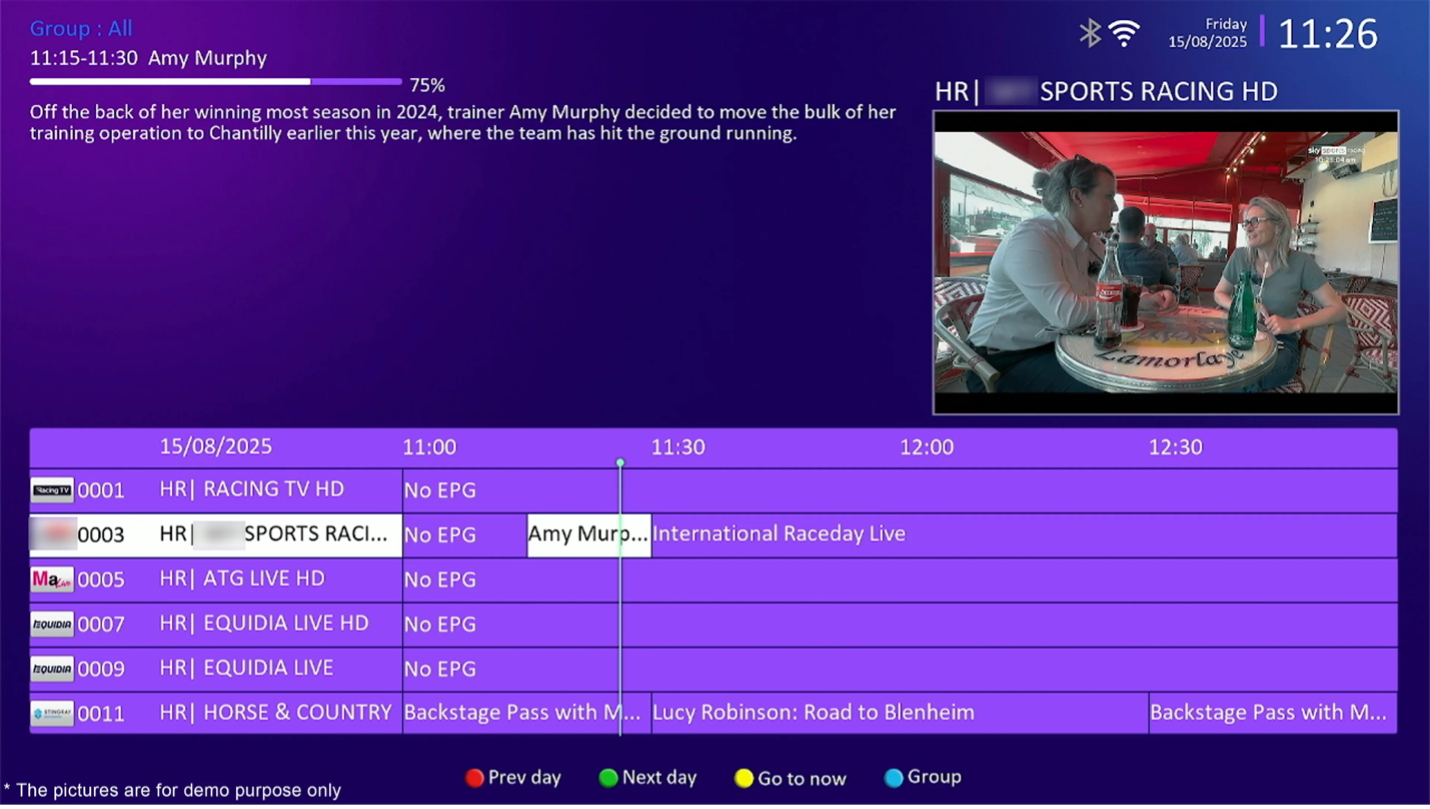
The device itself promises “Ministra/Stalker/Xtream/M3U protocols accounts supported”, which, at the very least, it’s ready to be configured with third-party streams; depending on the device, the TV Box might come with everything already enabled.
Many modified Android TV boxes run outdated Android versions that no longer receive security updates. Some sellers disable automatic updates entirely to prevent unofficial apps from breaking. As a result, known vulnerabilities can remain permanently exposed.
Unlike a browser session that ends when a tab closes, a TV box remains continuously connected to the home network. If compromised, it can act as:
- A network foothold inside the home
- A pivot point to scan other connected devices
- A passive traffic monitor on the local network
Because these devices connect directly to Wi-Fi routers, any weakness affects more than just streaming quality. It greatly increases the attack surface in any home.
There is also a supply-chain concern. Many low-cost Android TV boxes are made by generic manufacturers that only care to bring their product to market quickly, with no regard for security.
Researchers have previously identified Android TV boxes preinstalled with malware. The FBI has also issued warnings about this risk.
A device positioned in the living room that’s always on and connected to the network is a much bigger security risk than visiting a website.
Is IPTV illegal?
The IPTV technology itself is legal and many legitimate broadcasters use it to offer their licensed content over the internet.
However, streaming copyrighted content without authorization violates copyright law in many countries. Authorities have only recently seized large IPTV networks.
Even when legal consequences do not reach end users, financial risks remain. Subscriber databases can leak and payment details may be stored insecurely, eventually ending up on the Dark Net.
There’s always the torrent problem
While free streaming content is the preferred method for users, some will try to find recordings of past sporting events on torrent websites. Our researchers found the LummaStealer malware hidden in popular torrents.
Cybercriminals frequently embed malware within popular content that people actively seek, meaning that the higher the profile of a sporting event, the greater the risk associated with related torrent downloads.
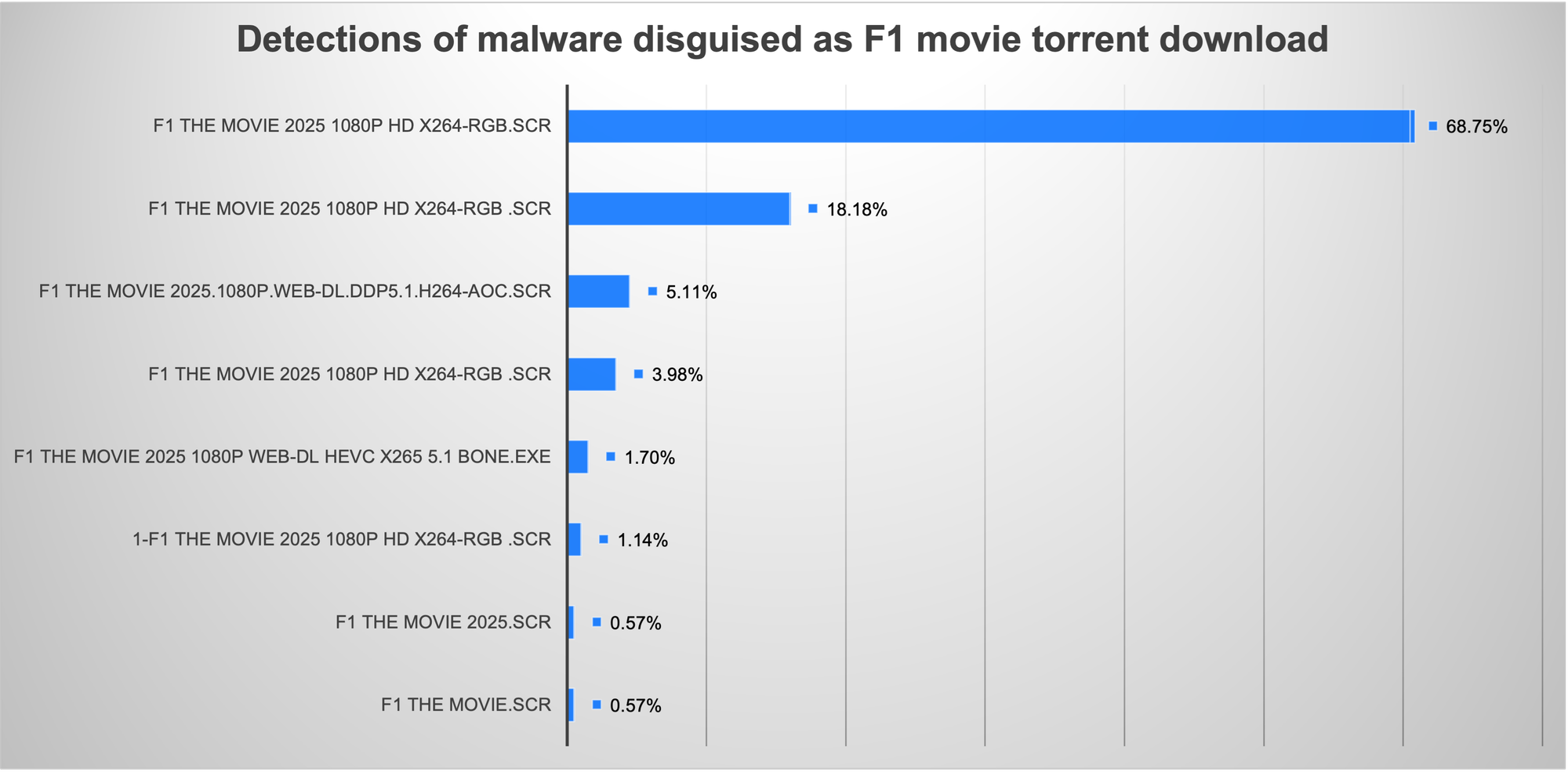
For example, fans searching torrent sites for a recording of a recently concluded F1 race are likely to encounter malicious files disguised as legitimate content.
The image below shows Bitdefender detections of files users attempted to download, believing they had found the latest Brad Pitt film F1, when in reality the files contained malware.
In addition to malware risks, some torrent platforms also employ aggressive advertising networks that may display explicit content, creating additional exposure concerns for minors.
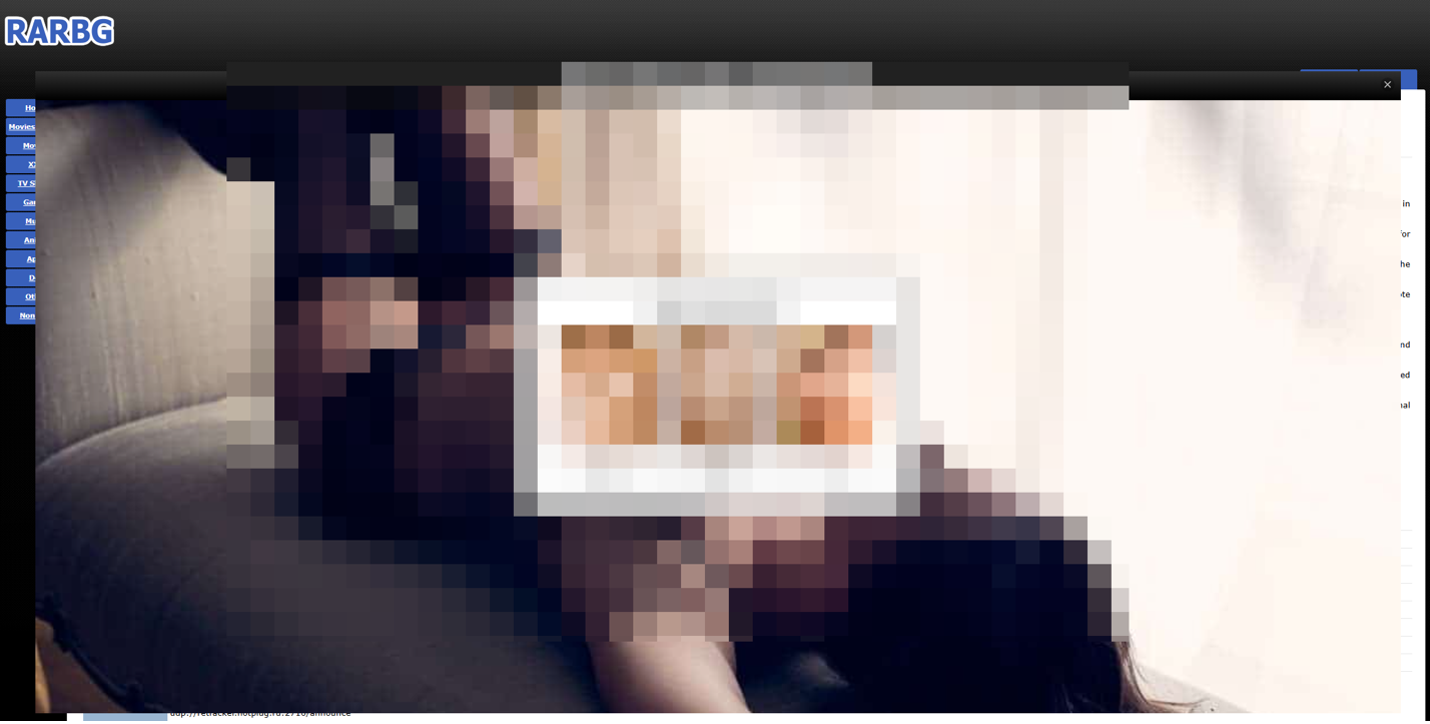
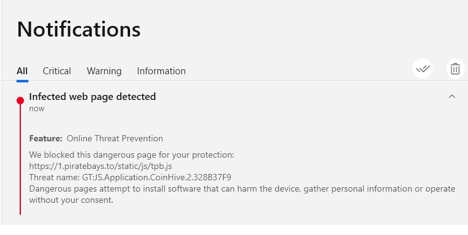
In some cases, torrent sites actively inject malicious code directly into users’ browsers, a tactic observed in several Pirate Bay clones. Without effective endpoint protection, visitors may be exposed to immediate compromise.
How to stream safely
You don’t need to abandon online streaming, but you do need to approach it responsibly.
- Choose licensed platforms that have the distribution rights. These services usually implement advertising standards and parental controls.
- Enable parental controls on smart TVs, streaming devices and home routers. Activate safe browsing filters where available. Keep devices updated with the latest security patches.
- Install a reputable security solution that blocks malicious websites, detects infected APK files, prevents phishing redirects and monitors suspicious network activity.
- Most importantly, talk to children and teens about online risks. “Free” online content often comes with invisible trade-offs.
FAQ
Are free streaming sites dangerous?
Yes. Many rely on aggressive ad networks, hidden tracking scripts, and unregulated infrastructure that can expose users to malware, scams, and explicit content.
Can IPTV apps infect my device?
Unofficial IPTV apps downloaded from outside trusted app stores may contain trojanized code or request excessive permissions, compromising device security.
Do pirate streaming sites track users?
Many embed tracking scripts, such as Google Analytics or Meta Pixel, which can collect browsing data and associate activity with advertising profiles.
Can children see gambling or adult content on free streaming sites?
Yes. Pirate platforms often display unfiltered betting ads, explicit banners, and pop-ups without age restrictions.
What is the safest way to watch live sports online?
Use licensed streaming services available in your region and protect all devices with updated security software and parental controls.
tags
Author

Silviu is a seasoned writer who followed the technology world for almost two decades, covering topics ranging from software to hardware and everything in between.
View all posts
Andrei is a graduate in Automatic Control and Computer Engineering and an enthusiast exploring the field of Cyber Threat Intelligence.
View all postsYou might also like
Bookmarks
