Authorized vs unauthorized fraud and what it means for your refund rights

August 18, 2026
Two victims can lose money to similar scams but face very different refund rules depending on who actually approved the payment. Understanding authorized vs unauthorized fraud helps you describe what happened accurately, dispute the transaction, and act quickly before recovery options narrow.
Key takeaways
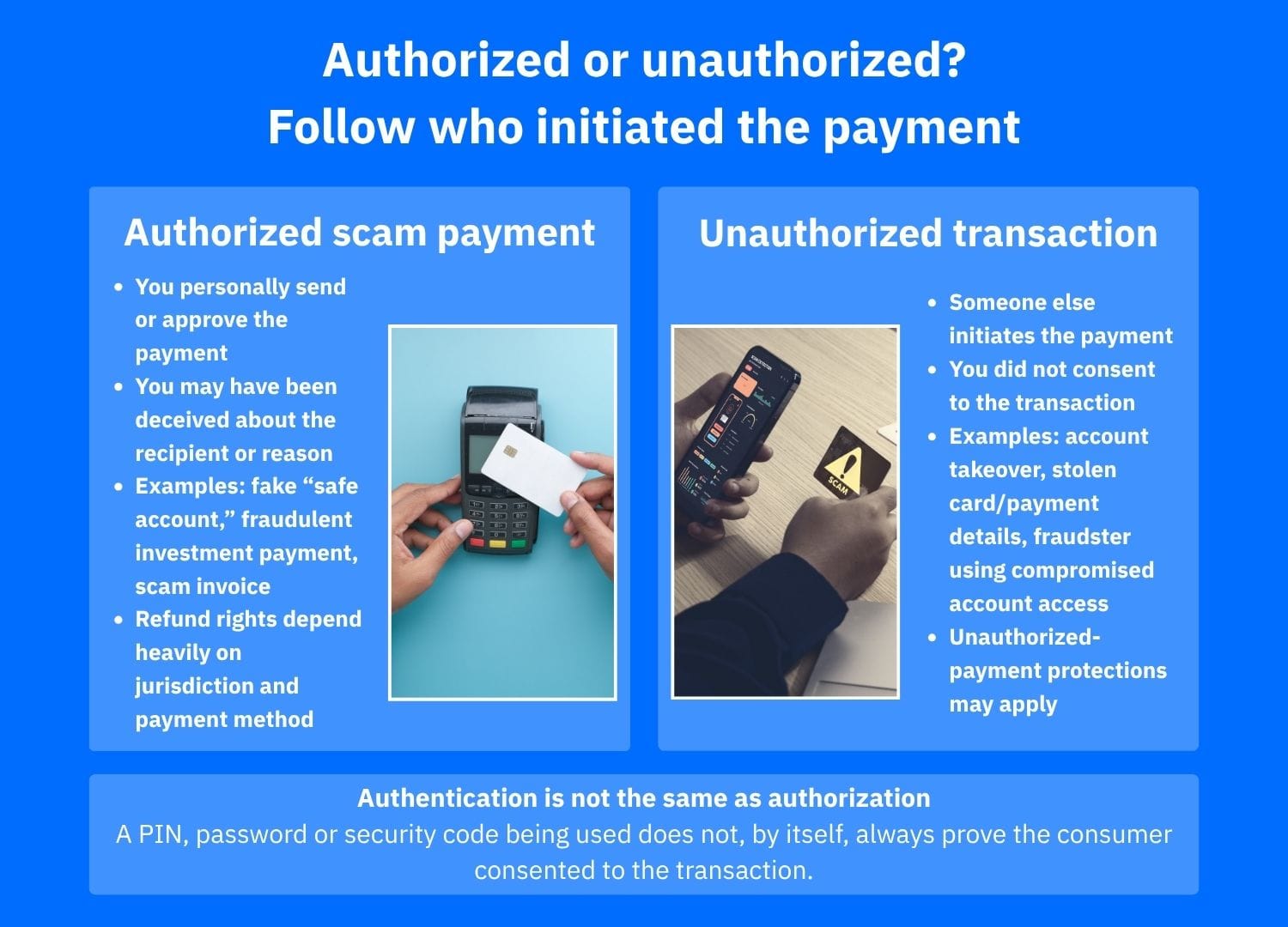
- Unauthorized fraud generally means someone else initiated a payment without your consent; an authorized scam payment means you were tricked into sending or approving it
- Refund rights depend on that distinction, but also on the country, payment method and circumstances
- A password, PIN or one-time code can authenticate a payment without necessarily proving that you authorized it
- Contact the bank or payment provider immediately, explain who initiated the payment, preserve evidence and secure exposed accounts
Authorized vs unauthorized fraud in plain language
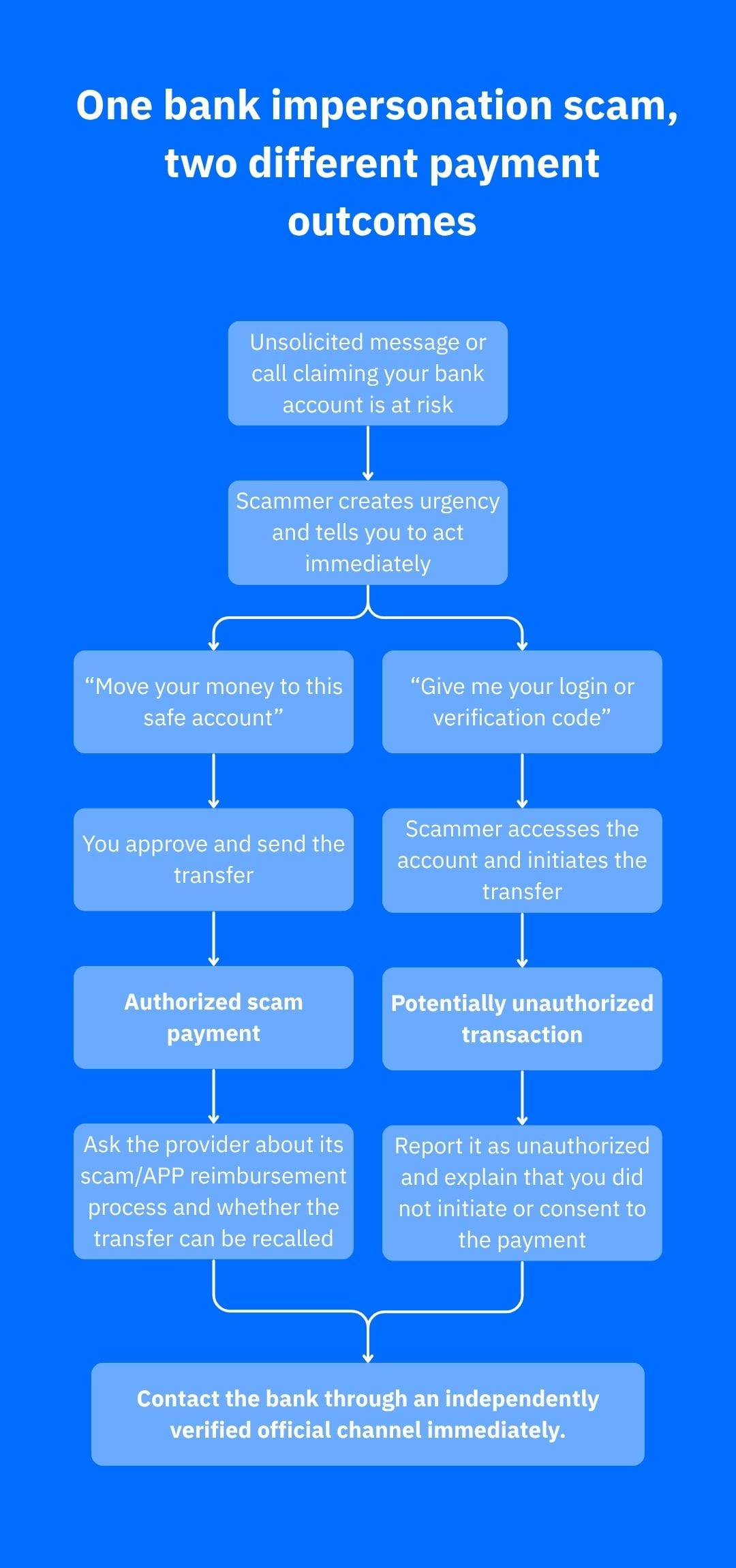
In payments law, “authorized” usually describes consent to the payment instruction, not whether the underlying story was accurate. If a fake bank employee convinces you to move money to a “safe account” and you approve the transfer, the payment may be treated as authorized even though the deception was criminal.
If the scammer instead obtains your login details and initiates the transfer without your consent, the transaction may be unauthorized. That distinction can determine which refund rules apply and how the claim is investigated. Importantly, use of a correct PIN, password or security code may show authentication without necessarily proving authorization.
This is one of the most important distinctions affecting recovery from financial scams: two scams with almost identical social-engineering tactics can produce very different payment disputes depending on who ultimately initiated the transaction.
Why the difference changes bank refund rights
There is no single global refund rule. Consumers should report the payment immediately and check the rules for their jurisdiction and payment method.
United States
Regulation E protects consumers against certain unauthorized electronic fund transfers. CFPB guidance says that when a fraudster tricks a consumer into sharing account access information and then uses it to initiate a transfer, the transfer can still qualify as unauthorized.
A transfer the consumer personally initiates after being deceived generally does not fit Regulation E’s definition of an unauthorized electronic funds transfer. Coverage also varies by payment rail. Some wire-transfer systems primarily used between financial institutions or businesses, including Fedwire, are excluded from Regulation E.
United Kingdom
For an unauthorized payment, the FCA says the bank should generally refund the consumer by the end of the next business day once notified, subject to exceptions, and consumers normally have up to 13 months to report it.
The UK also has mandatory reimbursement for eligible authorized push payment (APP) scams through Faster Payments or CHAPS from October 7, 2024. Eligible claims can be reimbursed up to £85,000, usually within five business days, although an excess of up to £100 and other exceptions may apply.
European Union
Under PSD2, a payment is authorized only when the payer has given consent. Without consent, it is unauthorized. Unauthorized transactions generally must be refunded immediately and no later than the end of the next business day after notification, with a 13-month reporting deadline in most cases.
Scam transfers authorized by victims do not currently receive the same broad EU-wide reimbursement treatment. Proposed PSR/PSD3 rules would strengthen protection for some impersonation scams, but the latest official status verified for this article said formal adoption was still required before the legislation could enter into force.
Warning signs before you approve a payment
Be wary of unsolicited instructions to move money urgently, particularly claims purportedly from a bank, police force, government body or support team. A “safe account,” demands for secrecy, remote-access software, requests for verification codes or pressure to ignore an in-app warning are all reasons to stop and independently verify the request through an official channel.
The criminal’s objective may be the payment itself, or the banking credentials, verification codes and account access needed to initiate transactions without you. Ending the conversation and contacting the organization independently can prevent the scammer from controlling both the story and your next action.
What to do if money has already moved
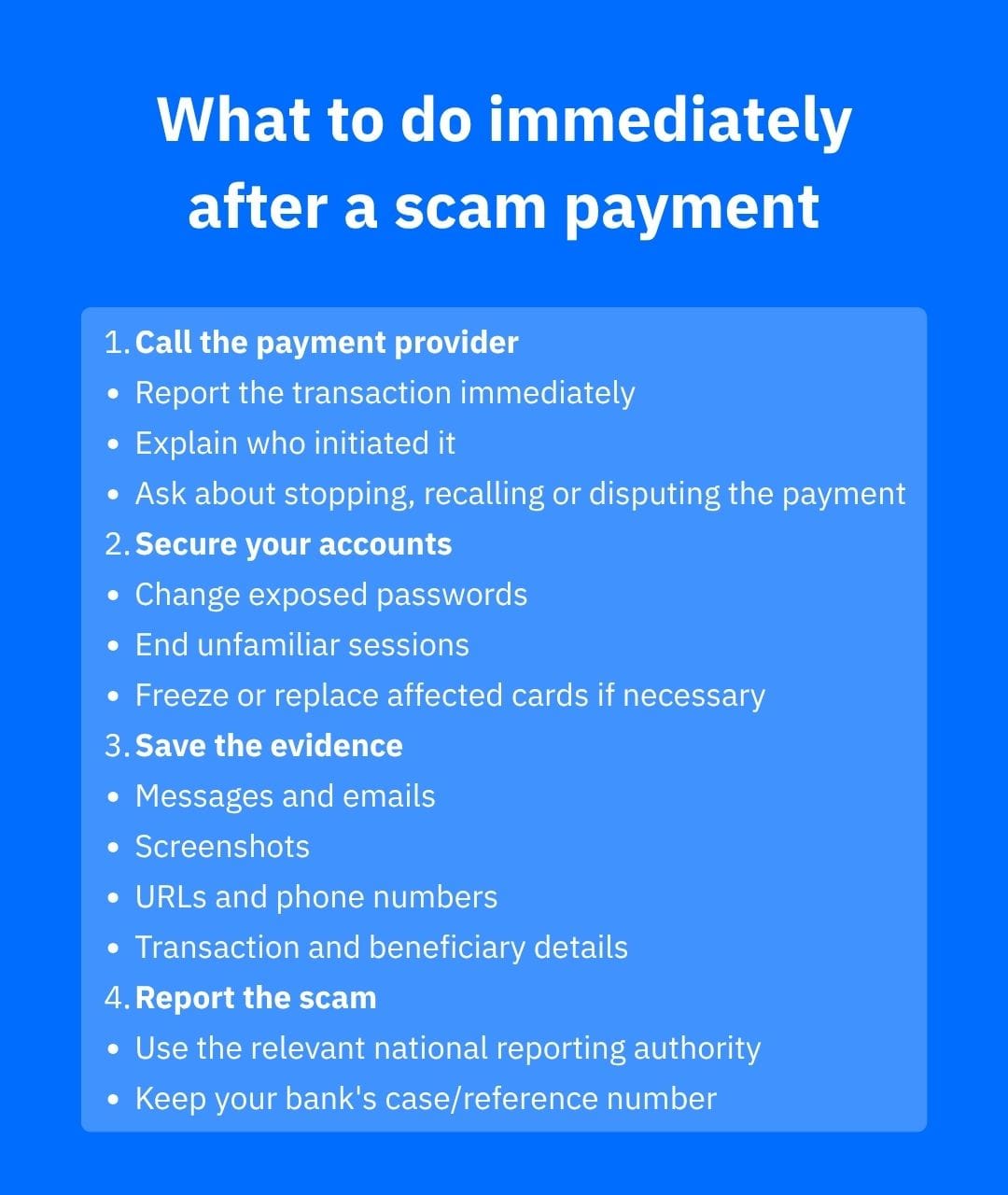
- Contact the bank, card issuer or payment service immediately. State whether you initiated the payment or someone else did, ask whether it can be stopped or recalled, and open the appropriate fraud or scam claim.
- Secure exposed accounts. Change compromised banking and email passwords, end unfamiliar sessions and replace or freeze affected cards when advised.
- Preserve the evidence. Save messages, receipts, transaction IDs, beneficiary details, URLs and screenshots. Our scam evidence checklist explains what to preserve before accounts or websites disappear.
- Follow the scam recovery timeline and report the incident through the appropriate national channel. If you initiated the transfer yourself, see what to do after you have sent money to a scammer by bank transfer.
How Bitdefender can help
Before paying, Bitdefender Scamio can analyze suspicious texts, emails, links, QR codes and screenshots you submit and flag potential scam risk. It can provide a useful second check when an unexpected payment request arrives, but it is not a bank-refund decision service.
If a scam exposed personal information or account credentials, Bitdefender Digital Identity Protection monitors a user's digital footprint for exposed data and compromised accounts and can alert them to identified risks. It cannot reverse a payment or guarantee recovery.
Conclusion
The distinction between authorized and unauthorized fraud can change which refund framework applies and how a claim is assessed. Act quickly, tell the provider exactly who initiated the payment, preserve evidence and challenge an incorrect classification if the facts do not match it.
Frequently asked questions
What does "authorized transaction" mean?
An authorized transaction is a payment to which the payer consented. In a scam, that can include a transfer the victim personally approved because a criminal deceived them. “Authorized” describes the payment instruction; it does not mean the scam was legitimate or that reimbursement is impossible.
Will the bank refund an authorized transaction?
Sometimes, but not automatically and not under the same rules everywhere. Refund rights depend on the jurisdiction, payment method, bank policy and scam type. The UK, for example, has mandatory reimbursement rules for many eligible APP scam payments, while other countries may offer narrower statutory rights.
What qualifies as an unauthorized transaction?
An unauthorized transaction is generally one initiated without the account holder's consent or actual authority. Examples include a fraudster using stolen payment details or taking over an account and sending money. Valid credentials do not necessarily settle the question, so the facts behind who initiated the payment matter.
tags
Author

Vlad's love for technology and writing created rich soil for his interest in cybersecurity to sprout into a full-on passion. Before becoming a Security Analyst, he covered tech and security topics.
View all postsYou might also like
Bookmarks
