Why email scams still work

November 26, 2026
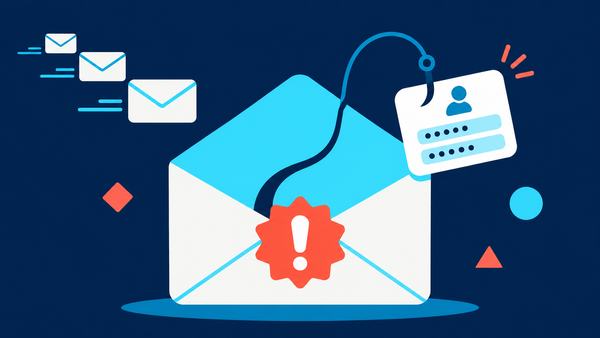
Despite being around for a long time, email scams are still effective because criminals can impersonate trusted senders and make harmful requests seem mundane.
A scam message may simply ask you to open an attached file or archive, verify an account, update a password, or approve an app. But the real goal is always the same: to convince you to share information or grant the attackers access.
And this works because, unlike communication channels that have grown outdated, such as SMS, we still use email for pretty much everything.
The medium has remained the same, but the attacks have evolved considerably. It used to be Nigerian princes, and now there’s an entire industry.
Key Takeaways
- Phishing kits make it easier for criminals to build and distribute convincing lures
- Scammers use familiar names, copied messages and urgent requests to win trust
- A phishing email can steal passwords or grant account access without revealing a password
- Verify unexpected requests through an official app, website or contact method
- If you approved access for an unfamiliar app, revoke its permissions in your account settings
Why criminals keep using email
Email reaches people where they already manage bills, accounts, work and personal messages. That gives scammers a familiar channel for fake alerts, document requests and invitations.
Email also remains an efficient way to target victims. Criminals have easier access to phishing kits that provide ready-made lures and automated campaign tools, lowering the barrier to running attacks at scale.
For example, the FBI’s 2026 warning about Kali365 describes a service that offers phishing lures, automated templates, and tools for capturing account access.
Familiar messages make scams harder to spot
A scam email may copy a real message or imitate a trusted company, government agency or even a person. The IRS describes “clone phishing” as copying a legitimate email and replacing its safe link or attachment with one that leads to malware or a fake website. It also warns that urgent messages and slightly misspelled sender addresses or website domains are common red flags.
The FBI’s 2026 warning about consent phishing shows how a scam can exploit that trust even when the login page is real. A victim may be sent to a legitimate service and asked to approve an unfamiliar app. If they grant permission, the app can access account data without giving the criminal the user’s password.
What a phishing email can lead to
Scammers may want passwords, banking details, personal information or access to your email account. Some phishing attacks want you to approve an app or enter a code instead of handing over a password.
That access can persist, and the FBI says that in consent phishing, changing a password may not eliminate an app’s access; the user must revoke the app’s authorization in security settings.
Phishing is not the only problem
While phishing has become a primary attack vector, email is also used for other scams, such as romance or donation scams. In fact, every major event is often accompanied by a wave of scam emails.
A good example was the 2023 earthquake. Less than 24 hours after two massive earthquakes in Turkey and Syria claimed thousands of lives, cybercrooks were already exploiting the humanitarian crisis.
How to check an unexpected email
Pause before following a link, opening an attachment, or approving an app. Check the sender’s full address and closely examine the website’s domain, especially if the message creates a sense of urgency or requests sensitive information.
Go directly to the organization’s website or app, or contact the sender using details you find independently. Don’t use the link or phone number in the message to verify it.
What to do if you have interacted with a scam
If you entered your password, change it through the service’s official website and check recent account activity. If you approved an unfamiliar app, remove its access in your account’s security or connected-app settings; a password change alone may not be enough for consent phishing. Turn on two-factor authentication where available.
If you have opened a suspicious attachment or you’ve run a command, stop using the affected device for sensitive accounts and run a security scan.
FAQ
Why do scammers still use email?
Email provides a familiar way to send fake account notices, document requests and invitations. Phishing kits also help criminals prepare and distribute lures at scale.
Can a phishing scam work if the login page is real?
Yes. The FBI warns that consent phishing can send victims to a legitimate service and trick them into authorizing a malicious app.
If I change my password, does that end all phishing attacks?
No. For consent phishing, you also need to revoke the unfamiliar app’s access in your account security settings.
tags
Author

Silviu is a seasoned writer who followed the technology world for almost two decades, covering topics ranging from software to hardware and everything in between.
View all postsYou might also like
Bookmarks
